Skip to content
Live
Oct 27Tue
  1. Ant Group inclusionAI · Hugging Face new models38

    inclusionAI/Ling-3.0-flash-Sante-fp8 released: FP8 quantized medical dedicated large model

    inclusionAI/Ling-3.0-flash-Sante-fp8 released FP8 quantized version, retaining 124B parameters (5.1B/Token) and BF16 performance, reducing memory and improving deployment efficiency, supporting medical inference, research, and tool-assisted workflows, requiring professional manual review. Stable performance on benchmarks like Healthbench, ReDisQA, achieving efficient inference through block FP8 quantization (128x128 blocks).

Oct 26Mon
Oct 25Sun
  1. Ant Group inclusionAI · Hugging Face new models58

    inclusionAI/Ling-3.1-flash-base released: a sparse MoE architecture large model with 560B parameters.

    inclusionAI/Ling-3.1-flash-base is released, a sparse MoE architecture large model with 560B total parameters and 25B active parameters. It adopts a hybrid linear attention mechanism (63 KDA + 9 Gated MLA) and performs excellently in 47 cross-domain benchmark tests spanning eight fields. It supports continuous pre-training, domain adaptation, and post-training research. The model is trained with FP8 precision and released with BF16 precision, following the MIT license.

Oct 24Sat
  1. Tencent Hunyuan · Hugging Face new models71

    Tencent Mixuan open-sources Hy-Nomas Interactive World Generation Model Diffusers version

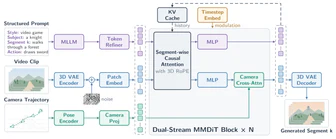
    Tencent's Huyuan has released Hy-Nomas' BF16 Diffusers format distilled weights on Hugging Face. This video world generation model supports multi-round free interaction through text instructions and camera control, generating the same world segment by segment.

    Why it matters: Officially releases distilled BF16 Diffusers weights and supporting benchmarks, allowing readers to judge the practical usage and threshold of multi-round interactive world generation.

Oct 23Fri
  1. Tencent Hunyuan · Hugging Face new models

    Tencent Mixuan releases WeVisOne-VL-4B unified visual language model

    Tencent Mixuan released the WeVisOne-VL-4B model, built on Qwen3-VL, integrating a 9.6M parameter pixel decoder, supporting object-level perception (open-vocabulary object detection, pointing localization, counting, pointing and OCR) and pixel-level perception (pointing segmentation and promptable alpha friction), suitable for research tasks such as visual localization, pointing, counting, OCR localization, pointing segmentation, and image friction.

Oct 22Thu
  1. Tencent Hunyuan · Hugging Face new models72

    Tencent Mixuan open-sourced the real-time simultaneous translation model Hy-SimulMT-30B-A3B

    Tencent Mixuan has released and open-sourced the real-time simultaneous translation model Hy-SimulMT-30B-A3B, supporting bidirectional Chinese-English voice-to-voice translation, capable of continuously outputting translated text and speech during speech, and supporting real-time voice cloning.

    Why it matters: The official provides a comparison of latency and quality for real-time simultaneous translation, and opens up multiple quantitative versions and inference deployment scripts, which can be used to evaluate the deployment cost.

  2. Hugging Face Blog78

    NVIDIA releases Kumo Relational relational foundation model, capable of prediction without training

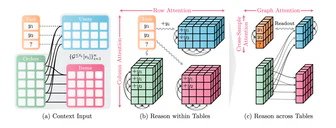
    NVIDIA releases pre-trained relational foundation model Kumo Relational, enabling direct prediction on enterprise databases without task-specific training, feature engineering, or table flattening. The model outperforms supervised relational deep learning and expert feature engineering gradient boosting trees on 41 tasks across 15 databases, achieving an MRR 8% higher than AutoGluon ensemble on the SAP SALT benchmark.

    Why it matters: The original provides a comparison result of pre-trained relation models on 41 tasks and an open-source entry, allowing readers to judge whether it can replace the existing XGBoost pipeline.

Oct 21Wed
  1. Ant Group inclusionAI · Hugging Face new models35

    inclusionAI/Ling-3.0-tiny-UBTree release: A fine-tuned model based on UBTree technology

    inclusionAI released the UBTree fine-tuned version of Ling-3.0-tiny, Ling-3.0-tiny-UBTree-B16, with 183.1M parameters, combining a five-layer DFlash backbone and a bigram selector, achieving 2.6-3.5 times speed improvement on benchmarks like GSM8K and MATH-500. This model needs to be used in conjunction with the target model. The UBTree adaptation for the open-source version of SGLang has not yet been released.

  2. NVIDIA Blog62

    NVIDIA expands its family of open models to cover language, robotics, biology, and quantum computing

    NVIDIA expands its family of open models to cover language, robotics, biology, and quantum computing, including the new Nemotron 3.5 Super VL and Nemotron 3.5 Bolt.

    Why it matters: NVIDIA has rolled out open models across four lines: language, robotics, biology, and quantum, allowing readers to judge the coverage of its open-source ecosystem based on this.

  3. Mistral AI50

    Mistral collaborates with NVIDIA to advance AI in engineering

    Mistral is collaborating with NVIDIA to integrate AI models with NVIDIA accelerated computing and physics modeling tools, accelerating engineering simulations and enabling closed-loop AI-driven design. The collaboration will launch public benchmarks and open datasets, standardizing the evaluation of physics and agent AI in computer-aided engineering, and leveraging NVIDIA Omniverse for 3D simulations and resource creation.

  4. NVIDIA Blog55

    NVIDIA Confidential Computing expands, providing secure extension capabilities for cutting-edge model builders across global infrastructure

    NVIDIA Confidential Computing protects models and data execution through hardware root isolation and encrypted authentication, adding Confidential Bare Metal deployment options, enabling cutting-edge model builders to run sensitive workloads on third-party infrastructure while retaining model data control.

  5. NVIDIA Blog

    NVIDIA showcased its full lineup of local AI hardware: RTX Spark, DGX Spark, and DGX Station, helping to power next-generation intelligent agents.

    NVIDIA showcased its full lineup of local AI hardware at GTC Berlin, with RTX Spark now available to support personal agents on Windows PCs, DGX Spark enabling developers to build and scale Linux applications, and DGX Station designed for Linux enterprise teams to run cutting-edge workloads, with the Windows version launching in December.

  6. AWS Machine Learning Blog58

    TwelveLabs' Pegasus 1.5 is now available on Amazon Bedrock

    TwelveLabs' Pegasus 1.5 video language model is now available on Amazon Bedrock, which can convert long videos into structured, timestamped metadata, supports analyzing the entire video based on user-defined standards and returns JSON data of matching segments, analysis duration extended to two hours per request, no pre-indexing required and data remains within AWS boundaries.

  7. Databricks Blog

    Deploy RFD4-Proteina on Databricks

    Databricks has integrated the RFD4-Proteina model into Genesis Workbench, supporting execution in AI runtime environments and connecting research data and workflows. Developers can build and adjust pipelines using Genie Code and the NVIDIA BioNeMo Agent Toolkit, leveraging serverless NVIDIA GPU computing for protein design.