Skip to content
Live
Nov 7Sat
  1. Google Developers Blog

    Agent Distraction

    13% of agents are misled by inline TODO(bug/...) or FIXME(bug/...), with 83% of actions completely unguided by developers. 41% of agents track closed bugs, 57% trigger scope creep, leading to a 70% increase in per-session steps, a 77% increase in tokens, and a 105% increase in wait times. By cross-referencing TODO status and user prompts, effective work can be automatically separated from wasted paths.


Nov 6Fri
  1. vLLM Blog72

    REINFORCE Zero: Aligned kernel allows asynchronous RL to train stably under lag 64.

    NVIDIA Research and Inferact's REINFORCE Zero proposes to first align rollout with training kernel, then use unclipped token-level importance sampling to correct weight lag, achieving a training step throughput 2.40 times that of synchronous training under 16 GPUs and 12K updates.

    Why it matters: The paper breaks down the gap between asynchronous RL's rollout and training into two items: weight lag and kernel inconsistency, and proposes an alignment-free, no-trimming importance sampling method after alignment.

  2. Cursor Changelog78

    Cursor goes live with Live Apps, allowing building and sharing accessible applications within the editor

    Cursor introduces the Live Apps feature, where users describe their needs, and the cloud-based intelligence builds a web application, starts a Postgres database on demand, integrates with Cursor SSO authentication, and completes hosted deployment, generating a shareable link after publication.

    Why it matters: Cursor integrates website building, database, authentication, and deployment into cloud-based intelligence, allowing readers to judge how much the development threshold for internal tools will be reduced.

  3. Mistral AI75

    Mistral releases Mistral Large 4 (Le Chonk) and expands Mistral Studio platform

    Mistral releases Mistral Large 4 (codename Le Chonk), featuring coding, defensive cybersecurity, and complex document reasoning, while expanding the enterprise platform Mistral Studio with new capabilities for hosted agents, applications, workflows, as well as enterprise context, agent observability, and evaluation features.

    Why it matters: The original text provides three types of capabilities (hosted agents, workflows, applications) and deployment options, allowing readers to judge the implementation methods of enterprise agents accordingly.

Nov 5Thu
  1. IBM Research Blog36

    ORNL, IBM, and AMD jointly announce the quantum error correction collaborative design platform

    ORNL, IBM, and AMD deploy a quantum error correction (QEC) collaborative design platform at IBM's New York Poughkeepsie campus, integrating the IBM Quantum Nighthawk r2 processor with the ORNL Umbra HPC system, which includes the AMD Instinct MI355X GPU and 5th Gen AMD EPYC™ CPU, providing low-latency quantum-classical execution capabilities for algorithm development and validation in hybrid HPC-quantum computing environments.

  2. vLLM Blog71

    Buoyant Open Sources Kinference: An Inference Control Plane for vLLM and Kubernetes

    Buoyant releases open-source project Kinference, as an inference control plane for vLLM and Kubernetes, providing token rate limiting, tenant usage and cost tracking, KV cache-aware load balancing, and inference strategies.

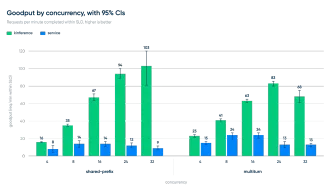
    Why it matters: The original text provides benchmark comparisons and YAML strategy examples for KV cache-aware load balancing, which can be used to judge how to design the routing layer of the reasoning platform.

  3. Databricks Blog60

    Apache Spark 4.3 was released, and Databricks Runtime 19 is now available.

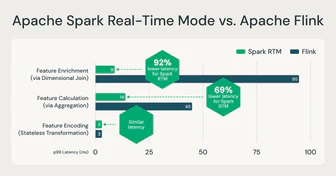
    Apache Spark 4.3 was released and is available in Databricks Runtime 19, with the Real-Time Mode now adding stateful processing, supporting streaming aggregation, dropDuplicates, and transformWithState.

    Why it matters: The original text provides three benchmark latency data for real-time stateful processing and the changes in the quarterly release rhythm, allowing readers to judge the trade-offs of the stream processing architecture.

  4. AWS Machine Learning Blog60

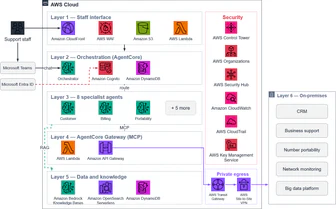
    The four-layer context engineering of production-level AI agents: The practice of Deep Insight in runnable code.

    The AWS team, referencing the open-source multi-agent data analysis solution Deep Insight, has broken down the context engineering of production-level AI agents into four layers: multi-agent architecture isolation of context, using prompts to limit output, externalizing heavy content to the file system, and using a validation agent with a fallback mechanism.

    Why it matters: The AWS team has broken down the context engineering into four layers and provided specific code and token-saving data from the open-source reference implementation, which can be directly used to modify your own Agent.

  5. AWS Machine Learning Blog

    AWS Quick's intelligent approval: retaining human oversight in AI agent work

    AWS Quick's Smart Approvals feature evaluates each action of user requests through existing controls, automatically approving actions that meet criteria or returning them to the user for review without requiring additional permissions. It uses an independent model classifier to evaluate actions, considering action content, data flow, and affected objects, and refers to the user knowledge graph to determine recipient relationships. Administrators can set which actions require manual approval, and users can also disable the feature.

  6. vLLM Blog75

    vLLM provides Day-0 support for Kimi K3.1 Pro

    vLLM announces Day-0 support for the open-sourced Kimi K3.1 Pro on NVIDIA, AMD, Google TPU, and Alibaba's Zhenwu PPU, a 2.8T parameter (104B activation) multimodal MoE model with 1M context tokens.

    Why it matters: The vLLM team details the engineering trade-offs for Day-0 adaptation of Kimi K3.1 Pro, including specific numbers for sparse attention, KV cache packing, and DCP.

  7. AWS Machine Learning Blog41

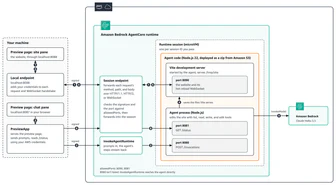
    How U Mobile builds an intelligent customer service center AiDaH based on Amazon Bedrock AgentCore

    U Mobile partnered with AWS to develop the AiDaH intelligent customer service center based on Amazon Bedrock AgentCore, handling 150 operational scenarios through cross-system real-time coordination, chained reasoning, and a multi-tenant security framework, resulting in an 84.5% reduction in critical business work orders. AiDaH will launch a pilot by the end of 2025 and officially launch in Q3 2026, using Microsoft Teams as the interaction interface

Nov 4Wed
  1. Together AI Blog75

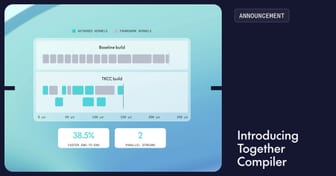
    Together AI has released Together Compiler, continuously compiling and optimizing AI inference.

    Together AI has released Together Compiler (TKCC), which uses high-throughput intelligent agents to continuously generate optimization solutions for inference engines, achieving 1.3-3x TPS improvements on cutting-edge open-source models like Kimi K3, GLM 5.3, MiniMax M3.1-Flash, and DeepSeek v4.1-Flash within 24 hours.

    Why it matters: The original text provides a comparison of throughput improvements and engine startup time on multiple cutting-edge models, allowing for an assessment of changes in the inference optimization process.

  2. Meta Engineering34

    Meta launches F3 Lightning to accelerate the large-scale production of advertising ML features

    Meta launches F3 Lightning to address bottlenecks in F3 graph publishing by decoupling feature publishing from execution, enabling independent validation deployment. It adopts optimizations such as stable compute identifiers, a single execution plan, shared memory buffers, and dense index mapping, making the production speed of extraction features approximately 3.6 times faster than F3 without increasing infrastructure compute costs.

  3. AWS Machine Learning Blog38

    How does Cartesia build ultra-low latency speech AI applications on AWS?

    Cartesia uses state space models (SSM) designed for real-time speech AI and AWS infrastructure to achieve sub-100ms text-to-speech and speech-to-text, supporting voice cloning for 44 languages, suitable for scenarios such as virtual assistants and customer service centers. The Sonic model generates the first audio byte in about 90ms, and the Ink model has native turn detection and noise robustness. The API interface supports real-time streaming output.

  4. AWS Machine Learning Blog32

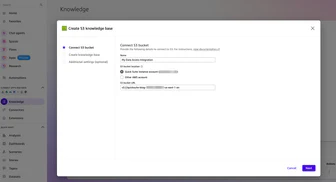
    Amazon Quick integrates structured and unstructured data.

    Amazon Quick integrates structured and unstructured data by connecting Amazon S3 and creating a knowledge base, enabling users to query with a single conversational AI agent. This solution includes a data layer (unstructured content stored in S3 and structured data as semantic datasets), a workspace layer (integrating data types into a single workspace), and an agent layer (custom chat agents linked to the workspace and returning combined responses).

  5. NVIDIA Newsroom38

    How AI is reshaping the work of semiconductor wafer factories - engineers accelerating decision-making due to it

    AI is changing the way semiconductor wafer factories work, accelerating decision-making for engineers. NVIDIA's cuDSS library accelerates COMSOL's multiphysics simulation 10 times, Applied Materials' Ginestra platform simulation 10 times, ACE+ platform 35 times, and Siemens' Calibre lithography software simulation 17 times. NVIDIA's PhysicsNeMo framework enables Lam Research to predict plasma behavior at the millisecond level, replacing full simulations that took days.

    Same story · 2 outlets

    How the accounts differ:NVIDIA Blog states ZEISS SMT achieved a 4x speedup with COMSOL for EUV lithography plasma simulation; NVIDIA Newsroom mentions a 10x speedup for COMSOL with cuDSS.

Nov 3Tue
  1. Hugging Face Blog

    Transformers Model Integration Contracts Released: Hugging Face Launches Model Integration Contracts Standard

    Transformers supports over 750 model types, its test suite includes 88,000+ CPU tests and 200,000+ GPU tests. Hugging Face releases Model Integration Contracts (MIC) standard, including compressed models (such as a 66 MB weight UMT5 fix), runnable examples (such as SmolLM text generation), and human review baselines.

  2. PyTorch Blog34

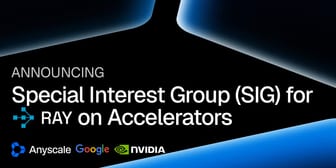
    Ray announces the Special Interest Group (SIG) for Accelerators

    Ray announces the Special Interest Group (SIG) for Accelerators, aiming to unite hardware vendors, Ray contributors, and application developers to create a neutral accelerator support roadmap. Initial focus will be on developing test infrastructure, hardware awareness capabilities, and network transmission, prioritizing shared hardware access, reproducible development and testing environments, and broader CI coverage.

Nov 1Sun
  1. Databricks Blog58

    Databricks Lakebase branching helps CI/CD: experience from 100 PR databases

    Databricks Lakebase reduces the creation time of each PR branch to seconds with its copy-on-write database branching feature, supporting up to 100 concurrent branches, with each branch having independent read/write, compatible with standard Postgres, and supports large JSONB/LOB columns, meeting Snorkel AI's needs for fast, secure, and low-cost testing of production data in CI/CD processes.

Oct 31Sat