Skip to content
Live
Oct 21Wed
Oct 20Tue
  1. Hugging Face Blog58

    How does ALTK-Evolve surpass state-of-the-art models in the τ²-bench customer service task through learning and memory?

    ALTK-Evolve uses GPT-4.1 to learn and apply customer service scripts. In the τ²-bench customer service agent benchmark test, it surpasses all retail entries in the retail sector, achieving a score of 67.5% Pass^4, and does not require updating model weights. The model is based on a basic ReAct agent and GPT-4.1. It attempts to analyze tasks and use GPT-4.1 to distill success and failure into short behavioral rules, then adds these guidelines to the agent's system prompts without updating weights or manual annotation.

  2. Anthropic Research

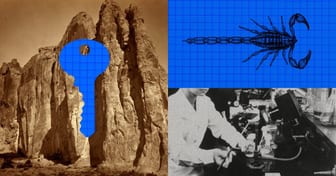
    How does Claude design protein binders for scorpion neurotoxins?

    Claude autonomously generated and screened 318,484 protein designs in 64 hours, selecting 180 for testing, and collaborated with Adaptyv Bio and Twist Bioscience to experimentally validate 211 designs, of which 17 met the binding criteria. All design data has been made public. Experts consider this the first AI design attempt for scorpion neurotoxins, which could accelerate drug discovery for neglected diseases.

Oct 19Mon
  1. IBM Research Blog22

    Coursera's new course 'AI Data Stream Architecture: From Principles to Practice' teaches the principles of modern accelerator operation

    Coursera's new course 'AI Data Stream Architecture: From Principles to Practice' teaches engineers how to work across GPUs, TPUs, Cerebras WSE, Groq LPU, and IBM Spyre accelerators. The course is taught by Kaoutar El Maghraoui, a senior research scientist at IBM Research, covering execution models, compilation, memory systems, debugging, and performance modeling through six courses and hands-on experiments, emphasizing how different architectures affect model performance and the key role of compiler optimization.

  2. Together AI Blog

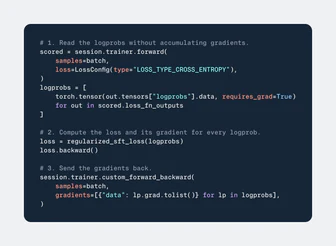
    Together Post-Training: Flexible and efficient model fine-tuning service

    Together AI has launched Post-Training services, supporting the construction of custom models through reinforcement learning and supervised fine-tuning without complex infrastructure. The service provides flexible training loop definition capabilities and optimizes the underlying system and infrastructure to improve model quality and training speed. It supports mainstream open-source models such as Muse Spark Open, GLM 5.3, Kimi K3, and Qwen 3.8-27B, running on dedicated GPU resources to ensure efficient and numerically consistent training.

Oct 16Fri
  1. Tencent Hunyuan · Hugging Face new models

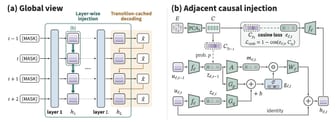
    Qwen3-8B-DSpine-b16 released: Speculative decoding model with parallel drafting and deep conditional injection

    Qwen3-8B-DSpine-b16 released by Qwen, employing speculative decoding technology with parallel drafting and deep conditional injection, achieving an average acceptance length score of 10.55 on Qwen3-8B. The model supports a context length of 8192 tokens, uses bfloat16 data type and fa3 attention backend, installation requires git clone and pip install, and runs via sglang serve.

  2. Microsoft AI News

    Microsoft AI has released an 80 billion parameter MoE large model MAI-Base-2.

    Microsoft AI has completed the pre-training of a new MoE large model MAI-Base-2, with 80 billion active parameters and 2.8 trillion total parameters, surpassing all open-source models in internal evaluations. The model is 4-12 times more efficient in pre-training FLOPs than the strongest open-source base model DeepSeek-V4-Pro-Base and is used to train larger models. Microsoft plans to license the model weights through Foundry using organic data pre-training and full-stack control.

Oct 15Thu
  1. Mistral AI · Hugging Face new models

    Mistral AI releases Timestral-123M time series base model

    Mistral AI releases Timestral-123M time series base model, with 123M parameters, using a patch-based Transformer architecture, context length of 32,768 time steps, single prediction covers 1,024 time steps, outputs 21 quantiles. The model achieves optimal accuracy in zero-shot prediction on GIFT-Eval, TIME, and fev-bench evaluations, and is licensed under the Modified MIT License.

Oct 14Wed
  1. StepFun · Hugging Face new models

    Step-5-Preview-NVFP4 model release by LeapX Stars

    LeapX Stars releases flagship model Step-5-Preview-NVFP4, with 600B total parameters and 27B active parameters, supporting up to 1M context windows, excels in software engineering, professional knowledge work, and financial fields, capable of processing text, images, and video, deployable via OpenAI-compatible API or offline generation.

Oct 13Tue
  1. LangChain Blog

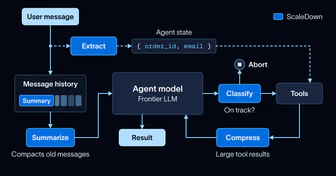
    How ScaleDown optimizes context management for long-running agents through compression and extraction techniques

    ScaleDown optimizes context management for long-running agents through compression and extraction techniques, its model is 41 times cheaper and 2.7 times faster than general models like GPT-5.5 in benchmark tests. ScaleDown provides four models: Summarize, Compress, Extract, and Classify, respectively for summarization, compression, extraction, and classification, supporting up to 1M tokens of input, and supporting image and PDF input.

  2. Microsoft Research

    Microsoft Research open-sources multi-modal model StudentSim for simulating student learning behavior

    Microsoft Research has open-sourced the multimodal model StudentSim for simulating student learning behavior. It is trained on publicly anonymized learning records to create a personalized student simulator that outperforms benchmarks in areas such as chess, English writing, and mathematics. It provides early feedback signals for AI tutoring systems but is not intended to replace teachers or classroom teaching.

Oct 6Tue
  1. Google Research

    Google Earth AI's Population Dynamics Foundation Model (PDFM) provides a planetary geospatial foundation model for global public health.

    Google Earth AI's Population Dynamics Foundation Model (PDFM) compresses search trends, population flows, building environment density, and environmental factors into location embeddings, enhancing epidemiological research performance in various disease fields and geographical environments without specific task fine-tuning.

  2. Mistral AI

    Mistral AI has launched the public beta version of Mistral Large 4.

    Mistral Large 4 is a native multimodal large language model with 100 billion parameters, featuring 52 billion active parameters. It excels in coding, agent workflows, and multimodal understanding, reaching the level of the world's strongest open-source model. It also leads in critical enterprise workloads such as cybersecurity, finance, and law. The model will be open-sourced by the end of this month and is currently available for experience through the public beta API of Mistral Studio.

  3. Google Developers Blog

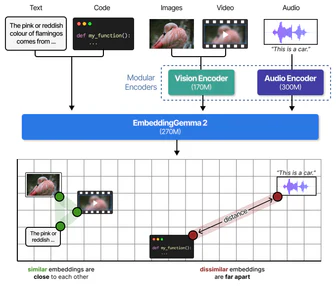
    EmbeddingGemma 2 Developer Guide

    EmbeddingGemma 2 is an open-source 740M parameter model developed based on Gemma 4, which maps text, code, images, video, and audio to a unified 768-dimensional space, supports modular loading (270M-740M parameters), and performs excellently in code search and cross-modal retrieval, can be used via the sentence-transformers library.

Oct 2Fri
  1. Google Research

    Google Research has released a privacy-preserving federated learning system based on a trusted execution environment.

    Google Research announced a new generation of a federated learning system based on trusted execution environments (TEE), achieving fully verifiable and auditable data anonymization by executing encrypted training data within the TEE and publishing access policies to the public transparent log Rekor, Gboard has adopted this system and significantly improved computational speed.

  2. NVIDIA Blog

    NVIDIA DGX Spark 64GB released, providing developers with more local AI building and expansion solutions

    The NVIDIA DGX Spark with 64GB unified memory, launched by Acer, ASUS, Dell, Gigabyte, HP, and MSI, supports developers, researchers, and AI enthusiasts to run models with up to 100 billion parameters locally without cloud dependency. Two devices can be clustered via NVIDIA Sync Cluster Assistant, merging memory to 128GB and boosting performance 1.7 times, priced from $4999.

Sep 30Wed
  1. Anthropic Research71

    Anthropic Research: What Work Can Robots Currently Complete?

    Anthropic has released a Robot Exposure Index study, using Claude to evaluate about 19,000 tasks in O*NET, finding that existing robots can complete 74% of physical tasks in the U.S. and account for 34% of all work time, but most are limited to controlled environments.

    Why it matters: Anthropic used Claude to rate O*NET tasks item by item, quantifying how much work robots can currently cover, and provided constraints on cost and regulation.

Sep 29Tue
  1. Microsoft Research

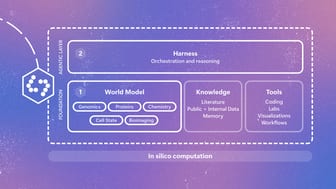
    Microsoft Research has released Quine: an AI research system designed for biological complexity.

    Microsoft Research has released Quine, an AI research platform that combines a multi-modal biological world model with an interactive connection system, used to integrate models, scientific tools, literature, and researchers, and has been used to predict compounds driving tumor state changes and validate candidates; the system is designed for research, not for clinical or medical use, and its output may be incomplete or require verification by researchers, with future plans to expand access through Microsoft Discovery.

Sep 24Thu
  1. Anthropic Research

    Project Swap: The performance and challenges of agents in market transactions

    In the Project Swap experiment, 201 Anthropic employees conducted book trades through the Claude agent, with 61% of the agents accurately matching employee preferences. The agents performed well in the trades, but their efficiency was limited by insufficient information. The experiment showed that model performance had a greater impact on the negotiation results of the agents than instructions, with most participants satisfied with the books they received from the trades and willing to pay about one-third of their annual budget for Claude to handle the trades.

Sep 23Wed
  1. Anthropic Research80

    Claude autonomously discovers a new enzyme system with CRISPR-like repetitive sequences.

    Anthropic has established a life science research team and built its own laboratory, allowing the Claude intelligent entity to autonomously search in DNA sequence databases and discover a new enzyme system ART (array-associated reverse transcriptases) related to DNA repetitive sequences.

    Why it matters: Anthropic's self-built lab enables Claude to autonomously screen DNA databases and discover a new enzyme system similar to CRISPR, demonstrating the specific process of AI-driven hypothesis generation.

Sep 20Sun
  1. StepFun · Hugging Face new models

    Step-5-Preview-BF16 model release by Jieyue Xingchen

    Jieyue Xingchen releases flagship model Step-5-Preview-BF16, with 600B total parameters, 27B active parameters, supporting up to 1M context windows, excels in software engineering, professional knowledge work, and financial fields, capable of processing text, images, and video, deployable via OpenAI-compatible API or offline generation.

  2. StepFun · Hugging Face new models

    Jieyue Xingchen Step-5-Preview model release: Sparse MoE architecture with 600B parameters

    Step-5-Preview, the flagship model from Jieyue Xingchen, adopts a sparse MoE architecture with 600B total parameters and 27B active parameters, supporting up to 1M tokens in context, and excels in software engineering, professional knowledge, and financial tasks, demonstrating outstanding performance in the DeepSWE v1.1 benchmark. The model can be deployed via OpenAI-compatible APIs using vLLM or SGLang, or used for offline generation with Transformers.

Sep 8Tue
Sep 1Tue
Aug 26Wed
Aug 25Tue
Aug 18Tue
  1. Anthropic Research78

    How does Claude accelerate protein design and analysis chemistry?

    Anthropic announced two experimental results: Claude (Mythos Preview and Opus 4.8) designed protein binders for 15 targets, successfully covering 14, with a hit rate of 35.1% in single-target mode, higher than the common 10-15% in current protein design activities.

    Why it matters: Anthropic announced Claude's experimental results in protein design and analysis chemistry, providing wet lab validation data and prompts.

Jul 31Fri
  1. Thinking Machines

    Thinking Machines has released the open-source Inkling and Inkling-Small language models.

    Thinking Machines releases open-source language models Inkling and Inkling-Small, allowing users to own, run, and customize them. To reduce the risk of abuse, models must pass security tests and research whether dangerous capabilities can be decoupled from general intelligence, while also building a layered defense ecosystem. Phased releases, supporting defenders, and collaboration with security researchers will enhance resilience. Internal evaluations and external tests show that releasing Inkling does not introduce significant incremental risks already present in existing open-source models.

Jul 30Thu
Jul 26Sun
  1. Berkeley AI Research

    ABBEL framework: Achieving efficient long-range interaction through belief updates

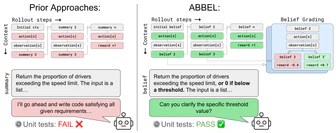
    The ABBEL framework replaces the complete interaction history with natural language belief states as the working context for an agent and utilizes a belief scoring mechanism to supervise the content of each belief state, achieving model performance close to that of a complete context model in collaborative code generation tasks while reducing the peak context token length by about 75% and training steps by 50%.

Jul 7Tue
  1. Berkeley AI Research

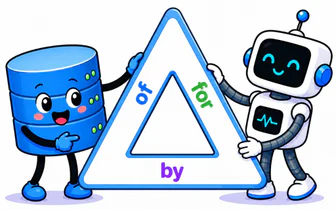
    GPT-4-class capabilities cost less than $1 per month, how data systems serve agents, and whether they belong to agents or are built by agents.

    GPT-4-class capabilities cost has dropped to less than $1 per month, with reasoning prices decreasing by over 50 times annually. Agents will dominate data system workloads, creating three new challenges: designing data systems for agents that support agentic speculation and optimize repetitive queries; building agent-specific data systems capable of managing agent cluster states and coordinating consensus; enabling agents to synthesize trustworthy custom data systems.

Jun 29Mon