Skip to content
Live
Oct 28Wed
  1. Databricks Blog

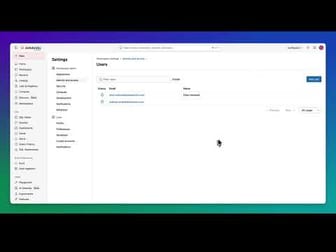
    Databricks improves document extraction accuracy through ai_extract and MLflow Prompt Registry

    Databricks improves document extraction accuracy by building a document extraction process that includes a review step, using ai_extract combined with JSON schema and global instructions, and leveraging MLflow Prompt Registry for versioned configuration. Finally, it validates the improvement effect on a fixed set of manually labeled data, enhancing the overall performance of the system.

  2. LangChain Blog71

    How to Set Up Design Intelligent Agents with LangChain Content Studio

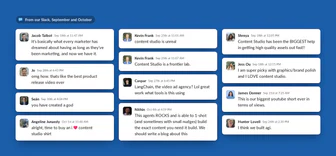
    LangChain introduces the internal design of its intelligent agent Content Studio, which can generate videos, social media graphics, UI diagrams, and presentations in Slack with a single prompt word, with all materials generated by code.

    Why it matters: LangChain has disclosed the complete setup process of its design agent Content Studio, including skills, wiki, inspection gates, and the division of labor between asynchronous sub-agents, which can serve as a reference for building vertical agents.

Oct 27Tue
  1. Databricks Blog22

    How is Databricks Free Edition used for teaching?

    Databricks Free Edition allows teachers and students to run full data or AI courses in the browser for free, without a cloud contract or license management, suitable for students and educators worldwide. The platform offers features such as collaborative notebooks, Spark, Delta Lake, Lakeflow, Databricks SQL, and Genie code assistant, supporting courses from introductory programming to AI projects. Skills are applied directly to industry-standard tools, with no conversion costs between production environments and teaching sandboxes.

  2. Claude · YouTube50

    How Anthropic engineers use Claude Docs

    Anthropic engineer Doug shares how to use Claude Docs in stand-ups and release reviews. Claude collaborates in documents, automatically extracting data, validating arguments, and responding to questions in comments. The tool is designed for team collaboration, supporting real-time analysis within the document.

  3. Google AI Blog45

    Google AI Quests series 'Summit' released: guiding students to explore neuroscience of brain mapping

    Google AI Quests Series Course 3 'Summit' released, gamifying learning neuroscience, guiding students to scan and map brain neurons to understand memory loss mechanisms. The course includes data cleaning and model testing tasks, emphasizing that AI needs human supervision and critical thinking. The course is inspired by Google AI's decade-long Connectome Project research, upon completion, students will understand real-world groundbreaking achievements, such as the complete fruit fly brain map.

Oct 25Sun
  1. vLLM Blog60

    vLLM serves DeepSeek-V4.1-Flash on GB300 NVL72: performance matches DeepInfer and extends to the entire rack

    The vLLM team used P/D separation and Wide-EP to serve DeepSeek-V4.1-Flash on a single NVIDIA GB300 NVL72 rack, achieving 954K tokens/s per GPU and 196 tokens/s for single-user P90 on SemiAnalysis AgentX, which is 7.9 times the early single-node results.

    Why it matters: The vLLM team has released per-item optimization and measured data for serving DeepSeek-V4.1-Flash on GB300 NVL72, which can be compared with DeepSeek's own engine DeepInfer.

Oct 24Sat
  1. vLLM Blog62

    vLLM provides an in-depth explanation of the optimization of PCP, DCP, and Hybrid HiSparse for GLM-5.3 on 16 H200s

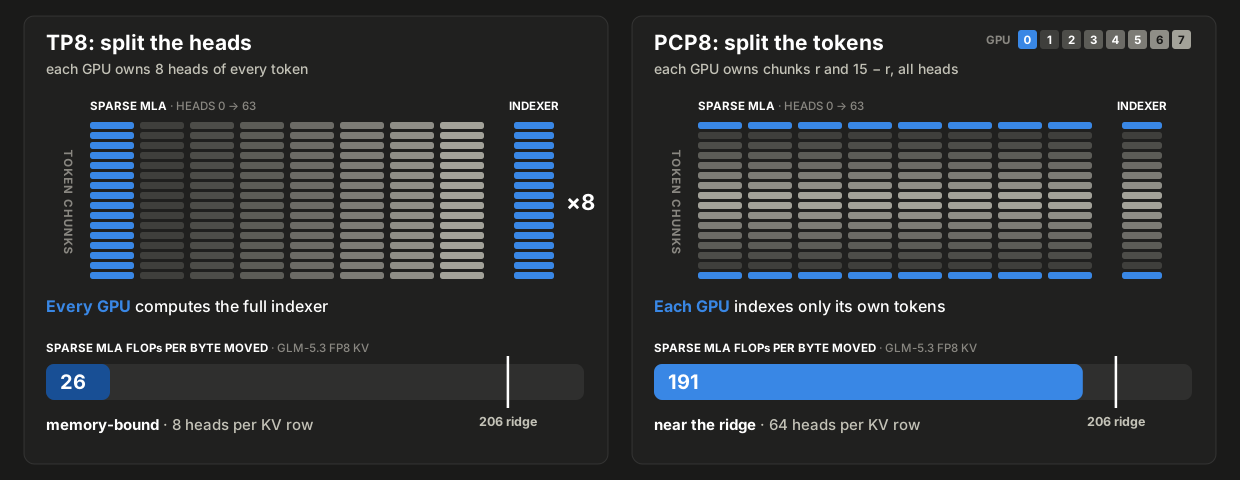
    vLLM team releases the second part of GLM-5.3 optimization, deploying on 16 H200s with 1 pre-filled node and 1 decoding node, using PCP to split pre-fill by token and DCP to split KV cache by token, allowing 1M context to fit into the pre-fill node

    Why it matters: The vLLM team has dissected how PCP, DCP, and Hybrid HiSparse can be combined on 16 H200s, allowing readers to understand the memory and pre-fetch bottlenecks of long-context deployment.

  2. AWS Machine Learning Blog

    Use AWS CDK custom resources to orchestrate SageMaker AI endpoint auto-scaling.

    Use AWS CDK custom resources to automatically orchestrate SageMaker AI endpoint updates with auto-scaling, without manual intervention. Through three custom resources (decommission, update, register scalable targets, attach extension policies) achieve explicit dependency order, ensuring endpoint configuration and auto-scaling parameters are synchronized in a single deployment. The deployment stack includes three custom resources, two Step Functions state machines, and twelve Lambda functions.

Oct 23Fri
  1. Databricks Blog60

    Databricks Talks AI Billing: How to Reduce the Unit Cost of Coding Agents by 90%

    Databricks executive Patrick reviews the process where the cost of AI coding agents increased exponentially after the company fully adopted them, and then reduced the unit cost by up to 90% by controlling the layer. He mentions that shifting traffic to cheaper new models contributed to more than 50% of the reduction, and Smart Router reduced the average task cost by more than 30% while maintaining near the quality of the most expensive model. This internal solution was later productized as Unity Gateway, which is now used by thousands of customers.

    Why it matters: Databricks executive reviews the process of its own AI coding costs from out of control to reducing the unit cost by 90%, providing migratable practices for gateways, routing, and self-built evaluations.

  2. AWS Machine Learning Blog34

    How Rescale uses Strands Agents and AI-DLC to build intelligent AI routing agents

    Rescale utilizes Strands Agents and the AI-DLC framework to set up intelligent routing agents on AWS in five days and deploy them in production within weeks. The agent classifies end-to-end test failures at night by calling Claude Opus 4.8, retrieves historical failure patterns from the knowledge base, queries MCP logs for runtime evidence, and generates remediation reports containing file references, function names, and recommended fixes for engineers to review.

Oct 22Thu
Oct 21Wed
  1. GitHub Blog · AI & ML33

    How GitHub Copilot continues a session in VS Code

    GitHub Copilot users can directly open a GitHub Copilot app session in VS Code to continue their conversation, code changes, and context. Users can review Copilot's modifications line by line, make manual edits directly in VS Code, and run and validate the project locally. The session and code workspace remain connected, supporting interactive iterative optimization with Copilot, and finally submitting updates to the associated pull request.

  2. Claude · YouTube25

    How Anthropic engineers use Claude Docs

    Anthropic engineer Doug shares methods of using Claude Docs in stand-up meetings and release reviews; Claude collaborates in documents, automatically extracts data, verifies claims, and responds to comment questions; the tool is designed for team collaboration, supporting real-time editing by multiple people and intelligent analysis.

Oct 20Tue
Oct 19Mon
  1. LangChain Blog

    How Nu company builds AI health coaches using LangGraph and LangSmith and prioritizes evaluation

    Nu company, while developing AI health coach Nu, prioritized building evaluation criteria to avoid boundary-crossing medical diagnoses. Using the LangGraph framework and LangSmith tools, it ensures the system meets health guidance needs while complying with regulatory requirements through LLM judges scored by category and open-ended behavior tests. The evaluation framework is designed separately for single responses and complete conversations, supporting rapid migration between two leading model providers. Safety probes and guard nodes review conversation content in real-time, ensuring the product stays within compliance boundaries.

  2. IBM Research Blog22

    Coursera's new course 'AI Data Stream Architecture: From Principles to Practice' teaches the principles of modern accelerator operation

    Coursera's new course 'AI Data Stream Architecture: From Principles to Practice' teaches engineers how to work across GPUs, TPUs, Cerebras WSE, Groq LPU, and IBM Spyre accelerators. The course is taught by Kaoutar El Maghraoui, a senior research scientist at IBM Research, covering execution models, compilation, memory systems, debugging, and performance modeling through six courses and hands-on experiments, emphasizing how different architectures affect model performance and the key role of compiler optimization.

Oct 17Sat
  1. AWS Machine Learning Blog

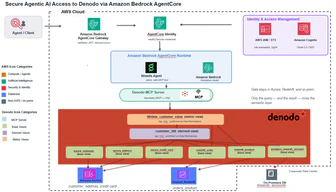
    Amazon Bedrock AgentCore: Building Trustworthy AI Agents with a Production-Ready Evaluation Framework

    Amazon Bedrock AgentCore Evaluation Framework helps AWS internal sales team handle business problems with multi-agent systems, identifying differences in agent performance between demonstrations and actual production; through services like Amazon Bedrock Guardrails and Amazon CloudWatch, the framework verifies answer accuracy before release and during ongoing production, tracing errors back to data, prompts, or code, avoiding user trust breakdown due to agents answering confidently yet incorrectly.

Oct 16Fri
  1. LangChain Blog

    LangChain blog: Frequently Asked Questions about Agent Evals

    The LangChain blog introduces how to use Agent Evals to test AI agent behavior, including analyzing behavior through trace logs, building test datasets containing inputs and expected outputs, running offline benchmark tests (such as Terminal-Bench) and online real-time evaluations, as well as using four types of evaluators: code inspection, LLM scoring, and manual review. Offline evaluations are used to test new prompts or models and catch regression issues, while online evaluations are used to monitor production quality and discover dataset gaps.

Oct 15Thu
  1. Google Developers Blog

    How to evaluate AI agents: Beyond sensory checks.

    Evaluating AI agents cannot rely solely on perception checks, as agents may fall into retry loops or produce hallucinatory responses that still appear normal, leading to soaring cloud costs and token usage. A repeatable evaluation process should be established, starting with defining key user journeys (CUJ), using simulated user testing, and employing multiple layers of checks such as unit tests, deterministic metrics, LLMs as judges for scoring standards, and integration tests. Combining manual review tracking with automated validation can detect latent regressions early in development and expand the evaluation framework as agent capabilities grow.

  2. LangChain Blog

    How LangChain Deep Agents Manage Context Windows Through Middleware

    LangChain Deep Agents manage context windows through middleware, preventing unnecessary information from entering and filtering existing content. It employs techniques such as offloading (saving large tool results and user messages to files), summarization (compressing old messages), skills (loading on demand), sub-agents (separating noisy tasks), and long-term memory (preserving learning across sessions). These techniques are implemented by inserting middleware at critical points like model calls and tool calls, allowing users to use them without writing code.