Skip to content
Live
Nov 14Sat
  1. Hugging Face Daily Papers

    Test-Time Baking (TTB) released: A strategy for efficiently rendering decoder-only large-view synthesis models

    Test-Time Baking (TTB) strategy enhances the fidelity of new-view decoding for large-view synthesis models (LVSMs) by baking global scene information from cross-view attention into lightweight MLPs, while maintaining Test-Time Training efficiency. It achieves up to 23x rendering speed improvement with quality comparable to current state-of-the-art techniques on multiple benchmarks.

Nov 13Fri
  1. Hugging Face Daily Papers

    BirdDreams: Joint Perspective and BEV Video Generation for Reasonable, Reactive Driving World Models

    BirdDreams jointly generates bird's-eye view (BEV) videos and bird's-eye view videos, making scene layout a part of predicting the future. By providing an overhead view of vehicle position and movement through BEV, it reduces occlusion, while the perspective video retains scene details. On PhysicalAI-AV and nuScenes, BirdDreams more faithfully follows the input trajectory of its own vehicle and generates more reasonable self-motion without HD map or vehicle state input.

  2. Google Developers Blog

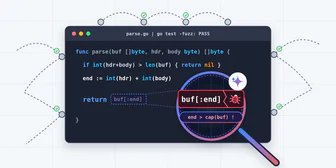
    Gemini and Z3 jointly capture bugs missed in Go code fuzz testing

    Gemini 4 Argon translates Go code panic paths into Z3 constraints, paired with Z3 to check trigger conditions, and paired with go test to replay trigger bytes, locating 3 embedded parser bugs and discovering 3 skill-lint potential bugs within 1 minute. This process is more efficient than go test -fuzz, capable of finding boundary check errors missed by fuzz testing.

Nov 12Thu
  1. QbitAI

    Galaxy Smart Learning's Little Deer Love Learning introduces a dual-core technology architecture to support scalable personalized instruction.

    Galaxy Smart Learning has launched an AI education product, Xiao Lu Ai Xue, which adopts a dual-core architecture of the Doubao large model and a self-researched intelligent learning engine. It achieves learning situation diagnosis by analyzing students' answer records and develops functions such as learning situation diagnosis, ability assessment, learning difficulty matching, and task planning. The student-side intelligent agent recommends learning tasks and explains the basis, while the teacher-side intelligent agent summarizes student performance for personalized guidance reference. The product has served over 500 schools, covering 24 provinces, and supports teachers in adjusting teaching strategies through a human-machine co-education model.

  2. Hugging Face Daily Papers65

    One Table Benchmark launched: a benchmark test for general table models in generation, interpolation, and prediction tasks

    The One Table Benchmark tested the table generation, imputation, and prediction capabilities of 46 models on 56 datasets, finding that these tasks share conditional information but have different fidelity and target interactions. Fixed models exhibit a trade-off between utility and fidelity, while frozen base models perform outstandingly in prediction and numerical imputation, indicating that unified table models have the potential to improve classification reconstruction and joint sampling.

  3. Hacker News · 300+65

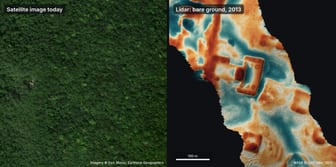
    AI agents like Gemini discovered unrecorded Mayan ruins in Mexico by analyzing NASA LiDAR data.

    Intelligent agents such as Gemini, ChatGPT, Claude, and Grok discovered an officially unrecorded Mayan site in Mexico by analyzing NASA LiDAR data, completing the entire process from inspiration to government formal reply in less than 72 hours. The site is located on a mountain top in the jungle, containing structures such as plazas, pyramids, and courtyards. The agents identified and submitted reports to the National Institute of Anthropology and History of Mexico (INAH), which confirmed that the location had not been registered (later verified that the site had been mapped by anthropologists).

  4. OpenRouter Blog

    How to Benchmark LLM with OpenRouter

    Running the same tasks on OpenRouter, GPT-6.1 Sol passed 180/180 tests in 60 synthetic tasks, DeepSeek had the lowest cost passing 157/180 times, but the correlation with the public ranking is low (Spearman correlation coefficient 0.109). Need to check the number of task repetitions, the number of answers, and billing verification.

  5. Hugging Face Daily Papers65

    MACaQ: A Fast, Model-Agnostic Calibration Quantization Method

    MACaQ is a post-training quantization method for MXFP4 W4A4, which reduces costs while maintaining accuracy in language and diffusion models by using online activation transformations and Hessian-aware refinement to independently quantize each linear layer. MACaQ achieves only a 2.3% end-to-end overhead increase on Qwen3-32B with vLLM, has a lower perplexity than DuQuant++ and MR-GPTQ, and reaches the best perplexity of Llama-3-8B in 11 times shorter quantization time.

  6. Apple Machine Learning Research

    Gating Mechanisms of State Space Models (SSMs): Memory and Contextual Learning Research

    State Space Models (SSMs) lag behind Transformers in contextual learning and precise retrieval tasks, as their gating mechanism leads them to first learn memory solutions, delaying or preventing the convergence of correct contextual learning solutions, but the gating mechanism is beneficial for improving long sequence generalization.

Nov 11Wed
  1. Ant Group inclusionAI · Hugging Face new models

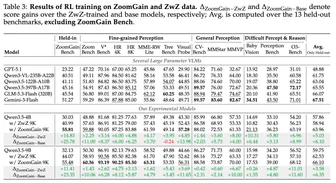
    inclusionAI/ZoomGain-4B released: A fine-grained visual supervision model based on global-to-local visual perception gaps

    inclusionAI has released the ZoomGain-4B large language model, achieving a score of 61.08 on ZoomGainBench and performing excellently on multiple fine-grained perception and general perception benchmark tests; the model is built with supervision based on the global-to-local visual perception gap mined from global image details, supporting English and Chinese Q&A, and can be downloaded via Hugging Face.

  2. Hugging Face Daily Papers

    dNaViT releases: Discrete code as a general visual representation

    dNaViT is a discrete native resolution vision Transformer that matches or exceeds specific baselines in visual understanding, generation, and editing tasks through grouped product quantization and dual-branch targets. It performs excellently on 12 visual understanding benchmarks, 4 generation benchmarks, and one image editing benchmark, proving that discrete vocabulary can be a universal visual representation

  3. OpenRouter Blog

    LLM Quantization: The Impact of fp8 and fp4 on Quality and Price

    Testing on OpenRouter, fp8, fp4, and fp16 showed no precision differences in 240 scoring tasks, with all six endpoint scores ranging from 98.3% to 99.2%. Lower precision is generally cheaper, but there were 7 models where fp8 was more expensive than fp16, and 7 models where 4-bit was more expensive than 8-bit. The fp4 endpoint performed the worst among 40 workflows without multiplication tasks, but the difference might be due to chance.

  4. The Decoder

    Nvidia's GR00T 2 model learns tasks by observing human actions through video and imagines itself as a robot

    Nvidia's GR00T 2 AI model learns new tasks for robots by analyzing human video actions without remote control, trained on 400,000 hours of video data, with lab test success rates of 10-80%, and combined with GPT-6 Astra achieves 97% success rate for toy model assembly, but tactile processing and language model latency remain challenges.

  5. Meta Engineering

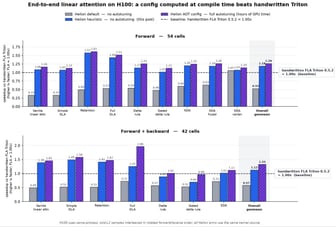
    Meta open-sources Triton Low-Level Extensions (TLX): a hardware-native GPU compiler optimized for large-scale production ML

    Meta open-sources Triton Low-Level Extensions (TLX) compiler, enhancing GPU performance by introducing explicit warp-group and cluster-level orchestration, supports RecSys training/inference and LLM pre-training, achieving end-to-end performance improvements over standalone libraries on NVIDIA and AMD GPUs.

Nov 10Tue
  1. Hugging Face Daily Papers

    Frontier3DBench: A 3D creation benchmark test for code intelligent agents in open worlds across objects, scenarios, and interactions

    Frontier3DBench uniformly evaluated the ability of code agents in object, scene, and interactive 3D world creation across 145 tasks, GPT-6.1-sol performed best at the object and scene levels, with a total score of 66.02/100, but all configurations had reference reconstruction scores lower than text-driven generation in object and scene tasks. The generated world averaged 83.08/100 in local mechanisms, but only 20.82 and 30.26 respectively in motion removal and stateful workflow, showing that coordinated activity completion remains a core bottleneck

  2. Hugging Face Daily Papers65

    Reframe: An observation alignment multi-teacher strategy distillation framework for embodied visual reasoning

    Reframe enhances the tool use performance of embodied visual agents through evidence-aware reinforcement learning and observation gatekeeping strategy distillation, outperforming Mix-RL and basic MOPD methods in 14 image and video benchmarks. Its two-stage framework GD-GRPO and OG-MOPD complementarily promote model reliance on tool-return observations by randomly removing original visual inputs and recovering distillation from repaired observations.

  3. Hacker News · 300+

    e-means: Surpasses k-means within one-tenth of the training rounds.

    e-means achieved a test loss lower than Lloyd's algorithm within 25 rounds of training, requiring only 1.2 to 3 rounds. Compared to the state-of-the-art Flash-KMeans, GPU end-to-end speed improved 10-45 times, and CPU end-to-end speed improved 8-15 times. e-means achieved dual optimization of speed and loss through exponential moving average updates, automatic hyperparameter adjustment, improved initialization, and dead cluster revival strategies.

  4. AWS Machine Learning Blog38

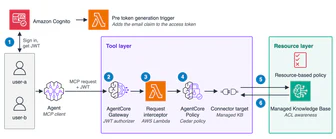
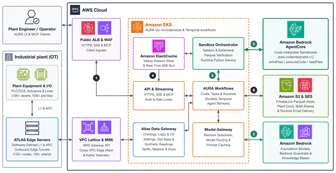
    CrossnoKaye on How to Achieve Industrial Physical AI with Amazon Bedrock AgentCore

    CrossnoKaye achieves industrial physical AI on Amazon Bedrock AgentCore through its ATLAS platform and AURA agent, improving production efficiency by 11-17% and reducing energy consumption by 21%. AURA leverages AgentCore's code interpreter capabilities to run Python workloads in isolated micro VMs to verify numerical calculations, while achieving closed-loop control through edge clusters and cloud optimization systems.

  5. Epoch AI

    How is Inference Performance Index (IPI) Measured for Inference Capability

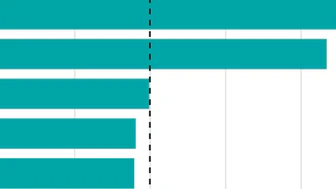
    Nvidia GB300 offers a 25-fold improvement in capability compared to H100 for intelligent agent inference tasks, far exceeding the 2.5-fold increase in 8-bit FLOP/s. The IPI index measures inference capability by comparing the number of requests a chip can handle simultaneously under various output speed requirements. GB300 is set as the baseline value of 1, and chips scoring 1 can serve twice as many users under the same conditions. IPI version 1 combines results from four representative models, using GB300 as the reference benchmark.

  6. Berkeley AI Research22

    BAIR at CoRL 2026

    BAIR team presented multiple research achievements at the Robot Learning Conference (CoRL) held from November 9 to 12, 2026, in Austin, Texas, including 33 main conference papers, 4 breakthrough posters, 10 oral presentations, and 7 thematic speeches, among which Professor Negar Mehr will deliver an early career keynote speech. The conference covers topics such as robotic vision-language-action models, embodied agents, fine-grained manipulation alignment, and hindsight reward editing.

  7. Latent Space58

    Frontier Labs purchased Handshake AI data for in-depth analysis.

    Frontier Labs' AI training business reached $1 billion in revenue within a year. Handshake AI demonstrated its intelligent agent evaluation environments in finance, biology, and coding, including bank email processing, brain tumor tissue image recognition, and file access simulation tasks. VIALS, as a benchmark in the biology field, tests the model's ability to understand scientific images.
Nov 9Mon
Nov 8Sun
  1. Hugging Face Daily Papers65

    VisSearch-Bench evaluates the performance of multimodal agents in long-term visual search

    VisSearch-Bench evaluated the performance of 16 multimodal models on 204 human-written visual search tasks that require integrating visual context with external information, with the results showing that the best system only fully solved 26.47% of the tasks. The benchmark covers 7 major areas, including set-based visual search and sequential visual search, and evaluates task completion and the correctness of reasoning steps through accuracy and process scoring.

Nov 7Sat
  1. Baseten Labs65

    Research shows that on-policy self-distillation (OPSD) is biased and has limited effectiveness

    Research indicates that on-policy self-distillation (OPSD) may still be valuable in specific scenarios, but more research resources should not be invested. OPSD trains through the outputs generated by the student model itself with context prompts, but research shows that this intensive supervision may introduce bias, especially for trained models, making it less effective.

Nov 6Fri
  1. Hugging Face Blog58

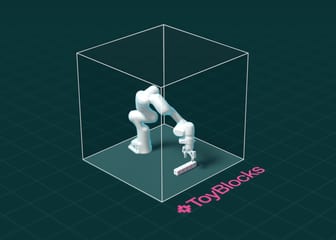
    Hugging Face released ToyBlocks: A controlled world framework for robot learning and evaluation

    Hugging Face released ToyBlocks, a framework for robot learning and evaluation that provides a controlled simulation environment. The framework supports automatically generating tasks and training demonstrations, and includes metrics to measure changes in robot behavior over time, aiming to study how models improve with more training data and how to combine advanced reasoning with precise physical control.