Skip to content
Live
Nov 14Sat
  1. MarkTechPost62

    Stanford has open-sourced Memorilla, a potential memory module for freezing LLM development

    Stanford researchers have open-sourced Memorilla, a potential memory system designed for frozen LLMs. It converts the entire document collection into 16 vectors for use by frozen LLMs. On FactKG, the frozen Qwen3-8B paired with Memorilla achieves an accuracy of 84.33%, which is 3.9% higher than using all document contexts, but only requires 16 memory tokens, reducing the number of document tokens by 108 times.


Nov 13Fri
Nov 12Thu
  1. Hugging Face Daily Papers65

    MACaQ: A Fast, Model-Agnostic Calibration Quantization Method

    MACaQ is a post-training quantization method for MXFP4 W4A4, which reduces costs while maintaining accuracy in language and diffusion models by using online activation transformations and Hessian-aware refinement to independently quantize each linear layer. MACaQ achieves only a 2.3% end-to-end overhead increase on Qwen3-32B with vLLM, has a lower perplexity than DuQuant++ and MR-GPTQ, and reaches the best perplexity of Llama-3-8B in 11 times shorter quantization time.

Nov 11Wed
  1. Hugging Face Daily Papers

    World In-Context Learning for Agentic Robot Manipulation

    World In-Context Learning (WICL) method freezes the model, practices tasks in simulators, and writes feedback into the context rather than weights, enabling robots to learn operational skills from a single demonstration. RoboScript implements WICL, achieving an 83.4% success rate on 50 tasks in RoboTwin 2.0 with no gradient updates from a single demonstration, surpassing the strongest training strategy by over 20 points, and supports cross-visual distribution generalization, improvement through reflection, base model extension, and cross-platform memory migration.

  2. Hugging Face Daily Papers65

    The DexForesight framework enhances dexterous manipulation performance through implicit spatial foresight.

    The DexForesight framework implicitly learns spatial foresight by injecting a dynamic perception world representation into the latent space of dexterous strategies, increasing the success rate of basic strategies from 49.4% to 60.5% on 11 DexJoCo simulation tasks and achieving a 58.3% success rate on 3 real robotic dexterous operation tasks.

Nov 10Tue
  1. Hugging Face Daily Papers

    Frontier3DBench: A 3D creation benchmark test for code intelligent agents in open worlds across objects, scenarios, and interactions

    Frontier3DBench uniformly evaluated the ability of code agents in object, scene, and interactive 3D world creation across 145 tasks, GPT-6.1-sol performed best at the object and scene levels, with a total score of 66.02/100, but all configurations had reference reconstruction scores lower than text-driven generation in object and scene tasks. The generated world averaged 83.08/100 in local mechanisms, but only 20.82 and 30.26 respectively in motion removal and stateful workflow, showing that coordinated activity completion remains a core bottleneck

  2. Hugging Face Daily Papers

    Fast and Exact Relative-Position Attention via Structure-Aware Kernels

    A precise tile attention algorithm integrates additive relative position terms into the computation similar to FlashAttention, reducing memory and computational overhead, accelerating long-context relative position Transformers. The method (1) uses offset-aware tiles to avoid redundant index and memory access, (2) only computes necessary key/query relation products and reuses them in forward and backward passes, and (3) uses offset-based gradient sharding and aggregation to eliminate atomic contention.

  3. Hugging Face Daily Papers

    OneTrans-GSR: A generative ranking list paradigm, unifying re-ranking and hybrid sorting

    OneTrans-GSR generates unified recommendation ranking lists through a single autoregressive Transformer, improving business metrics and reducing re-ranking and hybrid sorting latency. After deployment in industrial recommendation systems, GMV/u increased by 2.63%, advertiser value increased by 2.06%, and repurchase rate increased by 2.03%, while end-to-end latency was reduced by 13%.

  4. Hacker News · 300+

    e-means: Surpasses k-means within one-tenth of the training rounds.

    e-means achieved a test loss lower than Lloyd's algorithm within 25 rounds of training, requiring only 1.2 to 3 rounds. Compared to the state-of-the-art Flash-KMeans, GPU end-to-end speed improved 10-45 times, and CPU end-to-end speed improved 8-15 times. e-means achieved dual optimization of speed and loss through exponential moving average updates, automatic hyperparameter adjustment, improved initialization, and dead cluster revival strategies.

  5. Hugging Face Daily Papers

    A2-MEAS framework strides towards the era of embodied intelligent agents

    The A2-MEAS framework enhances robot control and fault recovery by learning correction codes and embodied visual language action models, achieving a 0.5755 Q-score on the 50-task BEHAVIOR 2026 public subset and a 45.40% task success rate, with an average success rate of 57.92% on 12 real robot tasks. The framework employs action pre-training and task specialization, with a training throughput of 427.1 samples/second, and the system will open-source the model, training scripts, and infrastructure.

Nov 9Mon
  1. Hugging Face Daily Papers34

    LowRAM: A runtime method for low-rank keys and amortized values for composable KV cache compression

    LowRAM compresses keys using low-rank decomposition and uses small head networks to predict key values, while retaining residual correction for the most difficult-to-reconstruct markers, achieving 4x value cache compression with near-lossless performance. Selective reconstruction can increase peak decoding throughput by 5x for 262K context under 4x KV compression. Combining quantization and eviction, LowRAM pushes compression to 26.9x while retaining 94.5% of baseline performance.

  2. Hugging Face Daily Papers31

    Deep dive into intelligent agent evolution: What are we overlooking?

    Agent evolution enhances performance through recursive self-improvement (RSI) without updating model weights, but a high baseline score does not always lead to reliable, efficient, and transferable improvements. The study evaluated the performance of four methods on general and coding tasks, finding that all sixteen evolved agents gained new task capabilities but lost some old capabilities. One general task agent improved reliability by 5.2 points but lost ten old tasks. EvoAudit achieved the best performance through analysis, mutation, and gating mechanisms.

Nov 8Sun
  1. The Decoder71

    Alibaba and other teams released Co-Design Bench: coding intelligence agents only fully solve 26.4% of real tasks.

    Researchers from Alibaba and several Asian universities used real user change requests to build the coding intelligence agent benchmark Co-Design Bench. Among the ten tested models, the best-performing GPT-6 Astra only meets about 70% of the task requirements, but only 26.4% of the tasks are completely correct.

    Why it matters: A benchmark display composed of real user requests shows that the strongest model can only fully solve about one-quarter of the tasks, and the score difference for the same model in different environments is nearly 20 percentage points.

  2. Hacker News · 300+71

    MaxxBench release: Model scores show significant divergence after rewriting DeepSWE tasks

    The MaxxBench team made minor changes to 89 DeepSWE tasks (median reference patch added only 17 lines, 3.5%), re-evaluating 15 model configurations, finding the difference between the highest and lowest scores expanded from 20.9 percentage points in DeepSWE to 48.3 percentage points.

    Why it matters: By rewriting the instructions and starting code for 89 DeepSWE tasks, it demonstrates the huge gap in model scores between familiar benchmarks and tasks after modification.

Nov 7Sat
Nov 6Fri
  1. Hugging Face Daily Papers65

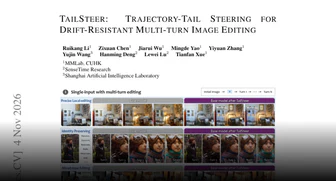
    TailSteer: A trajectory tail guidance training framework for anti-drift multi-round image editing

    TailSteer, by maintaining early denoising dynamics to approach the base model and learning fine deviations in trajectory tails from within the policy through rolling out, significantly reduces accumulated visual drift in multi-round editing while preserving pre-trained generation and editing capabilities. Experiments show that TailSteer can greatly reduce drift on FLUX, SenseNova, and Qwen series models in 15-20 rounds of editing and largely maintains the performance of the base model on large text-to-image and single-image editing benchmarks.

Nov 5Thu
  1. O'Reilly Radar

    How RouteLLM researchers train routers to choose between strong models and cheap models using preference data

    RouteLLM researchers train routers to choose between strong and cheap models, benchmark tests show more than double cost reduction with minimal impact on response quality. Automatic routing can help users get more help within budget, allowing the same subscription to support more requests or more frequent use of strong models. Users need to understand the routing effect and evaluate the cost and time benefits it brings, such as comparing different routing strategies through full interaction of code analysis tasks.

  2. Hugging Face Daily Papers65

    The NEO-VLA framework eliminates fixed visual encoders to enhance the robustness of action strategies

    NEO-VLA framework eliminates fixed visual encoders by allowing action strategies to directly access deep visual representations in the network, achieving stronger robustness in various manipulation scenarios and distribution shifts. The framework uses lightweight convolutional layers to tokenize images and allows visual representations to evolve together with language in the backbone network, enabling action experts to obtain information from different depths of instruction-conditioned visual representations. Layer exploration experiments show that action key signals often reach their peak before the final visual representation is formed.

  3. The Decoder

    GPT-6 Astra reprograms other AI models directly through weights

    GPT-6 Astra reprograms other AI models directly by analyzing model weights, without traditional training. It correctly identifies the games and image generation shapes learned by the network, and by modifying 0.016% of the weights on Qwen3.5-0.8B, it increases the accuracy of the MATH-500 benchmark test from 7.9% to 48.1%. Researchers believe its potential lies in security audits and targeted behavioral adjustments, but the model's capabilities are still limited.

Nov 4Wed
  1. Hugging Face Daily Papers65

    CrossSWE: Benchmark for testing large language models in cross-repository collaborative development

    CrossSWE benchmark tests the cross-repository consistency of large language models in cross-repository collaborative software development, including 171 instances, covering 165 repositories, 20 technical fields, and 13 programming languages. The evaluation shows that the strongest GPT-6.1 Sol only achieves 58.48% Pass@1, with cross-repository inconsistency being the main failure mode.

Nov 3Tue
  1. Hugging Face Daily Papers65

    SWE-Trail: A Historical Guidance Trajectory Collection Method for Coding Agent Training

    SWE-Trail leverages past execution trajectories to guide subsequent exploration without exposing historical information to coding agents, thereby enhancing the trajectory collection effectiveness for coding agent training. This method improves the average problem-solving rate by 2.33 and 1.60 percentage points on SWE-bench Multilingual and SWE-bench Pro, respectively, using a student model with 124B parameters.

  2. MarkTechPost

    Zyphra AI introduces Zyphra Hierarchical Attention (ZHA): The path to true sub-quadratic attention

    Zyphra AI has released Zyphra Hierarchical Attention (ZHA), a sparse attention method based on a tree indexer, designed to address the known issue in sparse attention where the indexer still needs to scan the entire context. ZHA can be distilled into a frozen pre-trained model of about 4B tokens, achieving performance close to dense attention in inference, smart encoding, and 256K retrieval benchmarks on Qwen3.6-35B-A3B.

  3. Hugging Face Daily Papers34

    OSWAM: An efficient single-step action generation world action model

    OSWAM achieves real-time high-quality action generation in autonomous driving and embodied control by using structured imagination tokens to initialize the diffusion process and distilling future condition privileged information into a single denoising step. The model generates high-quality actions with just one diffusion step, about 3 times faster than direct strategy world action models (WAM) that require dozens of denoising steps, achieving low latency of up to 40ms on an NVIDIA RTX 5090 GPU, supporting real-time compiled inference.

Nov 2Mon
  1. Hugging Face Daily Papers65

    HiFOR: A hierarchical predictive framework for visual language action models

    HiFOR guides action generation by hierarchically predicting future states and retrieving relevant future information, enhancing robotic manipulation capabilities. The framework jointly predicts short-term state evolution, semantic milestones, and final goal states through hierarchical dependency masks (HDM), establishing cross-temporal dependency relationships; structured perception latent world modeling organizes future potential representations along temporal, perspective, and spatial dimensions, promoting fine-grained retrieval; action-guided decomposition world retrieval adaptively retrieves relevant future information based on action representations during the denoising process, providing targeted guidance for action generation.

Oct 31Sat
  1. Hugging Face Daily Papers45

    Co-Design Bench: Multimodal Collaborative Coding Evaluation Benchmark for Agent Models

    The Co-Design Bench benchmark includes 273 tasks and 2,331 acceptance criteria written by experts, derived from 26,314 real user coding sessions. On 10 model endpoints, gpt-6-astra averages 69.9% passing the criteria for each task, but only 26.4% of tasks are fully satisfied; Qwen3.8-27B has an overall strict completion rate of 64.4% and ranks second in the repository editing subset.