Skip to content
Live
May 20Wed
May 19Tue
  1. Dify Blog70

    Dify Creator Center and Template Market officially launched

    Dify Creator Center and Template Market officially launched, allowing creators to publish workflow templates and users to quickly discover and use them. The new platform has optimized multilingual experience and content layout, integrating the publication and use of templates into a single path. Users can filter templates by category, tags, or creators. New users registering receive 200 free credit points.

May 15Fri
May 14Thu
  1. LangChain Blog73

    LangChain is conducting a public beta of Managed Deep Agents on LangSmith Cloud.

    LangChain launches Managed Deep Agents on LangSmith Cloud. Users write intelligent agents as Python projects consisting of files like agent.py, instructions.md, skills/, and deploy them with a single command mda deploy, provided with persistent threads and streaming execution by LangSmith Agent Server.

    Why it matters: The original text explains how to organize the agent project by files and deploy it to LangSmith with one click, as well as the infrastructure managed runtime that takes on the basics for the team.

May 7Thu
  1. Prime Intellect Blog

    Releasing Lab: The training platform for self-improving intelligent agents is officially launched

    Releasing Lab is officially launching today as part of the Open Superintelligence Stack. This platform supports the full process of training self-improving agents, allowing users to specify tasks, define execution environments, evaluate models, train based on reward signals, check reasoning results, deploy adapters, and run reasoning.

Apr 30Thu
Apr 14Tue
  1. Microsoft AI News

    MAI-Image-2-Efficient released: Flagship quality, cost reduced by 41%

    MAI-Image-2-Efficient is a text-to-image model launched by Microsoft, the productivity version, with a 22% speed increase and 4 times efficiency. The cost is $5 per 1M text input tokens and $19.50 per image output token, a 41% reduction in cost compared to the flagship version, and on average 40% faster than other leading models. It is suitable for batch processing and real-time interactive workflows, already available on Microsoft Foundry and MAI Playground.

Apr 10Fri
  1. LangChain Blog

    Deep Agents Deploy: An open-source alternative for deploying intelligent agents, replacing Claude Managed Agents.

    Deep Agents Deploy Officially Released as an Open Source Alternative to Claude Managed Agents for Intelligent Agent Deployment, Supporting Any LLM Model, Achieving Model-Agnostic, Production-Ready Deployment via the `deepagents deploy` Command, Users Can Customize AGENTS.md Instruction Sets and Agent Skills, and Choose a Sandbox Environment to Ensure Memory Ownership is Not Locked.

Apr 8Wed
  1. Anthropic Research74

    Anthropic launched Claude Managed Agents, decoupling the agent's brain from its hands

    Anthropic has launched Managed Agents on the Claude Platform, splitting the agents into three replaceable interfaces - session, harness, and sandbox - for running long-term tasks.

    Why it matters: Anthropic has disclosed the architectural trade-offs of hosting agents, showing readers how latency and security boundaries change when sessions, harnesses, and sandboxes are separated.

Apr 2Thu
  1. Microsoft AI News

    MAI-Transcribe-1 released: Microsoft launches the world's most accurate 25-language speech-to-text model.

    MAI-Transcribe-1 achieved the lowest Word Error Rate for 25 languages in the FLEURS evaluation, outperforming competitors such as Scribe v2 and Whisper-large-V3, while maintaining high accuracy in 25 languages. The model offers a batch transcription speed 2.5 times faster than Microsoft's existing Azure Fast, priced at $0.36 per hour, and is now available in Microsoft Foundry for open preview.

  2. Qoder Blog65

    The evolution from inline completion to intelligent code editing of Qoder NEXT

    Qoder NEXT proactively identifies developers' coding intent, providing smarter code editing suggestions, significantly improving development efficiency. Its Agent SDK supports cloud agent integration, with a context length of up to 128k tokens, inference speed 3.5 times faster than baseline models, priced at $3/month/M tokens, currently provided as a closed-source API.

Mar 30Mon
Mar 25Wed
Mar 19Thu
  1. Qoder Blog0

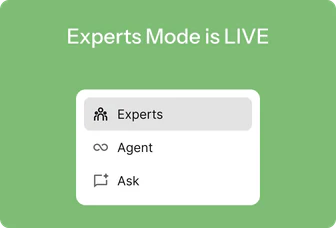
    Qoder Expert Mode: Improve results, reduce costs

    Qoder Expert Mode optimizes performance and efficiency, reducing costs while maintaining high-quality output, making it suitable for various application scenarios. This mode supports longer context windows and faster inference speeds, significantly enhancing user experience. Qoder Expert Mode is currently provided in a closed-source form, and users can integrate it via API and SDK.

Mar 18Wed
Mar 17Tue
Mar 16Mon
Mar 12Thu
Mar 10Tue
  1. Dify Blog65

    Dify Launches Creator Center and Template Marketplace, Making Workflow Template Sharing and Discovery More Convenient

    Dify Introduces Creator Center and Template Marketplace, Where Creators Can Upload Workflow Templates, and Users Can Discover and Adopt Them with One Click. Creator Center Supports Template Submission and Management, Template Marketplace Provides Categorization, Tags, and Creator Browsing, Template Detail Pages Include Visual Preview and Guided Setup, Supporting Organization Account Management Permissions.

Mar 5Thu
  1. Dify Blog65

    Dify Cloud free trial upgrade: Supports OpenAI, Claude, Gemini, and Grok models

    Dify Cloud is upgrading the free trial experience, Message Credits now support four models: OpenAI, Claude (Anthropic), Gemini (Google), and Grok (xAI), and can be used without configuring an API Key; The Explore page has added a featured template trial function, providing 5 message credits covering scenarios such as file translation, personalized memory assistant, and patient information collection, without plugin configuration.

Mar 3Tue
  1. Dify Blog

    Dify v1.13.0 introduces the Human Input node, integrating human judgment into automated workflows.

    Dify v1.13.0 has introduced the Human Input node, allowing pauses and waiting for human approval in workflows. This node supports two form delivery methods: Web App and Email, with form content that can include Markdown and dynamic variables, and branching paths can be defined through decision buttons. Configuration includes delivery methods, form content, and timeout policies, supporting pre-filled input fields and variable passing.

Feb 25Wed
  1. Replit Blog65

    Replit launches the Pro plan, with the core plan price dropped to $20 per month.

    Replit has launched the Pro plan at $100 per month, offering features such as Agent mode, tiered discount credit limits, and priority support, suitable for professional developers; the core plan price has been reduced to $20 per month, with new collaboration features allowing up to 5 people to collaborate, and original Teams users will be automatically upgraded to the Pro plan.

Feb 12Thu
Feb 10Tue
  1. Prime Intellect Blog

    Prime Intellect Lab: An end-to-end platform for training custom models

    Prime Intellect Lab releases an end-to-end model training platform that integrates Environments Hub, hosting training and hosting evaluation, supporting large-scale agent reinforcement learning, reasoning, and evaluation without managing GPU clusters or algorithm details. The platform is built based on environments, including task datasets and executors, and has completed over 3000 reinforcement learning runs through private testing.

Feb 5Thu
Jan 31Sat
Jan 29Thu
  1. LangChain Blog

    How does the LangChain Deep Agents SDK implement efficient context management?

    The LangChain Deep Agents SDK manages limited memory of AI agents through three compression techniques: offloading large tool results (>20,000 tokens) and inputs (>85% context window) to the file system, and using LLM to generate session summaries. The SDK triggers compression on Claude Sonnet 4.5 in terminal benchmark tests, retaining complete records through filesystem search and summaries, supporting frequent compression to optimize performance.

Jan 23Fri
Jan 14Wed
  1. Qoder Blog0

    Qoder NEXT model released: the next evolution towards intelligent editing with ActionRL preference alignment practices.

    The Qoder NEXT model upgrades editing capabilities from code completion to prediction, achieving more precise intelligent editing through ActionRL preference alignment technology. The model's context length reaches 128k, with a parameter size of 175B, demonstrating excellent performance in the SWE-bench reasoning benchmark, a 3.5x speed increase, and supporting open-source API interfaces.

Dec 22Mon