Skip to content
Live
Oct 16Fri
  1. Microsoft AI News

    Microsoft AI has released an 80 billion parameter MoE large model MAI-Base-2.

    Microsoft AI has completed the pre-training of a new MoE large model MAI-Base-2, with 80 billion active parameters and 2.8 trillion total parameters, surpassing all open-source models in internal evaluations. The model is 4-12 times more efficient in pre-training FLOPs than the strongest open-source base model DeepSeek-V4-Pro-Base and is used to train larger models. Microsoft plans to license the model weights through Foundry using organic data pre-training and full-stack control.

Oct 15Thu
  1. Baseten Blog

    NVIDIA Nemotron 3.5 Super VL released on Baseten

    NVIDIA Nemotron 3.5 Super VL combines visual understanding, reasoning, and tool use, supporting reading documents, images, application interfaces, and videos, scoring 1190 Elo in the GDPval evaluation, higher than Nemotron 3 Super's 493. Developers can fine-tune it via Baseten Loops SDK and evaluate it using NVFP4 weights on Blackwell GPU.

  2. Apple Machine Learning Research

    MLX and RDMA implement local and distributed large language model inference on Mac Studio

    On a cluster of four Mac Studio machines, Muse Spark Open (816B parameters) generates at a speed of over 36 tokens/second. The Mac Studio M5 Ultra version offers 4.6x faster inference speed (TTFT) and 1.6x faster tokens/second compared to the M3 Ultra, benefiting from the GPU neural accelerator and 1.2 TB/s memory bandwidth.

Oct 14Wed
  1. Google DeepMind

    Gemini 4 Argon brings breakthrough progress to robotics technology

    Gemini 4 Argon has achieved major breakthroughs in physical understanding, code generation, and visual semantic reasoning, achieving a pure reasoning score of 87% on the Embodied Reasoning (ERQA) benchmark test, surpassing all leading models. Argon can be applied to all stages of the robot's lifecycle, including mobile manipulation practice using MuJoCo, zero-shot robot control, and closed-loop steering of video world models.

Oct 13Tue
  1. Prime Intellect Blog

    Moondream has joined Prime Intellect and launched version 3.1.

    Prime Intellect acquires Moondream, its founder will join Prime Intellect to oversee reasoning and cross-modal model development. Moondream 3.1 performs excellently in object detection, aerial images, charts, and crowded scenes (such as shelves), processing 34 requests per second, 24 times faster than the next accurate open-source model, and costs only one-thousandth of Meta's new model Muse Wonder when achieving 80% accuracy.

Oct 12Mon
  1. Baseten Labs75

    Base Labs research found: Why does the model forget facts during iterative learning? Experimental analysis based on talkie-1930-13b-it.

    Base Labs research found that iterative learning with the talkie-1930-13b-it model using sports facts from 2011-2019 leads to fact forgetting, with forgotten facts still present in model weights. Experiments show that early learned facts are difficult to recall after 20 writes and merges, and are covered by later facts, but the covered facts can be relearned, primarily occurring in the later MLP weights.

Oct 9Fri
  1. AWS Machine Learning Blog

    Use Amazon SageMaker HyperPod to share GPU clusters between teams and achieve isolation and fairness.

    Amazon SageMaker HyperPod provides centralized authentication through AWS IAM Identity Center, uses the SageMaker AI domain to provide a customized user experience, combines Kubernetes namespaces to achieve workload isolation, and leverages HyperPod task governance for fair resource allocation, supporting multiple teams in efficiently sharing a single HyperPod EKS cluster.

Oct 8Thu
Oct 7Wed
  1. Ars Technica · AI75

    Google has launched an improved SynthID AI content detector, now available globally.

    Google has extended the SynthID detector to all partner watermarks. Users can check whether AI content contains SynthID tags through the new website SynthID.com without relying on the Gemini model. The detector has been integrated with SynthID data from 180 billion images and videos and 240,000 years of audio from Google, now supporting cross-platform watermark recognition.
  2. OpenRouter Blog75

    ElevenLabs has launched on the OpenRouter platform

    ElevenLabs has launched nine text-to-speech models and two speech-to-text models on the OpenRouter platform, supporting voice interaction for applications that have already called language models through OpenRouter. Eleven v4 can be used for long text voiceover and control tone and expression, v4 Turbo provides low-latency voice responses, and Scribe v2 supports meeting transcription with speaker tags. All models offer a 50% discount to OpenRouter customers before October 19.

Oct 5Mon
Oct 1Thu
  1. Amazon Science

    Graph Center Agent: How to Utilize Graph Structures for Agent Reasoning

    Amazon Science has released Graph Center Agent technology, which combines a continuous synchronized graph (digital twin) representing the network with device attributes and connections, with cascade graph algorithms (decomposition, aggregation, tracing) and agent orchestration to achieve minute-level root cause analysis of complex network failures, achieving 95% accuracy in a demonstration at NTT DOCOMO's MWC.

Sep 30Wed
  1. Google Developers Blog

    How does Sparse VideoGen (SVG) accelerate temporal and spatial attention computation for video diffusion on TPUs

    Sparse VideoGen (SVG) dynamically routes attention heads to spatial or temporal masks by identifying the spatiotemporal structures of different attention heads in video diffusion models, converting theoretical sparsity into actual end-to-end speedup. On TPU v6e, SVG retains about 38.87% of query-key pairs, achieving 3.5x inference acceleration while maintaining output quality at a given sparsity level. The scheme employs custom JAX and Pallas Splash attention kernels to convert theoretical sparsity into physical sparsity on hardware.

Sep 28Mon
Sep 25Fri
Sep 20Sun
  1. Qwen · Hugging Face new models

    Qwen/Qwen-Image-2.1-PE-I2I released: Open-source 7B parameter text-to-image generation and editing model

    Qwen/Qwen-Image-2.1-PE-I2I released, a 7B parameter unified text-to-image generation and editing model, featuring a 32-layer single-stream DiT architecture, supporting the generation of regular or transparent images, editing transparent layers, extracting photo subjects, and capable of editing with 10 reference images.

  2. Qwen · Hugging Face new models

    Qwen/Qwen-Image-2.1-PE-T2I release: Open source 7B parameter text-to-image generation and editing model

    Qwen/Qwen-Image-2.1-PE-T2I released, a 7B parameter unified text-to-image generation and editing model, featuring a 32-layer single-stream DiT architecture, supporting generation of regular or transparent images, editing transparent layers, extracting photo subjects, and enabling local editing through circular, doodle annotations, or independent masks. Its text-to-image prompt rewriting model Qwen3.5-VL 9B can convert multilingual requests into detailed English prompts and recommend aspect ratios.

Sep 11Fri
Sep 10Thu
  1. DeepSeek · Hugging Face new models

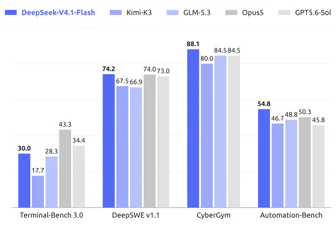
    DeepSeek-V4.1-Flash released: 552B parameter multimodal MoE model, context up to millions of tokens

    DeepSeek-V4.1-Flash is a 552B parameter multimodal MoE model that supports context up to one million tokens, natively processing images and text and generating text autoregressively. It adopts a Causal Encoder-Decoder architecture, reducing global KV cache usage to 890 bytes/token through technologies like CSA2 and FP4 primary KV cache, a 75% reduction compared to DeepSeek-V4-Flash.

Sep 1Tue
Aug 24Mon
  1. Import AI75

    Import AI 470: Machines without rights; SPADE automated environment generation; Hawkeye building better GPU kernels

    Research shows that AI accelerates the discovery of network vulnerabilities but has a minimal impact on mathematical research, and AI research itself has not shown significant acceleration. The SPADE project generates training data in synthetic environments through self-play, with the Qwen3-30B model achieving the best results, significantly improving performance in both game and tool environment tasks. The Hawkeye tool is used to optimize GPU kernel construction.

Aug 20Thu
Aug 13Thu
Aug 11Tue
Jul 31Fri
Jul 29Wed
Jul 27Mon
  1. Meta AI Blog

    Meta AI's DINOv3 and SAM models help the University of Pittsburgh reshape assistive robots

    Meta AI's DINOv3 and SAM models achieve real-time perception in edge computing, supporting the University of Pittsburgh's RAMMP project development of assistive robots, interacting through natural language and image data to reduce user cognitive load, already integrated in prototypes with automatic door button detection, cup recognition, and navigation assistance features, and plans to add voice and touch input support.