Skip to content
Live
Feb 10Tue
  1. Prime Intellect Blog

    Prime Intellect Lab: An end-to-end platform for training custom models

    Prime Intellect Lab releases an end-to-end model training platform that integrates Environments Hub, hosting training and hosting evaluation, supporting large-scale agent reinforcement learning, reasoning, and evaluation without managing GPU clusters or algorithm details. The platform is built based on environments, including task datasets and executors, and has completed over 3000 reinforcement learning runs through private testing.


Feb 5Thu
Jan 31Sat
Jan 29Thu
  1. LangChain Blog

    How does the LangChain Deep Agents SDK implement efficient context management?

    The LangChain Deep Agents SDK manages limited memory of AI agents through three compression techniques: offloading large tool results (>20,000 tokens) and inputs (>85% context window) to the file system, and using LLM to generate session summaries. The SDK triggers compression on Claude Sonnet 4.5 in terminal benchmark tests, retaining complete records through filesystem search and summaries, supporting frequent compression to optimize performance.

Jan 23Fri
Jan 20Tue
  1. Factory News

    Factory introduces Agent Readiness tool to assess the level of AI agent support in codebases

    Factory introduces Agent Readiness tool, which evaluates the support of codebases in eight technical pillars and five maturity levels by running the /readiness-report command, and provides specific improvement suggestions. The tool aims to address performance differences caused by codebase environment issues in AI coding agent deployment, supporting three interaction methods: CLI, Dashboard, and API, and can quickly improve basic configuration file and document missing issues through automation repair features.

Jan 14Wed
  1. Qoder Blog0

    Qoder NEXT model released: the next evolution towards intelligent editing with ActionRL preference alignment practices.

    The Qoder NEXT model upgrades editing capabilities from code completion to prediction, achieving more precise intelligent editing through ActionRL preference alignment technology. The model's context length reaches 128k, with a parameter size of 175B, demonstrating excellent performance in the SWE-bench reasoning benchmark, a 3.5x speed increase, and supporting open-source API interfaces.

Jan 9Fri
Jan 8Thu
  1. Dify Blog

    Dify deploys a private AI agent on NVIDIA DGX Spark.

    Dify combined with NVIDIA DGX Spark provides an end-to-end private AI deployment solution, supporting local running of models such as Llama 3, Qwen 2.5, and DeepSeek V3, with a maximum single-device support of 200B parameters and interconnected device support of 405B parameters. It enables zero-code AI application development through the Dify platform.

Dec 22Mon
Nov 21Fri
  1. Dify Blog70

    Kakaku uses Dify to accelerate AI applications: fast, secure, and scalable

    Kakaku has addressed speed, security, and scalability issues in AI application development through the Dify platform, making 30% of employees AI builders and launching a product data extractor within 3 hours, cumulatively building nearly 950 internal applications. Dify Enterprise provides a multi-workspace architecture, single sign-on, sandbox environment, and production-grade infrastructure, achieving a combination of central control and local freedom.

Nov 19Wed
  1. Dify Blog75

    How does Dify handle interference from 100 SaaS tools through Trigger and Agent?

    Dify automates the processing of SaaS tool events through Trigger and Agent, reducing manual intervention. Schedule Trigger, Webhook Trigger, and Plugin Trigger can subscribe to time, callback, and third-party application events, enabling workflows to run automatically without clicks. After users define rules, the system routes, processes, and logs events as needed, retaining only the steps requiring manual judgment.

Nov 13Thu
Oct 30Thu
  1. Dify Blog

    Dify Integrates TiDB Vector: Enhancing Knowledge Pipelines with Distributed Vector Storage

    Dify Knowledge Pipeline has officially integrated TiDB Vector, allowing developers to seamlessly reuse processes like parsing tables, extracting entities, and embedding text for knowledge construction in downstream AI applications. TiDB Vector supports hybrid SQL + vector search, filtering structured metadata via SQL syntax before performing semantic retrieval to ensure precise, context-aware responses, and leverages TiDB's distributed architecture for enterprise-grade scalability and stability.

Oct 29Wed
  1. Dify Blog70

    Dify integrates Qdrant high-performance vector database, accelerating the development of next-generation AI applications

    Dify Platform now integrates Qdrant high-performance Rust vector database, providing faster retrieval, hybrid search, and scalable performance for building reliable, production-grade AI applications. This integration enables developers to choose Qdrant without becoming vector search experts through simple configuration, achieving millisecond-level retrieval for millions of documents, complex metadata-based retrieval strategies, and hybrid search capabilities, supporting high-performance scaling from prototype to production.

Oct 21Tue
Oct 17Fri
  1. Dify Blog65

    Dify platform integrates Tavily API to achieve real-time web data knowledge pipeline construction

    Dify platform now supports Tavily Real-time Web Search API, allowing users to directly embed web data into knowledge pipelines to enhance accuracy and timeliness; Tavily can be used as a data source plugin in Dify Marketplace, paired with Dify knowledge pipelines, which support modular components from upload and parsing to chunk embedding; users can install the plugin, obtain an API key, and configure LLM nodes to use Tavily search results for generating Q&A pairs and storing them in a knowledge base.

Oct 6Mon
  1. Anthropic Research71

    Anthropic open-sources security audit tool Petri

    Anthropic has released an open-source auditing tool, Petri (Parallel Exploration Tool for Risky Interactions), where automated agents test target models through multi-round dialogues, and then LLM reviewers score them based on safety dimensions and select the most worthy dialogues for manual review.

    Why it matters: Anthropic has open-sourced the automated auditing tool Petri and provided cross-comparison results for 14 cutting-edge models on behaviors such as deception, sycophancy, and self-preservation.

Sep 23Tue
  1. Dify Blog

    Dify has launched the Knowledge Pipeline visualization process, which transforms enterprise messy data into high-quality LLM context.

    Dify has launched the Knowledge Pipeline visualization process, which transforms enterprise PDF, PPT, Excel, and other messy data into high-quality LLM context. This process manages data source connections, document parsing, text/image/table processing, knowledge distillation, and embedding through visual nodes, supporting over 30 local file formats, cloud storage, online documents, web crawlers, and other data sources. It provides 7 preset templates and pluggable parsing, enhancement, chunking, embedding, and loading modules, featuring real-time variable debugging capabilities.

Sep 15Mon
  1. Dify Blog75

    Dify and TrueFoundry AI Gateway Integration Guide

    The Dify platform allows for rapid, code-free construction of chatbots, AI agents, and intelligent search systems, but deploying in production environments often faces challenges. TrueFoundry AI Gateway seamlessly connects development and production, offering cost control, security reinforcement, service degradation, and supplier switching capabilities, supporting real-time cost tracking, role-based access control, multi-region load balancing, and cross-model compatibility.

Sep 4Thu
  1. Dify Blog75

    Dify collaborates with Arize: How to evaluate, monitor, and improve agents

    Dify collaborates with Arize to bring observability tools Phoenix and AX into the Dify ecosystem to evaluate, monitor, and improve agents. Phoenix can automatically track model calls, tool calls, and chain steps, collecting inputs, outputs, latency, and metadata, and supports annotation tracking, building structured test datasets, creating custom evaluations, and running tests.

Aug 27Wed
Aug 18Mon
Aug 7Thu
  1. Cohere Blog

    Cohere introduces North: The next-generation enterprise AI platform

    Cohere launches the enterprise AI platform North, which enhances employee task efficiency and quality by securely accessing work data, combining generative search models, customizable agents, and built-in workflow automation. The platform supports private deployment and can run with as few as two GPUs, has been adopted by companies like RBC and Dell, covering key industries such as finance and healthcare, and features security characteristics like fine-grained permission control, autonomous policies, and compliance certifications.

Jul 30Wed
  1. Dify Blog65

    Dify Enterprise is now available on Microsoft Azure Marketplace

    Dify Enterprise is officially launched on Microsoft Azure Marketplace, allowing enterprises to use the AI application development platform through a simplified procurement process; users can directly build, deploy, and scale AI applications within the Azure cloud infrastructure while maintaining existing compliance frameworks and security, supporting on-premises or cloud deployment models, and providing enterprise-level features such as advanced multi-tenant management, SSO integration, centralized access control, and audit logs.

Jul 10Thu
Jul 1Tue
  1. Dify Blog65

    Dify building secure AI applications on Azure AI Content Safety Container Extension

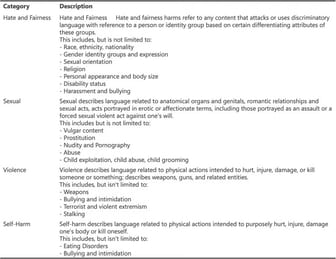
    The Azure AI Content Safety Container Plugin has been launched on the Dify Plugin Marketplace, capable of automatically detecting and filtering harmful content in user inputs and AI outputs to ensure application security and compliance. The plugin supports real-time content review, multi-layered protection (covering hate speech, violence, pornography, self-harm, etc.), and allows for local container deployment to meet privacy and compliance requirements. The latest version v0.0.2 provides unified review, custom configuration, text blacklists, combined result output, and detailed violation information.

Jun 25Wed
Jun 5Thu
  1. Dify Blog65

    Dify has received 100,000 GitHub stars, thanks to the open-source community's support

    Dify has surpassed 100,000 GitHub stars and joined the top 100 global open-source projects. The platform was open-sourced two years ago, aiming to make it easier for developers to build LLM applications, and has continued to grow thanks to community contributions. The project especially thanks 10 core contributors who have driven platform progress through code submissions, feature development, and documentation improvements.

May 20Tue
  1. Prime Intellect Blog

    PCCL - Prime Collective Communications Library Released: A fault-tolerant communication library designed for global distributed training.

    PCCL released, designed for global distributed training, with fault tolerance, supports operation on the public internet, bandwidth up to 45 Gbit/s between each pair of data centers, training bandwidth up to 25 Gbit/s between North America and Western Europe, supports dynamic member joining and rejoining, verified its high fault tolerance through long-term stress tests on major sockets (Linux, macOS, Windows WSA).

Apr 30Wed
  1. Dify Blog65

    Dify integrates the Palo Alto Networks plugin to enhance AI application security

    Dify has integrated Palo Alto Networks' AI runtime security plugin into its marketplace, allowing users to deploy the industry-leading security engine with a single click for each model call, user input, and model response. The plugin filters user inputs and model outputs, covering multiple levels from network posture to model behavior, including blocking prompt injection, denial-of-service attacks, data leakage, and harmful content, providing the first line of defense for AI applications without requiring model retraining.