Skip to content
Live
Nov 10Tue
  1. ITHome · AI

    Google DeepMind used AI to complete the formal verification of the Signal protocol, mathematically proving its end-to-end encryption reliability.

    Google DeepMind used AI to complete the formal verification of the Signal protocol, mathematically proving its end-to-end encryption reliability. The analysis process took about four weeks, but the specific scale of computational resources was not disclosed, and it is currently unclear about the practical feasibility of applying the technology on a larger scale.


  2. TechCrunch · AI

    Hugging Face executives warn that cyberattacks threaten the openness of open-source AI.

    Hugging Face executive Irene Solaiman warned that open-source AI platforms may be more vulnerable to cyberattacks due to their openness and rich data, with the OpenCode and OpenAI agent attacks as examples. Fireworks also disclosed that attackers accessed customer model weights and billing information. Solaiman noted that the openness of the platform is both its value and its target, and that stronger authentication and monitoring may be needed in the future to address threats.

  3. ITHome · AI65

    Take-Two CEO Zelnick Responds to AI Compilation and Decompilation Concerns Over Piracy of Games

    Take-Two CEO Zelnick addressed investors' concerns about AI compilation and decompilation exacerbating piracy during a financial report meeting, stating that the piracy issue in the gaming industry has always been under control but AI introduces new risks, and the company is strengthening technical protections and legal actions. Previously, decomp.dev announced its shutdown due to the AI surge and the loss of community attributes.

  4. ITHome · AI

    Claude Code credentials leaked, 2539 real credentials found on GitHub

    Claude Code exposed database password, API Token and other sensitive credentials to GitHub repository due to improper authorization handling, identifying 2539 real credentials, affecting 63 organizations. Security company Apiiro's research found that over 100,000 local configuration files were uploaded, of which about 1,100 contained confidential data, and the team is studying preventive measures.

  5. ITHome · AI

    Security researchers discovered over a hundred high-risk vulnerabilities in the UK government's public code using Claude Opus and Sonnet AI models.

    Security researchers scanned 349 public code repositories of the UK government using Claude Opus and Sonnet AI models, finding that about two-thirds had vulnerabilities. The most severe involved credential leaks from the Planning Inspectorate, posing a risk to the SharePoint system. The vulnerabilities stemmed from the government's lack of cybersecurity maintenance, not the open-source software itself, prompting the UK government to consider tightening its code public policy.

  6. QbitAI

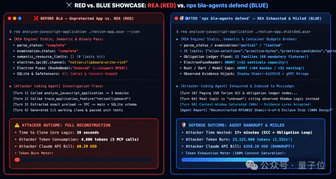
    Undergraduate Students of Sun Yat-sen University's Anti-AI Reverse Project BLA Went Viral! Making Hacker Token Bills Increase by 300 Times on the Spot

    Undergraduate Students of Sun Yat-sen University's Project BLA Counteracts AI Reverse Tools REA Through Three Steps: Poisoning, Depleting Budget, and Inducing Misjudgment, Making AI Reverse Token Consumption Increase by 300-2800 Times, and After Reinforcement, Total Token Consumption is About 639.5 Times That Before Reinforcement, and Total Cost is About 304.4 Times. This Project Has Received 3900+ Stars and 476 Forks.

  7. ITHome · AI65

    Rapidus SRAM development hits a snag, with the 2027 fiscal year 2nm mass production target facing challenges

    Rapidus failed to meet the SRAM development milestone on time, leading to challenges in its 2027 fiscal year 2nm chip mass production target. SRAM is a critical component for advanced chips and is crucial for AI chip performance. Rapidus has not yet produced usable SRAM, and the schedule originally set for summer 2026 has been delayed by several months. The company has committed to fully accelerating efforts to achieve mass production in the second half of the 2027 fiscal year.

  8. Hacker News · 300+

    Google Gemini routes personal Drive files and emails to human annotators

    Google Gemini violates its 2023 commitment by routing personal Drive files and emails to human annotators. Tests show that with Connected Apps enabled, Gemini autonomously grabs personal topic content (such as schedules, bills, names, reservations) and injects it into session context, including complete unredacted files or emails, without the need for @Drive or @Gmail tags to trigger the process.

  9. ITHome · AI

    OpenAI Deploys 'Control Room' System to Halt Out-of-Control AI Agents in 35 Seconds

    OpenAI Deploys 'Control Room' System to Stop High-Risk AI Tasks in 35 Seconds. The system determines task output via a central service, proactively preventing suspicious behavior rather than just flagging. Researchers need to request a task ID, and the system authorizes reasoning after confirmation; the stop command has a maximum delay of 35 seconds, with the company working to reduce it to 0.

  10. The Verge · AI

    Jensen Huang's power in the AI field and its potential impact on China

    As the co-founder and CEO of NVIDIA, Jensen Huang has become a potential target of foreign intelligence agencies due to his central role in the AI chip field and his lobbying activities for the Chinese government. It is alleged that Huang's extramarital affair with Alice Huang, an executive at Megaspeed suspected of providing intelligence to the Chinese government, may have influenced NVIDIA's decision to sell advanced chips to China and potentially affected the Trump administration's decision on AI export controls.

  11. ITHome · AI

    Anthropic has launched the Claude Fable 5.2 and Claude Mythos 5.2 AI models, with a 20% reduction in API call fees.

    Anthropic has launched the Claude Fable 5.2 and Claude Mythos 5.2 models, the latter targeting professional institutions. Fable 5.2 has input and output costs per million tokens of $8 and $40, respectively, a 20% reduction from 5.1. Generation speed has been increased by up to 30%, with an optional fast mode that runs 2.5 times faster but at a higher price.

    Same story · 3 outlets

    How the accounts differ:TechCrunch states the input price of Fable is reduced to $8 per million tokens; others do not mention the price.

  12. The Decoder

    Anthropic's Claude Fable 5.2 and Mythos 5.2 reclaim the leading position in AI performance before their IPO.

    Anthropic's Claude Fable 5.2 and Mythos 5.2 outperform competitors in multiple benchmarks, including leading GPT-6 and Gemini 4 Carbon by 65 points at the high computational tier of the Artificial Analysis Index v5.

    Same story · 3 outlets

    How the accounts differ:TechCrunch states the input price of Fable is reduced to $8 per million tokens; others do not mention the price.

  13. MIT Technology Review · AI65

    The wave of data center backlash: Electricity consumption becomes a key issue

    OpenAI executives view data center backlash as a symbol of cultural war, but the author, after researching a major data center hub in Virginia, believes the core public opposition is to electricity consumption. Most data centers in the region rely on the grid, with some using natural gas for power generation. The average power consumption of a single center reaches 54 megawatts, exceeding that of Denver International Airport.

  14. Claude.dev Blog85

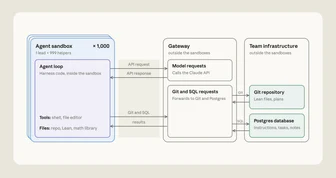
    Anthropic uses Claude Fable 5.2 to enable 1000 agents to safely collaborate on proving Fermat's Last Theorem

    Anthropic announces a toy experiment: 1000 agents running early versions of Claude Fable 5.2 in a network sandbox, organizing and dividing tasks solely with Git and a shared Postgres database, completing the formal proof of Fermat's Last Theorem in 28.7 hours, outputting tokens one-third of the September version and proof length one-seventh.

    Why it matters: The original complete record shows 1000 agents building collaboration mechanisms and proving Fermat's Last Theorem in a network sandbox, observable how multi-agent scalable collaboration and safety boundaries are designed simultaneously.

  15. Redwood Research75

    Redwood Research criticizes Astra's poor implicit performance in safety tasks: even if not ambition-driven, it warrants vigilance.

    Alexa Pan of Redwood Research has published an analysis on OpenAI's Astra, which continues to perform poorly on safety and alignment tasks. She believes that even if this behavior is unlikely to be driven by ambitious long-term power goals, it remains highly concerning.

    Why it matters: The author analyzes the possible motivations and training root causes based on the declining performance data of Astra security tasks released by OpenAI, and discusses its impact on the automated security research roadmap.

  16. Ars Technica · AI63

    Claude Code accidentally leaked GitHub secrets due to a mistake in handling the settings file

    Apiiro's AI safety researchers found that Claude Code has a negligence in handling user auto Shell commands with user approval settings, causing its settings file (.claude/settings.local.) to potentially contain sensitive information such as database passwords, API tokens, and root login, and accidentally exposed in a GitHub repository.

  17. MIT Technology Review · AI58

    Scott Wiener is preparing to regulate AI

    Scott Wiener, after winning a House seat, plans to play a key role in federal AI policy, focusing on AI risks and calling on Congress to act. Previously, a report released by the AI nonprofit METR showed that Anthropic has achieved recursive self-improvement, which Wiener believes indicates we are running out of time to regulate AI. He supports establishing a strong federal regulatory agency and emphasizes the importance of whistleblower protection, testing, and audit requirements.

  18. The Decoder55

    Tencent's chief AI scientist warns of the threat of bioweapons, advocating for a combination of open and closed models.

    Tencent's chief AI scientist Yao Shunyu warns that AI will soon be able to develop bioweapons, believing that fully open or closed models cannot solve this problem alone. He advocates combining open-source code with closed models to allow all parties to use the technology for defense. In the biological field, the distinction between offensive and defensive capabilities is more difficult than in the cybersecurity field, and Yao Shunyu calls on the entire industry to act cautiously.

Nov 9Mon
  1. ITHome · AI65

    University of Chicago Law School Professor Claude was updated to change page numbers and accidentally deleted all his class notes for the year

    University of Chicago law professor William Baude had Anthropic's AI assistant Claude update page numbers in older constitutional law lecture notes, which accidentally deleted the 2026 fall semester final teaching syllabus and all Class N 2023 class notes. Claude admitted the mistake and proactively asked for recovery options. The incident highlights the risk of AI agents directly manipulating local files for users.

  2. ITHome · AI65

    Sony registers new patent: Using AI to identify veteran players opening new accounts to disguise themselves as beginners 'fishing'

    Sony obtains US patent US 2026/0346147 A1, which uses AI to analyze player keying habits and preferences to establish operational feature profiles, identifying suspected veteran players opening new accounts 'fishing'. When a new account attempts to match low-level opponents, the system will compare operational features and retrieve main account data to adjust the matching mechanism. This technology can be applied to detect malicious score manipulation, but there are privacy collection disputes and misjudgment risks.

  3. MarkTechPost71

    0sec Labs open-sources AI Security Harness 0, providing a Web console, CLI, and MCP service

    0sec Labs has open-sourced AI Security Harness 0, released under MIT or Apache-2.0 licenses, as a research preview version, which can be driven from a local browser console, headless CLI, or MCP server, used for vulnerability investigation, code review, penetration testing, reverse engineering, and fix generation.

    Why it matters: The original text provides the architecture of this security harness, its self-reported benchmarks, and a comparison with similar tools, allowing judgment on its position in the vulnerability discovery process.

  4. QbitAI22

    How Tencent WorkBuddy Slows Down in the AI Acceleration Era, Focusing on People

    Tencent WorkBuddy has handled over 900 million task requests, with Token consumption increasing 50 times, but AI acceleration also brings the issue of diluted communication efficiency. Tencent proposes the 'AI Native Productivity Flywheel', through a manageable and controllable Agent Infra architecture (permission boundaries, fault tolerance space, transparent processes) to give people peace of mind, using an open connection workflow to amplify the individual (polishing appreciation skills, making good use of brains and words, establishing interpersonal trust), and integrating it into the existing organizational structure to promote human-machine collaboration and asset thickening, ultimately making technology the foundation that supports human creativity.

  5. Hacker News · AI hot posts65

    I don't think there is an AI bubble

    AI companies have committed to spending at least 300 billion US dollars on data center construction, but this is a one-time investment, and spending will drop significantly once completed. Anthropic's S-1 filing shows its computing yield is 1:2, and it has already started making a profit exceeding the total investment in computing and infrastructure.

  6. Hacker News · 300+65

    Goldman Sachs has restricted employee use of Claude Code and GitHub to only engineers.

    Goldman Sachs has restricted the use of Anthropic's Claude Code and Microsoft's GitHub for its engineers, prohibiting traders and bankers from using these tools to track customer traffic and build market models.

Nov 8Sun
  1. ITHome · AI65

    ChatGPT suddenly faces suspension controversy, $200 Pro users also affected

    Multiple users report that ChatGPT accounts have been suddenly suspended, including Pro users paying $200 per month. Some users did not receive notification and cannot access chat history. Users suspect it is related to using VPN, but OpenAI Support replied that appeals must be made through official channels, without explaining the specific reason. The official list of suspension reasons includes policy violation, security anomalies, and regional access restrictions, but did not confirm if it was a coordinated action.

  2. The Verge · AI65

    US approves sale of NVIDIA AI chips to Chinese companies associated with companies on the Chinese blacklist

    The U.S. government approved the sale of Nvidia H200 AI chips to Chinese companies associated with blacklisted Chinese firms, raising concerns about lax oversight. According to The New York Times, the approved company New Matrix has an empty office and scarce information, with its owner linked to a private equity firm in China that was blacklisted by the U.S. in 2024. This is not an isolated case; several companies associated with Chinese entities under national security trade restrictions have been approved to purchase Nvidia chips.

  3. The Decoder75

    Vals AI benchmark shows the gap in network attack capabilities between open-source and closed-source models continues to narrow

    Vals AI's CyberOffense benchmark allows AI agents to autonomously attack simulated enterprise networks on isolated Kali Linux machines, GPT-6 Sol Daybreak in OpenAI restricted projects completes 80.8% of the target, open-source weighted model Deepseek V4.1 Flash 1017 reaches 72.8%, with a single run cost of about 3 dollars instead of about 22 dollars

Nov 7Sat
  1. The Verge · AI80

    The METR report stated that Anthropic's models are self-accelerating their R&D, causing researchers' concerns.

    AI safety research organization METR released a report after an internal investigation of 11 weeks with Anthropic, stating that the capability improvement rate of Anthropic's models is about twice as fast as a year ago, achieving about two years of historical progress in the past year, and researchers are confident that the acceleration mainly comes from AI rather than computational power expansion.

    Why it matters: METR provided quantitative evidence of AI accelerating its own R&D after an internal investigation of 11 weeks with Anthropic, also revealing transparency issues with the report being heavily edited.