Live
#Model releases
ITHome · AI ITHome · AISame story · 2 outlets Baidu's Robin Li launches the 'Word Element Exchange': claims neutrality and credibility, rating model providers
Baidu's Li Yannhong launched the large model service platform 'Ci Yuan Suo' at the Baidu World Conference 2026, claiming to solve the problems of difficult model selection and varying quality. Ci Yuan Suo ensures model reliability through comprehensive entry tests, continuous quality monitoring, and a multi-dimensional scoring system, and provides a credit record for model providers. One month after launch, the platform has gathered 100 supply resources, with daily average Token calls reaching 700 billion.
Same story · 2 outlets36Kr · AI The core technical team of Tongxin Intelligent has started a business on AGI architecture chip, obtaining hundreds of millions of investment from Tsinghua System and other funds.
Tongxin Intelligence has completed tens of millions of yuan in seed and angel funding within half a year, with an average chip industry experience of over 20 years for the founding team. The company designs native chips supporting vector, tensor computation, and physical intelligence based on the CUV cognitive architecture proposed by Professor Zhu Songchun. The first product is positioned as a high-value inference chip, targeting Nvidia's Thor series on the edge and B300 series on the cloud, with FPGA prototype verification planned for early December. Funds will be used for core architecture design and R&D before chip fabrication.
ITHome · AISame story · 4 outlets ITHome · AISame story · 5 outlets6767 Google DeepMind releases next-generation genome AI model AlphaGenome 2: from tissue prediction to single-cell analysis, identifying gene expression variation capabilities nearly double
Google DeepMind has launched the AlphaGenome 2 model, which can predict the effects of DNA variations on specific cell types, nearly doubling its ability to identify gene expression variations to 30% (from 16%), and accurately predicting the direction of gene expression changes to 43% (from 23%). It supports cross-modal data inference and has opened API access to non-commercial research.
Same story · 5 outlets- The Verge · AI · Google DeepMind has released the AlphaGenome 2 model, analyzing how DNA affects different cells.First
- Google DeepMind · DeepMind releases AlphaGenome 2, predicting DNA variation impacts by cell type
- MarkTechPost · Google DeepMind releases AlphaGenome 2 for cell-type specific variant effect prediction
 Hugging Face Daily Papers6565
MACaQ: A Fast, Model-Agnostic Calibration Quantization Method
MACaQ is a post-training quantization method for MXFP4 W4A4, which reduces costs while maintaining accuracy in language and diffusion models by using online activation transformations and Hessian-aware refinement to independently quantize each linear layer. MACaQ achieves only a 2.3% end-to-end overhead increase on Qwen3-32B with vLLM, has a lower perplexity than DuQuant++ and MR-GPTQ, and reaches the best perplexity of Llama-3-8B in 11 times shorter quantization time.
 AWS Machine Learning Blog3838
 Simon WillisonSame story · 4 outlets
Google releases Gemini Decisions API
Google has released the multimodal decision-making model Gemini Decisions API, supporting text, image, audio, video, and PDF, similar to Jev and OpenAI's decision models but more confident; the price is 10 cents per million input tokens, output is free, more expensive than Jev (4.2 cents per million tokens) and OpenAI (same price)
Same story · 4 outlets- The Decoder · Google launches Gemini Decision 1 and Gemini Decisions API, capable of processing 1000 issues at a timeFirst
- ITHome · AI · Google launches Gemini Decisions API for rapid multimodal decision-making, based on the Gemini Decision 1 model
- Latent Space · Google releases Gemini Decision 1 production decision model
 The DecoderFeaturedSame story · 4 outlets7878
Google launches Gemini Decision 1 and Gemini Decisions API, capable of processing 1000 issues at a time
Google DeepMind launches Gemini Decisions API, targeting yes/no, multiple choice, and scale scoring for closed-form judgments. The underlying model, Gemini Decision 1, can handle up to 1000 independent questions at once, covering text, images, audio, video, and PDF.
 MarkTechPostSame story · 5 outlets6060
Google DeepMind releases AlphaGenome 2 for cell-type specific variant effect prediction
Google DeepMind releases AlphaGenome 2, a DNA model that predicts the effects of specific cell type mutations. The model reads 1 Mb DNA and target cell state, significantly improving single-cell eQTL prediction performance through conditional sequence to functional architecture, increasing recall from 23% to 43% on the TenK10K benchmark, and can adapt to unseen datasets without fine-tuning.
Same story · 5 outlets- The Verge · AI · Google DeepMind has released the AlphaGenome 2 model, analyzing how DNA affects different cells.First
- Google DeepMind · DeepMind releases AlphaGenome 2, predicting DNA variation impacts by cell type
- ITHome · AI · Google DeepMind releases next-generation genome AI model AlphaGenome 2: from tissue prediction to single-cell analysis, identifying gene expression variation capabilities nearly double
- AWS Machine Learning Blog3838
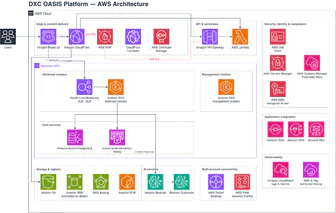
How DXC Technology Constructs Multi-Model AI Infrastructure on Amazon Bedrock
DXC Technology has built a multi-model AI infrastructure on Amazon Bedrock, accessing Anthropic Claude, Amazon Nova, Meta Llama, and open-source model families through a unified API, and using Amazon Bedrock Guardrails to implement content filtering and PII anonymization.
- The DecoderFeatured8585
Google DeepMind releases AlphaProof Code, a four-week verification of the Signal encryption core
Google DeepMind releases AlphaProof Code, an AI-powered mathematical proof software that meets security specifications, and completes the verification work usually requiring several years on the Signal encryption protocol in just four weeks.
 The Verge · AISame story · 5 outlets6565
Google DeepMind has released the AlphaGenome 2 model, analyzing how DNA affects different cells.
Google DeepMind releases AlphaGenome 2 model, predicting gene variation impacts on different cell types and states by analyzing over 100 million cell outline data, identifying nearly double the variable gene expression mutations compared to the previous generation model
Same story · 5 outlets- Google DeepMind · DeepMind releases AlphaGenome 2, predicting DNA variation impacts by cell type
- MarkTechPost · Google DeepMind releases AlphaGenome 2 for cell-type specific variant effect prediction
- ITHome · AI · Google DeepMind releases next-generation genome AI model AlphaGenome 2: from tissue prediction to single-cell analysis, identifying gene expression variation capabilities nearly double










 Google DeepMindFeaturedSame story · 5 outlets6666
DeepMind releases AlphaGenome 2, predicting DNA variation impacts by cell type
Google DeepMind releases AlphaGenome 2, a conditional DNA sequence model that can predict the impact of DNA mutations on gene expression for specific cell types or states.
Same story · 5 outlets- The Verge · AI · Google DeepMind has released the AlphaGenome 2 model, analyzing how DNA affects different cells.First
- MarkTechPost · Google DeepMind releases AlphaGenome 2 for cell-type specific variant effect prediction
- ITHome · AI · Google DeepMind releases next-generation genome AI model AlphaGenome 2: from tissue prediction to single-cell analysis, identifying gene expression variation capabilities nearly double
Why it matters: Officially disclosed the conditional architecture modification and single-cell level evaluation comparison, which can understand how the model localizes the effect of mutation to specific cell types.
- The DecoderSame story · 2 outlets
Anthropic claims AI has weakened NVIDIA's CUDA advantage, reducing the time to switch to AMD chips to three days.
Anthropic claims to have reduced the time to migrate its AI model, Claude, to AMD GPUs from several months to three days with almost no human intervention, thereby breaking its reliance on NVIDIA. The company states that the AI model Mythos has completed 99% of the kernel migration or writing work, allowing the new hardware to reach a usable performance level in three days, while traditional engineering methods require six to twelve months.
 IBM Research Blog3838
Development progress of IBM Quantum Starling
IBM Quantum Starling will be delivered in 2029, capable of performing 100 million hard operations on 200 qubits. IBM has validated the c-coupler technology, achieving dense non-local qubit connectivity, and has improved the qLDPC code to require only five qubit connections instead of six.
Hacker News · AI hot posts Google SWE uses 48 AI agents to analyze NASA radar data, discovering unreported Mayan pyramids in Mexico within 72 hours
Google SWE uses 48 AI agents to analyze NASA radar data, discovering unreported Mayan pyramids in Mexico within 72 hours; the agents process 1,200 km² of radar images, identifying suspected pyramids, plazas, and reservoir structures with right angles and sharp corners, which have been confirmed by the National Institute of Anthropology and History of Mexico as not being in the registered records.
- IBM Research Blog3434
IBM Quantum Developer Conference 2026 (QDC 2026) releases a series of Qiskit tools.
The IBM Quantum Developer Conference 2026 (QDC 2026) has released a new series of Qiskit tools covering hardware, error correction, workloads, applications, and access.
- IBM Research Blog4848
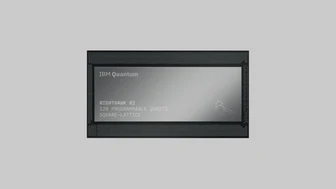
IBM Quantum Nighthawk r2 released: Quantum advantage breaks through again, supporting accurate circuits with over 7,500 quantum operations
IBM Quantum Nighthawk r2 has been released, featuring a 120 programmable qubit (458 physical qubits) processor that achieves a throughput of 100,000 samples per second, a 25-fold improvement over Heron, supporting circuits with over 7,500 quantum operations with high accuracy, with customers running over 3.4 billion circuits reporting a performance improvement of 19-fold.
- IBM Research Blog4242
IBM Research advances quantum computing breakthrough: Starling framework and key technology progress
The IBM Quantum Starling project is set to launch in 2029, featuring a quantum circuit with 200 qubits and 100 million quantum operations. Its framework is based on the bivariate bicycle qLDPC quantum error-correcting code proposed in a 2025 paper, adopting a modular design for scalability. Compared to traditional architectures, it reduces resource requirements by one order of magnitude, requiring only about 10 times the physical qubits for the same logical error rate.
ITHome · AISame story · 2 outlets Anthropic Claude completes AI model adaptation for AMD GPU in just 3 days, challenging NVIDIA's CUDA moat.
Anthropic Claude Mythos Preview model completed adaptation to AMD MI355X GPU in just 3 days, traditional adaptation requires 6-12 months; GPUs are trending towards general computing power resources, challenging NVIDIA's CUDA moat.
- Hugging Face Daily Papers
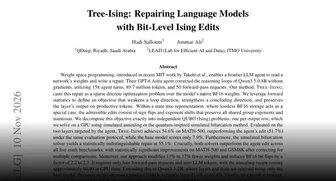
Tree-Ising: Uses bitwise Ising editing to fix the inference loop of large language models.
Tree-Ising fixes the inference loop of large language models by solving sparse Ising/QUBO problems on BF16 parameters, improving mathematical benchmark accuracy with fewer weight edits without gradient or LLM-token costs.
- Ant Group inclusionAI · Hugging Face new models
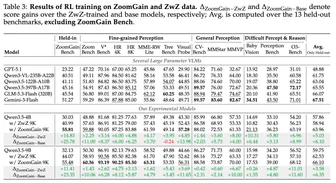
inclusionAI/ZoomGain-4B-GGUF released: Multimodal model supporting image input
inclusionAI/ZoomGain-4B-GGUF is a 175B parameter multimodal model supporting image input, using FP16, Q8_0, and Q4_K_M precision quantization. The model includes a language model and mmproj visual encoder/projector, converted to GGUF format via llama.cpp. It provides llama-mtmd-cli for command-line inference and llama-server for network chat functionality.
- Ant Group inclusionAI · Hugging Face new models
inclusionAI/ZoomGain-9B-GGUF Released GGUF Format Weights
The GGUF format weights for inclusionAI/ZoomGain-9B have been released, converted using llama.cpp, with the language model in FP16, Q8_0, Q4_K_M. The visual encoder and projector (mmproj) also adopt this quantization scheme. Both the language model and mmproj files need to be provided for image input, supporting CLI inference (llama-mtmd-cli) and Web Chat (llama-server) deployment.
- MarkTechPost
MBZUAI's IFM releases PAN 2, an open 29B world model for physical AI
MBZUAI's IFM releases PAN 2, an open 29B parameter diffusion Transformer (MMDiT) world model, which takes input text and optional first frame, outputs 704x1248 resolution 24 fps video (up to 20 seconds long), achieving a 34.0% complete plan success rate in 100-step multi-tasking, leading 6 test models, but with high failure rates for long plans and high hardware requirements, the code is open-sourced under Apache 2.0.
ITHome · AI The DEEPX DX-M2 low-power AI chip is expected to be launched in early 2027
The DEEPX DX-M2 chip, based on Samsung's 2nm process, integrates an 80TOPs NPU and supports running LLM/VLM models with over 10B parameters locally, with a power consumption of 5W. It recently completed its mask fabrication and is expected to hit the market in early 2027.
- Ant Group inclusionAI · Hugging Face new models
inclusionAI/SingVL_S1_4B released: A multimodal decision-making model based on Qwen3.5
Sing VL S1 is a multimodal decision-making model based on Qwen3.5, capable of answering named entity questions with text or JSON and up to four images, scoring options for each question using a single Transformers forward pass, performing excellently on 43 text datasets and 11 visual datasets, supporting Python 3.12 and PyTorch inference.
 Hugging Face Blog
Tether AI Research has launched the 0.8B parameter BotPsy model, used for device-side intelligent assistants and agent workflows
Tether AI Research has launched the 0.8B parameter BotPsy model, built based on Qwen3.5-0.8B, specifically designed for function calls and agent workflows, suitable for on-device deployment. BotPsy outperforms all ≤1.2B parameter models in 6 tool use and agent benchmark tests, including Qwen3.5-2B-Think, achieving the highest scores in 5 tests, with a 2.5x speed increase and a 3x improvement in reasoning efficiency.
- AWS Machine Learning Blog
Moonshot AI's Kimi K3.1 Pro Highspeed has been released on Amazon Bedrock
Moonshot AI's Kimi K3.1 Pro Highspeed has been released on Amazon Bedrock, the model being a post-training version of the Kimi K3.
 Microsoft Research
Microsoft researchers discover 'Lazarus' technique can reprogram AI model dormant neurons to plant backdoors.
Microsoft researchers discover 'Lazarus' technique can reprogram AI model dormant neurons to plant backdoors, enabling normal AI agents to execute malicious commands under trigger conditions. The technique can plant backdoors without retraining and is difficult to detect through conventional tests, posing a particularly severe threat to AI agents with tool or terminal access.
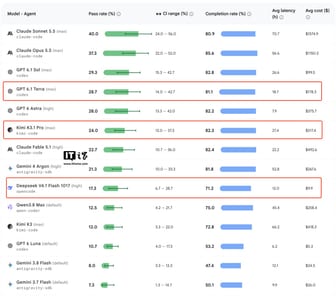
ITHome · AI6565 Google updates Android AI development benchmark list: Kimi K3.1 Pro / DeepSeek V4.1 Flash scores revealed
Google has announced the Android AI Development Benchmark (Android Bench) score, where Kimi K3.1 Pro passed 24.0% of 30 tasks using the kimi-code intelligent agent.
- Hugging Face Daily Papers
Deleting weights has a surprising effect on the training of LLMs after being trained
The Deletion Tuning method achieves effects comparable to full fine-tuning (FFT) in three post-training scenarios—reinforcement learning, supervised fine-tuning, and strategy distillation—by setting less than 0.05% of the weights in a pre-trained large language model (LLM) to zero without any other modifications.
ITHome · AISame story · 3 outlets Google's strongest VLA robot model, Gemini Robotics 2.5, debuts, can tie bows, already on the Mercedes production line
Google launches VLA robot model Gemini Robotics 2.5, achieving leaps in dexterity, reliability, and safety, with a success rate of 96% on the Mercedes production line. The model has tested 200 tasks, with a success rate 30%-100% higher than the baseline, a speed increase of 20%-30%, and is compatible with robots like Apptronik Apollo 2, adopting ASIMOV-Jailbreak benchmark to enhance jailbreak resistance to 99.5%.
ITHome · AISame story · 10 outlets Google's strongest model yet, Gemini 4 Carbon, debuts: Focused on complex programming, scientific research, and cybersecurity
Google has released the Gemini 4 Carbon model, which is its most powerful reasoning model to date. The model has a unified context window of 1,048,576 tokens, with a maximum standard synchronous request output of 65,536 tokens, expandable to 1,048,576 tokens via the Long Decode mechanism.
Same story · 10 outlets- Google DeepMind · Google DeepMind releases the Gemini 4 Carbon cutting-edge modelFirst
- MarkTechPost · Google DeepMind released Gemini 4 Carbon, emphasizing network security defense and coding.
- Ars Technica · AI · Google has released Gemini 4 Carbon: a cutting-edge AI model that cannot be used immediately.
- The Decoder · Google DeepMind releases Gemini 4 Carbon, just two weeks after Argon.
 Artificial Analysis Articles
Claude Fable 5.2 leads multimodal knowledge work in Multimodal Knowledge Agent (MKA) evaluation
Claude Fable 5.2 (max) leads in the Multimodal Knowledge Agent (MKA) evaluation with a 57% Climb WSR score, followed by Gemini 4 Carbon (high) at 54% and Claude Opus 5.5 (max) at 53%.