Skip to content
Live
Nov 13Fri
  1. AWS Machine Learning Blog

    Four aspects of Amazon Bedrock inference affect cost.

    Amazon Bedrock's request-level selection still changes the number of tokens processed by the service and the applicable tax rate. Cache duration, service tier, inference effort, and maxTokens can affect costs without changing the model or prompt. Each selection depends on the model and workload, and its effectiveness can be verified through response metadata, logs, and billing data.

  2. AWS Machine Learning Blog

    How to use CUR 2.0 and AWS Budgets to track and limit per-user Amazon Bedrock spending

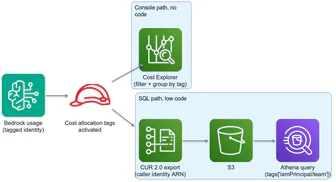
    Amazon Bedrock automatically records caller identity, users can assign tags through IAM hosts, activate cost allocation tags, and use CUR 2.0 or AWS Cost Explorer to report data, combined with AWS Budgets to set budget actions for spending limits. No application code needs to be written, when the threshold is reached, budget actions will automatically apply Deny IAM policies. This solution is suitable for accounts already using IAM roles, supporting both static primary tags and dynamic session tags for identity mapping.

  3. TechCrunch · AI

    Nectar launches AI agent automation brand creator discovery and connection

    Nectar launches 'Creator Intelligence' that can search over 300 million creators, analyze content and brand collaborations, automatically send personalized messages and manage collaborations, supporting Instagram creators and TikTokers, available globally and plans to integrate other AI assistants like Claude, ChatGPT, Copilot through Model Context Protocol (MCP).

  4. Databricks Blog60

    Databricks introduces Lakehouse//RT, aimed at real-time analysis loads for agents.

    Databricks has released the Lakehouse//RT, designed to directly handle high-concurrency real-time queries brought by AI agents on lakehouses, currently in beta. The official claims it can provide latency below 100 milliseconds under 12,000 QPS, and through four paths—high concurrency, rapid execution, small-step scaling, and a single system—ensures that cost growth is slower than query volume growth.

    Why it matters: The original text provides four cost reduction mechanisms and migration data from three customers, allowing judgment on whether the real-time analytics layer is worth replacing.

  5. AWS Machine Learning Blog

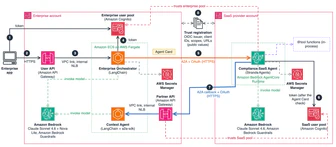
    Run intelligent agents securely and efficiently using the next-generation AgentCore runtime.

    Amazon Bedrock AgentCore runtime provides a secure environment for each session through hardware-isolated Firecracker micro-virtual machines (MicroVMs), the new version boosts startup speed by 15x, extends computing by 4x, improves efficiency by 68%, supports up to 8 vCPUs and 32 GB memory and 10 GB container images, session startup time is less than 2 seconds, suitable for complex workloads.

  6. Databricks Blog

    How H6.ai Builds AI-Driven Financial Automation Based on Lakebase Postgres

    H6.ai automates accounts payable processing on customers' existing ERP systems by reading invoices, matching purchase orders, allocating accounting subjects, and executing in accordance with company policies, combining AI-assisted understanding with deterministic policy execution. It adopts Lakebase Postgres to establish a dedicated database for each customer, storing purchase orders, suppliers, accounting subjects, historical transactions, and policies, etc., to support frequent regression testing.

  7. Amp News65

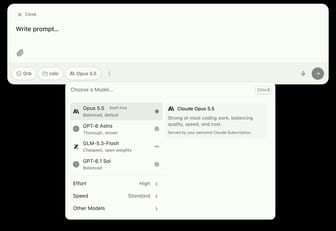
    Amp says goodbye to the Dial mode selector, introducing a model selector

    Amp is phasing out Dial and its four modes (Low, Medium, High, Ultra), introducing a model selector that allows users to choose models and computational intensity for each thread, and switch in the middle of the thread. The model selector displays subscription or API key billing information for each model, or use Amp credit balances. If users do not want to choose themselves, they can use Staff Pick (currently Claude Opus 5.5).

  8. Databricks Blog

    How Block uses Buzz and Unity Gateway to coordinate AI agents

    Block company has launched Buzz, an open-source collaborative space, allowing employees to interact with AI agents in a shared workspace. Through Databricks Unity Gateway, users can access cutting-edge models from OpenAI, Anthropic, Google, and open-source models (specific number not mentioned in the original text), experimenting with different AI agent framework combinations. Employees can create AI agents and choose models (such as the lightweight version of Goose) to achieve multi-person collaborative development, analysis, and other tasks.

Nov 12Thu
  1. PyTorch Blog

    Integrate SGLang into IBM Spyre within less than a week using AI tools

    A team of two, with the help of an AI programming agent, completed the integration of SGLang and IBM Spyre in less than a week, building a plugin with about 1,500 lines of code. SGLang's inference throughput on Spyre is about 3.6 times higher than the reference PyTorch implementation (using torch-spyre) and performs comparably to vLLM on Granite 3.3 8B and Gemma 4 26B A4B workloads.

  2. ITHome · AI

    Runway launches robot model Praxis-1, 15.6 times faster and cost reduced to 1/51

    Runway has launched the robot model Praxis-1, based on the Runway video foundation model with 27 billion parameters. In the RoboLab-120 benchmark test, it achieved a success rate of approximately 46.2%, with a speed increase of 15.6 times and a cost reduction to 1/51. This model is licensed under Apache 2.0 and both weights and code are open-sourced.

  3. 36Kr · AI65

    SpaceX is developing the Kessel AI chip rack to reduce reliance on NVIDIA

    SpaceX is developing the Kessel AI chip rack, using a passive PCB middle board to replace the NVLink cable box, retaining 72 GPU modules, 18 computing trays, and 9 switching trays, planning to procure chip modules directly from NVIDIA and purchase the remaining components independently to bypass NVIDIA's L6 computing board and enhance supplier selection and procurement autonomy.

  4. ITHome · AI

    Baidu Tianchi 1024 Card Super Node Released: Can support training of 5 trillion parameter models, to be launched next year.

    Baidu Tianchi's 1024 card super-node is launched, equipped with optical engine technology, inter-card interconnection bandwidth increased 3 times, training performance increased 2.5 times, and inference performance increased 3 times. Accompanied by G3.5 KV Cache GPU memory acceleration cabinet, long context inference performance increased 2 times, multi-round dialogue cache hit scenario TTFT decreased by 90%, and throughput increased 7 times. A single node can support the training of large models with 500 billion parameters, with the ability to scale to ten thousand cards, and will be launched next year.

  5. ITHome · AI

    Doubao Work has integrated third-party models such as DeepSeek V4.1 Flash and Kimi K3.1 Pro, and has also launched a usage credit multiplier and limited-time offers.

    Beanpod Work expands model selection, with the first batch of Kimi K3.1 Pro, GLM 5.3, and DeepSeek V4.1 Flash three third-party models. Simultaneously, the quota consumption multiplier and limited-time offers are launched. The model selection page marks the quota consumption multiplier, allowing users to weigh effectiveness, speed, and cost. During specified hours on weekdays and holidays, using participating models for activities can enjoy a discount on quota consumption. The quota consumption multiplier for Beanpod 2.1 Lite and DeepSeek V4.1 Flash is reduced.

  6. ITHome · AI65

    Molong Technology MUSA Developer Conference · 2026 Scheduled for December 29, with a brand new major product to be released

    MooreThread announced that the MUSA Developer Conference 2026 will be held on December 29th and 30th in Beijing, releasing brand new major products, technologies, and solutions, and showcasing the latest advancements of the MUSA platform. The conference's keynote speech will analyze next-generation GPU architectures and launch upgraded software development tools and libraries. General tickets are priced at 188 yuan, with single-day tickets at 68 yuan.

  7. AWS Machine Learning Blog

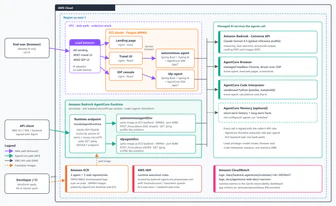
    Build autonomous AI agents using Amazon Bedrock and Spring AI

    Java teams can leverage Amazon Bedrock and Spring AI to build autonomous AI agents, addressing scalability, governance, security, and operational challenges. Spring AI brings AI capabilities to the JVM through the Spring framework (auto-configuration, dependency injection, composable advisors), while the Amazon Bedrock AgentCore platform supports framework and model-agnostic agent construction, connection, and optimization.

  8. Hacker News · 300+65

    AI agents like Gemini discovered unrecorded Mayan ruins in Mexico by analyzing NASA LiDAR data.

    Intelligent agents such as Gemini, ChatGPT, Claude, and Grok discovered an officially unrecorded Mayan site in Mexico by analyzing NASA LiDAR data, completing the entire process from inspiration to government formal reply in less than 72 hours. The site is located on a mountain top in the jungle, containing structures such as plazas, pyramids, and courtyards. The agents identified and submitted reports to the National Institute of Anthropology and History of Mexico (INAH), which confirmed that the location had not been registered (later verified that the site had been mapped by anthropologists).

  9. OpenRouter Blog

    How does OpenRouter Agent SDK prevent AI agents from falling into infinite loops?

    The OpenRouter Agent SDK, by enabling doom-loop detection, prevents infinite loops in six tested models when the third identical tool call is received; combining stepCountIs(40) and maxCost(x) can limit the number of runs and cost; the credit limit of the API key can control total expenditure, these measures effectively reduce the number of tool calls (from 314 to 64) and costs (from $0.29 to $0.05).

  10. ITHome · AI67

    Google DeepMind releases next-generation genome AI model AlphaGenome 2: from tissue prediction to single-cell analysis, identifying gene expression variation capabilities nearly double

    Google DeepMind has launched the AlphaGenome 2 model, which can predict the effects of DNA variations on specific cell types, nearly doubling its ability to identify gene expression variations to 30% (from 16%), and accurately predicting the direction of gene expression changes to 43% (from 23%). It supports cross-modal data inference and has opened API access to non-commercial research.

  11. 36Kr · AI

    Google launches Gemini Decisions API, charges $0.10 per million input tokens.

    Google launches the Gemini Decisions API, driven by the Gemini Decision1 model, allowing developers to evaluate up to 1000 questions for multimodal input, scoring preset options in a single forward pass and returning probabilities and confidence levels, with end-to-end latency of 150–250 milliseconds, and a fee of 0.10 USD per million input tokens.

  12. ITHome · AI

    Apple CarPlay integrates Google Gemini: Now you can chat with AI naturally in the car.

    Google is gradually rolling out the CarPlay integration feature to iOS users worldwide, covering all languages supported by Gemini Live. Users with devices like iPhone 18 Pro can use Gemini's voice mode for hands-free conversations on the CarPlay in-car screen, with chat history synced to the iPhone app. Users can connect to apps like Gmail and Google Calendar to get daily briefs or ask for destination information, practice speeches, etc., with conversations automatically synced to the phone.

  13. Simon Willison

    Google releases Gemini Decisions API

    Google has released the multimodal decision-making model Gemini Decisions API, supporting text, image, audio, video, and PDF, similar to Jev and OpenAI's decision models but more confident; the price is 10 cents per million input tokens, output is free, more expensive than Jev (4.2 cents per million tokens) and OpenAI (same price)

  14. Simon Willison58

    AWS officially releases the aws-emulator emulator

    AWS has released the aws-emulator emulator, which allows users to clone various AWS services locally for testing without using paid API keys. The emulator is written in Rust, and the project received 29,684 commits in the first three weeks. Currently, it requires Docker to run, but developers hope to provide a cross-platform single binary version in the future.