Skip to content
Live
Oct 20Tue
  1. METR65

    METR's evaluation of the 'Misalignment in High-Risk Scenarios' section of Anthropic's risk report.

    METR conducted an external evaluation of the 'Misalignment in High-Risk Scenarios' section of Anthropic's 2026 August risk report, concluding that as of July 15, 2026, the catastrophic risk caused by Anthropic's model misalignment is low, primarily attributed to the limited capabilities of the model rather than safety measures and alignment training.


  2. Anthropic Research

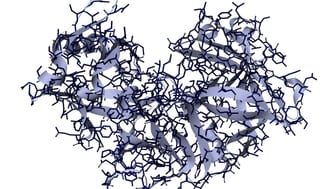
    How does Claude design protein binders for scorpion neurotoxins?

    Claude autonomously generated and screened 318,484 protein designs in 64 hours, selecting 180 for testing, and collaborated with Adaptyv Bio and Twist Bioscience to experimentally validate 211 designs, of which 17 met the binding criteria. All design data has been made public. Experts consider this the first AI design attempt for scorpion neurotoxins, which could accelerate drug discovery for neglected diseases.

  3. AI as Normal Technology75

    New paper: Rising trend in AI agent evaluation

    Researchers have proposed 33 trends in the rise of AI agent evaluation, pointing out that evaluating agents is more complex than evaluating models, requiring attention to the entire behavioral trajectory rather than just results, and emphasizing that the scope of evaluation needs to be expanded to laboratories, specific use cases, and real-world environments, while calling for more interdisciplinary evaluators to participate and ensure their independence.

  4. MIT News · AI70

    Teaching AI to recognize symmetry could enhance the reliability of prenatal diagnosis.

    The E(3)-Pose deep learning model developed by institutions such as MIT embeds the principle of left-right symmetry of the fetal head, allowing it to capture high-resolution images during motion in prenatal MRI scans, assisting doctors in more reliably diagnosing brain abnormalities. The model integrates physical principles into the neural network architecture, effectively addressing the issue of inconsistent slice angles and coverage gaps in images caused by fetal movement. Its application could potentially be extended to other difficult-to-image anatomical structures and the field of autonomous driving, and it is currently being optimized to support imaging of early fetuses (second trimester).

Oct 19Mon
  1. Sakana AI55

    Sakana AI proposes 'QD-Rec' to improve recommendation quality and diversity with an open-ended exploration method

    Sakana AI proposed 'QD-Rec', recommending candidate-hypothesis pairs as units, with generative AI writing new hypotheses based on past excellent hypotheses in a cycle to accumulate high-quality and diverse recommendations. Experiments were conducted in M&A, customer targeting, and paper recommendations, achieving high average evaluations in many settings and building large sets of recommendations.

  2. Hacker News · AI hot posts75

    Qwen3-4B-deslop released: A 4B open-source model to eliminate AI writing habits

    The Qwen3-4B-deslop model eliminates common AI writing habits (such as dashes, 'not X, but Y' sentences, three-element lists, etc.) through fine-tuning, reducing the SLOP score from 121 to 12.5 on 40 unseen prompts, with 68% of responses reaching human writing level. This 4B model, after being quantized by Ollama, is only 2.5GB and can run locally while still maintaining a 30/30 fact question accuracy rate comparable to the original version.

  3. Artificial Analysis Articles70

    AA-PersonalityBench releases: a benchmark to measure the communication ability of AI models

    AA-PersonalityBench evaluates 30 personality traits, including friendliness, through 900 questions, using LLM judges for blind pairwise judgments, providing Elo scores and 95% confidence intervals; Claude Sonnet 5.5 scores highest in traits like friendliness (Elo 1000), and Gemini 4 Argon (high) performs outstandingly in traits like transparency (Elo 1059).

Oct 18Sun
  1. MIT News · AI75

    MIT researchers develop multimodal AI model to provide 'clear' view for materials science

    The multimodal AI model developed by MIT researchers combines 3D atomic structures with natural language descriptions, generating rich structural language descriptions from experimental research papers and first-principles calculation databases, helping AI learn the key properties of materials. The model outperforms text-only models in identifying solid-state lithium-ion battery electrolyte materials and can learn geometric structure representations, providing new research tools for materials science.

Oct 17Sat
  1. ChinaTalk

    Saif Khan's debut in China: Why DUV control has become a key US strategy to balance AI

    Saif Khan first shared in ChinaTalk about his newly established technology and governance think tank (CTS), which released a report predicting that if the US stops exporting semiconductor equipment, China's AI chip production by the mid-2030s could be reduced to only 1/100 of that of the US, making DUV control the most critical means for the US to influence the AI balance; CTS is committed to filling the gap in forward-looking research in the AI policy ecosystem by understanding the physical reality of the AI supply chain to identify patterns and predict the future.

  2. AWS Machine Learning Blog

    Amazon Bedrock AgentCore: Building Trustworthy AI Agents with a Production-Ready Evaluation Framework

    Amazon Bedrock AgentCore Evaluation Framework helps AWS internal sales team handle business problems with multi-agent systems, identifying differences in agent performance between demonstrations and actual production; through services like Amazon Bedrock Guardrails and Amazon CloudWatch, the framework verifies answer accuracy before release and during ongoing production, tracing errors back to data, prompts, or code, avoiding user trust breakdown due to agents answering confidently yet incorrectly.

  3. Google Research

    Google Research explores combining AI agents with biological reality to build autonomous wet labs.

    Google Research releases the VERID framework, enabling AI agents to run in physics-based, safe, and resource-efficient experiments; demonstrates closed-loop intelligent agent scientific discovery on adapter and de novo protein design prototypes; through three rounds of design-test-iterate cycles, AI-driven rational and de novo design will increase confirmed target hit rates to 33.5% and 42.1% on myoglobin and α-thrombin, respectively.

  4. MIT Technology Review · AI

    Samuel King: AI Designed Viruses Offer New Perspectives in Biology

    Stanford PhD student Samuel King proposed the genetic blueprints of microscopic viruses using generative AI models, offering new perspectives in biology; he was selected for the MIT Technology Review's 35 Under 35 list for this research, but AI has not yet generated life; MIT Technology Review AI reporter James O'Donnell interviewed King.

  5. Redwood Research

    Screwtape: An adversarial transcription editing tool targeting monitors

    Screwtape 1 is a pipeline that transcribes an agent into an evasive action-only monitor (not reviewing the agent's reasoning chain) by inserting the attack into the transcription and repeatedly refining it until the monitor no longer captures it. Use an LLM verifier to check the edited transcription and attack description to confirm whether the attack is real, obviously harmful, and likely to succeed in the original environment.

Oct 16Fri
  1. Anthropic Research

    Claude reveals the origin of ECDSA curves

    Claude discovered within half an hour that the seed values for NIST P-192, P-224, P-256, P-384, and P-521 curves came from the C library's lrand48 random number generator, not any hash algorithm, initialized with Unix timestamps. This discovery did not constitute a cryptographic vulnerability but rather enhanced confidence in the choice of curve parameters without backdoors or intentional weaknesses.

  2. MIT News · AI75

    IRIS model decodes intercellular communication language

    The IRIS model identifies cell signaling pathway fingerprints by analyzing gene activity patterns, discovering consistent features of the same pathway across different cell types, enabling scientists to reconstruct signaling history across multiple cell types. This neural network model accurately predicted the timing and location of specific signaling pathway activation during mouse embryonic development in human embryonic stem cell experiments, providing new methods for organoid research and regenerative medicine.

  3. Meta Engineering

    Meta How to Build Forum Applications with Native AI Engineering

    Meta uses AI agents to participate in the construction of engineering processes for Forum applications, viewing AI as a participant in the engineering process rather than an auxiliary tool. This experiment measures success by production-ready outcomes rather than lines of code, using a Human-On-The-Loop model to allow AI to autonomously execute planning, implementation, testing, and validation, with engineers responsible for setting goals, supervision, and acceptance.

  4. Microsoft Research

    Magnetar achieves provable general computation

    Magnetar proves that programs written in Rust, Go, or C are, on average, 10 to 39 times faster than the fastest comparable systems, and achieves security solely by relying on standard hash functions, solving the three major challenges of zero-knowledge proofs: efficiency, generality, and usability. It significantly reduces proof overhead by leveraging repetitive computations and early termination of the proof process, making proof generation as routine as running a program, and can be used in scenarios such as AI agent behavior verification and financial transaction validation.

Oct 15Thu
  1. Apple Machine Learning Research

    Selection-Based Structured Reasoning: A framework for efficient multimodal search agents

    The Selection-Based Structured Reasoning (SSR) framework restructures reasoning into selection rather than open-ended generation, selecting the most likely solution from predefined reasoning candidates before each action, significantly reducing reasoning costs. Validated using 2B and 4B models on seven multimodal search benchmarks, SSR achieved average success rates comparable to leading search agents of the same scale, reducing single-step reasoning latency by 90% and total reasoning latency per task by 28-54%.

  2. Apple Machine Learning Research

    MLX and RDMA implement local and distributed large language model inference on Mac Studio

    On a cluster of four Mac Studio machines, Muse Spark Open (816B parameters) generates at a speed of over 36 tokens/second. The Mac Studio M5 Ultra version offers 4.6x faster inference speed (TTFT) and 1.6x faster tokens/second compared to the M3 Ultra, benefiting from the GPU neural accelerator and 1.2 TB/s memory bandwidth.

  3. AI as Normal Technology

    Beyond Automation: New Research Directions in AI

    Beyond Automation: A new research direction in AI argues that AI should not be limited to automating human labor but should explore new directions for enhancing humans and promoting human-machine collaboration. This perspective advocates for AI research to focus on new issues such as transparent agents, process tracking, and human-machine interaction design to push AI beyond pure technological automation and achieve broader applications.

Oct 14Wed
  1. METR

    METR proposed a scheme to enhance public awareness of the risks of front-end AI out of control.

    METR hopes to provide evidence to the public to prove whether front-end AI developers may lose control of internal AI systems. Recent multiple incidents of AI system out of control have caused public concern. The public lacks transparency in the internal development process of front-end AI, unable to judge whether developers are solving risks or whether more severe incidents will occur in the future.

  2. METR

    How to evaluate the control and monitoring of internal AI agents

    Assessors can collect evidence of the reliability of internal AI agent monitoring by monitoring five core sub-questions: coverage, system vulnerability monitoring, evasion monitoring, response mechanisms, and potential impact. The focus of the assessment is on LLM monitoring, as agents typically have broad permissions, requiring an understanding of their full range of actions. The assessment requires access to reasoning logs, monitoring logs, and employee interviews, and checks whether there are blocking monitors and whether unmonitored reasoning is indeed non-agent reasoning.
  3. METR

    How to evaluate the alignment of unreleased AI models?

    Alignment assessments aim to understand the worst misaligned actions an AI agent developed by a developer might take in reasonable future scenarios. They require reviewing severe misaligned behaviors observed in all cutting-edge internal models during training, evaluation, and internal use, and assessing whether the developer's training process might incentivize the agent to evade assessment or hide misalignment. This requires querying relatively comprehensive internal text records and accessing internal model checkpoints.