Skip to content
Live
Oct 27Tue
  1. Baseten Blog

    BDN Sealed Volumes: A Model Data Solution for One-Time Release and Anywhere Mounting

    BDN has released the Sealed Volumes feature, allowing users to publish model data once and mount it in any deployment, solving the data drift problem caused by model files lacking a single data source. This feature archives directories, Hugging Face repositories, S3/GCS, and other data sources as immutable versions, managing files through content hash keys, eliminating the need for repeated downloads during deployment.

  2. LangChain Blog58

    How LangChain builds enterprise-level agents (company harness)

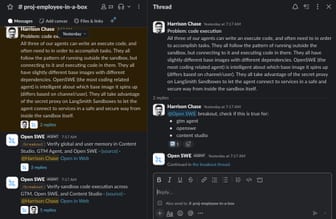
    LangChain's internal agents integrate with Slack to execute tasks as a user or with fixed credentials, featuring global and user-level memory, executing code in a sandbox, and supporting background scheduling. Its architecture includes three agents: GTM, OpenSWE, and Content Studio, which handle GTM activities, engineering code reviews, and marketing content creation, respectively. The 'breakout' feature optimizes user experience and addresses core issues like authentication.

  3. Latent Space42

    Supabase's AI App Backend Plan

    Supabase plans to run long-running workloads alongside its database using Supabase Compute, simplify schemas to make them easier for AI agents to understand, and design infrastructure that supports more applications. Its acquired Turso product supports scaling, and the company is using AI internally to improve efficiency while maintaining a parallel approach of open-source and commercial sales.

  4. AWS Machine Learning Blog48

    Building enterprise-grade intelligent retrieval on Amazon Bedrock knowledge base using AWS CDK

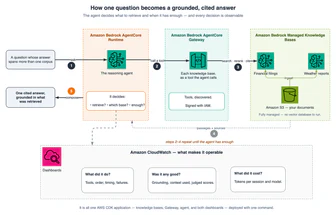
    Building enterprise-grade intelligent retrieval on Amazon Bedrock knowledge base using AWS CDK, providing multi-round planning and tool-driven retrieval through the reasoning agent and AgenticRetrieveStream API, returning referenced answers. The solution deployment includes a CDK application with Amazon S3 corpus, knowledge base, and reasoning agent, supporting semantic routing and multiple retrievals, and built-in Amazon CloudWatch monitoring and evaluation features.

  5. Sierra Blog65

    Sierra has launched on Google Cloud Marketplace

    Sierra is now available on Google Cloud Marketplace, enabling businesses to leverage existing Google Cloud commitments to partner with Sierra. Through Sierra, businesses can build and deploy AI agents to improve customer experience and drive business growth, from loan refinancing to paying insurance claims or preventing customer churn.

  6. MarkTechPost58

    Nace AI releases Drex for Search for AI agent document search

    Nace AI releases Drex for Search, a retrieval layer for document search, with its decision model Drex achieving 92.05% accuracy in the BrowseComp-Plus evaluation, using only 12.6 search calls per query. Supports CLI, SDK, MCP, or REST calls, and can be paired with response models like GPT-5, Gemini 3.5 Flash, or Qwen 27B, ranking top two in the 3/4 public leaderboard.

Oct 26Mon
  1. 36Kr · AI65

    Oracle launches AI agent platform Oracle AI Success Navigator to help accelerate Fusion Cloud application implementation

    Oracle Launches Intelligent Agent AI Platform Oracle AI Success Navigator, Adds Six Types of AI Agents for Environmental Analysis, Application Design, Configuration Development, Testing, System Integration, and Innovation Opportunity Identification, Helping Customers Reduce Manual Operations and Simplify Complex Tasks; Medical Institution Lexington Health Reduced Some Design and Configuration Workloads by 80% with This Platform

  2. IBM Research Blog58

    PyTorch supports IBM's dataflow AI accelerator Spyre through torch-spyre and Spyre vLLM plugin

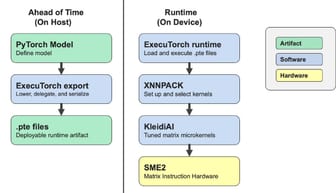
    IBM and the PyTorch Foundation announce that Spyre accelerator will become the first-class backend for PyTorch and support multi-accelerator scheduling. The torch-spyre compiler, Spyre vLLM plugin, and continuous integration efforts enable models and workflows to run on Spyre, an architecture optimized for inference, suitable for IBM Z, LinuxONE, and Power systems.

  3. QbitAI38

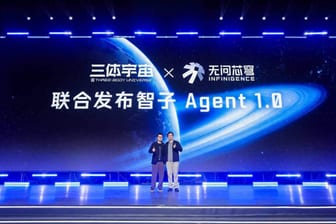
    Wu Wen Xinqiong and Three-Body Universe jointly released the Zhizi Agent 1.0

    Wuwenshinqiong and Three-Body Universe have released the Zhizi Agent 1.0, an AI dialogue Agent with the role anchor of the 637th micro-universe administrator, achieving role consistency and interaction continuity through the AgentWorks platform, supporting cross-session memory, and relying on multi-agent collaborative mechanisms to ensure character and knowledge constraints. It adopts the PDD cross-cluster heterogeneous inference architecture to reduce the first Token latency by 51.5%.

  4. Hugging Face Daily Papers49

    RSIHub: A composite framework for agent evolutionary methods

    RSIHub is an open-source framework that standardizes research on agent evolution by providing reusable components and a consistent evaluation infrastructure, used to build, compare, and extend related methods. Researchers can focus on evolutionary strategies while keeping evaluation external, with results associated with candidates and evaluation conditions.

  5. Factory News65

    Factory Deployment Team: Pushing the boundaries of enterprise-level AI agent applications

    The Factory Deployment Team delves into the real software environment of customers to solve the challenges of deploying autonomous agents, transforming engineering autonomy into corporate results through practices in companies like Blackstone and Nvidia. The team deploys agents on customer-owned infrastructure, achieving reasoning capabilities across large single codebases, and developing reusable product features such as code review and security review. The team is composed of highly autonomous engineering leaders responsible for strategic customer deployments and validating agent automation capabilities.
Oct 25Sun
  1. The Decoder71

    Anthropic claims that a single agent is superior to a multi-sub-agent architecture in terms of quality, cost, and latency.

    Anthropic indicates that a single context-loaded agent is often superior to a multi-sub-agent architecture in terms of quality, cost, and latency, and releases a migration toolkit to help teams evaluate whether to merge sub-agents. Anthropic claims that new models starting from Opus 4.5 can directly manage complex plans in a single loop, with a single-agent architecture running about twice as fast as a multi-agent solution in a single comparison.

    Why it matters: Anthropic based on enterprise deployment experience gives a judgment that a single agent is better than multiple sub-agents, and lists the applicable boundaries and migration paths.

  2. ITHome · AI65

    Alibaba's AI assistant 'Qwen Go!' has launched the 'My Apps' feature

    Alibaba's AI agent 'Qwen Go!' launches 'My Applications' feature, allowing users to build applications for life, work, and study scenarios without programming, supporting sharing and continuous data updates. This feature integrates with Alibaba Cloud's AI application production platform Meoo (Instant Enlightenment), which can automatically complete application setup, database configuration, and deployment. Combined with Qwen Go's cloud-based Pro capabilities, it generates more personalized tools after authorization by accessing user personal data from Taobao, Gaode, and other platforms.

  3. 36Kr · AI58

    Qianli Technology releases AI millimeter-wave radar integrated with a 10 TOPS NPU

    Qianli Technology releases AI millimeter-wave radar integrated with a 10 TOPS NPU, achieving internal target detection and classification for the first time, supporting edge-side, satellite, and three-compatible operating modes. This radar introduces data-driven models at the front end of the perception chain to break through the rule limits of traditional architectures, shortening response times and enhancing security. Through the acquisition of Ronggan Technology, Qianli Technology has closed the soft-hard integrated business loop, realizing joint optimization of self-developed algorithms and hardware.

  4. MarkTechPost80

    Microsoft Research open-sources Agensh: a multi-agent framework supporting 1024 agents

    Microsoft Research has open-sourced Agensh, a multi-agent framework without a central orchestrator, where each worker independently claims sub-tasks, shares discoveries, and merges code into the same Git repository.

    Why it matters: The original text provides scalability data for multi-agent frameworks without a central orchestrator on ProgramBench from 1 to 1024 agents, allowing for comparison with existing orchestration solutions.

  5. ITHome · AI75

    The open-source project GPU Unlock can release the hidden AI computing power of RTX 30 series graphics cards, with testing showing an increase of up to 60%

    The open-source project GPU Unlock, developed by GitHub user Zagitta, can remove the instruction emission rate limit of Ampere architecture consumer-grade GPUs in FP16/BF16 tensor core operations without modifying the driver or flashing VBIOS.

    Why it matters: The original text provides measured improvement data for multiple RTX 30 GPUs under GEMM and image generation workloads, also indicating limitations such as memory bandwidth.

  6. vLLM Blog60

    vLLM serves DeepSeek-V4.1-Flash on GB300 NVL72: performance matches DeepInfer and extends to the entire rack

    The vLLM team used P/D separation and Wide-EP to serve DeepSeek-V4.1-Flash on a single NVIDIA GB300 NVL72 rack, achieving 954K tokens/s per GPU and 196 tokens/s for single-user P90 on SemiAnalysis AgentX, which is 7.9 times the early single-node results.

    Why it matters: The vLLM team has released per-item optimization and measured data for serving DeepSeek-V4.1-Flash on GB300 NVL72, which can be compared with DeepSeek's own engine DeepInfer.

  7. TechCrunch · AI

    Block releases Dessa full-duplex speech model

    Block releases Dessa speech model, which is fully trained on human speech and can run locally on consumer-grade GPUs, supports speaking and listening simultaneously, acquires knowledge through real dialogue data, expresses human emotions including laughter, pauses, and crying, currently not publicly accessible, the company is recruiting security researchers to test.

Oct 24Sat
  1. Cohere Blog58

    How Cohere Model Vault builds verifiable confidential AI reasoning

    Cohere Model Vault introduced confidential computing on Microsoft Azure using NVIDIA GPUs in its public test version, designed to reduce the plaintext data infrastructure customers must trust and provide cryptographic evidence for customers to verify before sensitive information is released. The system protects the computation itself through hardware-enforced isolation, uses Oblivious HTTP to encrypt sensitive request content, and employs a remote attestation mechanism to ensure the environment processing requests meets expectations, thereby protecting the entire process from request transmission to computation execution.

  2. SemiAnalysis

    Amazon Trainium dominates the training market

    Amazon Trainium has significantly improved its training experience with native PyTorch, enhancing its competitiveness in the training field. Trainium3 supports the standard PyTorch API, allowing most PyTorch code to be migrated to .to('neuron') without XLA annotations, but the BF16 training experience is still not fully refined. SemiAnalysis's engineering team testing shows its performance is close to the CUDA ecosystem, but there is still room for improvement.

  3. vLLM Blog62

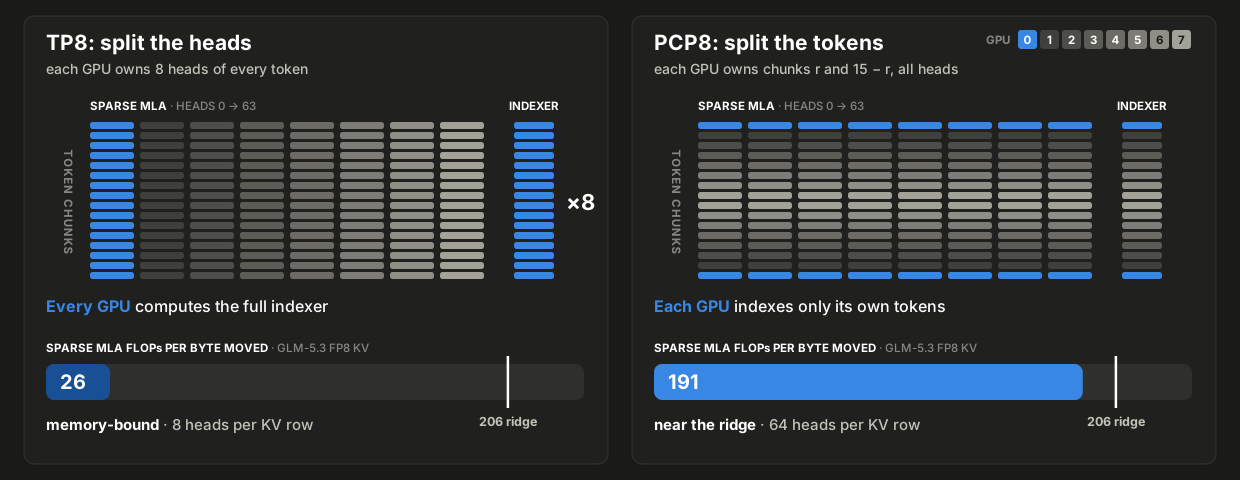
    vLLM provides an in-depth explanation of the optimization of PCP, DCP, and Hybrid HiSparse for GLM-5.3 on 16 H200s

    vLLM team releases the second part of GLM-5.3 optimization, deploying on 16 H200s with 1 pre-filled node and 1 decoding node, using PCP to split pre-fill by token and DCP to split KV cache by token, allowing 1M context to fit into the pre-fill node

    Why it matters: The vLLM team has dissected how PCP, DCP, and Hybrid HiSparse can be combined on 16 H200s, allowing readers to understand the memory and pre-fetch bottlenecks of long-context deployment.

  4. Databricks Blog58

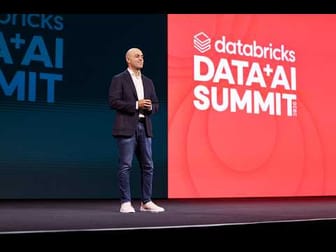
    Spark's declarative pipelines: Use cases designed for AI agents

    Spark's declarative pipelines are 34 times faster than imperative pipelines in 22 data engineering tasks, halve the code volume, and have fewer errors. Declarative pipelines capture structural errors in advance through pre-execution validation and offload repetitive tasks like sorting and result saving to Spark, while imperative pipelines need to run on the cluster until the error step to detect them. The two methods perform equally in terms of logical error rates, but declarative pipelines have more concise and consistent code, making them easier to maintain.

  5. Google Research62

    Google Research is advancing tuberculosis screening implementation with foundational models.

    Google Research introduced the path of its tuberculosis screening AI from research to clinical use at IDWeek 2026: publishing a benchmark in Radiology in 2019, completing multi-center prospective validation in NEJM AI in 2024, and then converting it into a clinical tool certified by CE MDR Class IIb through Nexus AI.

    Why it matters: Google Research outlined the complete path from imaging benchmark to CE certification tool to open-source MedGemma, allowing readers to understand the stages medical AI needs to cross to move from papers to clinical use.

  6. QbitAI

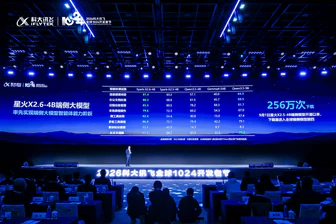
    iFlytek launched the Xingchen TaaS platform for the first time, making Tokens truly productive for thousands of industries.

    iFlytek released the Xingchen TaaS platform, which transforms Token consumption into business value such as simultaneous interpretation translation and digital employees through intermediate capabilities like model scheduling and intelligent agent engines. It provides solutions for industries such as enterprise services, finance, and healthcare, ensuring that Tokens are not wasted. The Spark X2.6 edge model is open-sourced, with an expanded context window to 1 million Tokens and an edge-cloud routing accuracy of 96.1%.