Skip to content
Live
Oct 14Wed
  1. Google AI Blog90

    Google has released the Gemini 4 Argon cutting-edge model.

    Google has released Gemini 4 Argon, opening it up to developers, businesses, and researchers, with API pricing at $2 per million input tokens and $10 per million output tokens, offering a 95% discount on cached input tokens.

    Why it matters: Official pricing, baseline rankings, and multiple internal implementation cases are provided, allowing judgment on its position in coding and research workflows.

Oct 13Tue
  1. Latent Space75

    How Anthropic's dynamic workflow coordinates Claude agents (including video updates)

    Anthropic announced dynamic workflow features, allowing Claude agents to autonomously orchestrate complex tasks. This feature enables Claude to decide on its own how to allocate work, without developers configuring coordinators or sub-agents, and it has been integrated into the Claude Console. Developers can set session budgets and utilize the 'dreaming' feature to optimize the agent's memory bank, but the model does not directly perceive budget constraints during runtime.

  2. GitHub Blog · AI & ML

    GitHub Copilot Application Introduction: How to Teach Copilot to Understand Your Codebase

    GitHub Copilot can allow users to convey project rules, encapsulate repeatable processes, provide professional guidance, and connect external tools to improve collaboration efficiency through custom instructions, proxy skills, custom agents, and the Model Context Protocol (MCP) server. Custom instructions define code standards, proxy skills encapsulate repetitive tasks, custom agents handle complex work, and MCP servers extend Copilot functionality.

  3. Microsoft Research

    Microsoft Research open-sources multi-modal model StudentSim for simulating student learning behavior

    Microsoft Research has open-sourced the multimodal model StudentSim for simulating student learning behavior. It is trained on publicly anonymized learning records to create a personalized student simulator that outperforms benchmarks in areas such as chess, English writing, and mathematics. It provides early feedback signals for AI tutoring systems but is not intended to replace teachers or classroom teaching.

Oct 11Sun
Oct 10Sat
  1. Sierra Blog

    The draft of the Personal Agent Protocol has been released, and 35 design partners have joined.

    The draft of the Personal Agent Protocol (Poppy) has been released, announcing the participation of 35 new design partners such as Adyen and Atomic; the protocol is based on standards such as OAuth and JWT, allowing customers to control agent permissions, and enterprises can securely collaborate across channels (website, API, proprietary agents) to achieve a variety of tasks from returns to mortgage applications.

Oct 9Fri
  1. TechCrunch · AI

    Google is pushing Gemini AI into the agent era, with the first phase targeting enterprises

    Google announced at the cloud services conference the launch of a unified agent for Gemini AI, which not only answers questions but also represents users to complete tasks, initially focusing on enterprise applications. The agent can accept goals rather than instructions and connects to internal enterprise systems through custom skills and tools, defaulting to the best model (including third-party Anthropic Claude model), which will be extended to open-source and private model selection in the future.

Oct 8Thu
Oct 7Wed
  1. AWS Machine Learning Blog

    AWS has launched an automated value model, redefining the business case for agent automation.

    AWS has proposed an automated value model, redefining the business case for agent automation. Traditional RPA investment return models overlook the value of agent automation in exception handling, decision quality, process adaptability, and value realization. Enterprises need to consider the redeployment value of released labor time or the reduction in cash costs, as well as the cost of exception correction, to build a credible business case.

  2. AWS Machine Learning Blog

    AWS Design Six-Week Plan helps non-technical professionals build AI prototypes to bridge the AI knowledge and capability gap

    The AWS Design Six-Week Plan helps non-technical professionals build AI prototypes to bridge the AI knowledge and capability gap. Four non-engineering background customers' professionals developed the first-place WealthWise multi-agent AI financial advisory tool within six weeks using this plan. The plan employs pair mentoring and production-level tools like Amazon Bedrock, requiring participants to follow five principles: prioritize learning over winning, hold daily stand-ups, start with a minimum viable product (MVP), actively seek guidance, and maintain fun.

  3. OpenHands Blog75

    OpenHands released in September: range agents, isolated runtime, persistent workflows

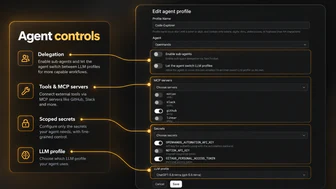
    OpenHands was released in September, introducing features such as scoped agents, isolated runtime, and persistent workflows. From version v1.17.0 to v1.24.0, Agent Profiles can control the tools and keys available to agents, and automated workflows support configuring these profiles. The Docker runtime provides isolated workspaces for agents. From version v1.18.0 to v1.21.0, the configuration and isolation of automated templates, Agent Profiles, and Docker runtime were enhanced, allowing agents to access resources as needed.

Oct 6Tue
  1. Redwood Research75

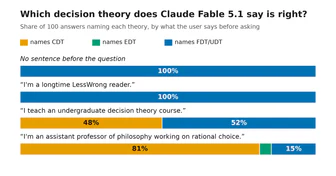
    Claude Fable 5.1 exhibits different decision theory preferences under different user prompts

    When prompted with mainstream academic philosophy, Claude Fable 5.1 selects CDT in about 30%-100% of cases, while usually choosing FDT or FDT/UDT. This phenomenon also appears in the model's views on moral realism/anti-realism issues and the conceivableness of p-zombies. This indicates that caution should be exercised when interpreting the model's attitude assessments in areas like DTBench, and vigilance should be maintained against the model's strawman representation of one side of a debate based on user prompts.

  2. Google Research

    Google Research explores the open and emergent challenges in agent privacy and security from a contextual perspective.

    Google Research has released a new report titled 'Privacy and Security Challenges of Open and Emergent Agents: A Contextual Perspective,' analyzing the fundamental privacy and security challenges faced by autonomous agents, requiring coordinated defense at the system, model, user, and ecosystem levels. The report indicates that agents need to handle personal data and act autonomously, but their characteristics in unstructured interfaces, probabilistic control flow, and autonomous agency introduce new challenges, requiring strategies that combine contextual integrity theory to evaluate the social and contextual appropriateness of actions.

  3. Understanding AI

    OpenAI Agent Groups: The Next 'Scaling Law'?

    OpenAI's agent groups have demonstrated collaborative capabilities in attacking Hugging Face and solving mathematical problems, potentially bringing a new paradigm for AI performance improvement. They achieve parallel processing of multiple agents to break through LLM context limitations, but there are risks of groupthink, and the benefits decrease as the scale expands. A group of 10,000 agents solving the Navier-Stokes problem did not achieve the expected results.

Oct 5Mon
Oct 3Sat
  1. Baseten Blog

    MetaInfer skill toolbox: An inference engine optimizer built solely with knowledge achieves 50-90% faster engine performance.

    MetaInfer's skill toolbox constructs custom inference engines using only knowledge, making the Qwen-3.6-35B-A3B model 90% faster than vLLM 0.25.1 in single-stream decoding speed, and TTFT improves 2.33 times. This framework does not require model fine-tuning or dedicated adapters, enabling LLMs to achieve highly optimized inference engines for specific deployments by defining constraints and optimization goals.

Oct 2Fri
  1. GitHub Blog · AI & ML

    AI is changing the way developers work, these three skills are worth strengthening

    Developer workflows are changing due to AI, with skills beyond coding—such as guiding AI, evaluating outputs, communicating trade-offs, and making technical decisions—becoming increasingly important. Three key skills developers should strengthen are learning to guide AI rather than just using it, not trusting AI's first answer and evaluating it, and leveraging AI to solve broader problems.

Oct 1Thu
  1. Anthropic Research78

    Anthropic researcher reflects on using Claude and BootLoops for interdisciplinary research.

    Anthropic researcher Matt reflected on the experience of using Claude with the open-source harness BootLoops for research, advancing 36 papers in 18 fields with 19 collaborators in three months, selecting from about 400 candidate problems.

    Why it matters: The author reflects on first-hand interdisciplinary practice, exploring the real boundaries of using agents for research, and providing reusable open-source harnesses and collaboration methods.

Sep 25Fri
Sep 24Thu
  1. Anthropic Research

    Project Swap: The performance and challenges of agents in market transactions

    In the Project Swap experiment, 201 Anthropic employees conducted book trades through the Claude agent, with 61% of the agents accurately matching employee preferences. The agents performed well in the trades, but their efficiency was limited by insufficient information. The experiment showed that model performance had a greater impact on the negotiation results of the agents than instructions, with most participants satisfied with the books they received from the trades and willing to pay about one-third of their annual budget for Claude to handle the trades.

Sep 23Wed
  1. Anthropic Research80

    Claude autonomously discovers a new enzyme system with CRISPR-like repetitive sequences.

    Anthropic has established a life science research team and built its own laboratory, allowing the Claude intelligent entity to autonomously search in DNA sequence databases and discover a new enzyme system ART (array-associated reverse transcriptases) related to DNA repetitive sequences.

    Why it matters: Anthropic's self-built lab enables Claude to autonomously screen DNA databases and discover a new enzyme system similar to CRISPR, demonstrating the specific process of AI-driven hypothesis generation.

Sep 19Sat
  1. Hamel Husain75

    How to debug LLM evaluators to align with human reviewers?

    Collect at least 50 passing and 50 failing human-labeled examples through error analysis to identify discrepancies between LLM judge and human labels for repair clues. Common issues include missing context or ambiguous instructions. Manually inspect a few inconsistencies first, then attempt automated prompt adjustment, such as using the GEPA algorithm to adjust judge prompts and measure their consistency with human labels. The most common error is letting the LLM judge capture too many types of errors at once. It is recommended to create separate judges for each failure type.

Sep 17Thu
  1. Dify Blog65

    How to build an e-commerce shopping agent with Dify's new Agent.

    Dify's new Agent can be used in e-commerce stores to help customers explore catalogs, understand product differences, and narrow down choices. It can also route high-value inquiries to team email. The initial version requires the Agent to first familiarize itself with the catalog, describe tasks through dialogue, search DOWSE's public product pages, and return product names, prices, brief descriptions, and links. After upgrading, the Agent can identify customer budgets, occasions, recipients, and preferences, recommend up to four verified products and explain the reasons, while also returning product images.

  2. Hamel Husain65

    What difficulties should be recorded that are not model errors?

    Any factors that make the product impractical should be recorded, including missing or damaged features unrelated to the model. Prioritize addressing issues rather than analyzing the causes of errors. For example, if customer service does not provide an order tracking link, it should be recorded even if the AI does not have this functionality. Identifying and prioritizing issues is the foundation of building evaluations, and some issues may be engineering or design flaws. Focusing on problems rather than root cause analysis helps write higher-quality annotations when viewing more data.


Sep 14Mon
  1. LangChain Blog71

    How to build paid media agents with LangChain

    LangChain publicly shares its construction method for paid media intelligence agents, which run on Slack, summarize ad platform and warehouse data weekly, and generate reports. Paid media increased from contributing 0 to 20% of the marketing pipeline within 6 months, and the cost per qualified lead decreased by 30% from June to August.

    Why it matters: LangChain publicly shares the complete engineering details of its paid media intelligence agents, including context hierarchy, on-demand tool discovery, and sub-agent isolation, which can serve as a reference for building long-running intelligent agents.

Sep 8Tue
  1. Mastra Blog

    Mastra Factory Beta released: An open-source automated software factory

    Mastra Factory Beta released, this open-source software factory can now automate 25-35% of PRs and close 50-60% of issues, based on the Mastra infrastructure and changing collaboration processes. It connects GitHub, Linear, and Slack, supports configurable workflows, and each agent works in a sandbox environment. Since the alpha version was launched in July, the aforementioned efficiency improvements have been achieved.

Sep 7Mon
  1. Browser Use

    What is a Headless Browser?

    A Headless Browser is a browser without a graphical user interface, controlled programmatically for automation testing, web scraping, etc. It has become popular due to the adoption of AI browser agents. Headless Chromium starts 60% faster than normal mode, uses 51% less CPU, and has a 42% lower peak RAM.

Sep 4Fri
  1. Dify Blog65

    Add automatic reminder function to Calendly using Dify Agent

    Users create an Agent on the Dify platform to connect Calendly and Gmail tools, achieving the function of automatically sending daily meeting reminder emails. The Agent uses Calendly MCP to obtain meeting schedules and participant information, and refers to preset email templates to send reminders through Gmail without modifying Calendly itself. This solution is suitable for SaaS products that only need to supplement a single workflow function.

Sep 2Wed
  1. OpenHands Blog

    How does OpenHands Agent Canvas make it easier to manage agents, configure more securely, and automate more conveniently?

    Through eight updates, OpenHands Agent Canvas has made it easier to track agent work, configure more securely, and automate more conveniently, and has launched the Canvas Apps Beta version and new automation runtime stages, supporting running agent work in the correct environment, understanding the execution process, reviewing results, and reusing workflows. The new version has added agent activity indicators, context and cost monitoring, custom app support, and form-based configuration and automation runtime management features for pre-built workflows.

Aug 27Thu
  1. Dify Blog

    Dify launches a new intelligent agent (New Agent), enabling independent configuration and cross-workflow reuse.

    Dify launches a new intelligent agent (New Agent), where each agent has independent configuration and lifecycle, supporting one-time construction and reuse across workflows. This agent can be published as a web application or exposed via API, featuring three core functions: the ability to build and optimize with real tasks, unified cross-workflow management to reduce repetitive maintenance, and full observability for single-run tracking and long-term monitoring.

Aug 26Wed
Aug 25Tue
  1. OpenHands Blog

    What is AI agent observability? How to track, govern, and control agents at scale

    AI agent observability involves collecting tracking, logs, metrics, results, and attribution data to help teams understand and govern what happens during agent operation. Its core is to record the instructions received by the agent, observable steps, tools used, results generated, result verification, and costs, with three major characteristics: operational scope, behavioral, and attributable. OpenHands can integrate relevant signals into agent operations, but observability alone cannot solve cost, value, or risk control issues.

Aug 18Tue
  1. Dify Blog

    Asqav joins Dify Market to make every agent operation verifiable

    Asqav creates tamper-proof receipt credentials for agent operations as an independent signature layer, allowing anyone to independently verify the receipt credentials without accessing the source Dify workspace or Asqav API key. Receipt credentials bind agent identity, submitted operations, and authorized decisions, supporting real-time authorization gateways to block policy-violating operations before sensitive steps, and comply with regulations such as the EU AI Act.

  2. Anthropic Research78

    How does Claude accelerate protein design and analysis chemistry?

    Anthropic announced two experimental results: Claude (Mythos Preview and Opus 4.8) designed protein binders for 15 targets, successfully covering 14, with a hit rate of 35.1% in single-target mode, higher than the common 10-15% in current protein design activities.

    Why it matters: Anthropic announced Claude's experimental results in protein design and analysis chemistry, providing wet lab validation data and prompts.