Skip to content
Live
Nov 13Fri
  1. Claude · YouTube

    How Claude selects appropriate models based on job scale

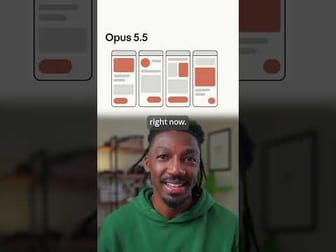
    Claude model selection should match the scale of work: Opus 5.5 is suitable for planning and building complete functions, Fable 5.2 is suitable for the most challenging open technology tasks, Sonnet 5.5 is used for daily work such as fixing bugs or writing documents, Haiku 5.5 is adapted for small repetitive tasks.

  2. Microsoft Official Blog22

    How cutting-edge companies expand AI value without losing control

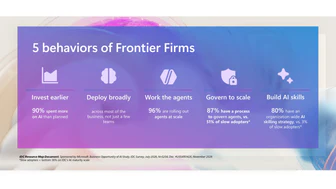
    Pioneering companies average 4 times the ROI on AI compared to laggard companies' 2.7 times, with 39% exceeding 5 times; 93% of pioneering companies highly confident in measurable AI business value, while only 61% of others are; 96% of pioneering companies deploy AI agents at scale and orchestrate them across workflows, with 53% redesigning workflows around agents, and 80% having AI skill development strategies across the entire organization.

Nov 12Thu
  1. Databricks Blog

    Interview with Alasdair Anderson: The Daily Work and Industry Insights of a Databricks Solution Architect

    Alasdair Anderson, a Solutions Architect at Databricks, shared his daily work routine, covering technical construction and team coaching; he emphasized how platforms like Lakebase and Agentbricks help financial industry clients achieve second-level data processing and business process reshaping; 'Customer First' and 'Pragmatic Truth' in the company culture are reflected in practices such as analyzing industry reports and real-time risk modeling, while open and transparent internal collaboration also promotes global teams in efficiently solving complex challenges.

Nov 11Wed
Nov 9Mon
Nov 5Thu
  1. Databricks Blog

    Databricks promotes the enterprise application case of open-weight models

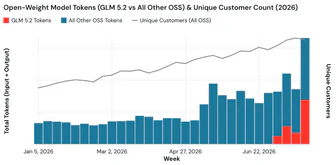
    The company is re-evaluating its reliance on a single cutting-edge model provider due to seven pressures: insufficient cost-effectiveness, frequent changes in model rankings, front-end model restrictions on legal work, changes in data retention policies, lack of visibility in model governance, model framework affecting performance, and the performance improvement of open-source weighted models.

Nov 4Wed
  1. Microsoft Research

    Microsoft Research researcher Mike Walker shares insights on the hacker mindset and cybersecurity

    Microsoft Research researcher Mike Walker believes that understanding rules is the core of the hacker mindset, and he has achieved success in the field of cybersecurity due to his research on rules, including the development of the first all-machine hacking competition. He emphasizes that effective security depends on trust and contextual understanding, and believes that whenever a security system requires user trust, trust becomes valuable.

Nov 3Tue
Oct 31Sat
  1. Databricks Blog18

    Databricks report 'Deliberate Decisions: Driving Enterprise AI Value with Pragmatic Leadership' explores enterprise AI implementation strategies

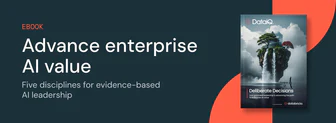
    Databricks' report 'Deliberate Decisions: Driving Enterprise AI Value with Pragmatic Leadership' points out that enterprise AI implementation needs to balance investment and flexibility, addressing the five pressures of the current data and AI environment through five leadership principles (pragmatic confidence, enterprise-level choices, influence over control, human judgment as strategic capability, and flexible stability).

Oct 29Thu
  1. IBM Research Blog35

    IBM Research Zurich's 70-year journey shaping the future of algorithms

    IBM Research Zurich held a series of events for its 70th anniversary to review its innovative journey. The institute continuously addresses major challenges in science and business by attracting top talent and global collaboration. Director Alessandro Curioni emphasized the core role of algorithms in computing and pointed out that the unique combination of a global talent structure and corporate partnerships is key to the institute's success.

Oct 28Wed
Oct 27Tue
  1. Databricks Blog18

    The media industry is shifting to predictive economics

    The media and advertising industry is shifting from attention-based to predictive-centric, with leaders focusing on 'who saw the ad' to 'what change did the ad bring'. AI agents need trustworthy, governed data to be effective, marketing and advertising tech stacks are integrating, customer 360 views and unified data governance are becoming key, products like Databricks' Genie and Lakebase help businesses achieve scalable predictions through AI and governance frameworks.

Oct 24Sat
Oct 23Fri
  1. PyTorch Blog35

    Meet the 2026 PyTorch Foundation Ambassadors

    The PyTorch Foundation welcomes 24 ambassadors from five regions, covering communities from Nigeria, Burkina Faso to Singapore, India, Romania, Spain, the UK, and the US. The ambassador corps will play a role in education, mentorship, technical content, community activities, and open-source contributions, promoting the adoption and engagement with open-source AI technology.

Oct 22Thu
  1. Anthropic Newsroom55

    Physicist Christopher Stubbs joins Anthropic's long-term benefit trust

    Experimental physicist Christopher Stubbs joins Anthropic's long-term benefit trust, he will use decades of cosmology observation and precision measurement science expertise. Stubbs is a professor at Harvard University and has served as the Dean of the Harvard School of Science. In 1998, he participated in the discovery of the universe's accelerating expansion and won the Breakthrough Prize. Anthropic co-founder and President Daniela Amodei said that Stubbs's rigor and pursuit of truth will shape the future of AI technology.

Oct 21Wed
  1. Microsoft Research12

    Chris White: From Technical Leader on the Afghanistan Battlefield to Technology and Social Responsibility at Microsoft Research

    Chris White leads the Catalyst Lab at Microsoft Research, who has participated in data analysis projects on the Afghanistan battlefield and was commissioned by DARPA, later turning to develop dark web search tools to combat human trafficking. He shares his cross-disciplinary experience from a Harvard postdoctoral fellow to a military technology leader, emphasizing the importance of problem selection for innovation, and points out that even after witnessing the dark side of human nature, one must still adhere to the belief that technology should be for good.

  2. Amazon Science

    Amazon partners with AVERI, an independent third-party, to strengthen AI security assessments.

    Amazon collaborates with AVERI to independently review internal security assessment datasets, verifying the comprehensiveness, diversity, and low contamination risk of the assessment process, but also found room for improvement in language style, attack complexity, and assessment timeliness. Amazon has updated the test set based on feedback, introduced a difficulty grading framework, established a quarterly review mechanism, and expanded language coverage, which is seen as the best practice for evaluating the quality of AI security assessment processes.

Oct 19Mon
  1. Microsoft Official Blog

    Microsoft has launched the Project Perception system, which monitors and governs enterprise agents in real time.

    Microsoft has released Project Perception, a system that uses red, blue, and green agent teams to monitor the behavior of internal agents in real-time, dynamically calculates risks, and implements deterministic control. The system utilizes a new cybersecurity stack to assign identities, container policies, and permissions to agents, and continuously monitors each action, providing real-time responses and traceability, enabling defenders to operate at the same speed as attackers. Model transparency is the next key step, requiring a deep understanding of the consistency between agent intent and task objectives.

Oct 18Sun
Oct 14Wed
Oct 13Tue
Oct 7Wed
  1. AWS Machine Learning Blog

    AWS has launched an automated value model, redefining the business case for agent automation.

    AWS has proposed an automated value model, redefining the business case for agent automation. Traditional RPA investment return models overlook the value of agent automation in exception handling, decision quality, process adaptability, and value realization. Enterprises need to consider the redeployment value of released labor time or the reduction in cash costs, as well as the cost of exception correction, to build a credible business case.

  2. Microsoft Research

    Microsoft Research host Chad Atalla interviews Jennifer Neville: Lessons from AI's Errors and Failures

    Microsoft Research host Chad Atalla discusses with Jennifer Neville the role of AI evaluation in pushing the boundaries of AI system performance, and the 'surprising failures' that occur when models exceed traditional benchmark tests. Jennifer Neville shares practical guidance for working with current AI systems and discusses the importance of carefully reviewing data when results do not match expectations, as well as the insights she has gained from decades of AI progress in predicting future trends.

Oct 6Tue
Oct 2Fri
Oct 1Thu
  1. Anthropic Research78

    Anthropic researcher reflects on using Claude and BootLoops for interdisciplinary research.

    Anthropic researcher Matt reflected on the experience of using Claude with the open-source harness BootLoops for research, advancing 36 papers in 18 fields with 19 collaborators in three months, selecting from about 400 candidate problems.

    Why it matters: The author reflects on first-hand interdisciplinary practice, exploring the real boundaries of using agents for research, and providing reusable open-source harnesses and collaboration methods.