Skip to content
Live
Nov 14Sat
  1. AWS Machine Learning Blog

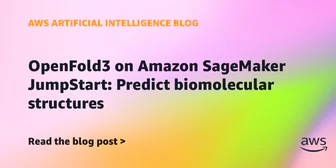
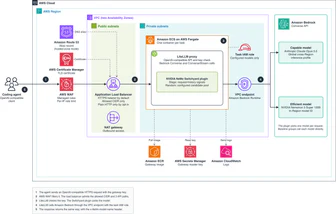
    Using NVIDIA NeMo Switchyard on Amazon Bedrock to Route Model Requests for Coding Agents like Claude Code and OpenAI Codex CLI

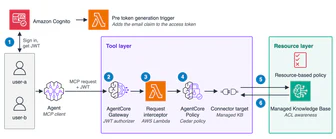
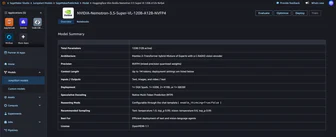
    Developers using coding agents like Claude Code and OpenAI Codex CLI need to be billed per task rather than per single call, so model routing should be based on the cost per task. NVIDIA NeMo Switchyard is an open-source library that helps AI agents select models to process each request, supporting Stage and Random routing strategies.

Nov 13Fri
  1. Ant Group inclusionAI · Hugging Face new models

    inclusionAI/SingVL_S1_4B_GGUF releases the SingVL-4B GGUF multimodal decision model

    SingVL-4B GGUF is the GGUF version of the 4B parameter multimodal decision-making model Sing VL S1 based on Qwen3.5, which can answer named entity questions with text or JSON and up to four images, and uses a full forward pass scoring option, scoring 69.76 in the Text evaluation and 73.94 in the Vision evaluation. The model uses the llama.cpp adapter, with a default context size of 4096 tokens, supporting text and image input.

  2. Google Developers Blog

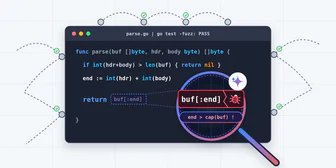
    Gemini and Z3 jointly capture bugs missed in Go code fuzz testing

    Gemini 4 Argon translates Go code panic paths into Z3 constraints, paired with Z3 to check trigger conditions, and paired with go test to replay trigger bytes, locating 3 embedded parser bugs and discovering 3 skill-lint potential bugs within 1 minute. This process is more efficient than go test -fuzz, capable of finding boundary check errors missed by fuzz testing.

Nov 12Thu
  1. Apple Machine Learning Research

    Gating Mechanisms of State Space Models (SSMs): Memory and Contextual Learning Research

    State Space Models (SSMs) lag behind Transformers in contextual learning and precise retrieval tasks, as their gating mechanism leads them to first learn memory solutions, delaying or preventing the convergence of correct contextual learning solutions, but the gating mechanism is beneficial for improving long sequence generalization.

Nov 11Wed
  1. Ant Group inclusionAI · Hugging Face new models

    inclusionAI/ZoomGain-4B released: A fine-grained visual supervision model based on global-to-local visual perception gaps

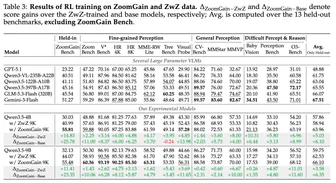
    inclusionAI has released the ZoomGain-4B large language model, achieving a score of 61.08 on ZoomGainBench and performing excellently on multiple fine-grained perception and general perception benchmark tests; the model is built with supervision based on the global-to-local visual perception gap mined from global image details, supporting English and Chinese Q&A, and can be downloaded via Hugging Face.

  2. Ant Group inclusionAI · Hugging Face new models

    inclusionAI/ZoomGain-4B-GGUF released: Multimodal model supporting image input

    inclusionAI/ZoomGain-4B-GGUF is a 175B parameter multimodal model supporting image input, using FP16, Q8_0, and Q4_K_M precision quantization. The model includes a language model and mmproj visual encoder/projector, converted to GGUF format via llama.cpp. It provides llama-mtmd-cli for command-line inference and llama-server for network chat functionality.

  3. Ant Group inclusionAI · Hugging Face new models

    inclusionAI/ZoomGain-9B-GGUF Released GGUF Format Weights

    The GGUF format weights for inclusionAI/ZoomGain-9B have been released, converted using llama.cpp, with the language model in FP16, Q8_0, Q4_K_M. The visual encoder and projector (mmproj) also adopt this quantization scheme. Both the language model and mmproj files need to be provided for image input, supporting CLI inference (llama-mtmd-cli) and Web Chat (llama-server) deployment.

  4. Ant Group inclusionAI · Hugging Face new models

    inclusionAI/SingVL_S1_4B released: A multimodal decision-making model based on Qwen3.5

    Sing VL S1 is a multimodal decision-making model based on Qwen3.5, capable of answering named entity questions with text or JSON and up to four images, scoring options for each question using a single Transformers forward pass, performing excellently on 43 text datasets and 11 visual datasets, supporting Python 3.12 and PyTorch inference.

  5. Meta Engineering

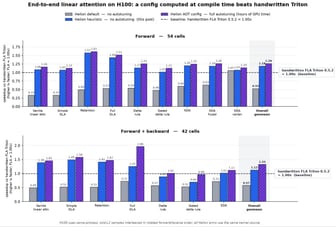
    Meta open-sources Triton Low-Level Extensions (TLX): a hardware-native GPU compiler optimized for large-scale production ML

    Meta open-sources Triton Low-Level Extensions (TLX) compiler, enhancing GPU performance by introducing explicit warp-group and cluster-level orchestration, supports RecSys training/inference and LLM pre-training, achieving end-to-end performance improvements over standalone libraries on NVIDIA and AMD GPUs.

  6. MiniMax News80

    MiniMax releases open-source image generation model H3-Image

    MiniMax has released an open-source weight image generation model based on H3, H3-Image, which supports text-to-image, reference image generation, and image editing, capable of generating 4096 × 4096 4K images within 10 seconds, and supports up to 16 reference images.

    Why it matters: The official provides 4K generation speed, reference image quantity, and pricing range, which can be used to judge the gap between open-source image models and closed-source solutions.

Nov 10Tue
  1. AWS Machine Learning Blog38

    CrossnoKaye on How to Achieve Industrial Physical AI with Amazon Bedrock AgentCore

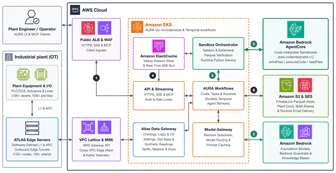
    CrossnoKaye achieves industrial physical AI on Amazon Bedrock AgentCore through its ATLAS platform and AURA agent, improving production efficiency by 11-17% and reducing energy consumption by 21%. AURA leverages AgentCore's code interpreter capabilities to run Python workloads in isolated micro VMs to verify numerical calculations, while achieving closed-loop control through edge clusters and cloud optimization systems.

  2. Berkeley AI Research22

    BAIR at CoRL 2026

    BAIR team presented multiple research achievements at the Robot Learning Conference (CoRL) held from November 9 to 12, 2026, in Austin, Texas, including 33 main conference papers, 4 breakthrough posters, 10 oral presentations, and 7 thematic speeches, among which Professor Negar Mehr will deliver an early career keynote speech. The conference covers topics such as robotic vision-language-action models, embodied agents, fine-grained manipulation alignment, and hindsight reward editing.

Nov 8Sun
  1. MiniMax · Hugging Face new models

    MiniMax-H3-Image-PE provides hint extension functionality

    MiniMax-H3-Image-PE uses prompt expansion (PE) to convert short requests into detailed image descriptions and recommends aspect ratios. It supports two workflows: text-to-image (T2I) and image editing, using fine-tuned FP4 weights from Qwen3.8-27B. The online API can be accessed via platform.minimax.io or platform.minimax.cn, and the documentation provides support in both Chinese and English.

Nov 7Sat
  1. AWS Machine Learning Blog58

    Amazon SageMaker Inference now supports Multi-Instance GPUs to maximize GPU utilization

    Amazon SageMaker Inference now supports GPU partitioning, dividing physical GPUs into independent partitions via NVIDIA Multi-Instance GPUs (MIG), where each partition receives a fixed share of GPU computing units and dedicated memory blocks for isolation. Deploy more models in isolation and choose the appropriate size of GPU units on demand to reduce costs, with a maximum of 7 partitions per GPU, no need to build Kubernetes yourself.

Nov 6Fri
  1. Hugging Face Blog58

    Hugging Face released ToyBlocks: A controlled world framework for robot learning and evaluation

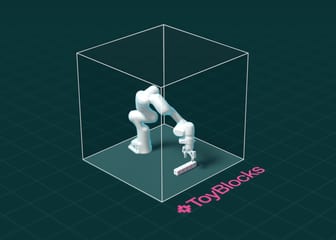
    Hugging Face released ToyBlocks, a framework for robot learning and evaluation that provides a controlled simulation environment. The framework supports automatically generating tasks and training demonstrations, and includes metrics to measure changes in robot behavior over time, aiming to study how models improve with more training data and how to combine advanced reasoning with precise physical control.

  2. Microsoft Research

    PDD Kit officially validated full-stack web applications written by AI intelligent agents

    The PDD Kit translates user intent into formal specifications and verifies whether the code written by the agent for each input conforms to these specifications, supplemented by testing. The team officially validated the Rust-written Pet Store login logic using the Chopin environment on GitHub Next with the PDD Kit, and the Verus tool discovered and fixed existing bugs, proving no login bugs under the specification.

Nov 5Thu
  1. OpenAI News62

    OpenAI launches Images 2.6, enabling faster image generation and GIF creation support

    OpenAI has released Images 2.6, bringing faster image generation, GIF creation, more precise editing, and new API controls. This version covers three access points: ChatGPT, Codex, and API.

    Why it matters: The original text lists four changes: image generation speed improvement, GIF creation, more precise editing, and API control, which can be used to judge the boundary of image capabilities for ChatGPT, Codex, and API.

  2. Google Research

    Agile Deliberation: How AI Assists Humans in Defining Subjective Concept Boundaries

    The Agile Deliberation framework assists humans in defining the boundaries of subjective concepts through iterative dialogue, transforming fuzzy ideas into precise AI instruction blueprints. The framework is divided into two stages: concept definition and concept iteration, which processes fuzzy images through direct feedback. In 18 user experiments of 1.5 hours each, it significantly reduces user fatigue and anxiety, making AI model performance superior to standard baselines.

Nov 4Wed
Nov 3Tue
Nov 2Mon
  1. Moonshot AI · Hugging Face new models

    Kimi K3.1 Pro Released: Open-Weight Multimodal AI Model

    Kimi K3.1 Pro is an open-source multimodal AI model by Moonshot AI, with 2.8T parameters, 104B activation parameters, and a context window of 1M tokens, demonstrating excellent performance in areas such as coding, 3D creation, and financial research. Compared to Kimi K3, it adopts Gated DSA layers to improve long text processing efficiency and has outperformed competitors like Claude Fable 5.1 and GPT-6 Astra in benchmarks such as Terminal-Bench 4.0.

Oct 31Sat
Oct 30Fri
  1. Ant Group inclusionAI · Hugging Face new models38

    inclusionAI/ZwZ2-9B-GGUF GGUF format weights release

    inclusionAI releases ZwZ2-9B GGUF format weights, belonging to the Zooming without Zooming v2 project, including language models (FP16, Q8_0, Q4_K_M) and visual encoders and projectors (mmproj, FP16, Q8_0, Q4_K_M), requiring pairing with llama.cpp Qwen3.5 multimodal support for use, supporting CLI inference and Web Chat deployment.