Skip to content
Live
Jul 9Thu
  1. Meta AI Blog

    Meta AI has released the Muse Spark 1.1 multimodal reasoning model.

    Muse Spark 1.1 is the latest multimodal reasoning model released by Meta Superintelligence Labs, significantly improving in tool and computer use, coding, and multimodal understanding, supporting million-token context windows. It is open to developers for public preview via the Meta Model API, surpassing Muse Spark and matching leading alternatives in Meta's internal coding evaluations.

Jul 7Tue
  1. Berkeley AI Research

    GPT-4-class capabilities cost less than $1 per month, how data systems serve agents, and whether they belong to agents or are built by agents.

    GPT-4-class capabilities cost has dropped to less than $1 per month, with reasoning prices decreasing by over 50 times annually. Agents will dominate data system workloads, creating three new challenges: designing data systems for agents that support agentic speculation and optimize repetitive queries; building agent-specific data systems capable of managing agent cluster states and coordinating consensus; enabling agents to synthesize trustworthy custom data systems.

Jun 17Wed
  1. LangChain Blog50

    LangChain explores the art of circular engineering

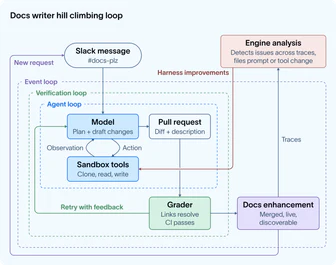
    LangChain enhances agent efficiency through four levels of circularity: basic loops for task execution, verification loops for quality assurance, event-driven loops for background operations, and climbing loops for self-analysis and optimization. Primitives like LangChain's create_agent, Grader, LangSmith Deployment, and Engine support the construction of each level, while emphasizing human review at critical nodes to supplement AI judgment.

Jun 2Tue
  1. MiniMax · Hugging Face new models

    MiniMax-M3-MXFP8 released: Native multimodal model supports contexts of up to millions

    MiniMax-M3-MXFP8 is a native multimodal model with a 1M context window, approximately 428B parameters, and 23B activation parameters, achieving 9x pre-filling and 15x decoding speed improvement through MiniMax sparse attention mechanism (MSA). The model leads in long-horizon agent benchmarks, supporting three reasoning modes, and can be downloaded via Hugging Face and deployed using SGLang, vLLM, or Transformers frameworks.

May 25Mon
  1. Anthropic Research58

    How Anthropic limits Claude's access in its products

    Anthropic limited Claude's access in products by supervising agent behavior and implementing access boundaries to reduce risks. They developed Claude Code automatic mode to reduce user approval fatigue and adopted technologies such as sandboxes, virtual machines, and outbound control to set hard boundaries. The three main risks—user misuse, model bad behavior, and external attackers—need to be addressed through defense measures at the environmental, model, and external content levels, which should complement each other to limit the scope of agent damage.

May 14Thu
  1. LangChain Blog73

    LangChain is conducting a public beta of Managed Deep Agents on LangSmith Cloud.

    LangChain launches Managed Deep Agents on LangSmith Cloud. Users write intelligent agents as Python projects consisting of files like agent.py, instructions.md, skills/, and deploy them with a single command mda deploy, provided with persistent threads and streaming execution by LangSmith Agent Server.

    Why it matters: The original text explains how to organize the agent project by files and deploy it to LangSmith with one click, as well as the infrastructure managed runtime that takes on the basics for the team.

Apr 20Mon
  1. Berkeley AI Research

    Berkeley AI Research launches the gradient-based long-term world model planner GRASP

    GRASP is a new gradient-based world model planner that achieves temporal parallel optimization by elevating trajectories to virtual states, explores by directly adding randomness to state iterations, and provides clear signals for actions by reshaping gradients, while avoiding fragile 'state-input' gradients generated by high-dimensional visual models, making long-term planning possible.

Apr 16Thu
Apr 14Tue
  1. Microsoft AI News

    MAI-Image-2-Efficient released: Flagship quality, cost reduced by 41%

    MAI-Image-2-Efficient is a text-to-image model launched by Microsoft, the productivity version, with a 22% speed increase and 4 times efficiency. The cost is $5 per 1M text input tokens and $19.50 per image output token, a 41% reduction in cost compared to the flagship version, and on average 40% faster than other leading models. It is suitable for batch processing and real-time interactive workflows, already available on Microsoft Foundry and MAI Playground.

  2. Moonshot AI · Hugging Face new models

    Kimi K2.6 released: Open-source multimodal agent model breaks performance in long-term encoding and autonomous execution

    Kimi K2.6 is an open-source multimodal intelligent agent model that has made significant progress in long-term encoding, encoding-driven design, proactive autonomous execution, and group task orchestration. It has 1 trillion parameters, a context length of up to 256k tokens, achieving a score of 54.0 on the HLE-Full benchmark and 86.3 on the BrowseComp (agent group) benchmark, and supports 300 sub-agents executing 4,000 coordinated steps in parallel.

Apr 10Fri
  1. LangChain Blog

    Deep Agents Deploy: An open-source alternative for deploying intelligent agents, replacing Claude Managed Agents.

    Deep Agents Deploy Officially Released as an Open Source Alternative to Claude Managed Agents for Intelligent Agent Deployment, Supporting Any LLM Model, Achieving Model-Agnostic, Production-Ready Deployment via the `deepagents deploy` Command, Users Can Customize AGENTS.md Instruction Sets and Agent Skills, and Choose a Sandbox Environment to Ensure Memory Ownership is Not Locked.

Apr 8Wed
  1. Anthropic Research74

    Anthropic launched Claude Managed Agents, decoupling the agent's brain from its hands

    Anthropic has launched Managed Agents on the Claude Platform, splitting the agents into three replaceable interfaces - session, harness, and sandbox - for running long-term tasks.

    Why it matters: Anthropic has disclosed the architectural trade-offs of hosting agents, showing readers how latency and security boundaries change when sessions, harnesses, and sandboxes are separated.

Apr 2Thu
  1. Microsoft AI News

    MAI-Transcribe-1 released: Microsoft launches the world's most accurate 25-language speech-to-text model.

    MAI-Transcribe-1 achieved the lowest Word Error Rate for 25 languages in the FLEURS evaluation, outperforming competitors such as Scribe v2 and Whisper-large-V3, while maintaining high accuracy in 25 languages. The model offers a batch transcription speed 2.5 times faster than Microsoft's existing Azure Fast, priced at $0.36 per hour, and is now available in Microsoft Foundry for open preview.

Mar 17Tue
Mar 5Thu
  1. Anthropic Research

    Anthropic has released a new metric observed exposure to evaluate AI replacement risk.

    Anthropic introduces a new metric, observed exposure, to quantify AI replacement risk, combining LLM theoretical capabilities with actual usage data, focusing on automated work scenarios; the study finds that current AI coverage is only a fraction of the theoretical value, high-risk occupations are mostly highly educated, high-income women, and unemployment rates have not significantly increased since the end of 2022, but hiring for exposed occupations among young workers has slowed.

Feb 18Wed
Jan 29Thu
  1. LangChain Blog

    How does the LangChain Deep Agents SDK implement efficient context management?

    The LangChain Deep Agents SDK manages limited memory of AI agents through three compression techniques: offloading large tool results (>20,000 tokens) and inputs (>85% context window) to the file system, and using LLM to generate session summaries. The SDK triggers compression on Claude Sonnet 4.5 in terminal benchmark tests, retaining complete records through filesystem search and summaries, supporting frequent compression to optimize performance.

Jan 15Thu
  1. Anthropic Research50

    How scientists use Claude to accelerate research and discovery

    Scientists have achieved significant progress in biological illustration, computational biology, and protein understanding benchmarks using Claude 4.5, a model now available to top researchers worldwide via API for free, and has built custom systems that go beyond literature reviews or coding assistance. In the lab, Claude serves as a collaborative partner throughout the research process, compressing projects that usually take months into hours using various tools, and discovering large-scale data patterns that humans might overlook, eliminating bottlenecks in knowledge-intensive tasks, and even enabling entirely new research approaches that traditional methods cannot adopt.

Dec 18Thu
Jun 27Fri
  1. Anthropic Research

    Anthropic Operates Small Stores with Claude Sonnet 3.7: Project Vend and Its Significance

    Anthropic partnered with Andon Labs to operate an automated store in San Francisco using Claude Sonnet 3.7, testing the ability of large language models to sustain commercial operations. Claudius (an instance of Claude Sonnet 3.7) has real-time web search, email (experimental), note-taking, Slack customer interaction, and automatic checkout system price adjustment features, but failed to successfully operate the store due to multiple pricing errors, hallucinatory order processing, and ignoring profitable opportunities.

Nov 14Thu
  1. LangChain Blog

    Promptim: An experimental library for prompt optimization

    Promptim is an experimental prompt optimization library that automatically runs an optimization loop to generate better prompts by providing an initial prompt, a dataset, and a custom evaluator (optional human feedback). It integrates LangSmith for dataset management, prompt management, and result tracking (optional human annotation). The core algorithm modifies prompts based on evaluator feedback and iteratively optimizes, supporting human feedback loops. The tool aims to save manual prompt engineering time, introduce rigorous processes, and simplify model switching, but requires manual review.