Skip to content
Live
Nov 11Wed
  1. Google DeepMind87

    Google DeepMind releases the Gemini 4 Carbon cutting-edge model

    Google DeepMind has opened Gemini 4 Carbon to developers, enterprises, scientists, and consumers, claiming it has reached cutting-edge levels in network security capabilities and long-range intelligent agent workflows.

    Why it matters: The official provides the positioning division of roles between Carbon and Argon, multiple benchmark rankings, and cost comparisons per task to help determine when to use a heavier model.


Nov 10Tue
  1. Claude.dev Blog

    Which Claude model should Anthropic use? Fable, Opus, Sonnet, or Haiku?

    Anthropic has launched four Claude models for users to choose from: Claude Haiku 5.5, Claude Sonnet 5.5, Claude Opus 5.5, and Claude Fable 5.2.

    Same story · 3 outlets

    How the accounts differ:TechCrunch states the input price of Fable is reduced to $8 per million tokens; others do not mention the price.

  2. AWS Machine Learning Blog

    Anthropic launched Claude Fable 5.2 and Claude Mythos 5.2 on AWS

    Anthropic Launches Claude Fable 5.2 and Claude Mythos 5.2 on AWS, Fable 5.2 is its most powerful general model for coding and scientific fields, supporting unsupervised operation for days; Mythos 5.2 is provided through a validation program and performs more reliably in cybersecurity and life science fields.

    Same story · 3 outlets

    How the accounts differ:TechCrunch states the input price of Fable is reduced to $8 per million tokens; others do not mention the price.

  3. Claude · YouTube75

    Anthropic released Claude Fable 5.2

    Anthropic released Claude Fable 5.2, stating that it has improved in coding, reasoning, and vision, targeting the most complex and open-ended technical work. The official recommendation is to start most coding and knowledge tasks from Opus 5.5, and Fable 5.2 has been launched in the Pro, Max, Team, and Enterprise packages.

    Same story · 3 outlets

    How the accounts differ:TechCrunch states the input price of Fable is reduced to $8 per million tokens; others do not mention the price.

  4. Claude · YouTube68

    Claude Mythos 5.2 predicted the complete AAV coat structure

    Claude Mythos 5.2 predicts the complete AAV capsid structure, which is composed of 60 identical protein chains. It writes code for an open-source folding model to handle the overlap grouping of adjacent five chains, then uses the symmetry of the capsid to assemble the 60 chains. On AAV2, its prediction deviates from the experimental structure by about the width of an atom.

    Why it matters: The original text provides specific methods and accuracy of the model in real scientific research tasks, allowing readers to judge its applicable boundary in structural prediction work.

  5. Claude · YouTube75

    Anthropic released Claude Fable 5.2

    Anthropic releases Claude Fable 5.2, designed for the most challenging technical challenges, with improvements in coding, reasoning, and vision, suitable for the most ambitious open-ended technical work. The official recommendation is to use Opus 5.5 for most coding and knowledge tasks, and Fable 5.2 is now available in the Pro, Max, Team, and Enterprise packages.

    Same story · 3 outlets

    How the accounts differ:TechCrunch states the input price of Fable is reduced to $8 per million tokens; others do not mention the price.

    Why it matters: The official statement explains the positioning and applicable scenarios of Fable 5.2, and provides a choice suggestion between Opus 5.5, making it easier to decide which model to use.

  6. AWS Machine Learning Blog38

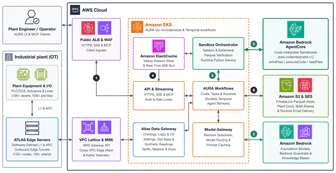
    CrossnoKaye on How to Achieve Industrial Physical AI with Amazon Bedrock AgentCore

    CrossnoKaye achieves industrial physical AI on Amazon Bedrock AgentCore through its ATLAS platform and AURA agent, improving production efficiency by 11-17% and reducing energy consumption by 21%. AURA leverages AgentCore's code interpreter capabilities to run Python workloads in isolated micro VMs to verify numerical calculations, while achieving closed-loop control through edge clusters and cloud optimization systems.

  7. Meta Engineering38

    LLDB extension architecture supports application debugging across CPU and GPU

    LLDB supports application debugging across CPU and GPU through the neutral accelerator plugin architecture of lldb-server, separating general debugging infrastructure from hardware-specific device control, presenting CPU and GPU as independent debugging processes that work together in a single debugging session. This architecture converts hardware-specific debugging APIs into concepts understood by LLDB through plugins, supporting collaborative debugging of CPUs and GPUs with different architectures, registers, memory spaces, and execution models while maintaining the neutrality of the client.

Nov 9Mon
  1. Hugging Face Blog45

    HOPE Advanced Pruning Method Released

    The HOPE method achieves better pruning effects in mixed expert language models by considering the second-order interactions between experts. It improves performance by 6.1% over the next best method on the agentic coding task at a 50% pruning rate. This method is validated on models like Qwen3.5-122B, where each MoE layer has 256 experts. After pruning, it can reduce memory usage by about 250 GB and is compatible with quantization.

  2. NVIDIA Newsroom32

    NVIDIA has released an optimized deployment solution for South Korea's leading open-source models, Dynamo.

    NVIDIA has released an optimized deployment solution for South Korea's leading open-source models, Dynamo, supporting SK Telecom A.X K2, LG AI Research K-EXAONE 2.0, Upstage Solar Open 2, and Motif Technologies Motif-3, achieving up to 2x performance improvement through optimized multi-GPU coordination and communication, accelerating model production deployment.

Nov 8Sun
  1. OpenAI Agents SDK releases22

    OpenAI Agents SDK v0.24.0-alpha.7 released

    OpenAI Agents SDK v0.24.0-alpha.7 released, supports classic workflows and native execution, adds voice and managed tools, introduces persistent session storage and context control. The new version defaults to strict mode execution, requiring updates to existing environments; bundled model default inference strength is increased to medium.

Nov 7Sat
  1. AWS Machine Learning Blog42

    AWS releases serverless MCP server for accessing AI agent data lake on Amazon ECS Fargate

    AWS launches serverless Model Context Protocol (MCP) server on Amazon ECS Fargate to address integration challenges of LLM agents accessing corporate data lakes in AI applications. The server achieves metadata-driven, configurable data lake access without the need to write integration code for each dataset, and supports elastic scaling in multi-tenant environments.

  2. AWS Machine Learning Blog

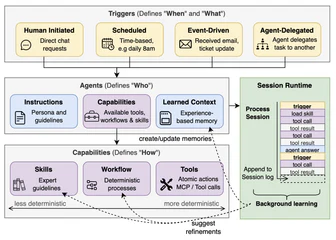
    Agent primitives classification in AWS Quick

    AWS Quick breaks down agent work into four primitives: 'When', 'What', 'Who', 'How', triggering tasks, agents execute and use capabilities (tools, skills, workflows) to complete work. Triggers are of four types: human-initiated, agent-delegated, scheduled, and event-driven; agents are persistent learners, including instructions, dynamically updated capabilities, and accumulated contextual memory; capabilities range from fully autonomous to fully deterministic, tools are atomic operations, skills provide structured guidance, and workflows are deterministic coordination.

  3. AWS Machine Learning Blog58

    Amazon SageMaker Inference now supports Multi-Instance GPUs to maximize GPU utilization

    Amazon SageMaker Inference now supports GPU partitioning, dividing physical GPUs into independent partitions via NVIDIA Multi-Instance GPUs (MIG), where each partition receives a fixed share of GPU computing units and dedicated memory blocks for isolation. Deploy more models in isolation and choose the appropriate size of GPU units on demand to reduce costs, with a maximum of 7 partitions per GPU, no need to build Kubernetes yourself.

  4. Databricks Blog38

    Databricks Feature Views implement real-time fraud detection.

    Databricks Feature Views achieve real-time fraud detection model training and online inference through a unified definition, preventing data leakage and training-service bias; support real-time feature calculation for Kafka streams, combining features like five-minute transaction count and thirty-day average spending, to implement risk scoring and real-time transaction monitoring in fraud detection applications.

  5. Claude · YouTube42

    How Salesforce leverages Claude Code to improve AI coding efficiency and output quality

    Salesforce expanded Claude Code to thousands of engineers, doubling effective output and reducing the number of bugs per line of code. The 'effective output' scoring system, co-built by the company's engineering leadership and Stanford researchers, measures AI coding ROI, and the intelligent agent maturity curve guides engineers from simple prompts to fully autonomous agents.

  6. AWS Machine Learning Blog38

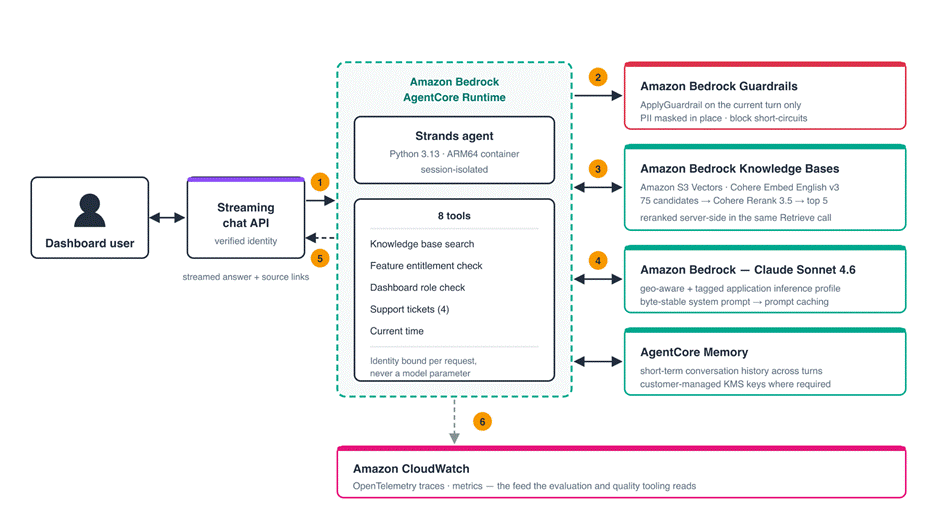
    Taxbit Assist: An authorized AI agent based on Amazon Bedrock AgentCore

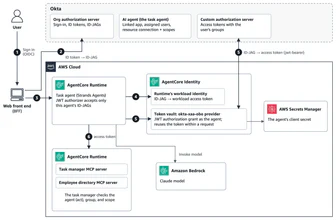
    Taxbit Assist embedded in the Taxbit dashboard, running via Amazon Bedrock AgentCore, requiring user authentication. Intelligently searches for candidate paragraphs in the Amazon Bedrock knowledge base and rearranges them on the server side. Answers must be source attributed and role permission compliant, without providing tax advice. AgentCore manages conversation state in memory, supports regional data residency, and complies with ISO/IEC 42001 standards.

  7. AWS Machine Learning Blog38

    Greenlight Financial builds an autonomous secure operations center solution based on Amazon Bedrock AgentCore

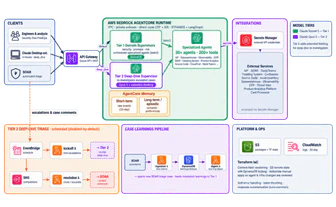
    Greenlight Financial autonomously processes over 90% of 4,000 security risk cases each month. Its solution, Luna, runs on Amazon Bedrock AgentCore, which includes over 30 specialized agents. Through AgentCore's runtime and memory support for hierarchical multi-agent systems, it achieves second-level security event triage in seconds without human intervention.

Nov 6Fri
  1. vLLM Blog72

    REINFORCE Zero: Aligned kernel allows asynchronous RL to train stably under lag 64.

    NVIDIA Research and Inferact's REINFORCE Zero proposes to first align rollout with training kernel, then use unclipped token-level importance sampling to correct weight lag, achieving a training step throughput 2.40 times that of synchronous training under 16 GPUs and 12K updates.

    Why it matters: The paper breaks down the gap between asynchronous RL's rollout and training into two items: weight lag and kernel inconsistency, and proposes an alignment-free, no-trimming importance sampling method after alignment.

  2. Hugging Face Blog58

    Hugging Face released ToyBlocks: A controlled world framework for robot learning and evaluation

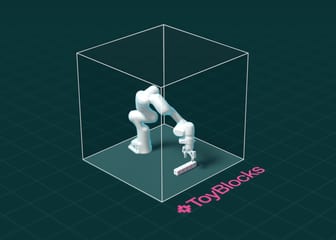
    Hugging Face released ToyBlocks, a framework for robot learning and evaluation that provides a controlled simulation environment. The framework supports automatically generating tasks and training demonstrations, and includes metrics to measure changes in robot behavior over time, aiming to study how models improve with more training data and how to combine advanced reasoning with precise physical control.