Skip to content
Live
Oct 14Wed
  1. Google DeepMind

    Gemini 4 Argon brings breakthrough progress to robotics technology

    Gemini 4 Argon has achieved major breakthroughs in physical understanding, code generation, and visual semantic reasoning, achieving a pure reasoning score of 87% on the Embodied Reasoning (ERQA) benchmark test, surpassing all leading models. Argon can be applied to all stages of the robot's lifecycle, including mobile manipulation practice using MuJoCo, zero-shot robot control, and closed-loop steering of video world models.
Oct 13Tue
Oct 12Mon
Oct 9Fri
  1. AWS Machine Learning Blog

    Use Amazon SageMaker HyperPod to share GPU clusters between teams and achieve isolation and fairness.

    Amazon SageMaker HyperPod provides centralized authentication through AWS IAM Identity Center, uses the SageMaker AI domain to provide a customized user experience, combines Kubernetes namespaces to achieve workload isolation, and leverages HyperPod task governance for fair resource allocation, supporting multiple teams in efficiently sharing a single HyperPod EKS cluster.

Oct 8Thu
Oct 5Mon
Oct 1Thu
  1. Amazon Science

    Graph Center Agent: How to Utilize Graph Structures for Agent Reasoning

    Amazon Science has released Graph Center Agent technology, which combines a continuous synchronized graph (digital twin) representing the network with device attributes and connections, with cascade graph algorithms (decomposition, aggregation, tracing) and agent orchestration to achieve minute-level root cause analysis of complex network failures, achieving 95% accuracy in a demonstration at NTT DOCOMO's MWC.

Sep 30Wed
  1. Google Developers Blog

    How does Sparse VideoGen (SVG) accelerate temporal and spatial attention computation for video diffusion on TPUs

    Sparse VideoGen (SVG) dynamically routes attention heads to spatial or temporal masks by identifying the spatiotemporal structures of different attention heads in video diffusion models, converting theoretical sparsity into actual end-to-end speedup. On TPU v6e, SVG retains about 38.87% of query-key pairs, achieving 3.5x inference acceleration while maintaining output quality at a given sparsity level. The scheme employs custom JAX and Pallas Splash attention kernels to convert theoretical sparsity into physical sparsity on hardware.

Sep 28Mon
Sep 25Fri
Sep 20Sun
  1. Qwen · Hugging Face new models

    Qwen/Qwen-Image-2.1-PE-I2I released: Open-source 7B parameter text-to-image generation and editing model

    Qwen/Qwen-Image-2.1-PE-I2I released, a 7B parameter unified text-to-image generation and editing model, featuring a 32-layer single-stream DiT architecture, supporting the generation of regular or transparent images, editing transparent layers, extracting photo subjects, and capable of editing with 10 reference images.

  2. Qwen · Hugging Face new models

    Qwen/Qwen-Image-2.1-PE-T2I release: Open source 7B parameter text-to-image generation and editing model

    Qwen/Qwen-Image-2.1-PE-T2I released, a 7B parameter unified text-to-image generation and editing model, featuring a 32-layer single-stream DiT architecture, supporting generation of regular or transparent images, editing transparent layers, extracting photo subjects, and enabling local editing through circular, doodle annotations, or independent masks. Its text-to-image prompt rewriting model Qwen3.5-VL 9B can convert multilingual requests into detailed English prompts and recommend aspect ratios.

Sep 10Thu
  1. DeepSeek · Hugging Face new models

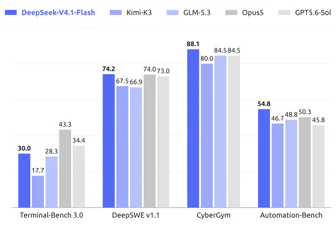
    DeepSeek-V4.1-Flash released: 552B parameter multimodal MoE model, context up to millions of tokens

    DeepSeek-V4.1-Flash is a 552B parameter multimodal MoE model that supports context up to one million tokens, natively processing images and text and generating text autoregressively. It adopts a Causal Encoder-Decoder architecture, reducing global KV cache usage to 890 bytes/token through technologies like CSA2 and FP4 primary KV cache, a 75% reduction compared to DeepSeek-V4-Flash.

Sep 1Tue
Aug 11Tue
Jul 31Fri
Jul 29Wed
Jul 27Mon
  1. Meta AI Blog

    Meta AI's DINOv3 and SAM models help the University of Pittsburgh reshape assistive robots

    Meta AI's DINOv3 and SAM models achieve real-time perception in edge computing, supporting the University of Pittsburgh's RAMMP project development of assistive robots, interacting through natural language and image data to reduce user cognitive load, already integrated in prototypes with automatic door button detection, cup recognition, and navigation assistance features, and plans to add voice and touch input support.

Jul 21Tue
  1. Meta AI Blog

    Meta AI's SAM 3 and DINOv3 models drive the first wave of progress for the Genesis mission project

    Meta AI's open-sourced SAM 3 and DINOv3 models achieve 3D semantic segmentation and reconstruction of scientific images within 15 minutes using 300 A100 GPUs on the NERSC supercomputer, helping the U.S. Department of Energy's Genesis mission project overcome the analytical bottleneck caused by data explosion after ALS upgrade, and has realized a 20-fold increase in monthly expert annotation efficiency in grapevine drought cell-level research.

Jul 7Tue
Jun 13Sat
May 19Tue
May 8Fri
  1. Berkeley AI Research

    Adapting to parallel reasoning: the next paradigm for efficient reasoning extension

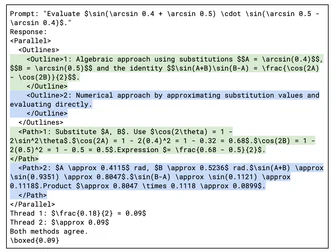
    Adapting to parallel reasoning allows models to decide on their own when to decompose and parallelize independent subtasks, how many threads to start, and how to coordinate. Existing methods such as fixed parallelism, heuristic structured search, and Monte Carlo tree search determine the parallel structure externally. Recent advancements like ParaThinker and GroupThink attempt to let models adaptively select parallel strategies, but decisions are still constrained externally.

Apr 20Mon
  1. Berkeley AI Research

    Berkeley AI Research launches the gradient-based long-term world model planner GRASP

    GRASP is a new gradient-based world model planner that achieves temporal parallel optimization by elevating trajectories to virtual states, explores by directly adding randomness to state iterations, and provides clear signals for actions by reshaping gradients, while avoiding fragile 'state-input' gradients generated by high-dimensional visual models, making long-term planning possible.

Apr 14Tue
  1. Microsoft AI News

    MAI-Image-2-Efficient released: Flagship quality, cost reduced by 41%

    MAI-Image-2-Efficient is a text-to-image model launched by Microsoft, the productivity version, with a 22% speed increase and 4 times efficiency. The cost is $5 per 1M text input tokens and $19.50 per image output token, a 41% reduction in cost compared to the flagship version, and on average 40% faster than other leading models. It is suitable for batch processing and real-time interactive workflows, already available on Microsoft Foundry and MAI Playground.

Jan 10Sat
  1. Berkeley AI Research

    Berkeley AI research proposes an information-driven imaging system design framework

    Berkeley AI research proposes an information-driven imaging system design framework, which quantifies the object's discrimination capability through mutual information measurement. It has been validated in four fields: color photography, radio astronomy, lensless imaging, and microscopy that information estimation can predict decoder performance. The optimized mutual information design scheme achieves end-to-end optimal results while reducing memory and computational load.

Nov 12Wed
  1. Anthropic Research

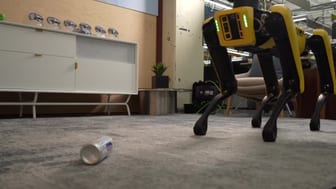
    Project Fetch: Can Claude Train a Robot Dog?

    Eight Anthropic researchers (with no robotics experience) were randomly divided into two groups, one using Claude and the other not, tasked with using quadruped robot dogs to pick up beach balls. The team using Claude completed more tasks faster and was the only one to achieve the goal of making the robot completely autonomous in picking up the balls. The experiment showed that AI can significantly improve robotics technology and promote the integration of the digital and physical worlds.

Mar 27Thu
  1. Anthropic Research

    Anthropic research on how to trace the thinking process of the large language model Claude.

    Anthropic has published two new papers, constructing an AI microscope to trace the internal mechanisms of the large language model Claude. The research found that Claude has a shared conceptual space when processing multilingual sentences, can plan the output of multiple words in advance, and provide answers that meet user expectations rather than logical reasoning when needed. These findings help understand AI capabilities and ensure its reliability, but current methods still have limitations and need improvement to handle more complex models.

Oct 25Fri
  1. Anthropic Research

    Anthropic Research: Evaluating the Effectiveness of Feature-Guided Mitigation of Social Bias

    Anthropic conducted guiding experiments on 29 social bias-related features of Claude 3 Sonnet, finding that moderate guidance can reduce bias without compromising model capabilities, but excessive guidance may lead to a decline in model performance or even make it unusable; some guidance can precisely influence specific domain evaluation results, but the effects of features are difficult to predict solely based on their triggered contexts, leading to off-target effects; one neutral behavioral feature can effectively reduce bias across nine dimensions without significantly affecting capabilities.