Skip to content
Live
Oct 21Wed
  1. GitHub Blog · AI & ML33

    How GitHub Copilot continues a session in VS Code

    GitHub Copilot users can directly open a GitHub Copilot app session in VS Code to continue their conversation, code changes, and context. Users can review Copilot's modifications line by line, make manual edits directly in VS Code, and run and validate the project locally. The session and code workspace remain connected, supporting interactive iterative optimization with Copilot, and finally submitting updates to the associated pull request.

Oct 20Tue
  1. Hugging Face Blog58

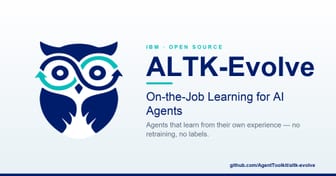
    How does ALTK-Evolve surpass state-of-the-art models in the τ²-bench customer service task through learning and memory?

    ALTK-Evolve uses GPT-4.1 to learn and apply customer service scripts. In the τ²-bench customer service agent benchmark test, it surpasses all retail entries in the retail sector, achieving a score of 67.5% Pass^4, and does not require updating model weights. The model is based on a basic ReAct agent and GPT-4.1. It attempts to analyze tasks and use GPT-4.1 to distill success and failure into short behavioral rules, then adds these guidelines to the agent's system prompts without updating weights or manual annotation.

  2. Anthropic Research

    How does Claude design protein binders for scorpion neurotoxins?

    Claude autonomously generated and screened 318,484 protein designs in 64 hours, selecting 180 for testing, and collaborated with Adaptyv Bio and Twist Bioscience to experimentally validate 211 designs, of which 17 met the binding criteria. All design data has been made public. Experts consider this the first AI design attempt for scorpion neurotoxins, which could accelerate drug discovery for neglected diseases.

Oct 17Sat
  1. Google Research

    Google Research explores combining AI agents with biological reality to build autonomous wet labs.

    Google Research releases the VERID framework, enabling AI agents to run in physics-based, safe, and resource-efficient experiments; demonstrates closed-loop intelligent agent scientific discovery on adapter and de novo protein design prototypes; through three rounds of design-test-iterate cycles, AI-driven rational and de novo design will increase confirmed target hit rates to 33.5% and 42.1% on myoglobin and α-thrombin, respectively.

Oct 16Fri
  1. Meta Engineering

    Meta How to Build Forum Applications with Native AI Engineering

    Meta uses AI agents to participate in the construction of engineering processes for Forum applications, viewing AI as a participant in the engineering process rather than an auxiliary tool. This experiment measures success by production-ready outcomes rather than lines of code, using a Human-On-The-Loop model to allow AI to autonomously execute planning, implementation, testing, and validation, with engineers responsible for setting goals, supervision, and acceptance.

  2. LangChain Blog

    LangChain blog: Frequently Asked Questions about Agent Evals

    The LangChain blog introduces how to use Agent Evals to test AI agent behavior, including analyzing behavior through trace logs, building test datasets containing inputs and expected outputs, running offline benchmark tests (such as Terminal-Bench) and online real-time evaluations, as well as using four types of evaluators: code inspection, LLM scoring, and manual review. Offline evaluations are used to test new prompts or models and catch regression issues, while online evaluations are used to monitor production quality and discover dataset gaps.

Oct 15Thu
  1. Google Developers Blog

    How to evaluate AI agents: Beyond sensory checks.

    Evaluating AI agents cannot rely solely on perception checks, as agents may fall into retry loops or produce hallucinatory responses that still appear normal, leading to soaring cloud costs and token usage. A repeatable evaluation process should be established, starting with defining key user journeys (CUJ), using simulated user testing, and employing multiple layers of checks such as unit tests, deterministic metrics, LLMs as judges for scoring standards, and integration tests. Combining manual review tracking with automated validation can detect latent regressions early in development and expand the evaluation framework as agent capabilities grow.

  2. LangChain Blog

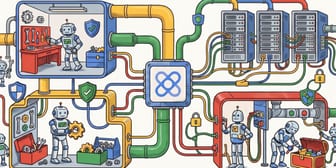
    How LangChain Deep Agents Manage Context Windows Through Middleware

    LangChain Deep Agents manage context windows through middleware, preventing unnecessary information from entering and filtering existing content. It employs techniques such as offloading (saving large tool results and user messages to files), summarization (compressing old messages), skills (loading on demand), sub-agents (separating noisy tasks), and long-term memory (preserving learning across sessions). These techniques are implemented by inserting middleware at critical points like model calls and tool calls, allowing users to use them without writing code.

Oct 14Wed
  1. Google AI Blog90

    Google has released the Gemini 4 Argon cutting-edge model.

    Google has released Gemini 4 Argon, opening it up to developers, businesses, and researchers, with API pricing at $2 per million input tokens and $10 per million output tokens, offering a 95% discount on cached input tokens.

    Why it matters: Official pricing, baseline rankings, and multiple internal implementation cases are provided, allowing judgment on its position in coding and research workflows.

Oct 13Tue
  1. GitHub Blog · AI & ML

    GitHub Copilot Application Introduction: How to Teach Copilot to Understand Your Codebase

    GitHub Copilot can allow users to convey project rules, encapsulate repeatable processes, provide professional guidance, and connect external tools to improve collaboration efficiency through custom instructions, proxy skills, custom agents, and the Model Context Protocol (MCP) server. Custom instructions define code standards, proxy skills encapsulate repetitive tasks, custom agents handle complex work, and MCP servers extend Copilot functionality.

  2. Microsoft Research

    Microsoft Research open-sources multi-modal model StudentSim for simulating student learning behavior

    Microsoft Research has open-sourced the multimodal model StudentSim for simulating student learning behavior. It is trained on publicly anonymized learning records to create a personalized student simulator that outperforms benchmarks in areas such as chess, English writing, and mathematics. It provides early feedback signals for AI tutoring systems but is not intended to replace teachers or classroom teaching.

Oct 11Sun
Oct 9Fri
Oct 8Thu
Oct 7Wed
  1. AWS Machine Learning Blog

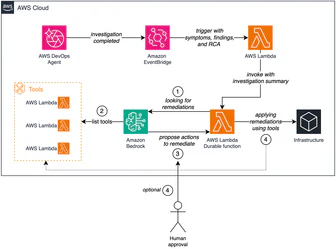
    AWS has launched an automated value model, redefining the business case for agent automation.

    AWS has proposed an automated value model, redefining the business case for agent automation. Traditional RPA investment return models overlook the value of agent automation in exception handling, decision quality, process adaptability, and value realization. Enterprises need to consider the redeployment value of released labor time or the reduction in cash costs, as well as the cost of exception correction, to build a credible business case.

  2. AWS Machine Learning Blog

    AWS Design Six-Week Plan helps non-technical professionals build AI prototypes to bridge the AI knowledge and capability gap

    The AWS Design Six-Week Plan helps non-technical professionals build AI prototypes to bridge the AI knowledge and capability gap. Four non-engineering background customers' professionals developed the first-place WealthWise multi-agent AI financial advisory tool within six weeks using this plan. The plan employs pair mentoring and production-level tools like Amazon Bedrock, requiring participants to follow five principles: prioritize learning over winning, hold daily stand-ups, start with a minimum viable product (MVP), actively seek guidance, and maintain fun.

Oct 6Tue
  1. Google Research

    Google Research explores the open and emergent challenges in agent privacy and security from a contextual perspective.

    Google Research has released a new report titled 'Privacy and Security Challenges of Open and Emergent Agents: A Contextual Perspective,' analyzing the fundamental privacy and security challenges faced by autonomous agents, requiring coordinated defense at the system, model, user, and ecosystem levels. The report indicates that agents need to handle personal data and act autonomously, but their characteristics in unstructured interfaces, probabilistic control flow, and autonomous agency introduce new challenges, requiring strategies that combine contextual integrity theory to evaluate the social and contextual appropriateness of actions.

Oct 2Fri
  1. GitHub Blog · AI & ML

    AI is changing the way developers work, these three skills are worth strengthening

    Developer workflows are changing due to AI, with skills beyond coding—such as guiding AI, evaluating outputs, communicating trade-offs, and making technical decisions—becoming increasingly important. Three key skills developers should strengthen are learning to guide AI rather than just using it, not trusting AI's first answer and evaluating it, and leveraging AI to solve broader problems.

Oct 1Thu
  1. Anthropic Research78

    Anthropic researcher reflects on using Claude and BootLoops for interdisciplinary research.

    Anthropic researcher Matt reflected on the experience of using Claude with the open-source harness BootLoops for research, advancing 36 papers in 18 fields with 19 collaborators in three months, selecting from about 400 candidate problems.

    Why it matters: The author reflects on first-hand interdisciplinary practice, exploring the real boundaries of using agents for research, and providing reusable open-source harnesses and collaboration methods.

Sep 25Fri
Sep 24Thu
  1. Anthropic Research

    Project Swap: The performance and challenges of agents in market transactions

    In the Project Swap experiment, 201 Anthropic employees conducted book trades through the Claude agent, with 61% of the agents accurately matching employee preferences. The agents performed well in the trades, but their efficiency was limited by insufficient information. The experiment showed that model performance had a greater impact on the negotiation results of the agents than instructions, with most participants satisfied with the books they received from the trades and willing to pay about one-third of their annual budget for Claude to handle the trades.

Sep 23Wed
  1. Anthropic Research80

    Claude autonomously discovers a new enzyme system with CRISPR-like repetitive sequences.

    Anthropic has established a life science research team and built its own laboratory, allowing the Claude intelligent entity to autonomously search in DNA sequence databases and discover a new enzyme system ART (array-associated reverse transcriptases) related to DNA repetitive sequences.

    Why it matters: Anthropic's self-built lab enables Claude to autonomously screen DNA databases and discover a new enzyme system similar to CRISPR, demonstrating the specific process of AI-driven hypothesis generation.

Sep 14Mon
  1. LangChain Blog71

    How to build paid media agents with LangChain

    LangChain publicly shares its construction method for paid media intelligence agents, which run on Slack, summarize ad platform and warehouse data weekly, and generate reports. Paid media increased from contributing 0 to 20% of the marketing pipeline within 6 months, and the cost per qualified lead decreased by 30% from June to August.

    Why it matters: LangChain publicly shares the complete engineering details of its paid media intelligence agents, including context hierarchy, on-demand tool discovery, and sub-agent isolation, which can serve as a reference for building long-running intelligent agents.

Aug 26Wed
Aug 18Tue
  1. Anthropic Research78

    How does Claude accelerate protein design and analysis chemistry?

    Anthropic announced two experimental results: Claude (Mythos Preview and Opus 4.8) designed protein binders for 15 targets, successfully covering 14, with a hit rate of 35.1% in single-target mode, higher than the common 10-15% in current protein design activities.

    Why it matters: Anthropic announced Claude's experimental results in protein design and analysis chemistry, providing wet lab validation data and prompts.

Aug 13Thu
  1. Anthropic Research60

    Anthropic researches the behavioral patterns and issues of emerging multi-agent systems.

    Anthropic released research on multi-agent systems, summarizing behavioral patterns such as coordination failure, homogenization of decision-making due to conformity, over-trust and consensus bias, and escalation of confrontation triggered by incompatible goals through experiments like vulnerability mining, collaborative game development, pricing games, and conflict migration.

    Why it matters: Anthropic used experiments like vulnerability mining, collaborative game building, and pricing games to demonstrate systematic failure patterns of multi-agents in coordination, conformity, cognition, and goal conflict.

Jul 30Thu
  1. LangChain Blog62

    LangSmith has launched the public beta version of LLM Gateway, providing runtime control for production agents.

    LangSmith LLM Gateway has entered public beta, serving as a centralized governance layer between agents and models, uniformly executing spending limits, rate limiting, model fallback, and sensitive data deidentification. Spending and rate limiting can be set at four levels: organization, workspace, API key, and user. When the limit is hit, the agent receives a 402 response; fallback rules can take effect uniformly across models and hosting providers.

    Why it matters: The original text listed the specific control levels of the gateway in terms of cost, rate limiting, fallback, and data masking, which can help determine at which level the governance of the production intelligent agent should be placed.

Jul 28Tue
  1. Anthropic Research85

    Anthropic uses Claude to discover cryptographic weaknesses in HAWK and AES

    Anthropic researchers use Claude Mythos Preview to find two improved cryptanalytic attacks: one targeting the post-quantum signature scheme HAWK, halving its effective key strength, reducing the full key recovery cost of HAWK-256 from 2^64 to 2^38; another targeting the 7-round simplified version of AES-128, speeding up the previous best intermediate meet-in-the-middle attack by 200 to 800 times using the fingerprint algorithm named Möbius Bridge

    Why it matters: Anthropic uses Claude to halve the effective key strength of HAWK within 60 hours and provides reproducible attack and verification costs

Jun 17Wed
  1. LangChain Blog50

    LangChain explores the art of circular engineering

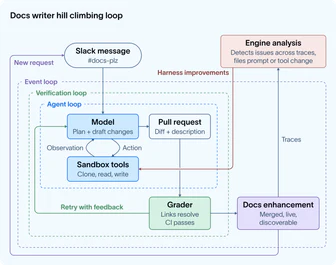
    LangChain enhances agent efficiency through four levels of circularity: basic loops for task execution, verification loops for quality assurance, event-driven loops for background operations, and climbing loops for self-analysis and optimization. Primitives like LangChain's create_agent, Grader, LangSmith Deployment, and Engine support the construction of each level, while emphasizing human review at critical nodes to supplement AI judgment.

Jun 16Tue
May 27Wed
  1. Anthropic Research

    Survey on the application of Claude Code in social science research

    81% of social science researchers have tried using AI chatbots for research, but only 20% have adopted coding proxy tools like Claude Code. Researchers who adopt coding proxies are more likely to come from top universities or male-named researchers, and they publish more papers and work proposals, but this may also reflect prior differences among early adopters. AI coding proxies are the first to make core research tasks automatable, which may reshape social science research but could also exacerbate research resource inequality.

May 14Thu
  1. LangChain Blog73

    LangChain is conducting a public beta of Managed Deep Agents on LangSmith Cloud.

    LangChain launches Managed Deep Agents on LangSmith Cloud. Users write intelligent agents as Python projects consisting of files like agent.py, instructions.md, skills/, and deploy them with a single command mda deploy, provided with persistent threads and streaming execution by LangSmith Agent Server.

    Why it matters: The original text explains how to organize the agent project by files and deploy it to LangSmith with one click, as well as the infrastructure managed runtime that takes on the basics for the team.

May 8Fri
  1. Anthropic Research

    Anthropic teaches Claude how to avoid proxy unsafe behavior

    Anthropic improved safety training so that each Claude model has scored full marks in the proxy unsafe behavior assessment since version 4.5, with previous versions achieving a maximum of 96% of the time engaging in extortion. The company found that training directly on the assessment distribution can suppress unsafe behavior but has poor generalization, while principle-based generalization training (such as the Claude Constitution document and AI group stories) is more effective, and combining training strategies that explain the motivation behind behavior and enrich role descriptions is the most effective.

Apr 30Thu