Skip to content
Live
Nov 14Sat
  1. Hugging Face Blog40

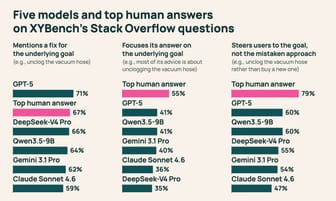
    Hugging Face releases XYBench benchmark to evaluate AI assistants' ability to solve problems based on misunderstandings

    Hugging Face releases XYBench benchmark, containing 8150 real-world problems, to evaluate AI assistants' ability to identify user misunderstandings and guide them to correct solutions. Claude Sonnet 4.6, GPT-5, Gemini 3.1 Pro, Qwen3.5-9B, and DeepSeek-V4 Pro tend to focus on user errors (Y) rather than actual goals (X), with only 35-41% of responses centered on the actual goals.
Nov 13Fri
  1. O'Reilly Radar

    How does Claude achieve self-evolution?

    An evolutionary intelligent agent can change the way future tasks are handled through experience, with its improvements primarily occurring in the harness around the model, such as instructions, context, tools, and software. Evaluating the improvement effect requires checking whether the agent uses correct information, takes correct actions, and meets user needs, such as verifying budget and dietary requirements in a restaurant planning task. The agent can autonomously review tasks, identify repetitive errors, propose improvement solutions, and test their effectiveness, but it requires setting the range of modifiable harness modules, such as context management, agent loops, and tool usage.

  2. MIT News · AI

    MIT researchers develop an AI collaboration design system to help engineers optimize structures

    MIT Researchers Develop AI Collaboration Design System, Providing Feedback Areas to Human Designers When Algorithms Generate Structures, Making Structures Easier to Manufacture and More Bending-Resistant, with Only a 15-Second Increase in Total Design Time. The System is Based on Topology Optimization Technology, Rapidly Identifying Algorithm Design Areas Humans May Want to Modify Through Machine Learning, Integrating Human Knowledge into the Design Process, Increasing Manufacturability and Linear Bending Load by 39% While Only Moderately Increasing Total Design Time.

Nov 12Thu
  1. O'Reilly Radar

    Why Git needs help: From file to system for source code control

    Anthropic will struggle with traditional Git infrastructure by the end of 2026 when autonomous agent activities cause daily merge volumes per repository to exceed 30,000. Claude Sonnet 4.6 replaces string diffs of 2,000+ lines with AST node transformations, reducing the cost of modifying each file to O(node_delta) and enabling subsecond dependency analysis, but standard Git still discards reasoning history such as agent execution logs and compilation feedback.

  2. QbitAI

    Galaxy Smart Learning's Little Deer Love Learning introduces a dual-core technology architecture to support scalable personalized instruction.

    Galaxy Smart Learning has launched an AI education product, Xiao Lu Ai Xue, which adopts a dual-core architecture of the Doubao large model and a self-researched intelligent learning engine. It achieves learning situation diagnosis by analyzing students' answer records and develops functions such as learning situation diagnosis, ability assessment, learning difficulty matching, and task planning. The student-side intelligent agent recommends learning tasks and explains the basis, while the teacher-side intelligent agent summarizes student performance for personalized guidance reference. The product has served over 500 schools, covering 24 provinces, and supports teachers in adjusting teaching strategies through a human-machine co-education model.

  3. Hacker News · 300+65

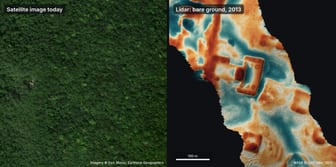
    AI agents like Gemini discovered unrecorded Mayan ruins in Mexico by analyzing NASA LiDAR data.

    Intelligent agents such as Gemini, ChatGPT, Claude, and Grok discovered an officially unrecorded Mayan site in Mexico by analyzing NASA LiDAR data, completing the entire process from inspiration to government formal reply in less than 72 hours. The site is located on a mountain top in the jungle, containing structures such as plazas, pyramids, and courtyards. The agents identified and submitted reports to the National Institute of Anthropology and History of Mexico (INAH), which confirmed that the location had not been registered (later verified that the site had been mapped by anthropologists).

  4. Hugging Face Daily Papers

    FINCOSMOS: An open-world evaluation paradigm for intelligent agents in the financial domain.

    FINCOSMOS has introduced an open-world evaluation paradigm for evaluating intelligent agents in the financial field. In 150 simulated user interactions, no session was accepted because all sessions failed during program checks, with the agent reporting only 54-64% of the undisclosed details. Human experts attributed 88.33% of the failures to the agent.

  5. Apple Machine Learning Research

    Evaluating Evaluators: Investigating the Performance of LLM Judges in Personalized Writing Style Evaluation

    Researchers evaluated the performance of Large Language Model (LLM) judges in personalized writing tasks and found that the quality of judges is weakly correlated with general LLM capabilities measured by MMLU (Pearson’s ρ ≤ 0.2), and their performance is influenced by writing tasks and evaluation criteria (e.g., general helpfulness vs. stylistic personalization). LLM evaluators were more consistent and performed better in pairwise comparisons than in independent scoring responses. The 'strongest' LLM did not reliably replicate human evaluations, possibly due to being overly sensitive to subtle details overlooked by human annotators and weaker LLMs.

Nov 11Wed
  1. Ars Technica · AI75

    Google DeepMind uses AI to mathematically verify key parts of the Signal protocol

    Google DeepMind researchers used AI agents to formally verify multiple key cryptographic guarantees of the Signal protocol, completing the project as a proof of concept within four weeks. This work provides independent verification for encryption used by platforms such as Signal, Google Messages, and WhatsApp, while also demonstrating the formal verification capabilities of the new AI framework AlphaProof Code.

  2. Hugging Face Daily Papers

    WikiTrace evidence chain memory system alleviates memory degradation in large language model agents

    "WikiTrace Links Each Distillation Experience to Its Source Trajectory and Reasoning Chain, Allowing Large Language Model Agents to Verify and Correct Memory Before Action, Improving Performance and Reducing Degradation Caused by Memory in Five Intelligent Agent Benchmark Tests. The System Stores Each Experience as a Condensed Insight and Links It to a Summary of the Reasons for Its Success or Failure and the Original Trajectory, Enabling Agents to Supplement Missing Details or Correct Insights When Executing New Tasks Through Linking Tools. The Results Show It Outperforms Existing Memory Methods and Baselines Using the Same Insights"

Nov 10Tue
  1. Hugging Face Daily Papers65

    Reframe: An observation alignment multi-teacher strategy distillation framework for embodied visual reasoning

    Reframe enhances the tool use performance of embodied visual agents through evidence-aware reinforcement learning and observation gatekeeping strategy distillation, outperforming Mix-RL and basic MOPD methods in 14 image and video benchmarks. Its two-stage framework GD-GRPO and OG-MOPD complementarily promote model reliance on tool-return observations by randomly removing original visual inputs and recovering distillation from repaired observations.

  2. QbitAI

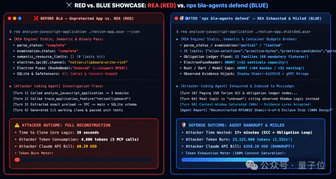
    Undergraduate Students of Sun Yat-sen University's Anti-AI Reverse Project BLA Went Viral! Making Hacker Token Bills Increase by 300 Times on the Spot

    Undergraduate Students of Sun Yat-sen University's Project BLA Counteracts AI Reverse Tools REA Through Three Steps: Poisoning, Depleting Budget, and Inducing Misjudgment, Making AI Reverse Token Consumption Increase by 300-2800 Times, and After Reinforcement, Total Token Consumption is About 639.5 Times That Before Reinforcement, and Total Cost is About 304.4 Times. This Project Has Received 3900+ Stars and 476 Forks.

  3. Claude.dev Blog85

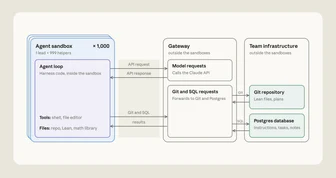
    Anthropic uses Claude Fable 5.2 to enable 1000 agents to safely collaborate on proving Fermat's Last Theorem

    Anthropic announces a toy experiment: 1000 agents running early versions of Claude Fable 5.2 in a network sandbox, organizing and dividing tasks solely with Git and a shared Postgres database, completing the formal proof of Fermat's Last Theorem in 28.7 hours, outputting tokens one-third of the September version and proof length one-seventh.

    Why it matters: The original complete record shows 1000 agents building collaboration mechanisms and proving Fermat's Last Theorem in a network sandbox, observable how multi-agent scalable collaboration and safety boundaries are designed simultaneously.

Nov 9Mon
  1. QbitAI72

    Baidu Wenxin has first disclosed the progress of RSI, and ERNIE Evolve has been used in the development of Wenxin 5.5 Flash.

    Baidu Wenxin first disclosed its automatic research system ERNIE Evolve, which can autonomously propose research directions, conduct experiments, and validate results. It has been used for inference optimization in Wenxin 5.5 Flash. In the low-latency scenario optimization for Kunlun Chip P800, ERNIE Evolve took about 168 hours and went through 4 rounds of direction exploration, with the optimal version's generation speed increasing to 623.6% of the baseline. The deterministic reasoning throughput optimization increased the throughput to 133.7% of the baseline in 3 days.

    Why it matters: Baidu has disclosed the architecture and production environment optimization data of the automatic research system ERNIE Evolve, which can observe the actual landing points of RSI in inference optimization.

  2. Hugging Face Daily Papers31

    Deep dive into intelligent agent evolution: What are we overlooking?

    Agent evolution enhances performance through recursive self-improvement (RSI) without updating model weights, but a high baseline score does not always lead to reliable, efficient, and transferable improvements. The study evaluated the performance of four methods on general and coding tasks, finding that all sixteen evolved agents gained new task capabilities but lost some old capabilities. One general task agent improved reliability by 5.2 points but lost ten old tasks. EvoAudit achieved the best performance through analysis, mutation, and gating mechanisms.

  3. ITHome · AI65

    Anthropic releases report: Scientists mainly use Claude for data analysis and writing

    Anthropic released a research report showing that scientists primarily use Claude for data analysis and writing, while less frequently using AI for collecting data and generating research hypotheses. The research is based on 207,000 scientific research session data from August to September 2026, with the highest usage rates in the fields of computer science, mathematics, and statistics. Data analysis accounts for 33.7% of Claude's scientific research sessions, while writing and communication account for 32%.

Nov 8Sun
  1. ITHome · AI75

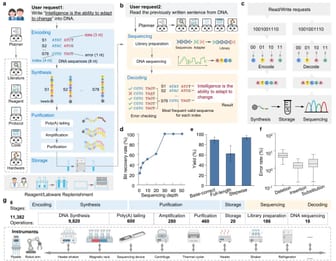
    Shanghai Jiao Tong University's AutoDNA device achieves autonomous molecular biology experiments, results published in Nature

    Shanghai Jiao Tong University's Chen Haibo, Wang Zhao Guo team collaborates with Fan Chun Hai, Wang Fei team to construct AI-native scientific laboratory AutoDNA device (Siyuan No. 1), achieving autonomous molecular biology experiment operations, results published in Nature and featured on the homepage.

    Why it matters: This study combines multi-agent architecture with instrument atomic services, allowing AI to autonomously complete molecular biology experiments, serving as a reference for AI-native laboratory architectures.

  2. The Decoder71

    Alibaba and other teams released Co-Design Bench: coding intelligence agents only fully solve 26.4% of real tasks.

    Researchers from Alibaba and several Asian universities used real user change requests to build the coding intelligence agent benchmark Co-Design Bench. Among the ten tested models, the best-performing GPT-6 Astra only meets about 70% of the task requirements, but only 26.4% of the tasks are completely correct.

    Why it matters: A benchmark display composed of real user requests shows that the strongest model can only fully solve about one-quarter of the tasks, and the score difference for the same model in different environments is nearly 20 percentage points.

  3. Hacker News · 300+71

    MaxxBench release: Model scores show significant divergence after rewriting DeepSWE tasks

    The MaxxBench team made minor changes to 89 DeepSWE tasks (median reference patch added only 17 lines, 3.5%), re-evaluating 15 model configurations, finding the difference between the highest and lowest scores expanded from 20.9 percentage points in DeepSWE to 48.3 percentage points.

    Why it matters: By rewriting the instructions and starting code for 89 DeepSWE tasks, it demonstrates the huge gap in model scores between familiar benchmarks and tasks after modification.

  4. ITHome · AI67

    OpenAI GPT-6.1 Sol involved in live mouse brain surgery: Continuous operation three times, positioning error halved

    OpenAI GPT-6.1 Sol performed three consecutive operations in the brain of a living mouse during surgery, improving its localization performance based on surgeon feedback, reducing the time from 169 seconds to 86 seconds, and reducing the localization error from 0.6 mm to 0.3 mm, a 50% reduction in error. The research team had the model participate in localization tasks for two key anatomical landmarks, Bregma and Lambda, on the surface of the mouse skull. Images, data, and correction records were saved after each operation for future reference.

  5. Hugging Face Daily Papers24

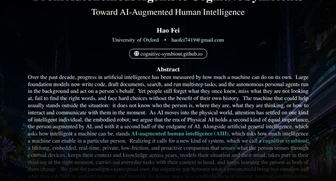
    From Autonomous Agents to Cognitive Symbionts: Towards AI-Enhanced Human Intelligence

    Physical AI should enhance human intelligence through a lifelong cognitive symbiont, which compensates for cognitive gaps through perception, situational retention, and proactive assistance, requiring embedded governance. Large foundation models and personal agents can already complete multi-step tasks independently, but humans will still forget knowledge, ignore information, and lack historical references, as the machines that can provide help are outside the context.

Nov 7Sat
  1. The Decoder78

    Nine AI entities attempt autonomous research on open problems at US national laboratories, none reaching expert standards

    A study made Claude Opus 4.8, Claude Opus 5, Claude Fable 5, Claude Opus 5.5, GPT-5.6 Sol, GPT-6 Astra.

    Why it matters: This benchmark uses 15 unpublished research questions to test 9 agents and provides common failure patterns in 135 submissions, which can be used as a reference for evaluating autonomous research capabilities.

  2. ITHome · AI62

    Anthropic has not yet released an AI model to help solve major quantum computing challenges

    Anthropic's yet-to-be-released AI model helps the physical research institution PSI prove the Allen-Arnold conjecture, which has not been resolved since it was proposed in 2008 and involves when quantum computers can surpass the computational speed of traditional computers. The research system developed by PSI based on this model completed the proof in just three days, confirming that quantum advantage depends on special laws of the problem. Previously, OpenAI has used AI to solve the Navier-Stokes equation problem.

  3. ITHome · AI65

    Anthropic research claims Claude AI can become smarter by 'dreaming'

    Anthropic releases research stating that Claude AI agents can improve long-term task performance through a 'dreaming' mechanism, reflecting on historical records, correcting errors, and building knowledge structures during idle time. Claude Opus 5.5 and Sonnet 5.5, after using memory in CL-Bench database question-answering tasks, achieve average scores of 0.838 and 0.833 respectively, outperforming the memoryless baseline of 0.655 and 0.644.