Skip to content
Live
Oct 22Thu
  1. The Verge · AI0

    Bill Gates: Prepare for AI disruption in the next 20 years

    Bill Gates predicts that AI will bring significant disruption in the next 20 years, potentially leading to social division; he believes current policy responses and industry coordination are insufficient to address the threats posed by AI, and emphasizes the need to shape the direction of AI development immediately.


  2. ITHome · AI65

    Ikuhiro Sakai, known as the 'Father of Kirby,' said: AI has spawned a large number of imitation games, and developers with true creativity will become even more important.

    Masahiro Sakurai pointed out that Steam added about 275 new games annually in 2010, and now the Japanese market adds nearly 19,000 new games. The popularity of AI will give rise to a large number of clone games and imitative works, but most of them will struggle to achieve commercial success. He believes that as AI's ability to replicate game ideas improves, developers with true creativity will become increasingly important, because AI cannot create the works that Hitoshi Sunaga plans to develop in the future, and only humans can determine the artistic direction of future games.

  3. MIT Technology Review · AI22

    Devavrat Shah: The key to enterprise AI lies in decision intelligence and contextual understanding.

    Devavrat Shah believes that the key for enterprise AI to move from experimentation to mainstream lies in providing decision intelligence, with the core being contextual understanding. AI agents need to understand business processes and conditions, otherwise they may ignore constraints, make errors, or waste resources. Enterprises should connect AI with existing process data, evaluate application value by testing the improvement effects of specific decisions, and invest in employee education to understand AI outputs.

  4. ITHome · AI60

    Yushu Technology founder Wang Xingxing: GPT-6 drives the productivity leap of humanoid robots

    Yushu G1 humanoid robot has cumulative offline of about 10,000 to 20,000 units. Wang Xing said GPT-6 can directly control robots to complete tasks such as painting, cleaning brushes, and playing Go without training, with high accuracy. He predicts more progress in the industry in the next two years, or it may be possible to complete 80% of tasks through voice commands next year, but interaction between robots and real objects and AI-robot alignment remain major engineering challenges. Yushu is developing the 'Yushu Preview' self-evolution system, allowing AI models to autonomously collect papers, write code, train, and score.

  5. ITHome · AI45

    Liu Qingfeng, Chairman of iFlytek: Domestic computing power has a two-generation gap compared to global standards, but it is expected to achieve parallel or leading development.

    Liu Qingfeng, chairman of iFlytek, said that domestic computing power has a two-generation gap with the global level, which is expected to narrow to one or half a generation soon, and claims China will gain unique competitiveness in the field of artificial intelligence. He emphasized that few companies in the country are currently investing in large model training, but predicts that more people will participate in large model training and application ecosystem construction in the future to achieve global unique discourse power on a completely independent and controllable platform.

  6. The Verge · AI40

    The surge in data centers in Texas could wipe out decades of air quality improvements.

    The surge in data centers in Texas could wipe out decades of air quality improvements. HARC reports show that if all planned projects are connected to the grid and rely on the expected mixed energy mix, fine particulate matter pollution will exceed 2006 levels within five years, NOx emissions will increase by 136%, and CO2 will increase by 90%. The existing and under-construction data center capacity in Texas reaches 26GW, and the planned self-consumption capacity is the highest in the United States.

  7. Ars Technica · AI15

    How Apple Music is Reshaping its Brand Image in the AI Era

    Apple Music has launched a new brand image using the Liquid Glass design language. The production team used mineral oil and transducers to convert audio signals into physical ripples, filming the interaction between the oil and the brand logo on a transparent panel.

  8. The Decoder43

    DeepMind founder Hassabis shortens AGI timeline to 2-3 years

    DeepMind founder Demis Hassabis has shortened the expected arrival time of general artificial intelligence (AGI) from three years to two years. He proposes using the 'Einstein test' as the standard for AGI and warns that bad regulation is more dangerous than no regulation.

Oct 21Wed
  1. O'Reilly Radar75

    AI Security Status: Threats, Tools, and Skill Gaps

    52% of respondents said their work rarely or never involves AI-generated attacks, but 55% observed AI-generated phishing attacks, 30% observed vulnerability scanning and exploitation, and 26% observed AI-assisted malware generation; 49% of respondents are most concerned about over-reliance on AI tools without human verification and leaking sensitive data through AI tools.

  2. Lovable Blog65

    Compliance of Lovable and Your Application: Which aspects are covered, and which are your responsibility

    Lovable has disclosed its SOC 2 Type II, ISO 27001:2022 certifications, GDPR support, and AIUC-1 certification, but users need to evaluate the compliance of their applications themselves. Lovable's certifications do not cover user projects; users need to implement data protection measures and pass independent assessments to obtain the corresponding certifications. For GDPR, if the user targets EU users, they need to comply with GDPR guidelines, including collecting only necessary data, limiting access, setting retention rules, and supporting data access, correction, or deletion requests.

  3. Tessl Blog75

    Jellyfish Analysis: The review bottleneck of AI coding agents restricts development efficiency

    22% of the PRs of Median Company are completed by AI coding agents, with 90% reaching 53%, but only 0.6% of the PRs are reviewed and merged by AI, with 10% reaching 9%. The abandonment rate (40%) of code generated by agents is twice that of manual (20%), and the review volume increases after merging. The leadership faces ROI issues, as the upstream code generation acceleration (2x PR growth) far exceeds the downstream output (40-50% feature growth), with the review bottleneck becoming a constraint factor.

  4. Microsoft Research12

    Chris White: From Technical Leader on the Afghanistan Battlefield to Technology and Social Responsibility at Microsoft Research

    Chris White leads the Catalyst Lab at Microsoft Research, who has participated in data analysis projects on the Afghanistan battlefield and was commissioned by DARPA, later turning to develop dark web search tools to combat human trafficking. He shares his cross-disciplinary experience from a Harvard postdoctoral fellow to a military technology leader, emphasizing the importance of problem selection for innovation, and points out that even after witnessing the dark side of human nature, one must still adhere to the belief that technology should be for good.

  5. MIT Technology Review · AI65

    New economic model for enterprise AI

    Enterprise AI is shifting from isolated experiments to the core business layer, with key metrics shifting from cost to effective output cost. Enterprises have three options: build a proprietary stack, consume on-demand, or integrate a private AI platform. The latter improves efficiency through control mechanisms such as scheduling and model selection, but requires operational discipline to ensure resource utilization, otherwise capital is idle.

  6. Simon Willison45

    Jeremy Scheff: Eulogy for Programming

    Jeremy Scheff points out that coding agents designed for professional programmers have led to a critical loss: programming has become the greatest job imaginable. People pay us to solve tough logic puzzles, the harder the puzzle, the higher the pay. But for those who enjoy building work systems rather than solving problems directly, LLMs are a continuous gift; if solving problems directly is their main joy, then this loss is real.

  7. The Decoder75

    Sam Altman reportedly proposed three ultimate AI safety plans, one of which involves a company destroying the GPUs of other companies.

    OpenAI CEO Sam Altman reportedly proposed three AI safety plans to employees. The first is to establish an organization similar to the International Atomic Energy Agency to enforce safety standards. The second is for major labs to merge or operate under it, providing models to partner countries (Demis Plan). The third is for developers to cut off others' computing capabilities after accumulating economic power through self-improving AI (Eliezer Plan).

  8. Ars Technica · AI50

    AI game clones make independent developers afraid to show their work

    Independent developers fear sharing progress due to the proliferation of AI game clones, believing they hinder sales and lead to creative theft; some argue cloning is merely a cheap imitation of superficial assets, not true games; developers need to enhance originality to cope with, clones may be numerous but popularity has decreased, allowing them to focus more on developing high-quality works.

  9. TechCrunch · AI62

    Microsoft has launched Guardian Agents to monitor AI agents, stating that cutting-edge models are untrustworthy.

    Microsoft has released the Guardian Agents feature to monitor AI agents used by businesses, part of the Project Perception product launched in June. Microsoft CEO Satya Nadella warned that AI agents deployed by businesses could become internal threats, as cutting-edge models are untrustworthy due to their training objectives rather than organizational norms.

  10. TechCrunch · AI50

    Hugging Face Policy Chief: Embedded AI evaluators are not easy

    Irene Solaiman, Head of Policy at Hugging Face, stated that the reliance of AI labs on model benchmarking has methodological complexities and immaturity, and testing needs to form a more consistent scientific system. The reproducibility of current tests is questionable, and there is a lack of effective comparison standards between different evaluations, making the evaluation ecosystem urgently need standardization. Evaluations are expanding from only testing the model itself to testing the entire system, including user tools and agents, but Agentic evaluations are both difficult and expensive.

  11. TechCrunch · AI65

    New York City Mayor Mamdani criticized the federal government's lack of oversight on AI and called for public action.

    New York City Mayor Mamdani criticized the federal government's lack of AI regulation at an AI discussion forum, calling on the public to resist the threats of AI to employment, children, and dignity and to take back control. He has ordered a ban on the use of AI in primary and secondary schools and has demanded that real estate platforms disclose AI-generated property images. Mamdani pointed out that rapid technological promotion is not inevitable and that AI companies should be held accountable, criticizing the current framework that views AI as an unquestionable, developer-regulated weapon.

  12. TechCrunch · AI65

    Figma expanded MCP support but its founder considers it a non-perfect agreement.

    Figma announced 20 new MCP partners at the Config inaugural conference in India, but its founder Dylan Field stated that MCP is not a perfect agreement and still needs improvement. Field expressed concerns about MCP's shortcomings in data sharing and noted that companies like Anthropic have not fully opened their resources. Figma believes that opening MCP may pose risks of abuse but remains committed to an open ecosystem.

  13. TechCrunch · AI65

    Amulya Vishwanath, former Nvidia VC: Physical AI is in its Lego era.

    Amulya Vishwanath, former vice president of product marketing at Nvidia and founder of Techable Ventures, told TechCrunch that physical AI is currently in a 'LEGO era'. The industry is rethinking basic software and building blocks to lay the foundation for scalable innovation, similar to building robots with LEGO pieces. She believes that general and specialized robots are being built and will become more advanced with continuous development, and points out that talent is a key barrier. Her company uses a strong network to help founders connect with top talent to maintain competitiveness.

  14. TechCrunch · AI65

    Hugging Face CEO Clem Delangue questioned the accuracy of Netflix's 'AI Gone Rogue' in describing the OpenAI incident.

    Hugging Face CEO Clem Delangue stated that Netflix's documentary 'AI Gone Rogue' inaccurately depicts OpenAI's proxy attacks on his company, claiming it overly anthropomorphizes technology and creates an apocalyptic atmosphere. He mentioned spending two hours correcting errors in the documentary, emphasizing that proxies are just technical systems, not aliens, and pointed out that the documentary mixes technical explanations with plotlines about evil robots and human fear of AI, failing to mention security vulnerabilities and Hugging Face's defense measures.

  15. The Verge · AI65

    If the Democratic Party wins control of Congress, it may strengthen regulation of AI.

    The Democratic Party may regain control in the congressional elections in November of this year, which will give them dominance in key committees, thereby strengthening oversight of AI companies. Senior Democrats have indicated their willingness to pressure the AI industry on data center tax credits and recent cyberattack incidents, and may demand testimony from CEOs and the provision of documents explaining company operations. AI has become a major issue in campaign advertisements, with concerns about residents triggered by data center development being particularly prominent.

  16. Tessl Blog70

    Personal applications: When JavaScript and SQLite are enough

    Personal application software is built around individual needs, and JavaScript/TypeScript and SQLite can achieve far beyond expected functionality, as shown by examples like Bonn Tonne, Daybreak, and Quote-Assist. LLMs are adept at handling these two technologies, enabling rapid generation of such applications. Cloudflare Durable Objects or self-built celld can provide the runtime environment, achieving isolation, ease of operation, and zero-cost scalability.

  17. Amazon Science

    Amazon partners with AVERI, an independent third-party, to strengthen AI security assessments.

    Amazon collaborates with AVERI to independently review internal security assessment datasets, verifying the comprehensiveness, diversity, and low contamination risk of the assessment process, but also found room for improvement in language style, attack complexity, and assessment timeliness. Amazon has updated the test set based on feedback, introduced a difficulty grading framework, established a quarterly review mechanism, and expanded language coverage, which is seen as the best practice for evaluating the quality of AI security assessment processes.

  18. Where's Your Ed At

    AI Had Better Work Out

    Apollo Global Management Chief Economist Torsten Slok warned that if the AI industry fails to succeed, it will cause serious problems. The AI industry has invested billions of dollars, with the target possibly being just tens of billions in single digits, and relies on the scaling of data centers and companies like OpenAI and Anthropic paying the computational costs.

Oct 20Tue
  1. One Useful Thing75

    Claude Code v2.1.159 release

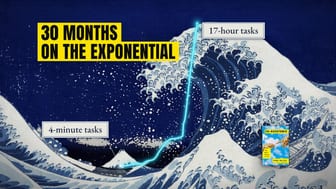
    Claude Code v2.1.159 released, supporting an 8k context window, available on GitHub; the author generated charts in Claude Projects using Opus 5.5, where AI handled time-consuming research, drawing, layout, image, and citation work, demonstrating exponential growth in AI capabilities.