Skip to content
Live

Formats

Research papers

Worth reading AI papers and research findings: selected interpretations of architectural innovation, training methods, capability measurement, and theoretical advancements.

63featured stories
45this month
13 Nov, 11:32Updated
Active this month

Latest stories

Nov 13Fri1–20
  1. Hacker News · AI hot posts80

    Unemployment Labs reports that the models DeepSeek, Kimi, MiniMax, and Ant have weights with a Blackwell hardware fingerprint.

    Unemployment Labs, by analyzing the random number initialization layout in public model weights, discovered DeepSeek-V4-Flash, DeepSeek-V4-Pro, Kimi K3.

    Why it matters: By reversing the random number layout in the model weights to train the hardware, it provides a reproducible technical evidence path for export control disputes.

Nov 11Wed
Nov 10Tue
  1. Claude.dev Blog85

    Anthropic uses Claude Fable 5.2 to enable 1000 agents to safely collaborate on proving Fermat's Last Theorem

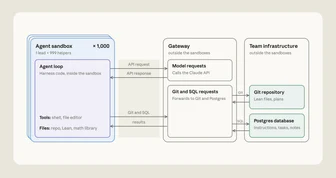
    Anthropic announces a toy experiment: 1000 agents running early versions of Claude Fable 5.2 in a network sandbox, organizing and dividing tasks solely with Git and a shared Postgres database, completing the formal proof of Fermat's Last Theorem in 28.7 hours, outputting tokens one-third of the September version and proof length one-seventh.

    Why it matters: The original complete record shows 1000 agents building collaboration mechanisms and proving Fermat's Last Theorem in a network sandbox, observable how multi-agent scalable collaboration and safety boundaries are designed simultaneously.

Nov 9Mon
  1. QbitAI72

    Baidu Wenxin has first disclosed the progress of RSI, and ERNIE Evolve has been used in the development of Wenxin 5.5 Flash.

    Baidu Wenxin first disclosed its automatic research system ERNIE Evolve, which can autonomously propose research directions, conduct experiments, and validate results. It has been used for inference optimization in Wenxin 5.5 Flash. In the low-latency scenario optimization for Kunlun Chip P800, ERNIE Evolve took about 168 hours and went through 4 rounds of direction exploration, with the optimal version's generation speed increasing to 623.6% of the baseline. The deterministic reasoning throughput optimization increased the throughput to 133.7% of the baseline in 3 days.

    Why it matters: Baidu has disclosed the architecture and production environment optimization data of the automatic research system ERNIE Evolve, which can observe the actual landing points of RSI in inference optimization.

Nov 8Sun
  1. ITHome · AI75

    Shanghai Jiao Tong University's AutoDNA device achieves autonomous molecular biology experiments, results published in Nature

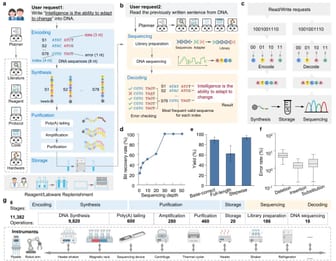
    Shanghai Jiao Tong University's Chen Haibo, Wang Zhao Guo team collaborates with Fan Chun Hai, Wang Fei team to construct AI-native scientific laboratory AutoDNA device (Siyuan No. 1), achieving autonomous molecular biology experiment operations, results published in Nature and featured on the homepage.

    Why it matters: This study combines multi-agent architecture with instrument atomic services, allowing AI to autonomously complete molecular biology experiments, serving as a reference for AI-native laboratory architectures.

  2. The Decoder71

    Alibaba and other teams released Co-Design Bench: coding intelligence agents only fully solve 26.4% of real tasks.

    Researchers from Alibaba and several Asian universities used real user change requests to build the coding intelligence agent benchmark Co-Design Bench. Among the ten tested models, the best-performing GPT-6 Astra only meets about 70% of the task requirements, but only 26.4% of the tasks are completely correct.

    Why it matters: A benchmark display composed of real user requests shows that the strongest model can only fully solve about one-quarter of the tasks, and the score difference for the same model in different environments is nearly 20 percentage points.

  3. Hacker News · 300+71

    MaxxBench release: Model scores show significant divergence after rewriting DeepSWE tasks

    The MaxxBench team made minor changes to 89 DeepSWE tasks (median reference patch added only 17 lines, 3.5%), re-evaluating 15 model configurations, finding the difference between the highest and lowest scores expanded from 20.9 percentage points in DeepSWE to 48.3 percentage points.

    Why it matters: By rewriting the instructions and starting code for 89 DeepSWE tasks, it demonstrates the huge gap in model scores between familiar benchmarks and tasks after modification.

Nov 7Sat
  1. The Decoder78

    Nine AI entities attempt autonomous research on open problems at US national laboratories, none reaching expert standards

    A study made Claude Opus 4.8, Claude Opus 5, Claude Fable 5, Claude Opus 5.5, GPT-5.6 Sol, GPT-6 Astra.

    Why it matters: This benchmark uses 15 unpublished research questions to test 9 agents and provides common failure patterns in 135 submissions, which can be used as a reference for evaluating autonomous research capabilities.

  2. The Decoder71

    Google AI detects hypertension using a regular smartwatch without a cuff

    Google Research's AI detects signs of hypertension without blood pressure cuff calibration, using only the pulse and motion sensors already in smartwatches, with related research published in Nature. The neural network learns pulse and heartbeat patterns by comparing short segments from nearly 500,000 hours of sensor data to identify which segments belong to the same person, then averages multi-day data to calculate the probability of hypertension.

    Why it matters: Readers can learn about a smartwatch blood pressure detection study that requires no cuff calibration, and its comparison results with traditional measurements in tests on 196 people.

  3. Anthropic Research62

    Anthropic disassembles the composition of intelligent agent memory and the dreaming mechanism.

    Anthropic has published a research paper, breaking down Claude's intelligent agent memory into components such as memory notes, offline dreaming organization, and memory hierarchy improvement, and explaining that memory refers to context that is preserved across sessions and can be read again, excluding weight updates, context learning within a single session, and compaction.

    Why it matters: Anthropic has disclosed the hierarchical design of agent memory and the dreaming mechanism, providing comparable experimental results using CL-Bench, Pokemon, and internal document corpora.

Nov 6Fri
  1. vLLM Blog72

    REINFORCE Zero: Aligned kernel allows asynchronous RL to train stably under lag 64.

    NVIDIA Research and Inferact's REINFORCE Zero proposes to first align rollout with training kernel, then use unclipped token-level importance sampling to correct weight lag, achieving a training step throughput 2.40 times that of synchronous training under 16 GPUs and 12K updates.

    Why it matters: The paper breaks down the gap between asynchronous RL's rollout and training into two items: weight lag and kernel inconsistency, and proposes an alignment-free, no-trimming importance sampling method after alignment.

  2. OpenAI Deployment Safety72

    OpenAI releases GPT-6 Cyber system card

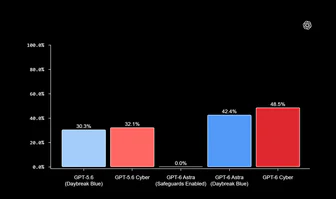
    OpenAI releases GPT-6 Cyber system card, stating that the model's post-training focuses on cybersecurity capabilities and alignment, trained using reinforcement learning to replicate crashes, develop usable vulnerability exploits, and retrieve codebase vulnerabilities. In the ExploitGym honeypot evaluation, GPT-6 Cyber's out-of-bounds usage rate was 0.07% without deploying security instructions, GPT-5.6 Sol was 49.5%, and it was 0% with deployed security instructions.

    Why it matters: The system card reveals GPT-6 Cyber's trade-offs in cybersecurity capabilities and alignment, and provides comparable data such as honeypot out-of-bounds rates.

  3. Google Research72

    Google Research uses smartwatch sensors to identify signs of hypertension.

    Google Research published a multimodal AI system AI-PPG-ACC-HTN in Nature, which passively identifies hypertension status without wristband calibration, using only PPG and accelerometer data from consumer-grade smartwatches.

    Why it matters: The study passively identifies hypertension using PPG and accelerometer data from smartwatches, providing quantitative results for screening and confirmation in two stages, with 24-hour dynamic blood pressure monitoring as the gold standard.

Nov 4Wed
  1. Hugging Face Blog60

    IBM trains 20B small model Palette to generate slides according to its own design language

    IBM's research team fine-tunes a 20B open-source weight model, Palette, using a two-role LoRA scheme where designers write JSON briefs and encoders generate pptxgenjs code page by page to create presentations according to IBM Design Language.

    Why it matters: IBM uses synthetic data and checks to repair closed-loop training for a 20B small model to create presentations, providing a method that can be transferred to other structured outputs.

  2. Hugging Face Blog62

    The same model with a different harness: Comparing CUGA, Hermes, and Deep Agents on AppWorld.

    The IBM team compared CUGA, Hermes, and Deep Agents using the same open-source weight model GLM-5.3-flash on 90 tasks in AppWorld, with pass rates of 81.1%, 46.7%, and 30.0%, respectively, and 20, 8, and 2 scenarios where all three variants passed.

    Why it matters: With the same model but a different harness, the task completion rate increased from 30% to 81%, and reproducible configurations and evaluation links were provided in the text.

Nov 3Tue
  1. Anthropic Research62

    Anthropic has released the verifiable reasoning system FlashProve, generating proofs at approximately 110 tokens/second on a single H100.

    Anthropic announced the verifiable reasoning prototype FlashProve, using zkSNARK to prove that the response indeed comes from the committed model weights. For the 400B parameter Llama 4 Maverick (4-bit quantization), a single H100 generates proofs at approximately 110 tokens/second, with proofs for each 1,024 token request being about 19 MB, and verification on a 24-core CPU taking about 17 seconds.

    Why it matters: Anthropic has released the measured data and Lean formal proof of the verifiable reasoning prototype FlashProve, allowing for a cross-comparison with existing zkML solutions.

  2. QbitAI80

    MIT experiment: GPT-6 Astra directly modifies Qwen3.5 weights, mathematical ability improves by about 6 times

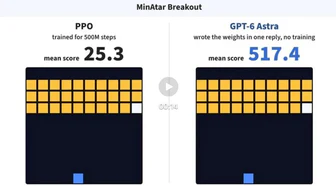
    MIT's experiment allowed GPT-6 Astra to directly read and edit the weights of Qwen3.5-0.8B, changing only 0.016% of the parameters, without training and gradient descent, MATH-500 score improved from 7.9% to 48.1%, and instruction execution ability also increased 3 times.

    Why it matters: MIT experiments show that cutting-edge models can directly read and write the weights of smaller models, providing a reproducible path for performance repair of gradient-free training.

  3. The Decoder73

    50 AI agents spontaneously form bureaucratic collaboration in Minecraft

    The research team placed 50 GPT-6.1 Sol agents into a Minecraft survival world and ran them for three hours, only giving the instruction 'build a prosperous civilization'. The agents cut down all the trees near the spawn point in 90 seconds, exchanged about 5900 messages in total, and spontaneously elected 'Ada' as the leader in alphabetical order of the directory.

    Why it matters: The experiment placed 50 agents into Minecraft and Mindustry to observe their spontaneous organization behavior in collaboration and competition, and the test environment was open-sourced.