Skip to content
Live
Found 11 items · updated 01:10
Oct 28Wed
  1. Ollama releases

    Liquid AI releases LFM3 small model family and d1 decision model v0.40.12

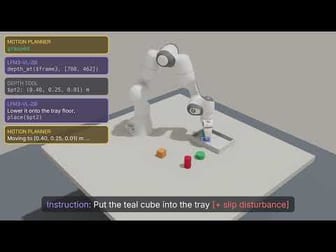
    Liquid AI releases the LFM3 small model family, including the 1.7B parameter lfm3 text model (256K token context), lfm3-vl supporting image understanding, lfm3-audio with 18 language speech processing capabilities, and the general model lfm3-omni for local agents and structured output; the d1 decision model is upgraded to 2B parameters, supporting text, image, and audio decision-making, with some models supporting Apple hardware.

  2. Hugging Face Blog76

    Liquid AI releases LFM3 series: Same 2B backbone derived text, visual, audio, multimodal and decision models

    Liquid AI releases the new generation Liquid Foundation Models, LFM3, deriving six 2B-level models from the shared backbone LFM3-1.7B-Base, covering text, vision, audio, multimodal, and decision, all open weights on Hugging Face.

    Why it matters: Liquid AI derives six modality models from the same 2B-level backbone and provides single-card fine-tuning and edge deployment paths, which can be used to judge the specialization route for small models.

Oct 27Tue
Nov 14Sat
Oct 29Thu
  1. 36Kr · AI

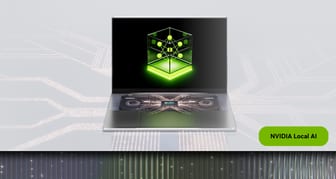
    NVIDIA has launched a local AI speech model, with new models and agent tools added to RTX Spark.

    The Nemotron 3.5 Transcribe open-weight speech model now supports RTX Spark, enabling speech transcription, speaker recognition, and translation, supporting 40 languages. The Liquid AI LFM3 series models have also been supported and can be run locally and fine-tuned. The RTX Spark laptop starts at $2599, with the highest configuration of 128GB unified memory, and FP4 AI computing power up to 1 petaflop.

Nov 13Fri
  1. MarkTechPost

    Liquid AI releases LiquidCodec, a 74M parameter streaming audio codec

    Liquid AI has released the LiquidCodec audio codec, supporting 24 kHz audio, converting speech to tokens predictable by language models, and then converting back to audio, with approximately 74M parameters.

    Same story · 2 outlets

    How the accounts differ:Liquid AI Blog mentions a compression rate of 1.1 kbps and speed improvements of 3.5x and 8x, while MarkTechPost does not mention these figures.

Nov 3Tue
  1. Latent Space

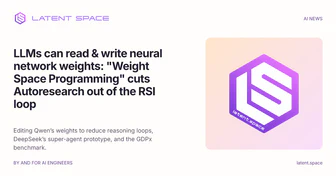
    Claude Code can read and write neural network weights: 'Weight space programming' bypasses Autoresearch

    Claude Code can directly read and edit the weights of other models without human intervention or PyTorch/Jax code, achieving weight reading, single-time bug fixes, performance improvements, or writing network weights from scratch. This technology bypasses the traditional process of Autoresearch by running experiments in a cluster to train models, demonstrating the potential of LLMs in weight space programming, currently mainly applicable to simple games and RL policies.

Oct 28Wed
  1. NVIDIA Newsroom58

    New models of NVIDIA RTX Spark laptops, agent tools, and game support

    NVIDIA RTX Spark laptop with new models, featuring Blackwell RTX GPU and Grace CPU Super Chip, supporting up to 128GB unified memory and 1 petaflop FP4 AI performance.

    Same story · 2 outlets

    How the accounts differ:NVIDIA Technical Blog states the platform is for 'AI development, creation, and gaming', while NVIDIA Newsroom specifies 'new models' and 'game support'.

  2. Latent Space65

    Anthropic stops coding interviews: 'Hunger beats lifetime employment'

    Anthropic has stopped traditional coding interviews for managers, believing Claude has performed better in React and assembly language tests, and points out that the most successful builders do not depend on these test performances. It suggests that junior engineers should prioritize business impact rather than backlog tasks, propose radical ideas, and build prototypes over the weekend, focusing on a good idea and leveraging fresh perspectives.

    Same story · 3 outlets

    How the accounts differ:Latent Space states Anthropic stopped coding interviews because Claude performed better in React and assembly language tests, while The Decoder focuses on AI's ability to handle programming tasks better than candidates.