Skip to content
Live
Jul 21Tue
  1. Meta AI Blog

    Meta AI's SAM 3 and DINOv3 models drive the first wave of progress for the Genesis mission project

    Meta AI's open-sourced SAM 3 and DINOv3 models achieve 3D semantic segmentation and reconstruction of scientific images within 15 minutes using 300 A100 GPUs on the NERSC supercomputer, helping the U.S. Department of Energy's Genesis mission project overcome the analytical bottleneck caused by data explosion after ALS upgrade, and has realized a 20-fold increase in monthly expert annotation efficiency in grapevine drought cell-level research.


Jul 9Thu
  1. Cognition Blog

    SWE-1.7 Released: A Cost-Reduction Solution for Cutting-Edge Intelligence

    SWE-1.7 is the strongest Cognition training model, achieving cutting-edge intelligence levels at a lower cost. It achieves breakthroughs by improving the RL pipeline (better infrastructure, more stable training, high-quality data, new techniques for long-term tasks), challenging the 'fine-tuning ceiling' assumption. It is provided on the Devin platform (Web/Desktop/CLI) by Cerebras, supporting 1000 TPS, with a FrontierCode 1 score of 42.3% in coding benchmarks.

Jul 7Tue
Jun 13Sat
May 20Wed
  1. Prime Intellect Blog

    Systemic Reward Attacks and Prime Sprints: Methods for Detection and Mitigation of Reward Attacks

    Systematic reward attack and Prime Sprints study reward attacks in a backdoor-ifeval environment with hidden keyword rewards, finding that attacks are dynamic problems. Benchmark frequency can predict attack occurrence, but there is no security rarity threshold. Attacks with zero baseline frequency are amplified, rare attacks are slower, and environments with moderate task difficulty are most robust. Prime Sprints provides free credit for users to conduct reward attack experiments, and the environment is open-sourced.

May 19Tue
May 18Mon
  1. Prime Intellect Blog

    General Agent: A self-evolving synthetic intelligence agent environment

    General Agent is an open-source environment that is a synthetic intelligent agent environment capable of self-evolving over time, containing 4,504 tasks across 1,040 domains and over 8,000 tools. The synthesizer and solver generate and validate tasks through a 2-player game mechanism, with task difficulty divided into 4 levels, gradually increasing in difficulty after validation by the solver.

May 8Fri
  1. Berkeley AI Research

    Adapting to parallel reasoning: the next paradigm for efficient reasoning extension

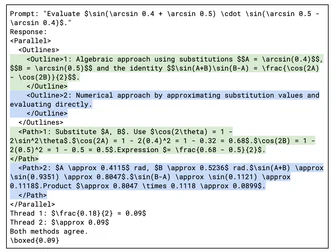
    Adapting to parallel reasoning allows models to decide on their own when to decompose and parallelize independent subtasks, how many threads to start, and how to coordinate. Existing methods such as fixed parallelism, heuristic structured search, and Monte Carlo tree search determine the parallel structure externally. Recent advancements like ParaThinker and GroupThink attempt to let models adaptively select parallel strategies, but decisions are still constrained externally.

Apr 20Mon
  1. Berkeley AI Research

    Berkeley AI Research launches the gradient-based long-term world model planner GRASP

    GRASP is a new gradient-based world model planner that achieves temporal parallel optimization by elevating trajectories to virtual states, explores by directly adding randomness to state iterations, and provides clear signals for actions by reshaping gradients, while avoiding fragile 'state-input' gradients generated by high-dimensional visual models, making long-term planning possible.

Apr 14Tue
  1. Microsoft AI News

    MAI-Image-2-Efficient released: Flagship quality, cost reduced by 41%

    MAI-Image-2-Efficient is a text-to-image model launched by Microsoft, the productivity version, with a 22% speed increase and 4 times efficiency. The cost is $5 per 1M text input tokens and $19.50 per image output token, a 41% reduction in cost compared to the flagship version, and on average 40% faster than other leading models. It is suitable for batch processing and real-time interactive workflows, already available on Microsoft Foundry and MAI Playground.

Jan 10Sat
  1. Berkeley AI Research

    Berkeley AI research proposes an information-driven imaging system design framework

    Berkeley AI research proposes an information-driven imaging system design framework, which quantifies the object's discrimination capability through mutual information measurement. It has been validated in four fields: color photography, radio astronomy, lensless imaging, and microscopy that information estimation can predict decoder performance. The optimized mutual information design scheme achieves end-to-end optimal results while reducing memory and computational load.

Nov 12Wed
  1. Anthropic Research

    Project Fetch: Can Claude Train a Robot Dog?

    Eight Anthropic researchers (with no robotics experience) were randomly divided into two groups, one using Claude and the other not, tasked with using quadruped robot dogs to pick up beach balls. The team using Claude completed more tasks faster and was the only one to achieve the goal of making the robot completely autonomous in picking up the balls. The experiment showed that AI can significantly improve robotics technology and promote the integration of the digital and physical worlds.

Jun 12Thu
Apr 28Mon
  1. Prime Intellect Blog

    Prime Intellect previews its distributed reasoning stack, building a reasoning engine for the public internet.

    Prime Intellect previews its distributed reasoning stack, designed for consumer-grade GPUs and public internet 100ms latency, and releases three open-source code repositories PRIME-IROH, PRIME-VLLM, PRIME-PIPELINE to achieve latency-aware pipeline parallelism, aiming to achieve the openness and democratization of AGI through consumer-grade hardware and network connections.

Mar 27Thu
  1. Anthropic Research

    Anthropic research on how to trace the thinking process of the large language model Claude.

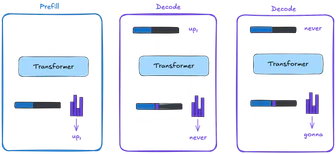
    Anthropic has published two new papers, constructing an AI microscope to trace the internal mechanisms of the large language model Claude. The research found that Claude has a shared conceptual space when processing multilingual sentences, can plan the output of multiple words in advance, and provide answers that meet user expectations rather than logical reasoning when needed. These findings help understand AI capabilities and ensure its reliability, but current methods still have limitations and need improvement to handle more complex models.

Dec 1Sun
  1. Liquid AI Blog

    STAR achieves automated architecture synthesis through target evolution.

    The STAR algorithm synthesizes customized architectures through evolutionary algorithms, with the generated architectures being superior in quality to strong Transformers and hybrid architectures, using fewer parameters and cache. STAR can customize architectures based on tasks, metrics, and hardware, employing the theory of linear input variation systems (LIVs) and hierarchical numerical sequences (STAR genomes) for evolutionary optimization, supporting both static and dynamic objectives.

Oct 25Fri
  1. Anthropic Research

    Anthropic Research: Evaluating the Effectiveness of Feature-Guided Mitigation of Social Bias

    Anthropic conducted guiding experiments on 29 social bias-related features of Claude 3 Sonnet, finding that moderate guidance can reduce bias without compromising model capabilities, but excessive guidance may lead to a decline in model performance or even make it unusable; some guidance can precisely influence specific domain evaluation results, but the effects of features are difficult to predict solely based on their triggered contexts, leading to off-target effects; one neutral behavioral feature can effectively reduce bias across nine dimensions without significantly affecting capabilities.

Nov 8Wed
Aug 15Tue
  1. Dify Blog65

    Dify v0.3.13 released: Easily integrate open-source large models like Llama2 and ChatGLM

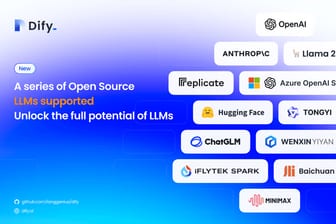
    Dify v0.3.13 released, integrating open-source large models like Llama2 and ChatGLM, supporting models from Hugging Face and Replicate platforms, allowing users to easily access and quickly build AI applications via API keys. The platform supports rapid switching between models, enabling users to compare performance by clicking the model selector, lowering the barrier for model selection and tuning.

Apr 12Wed
  1. Dify Blog

    Dify guides developers on how to build effective GPT-based applications

    When developers use OpenAI's GPT API, the AI may not produce the expected output or may 'be uncooperative'. To address these challenges and improve GPT performance, it is necessary to follow three key steps: guide model behavior through prompt engineering, use single-point or few-shot learning techniques, and leverage embeddings to extend model context, and can adapt the model to specific domains through fine-tuning.