Skip to content
Live
Nov 6Fri
  1. Mistral AI75

    Mistral releases Mistral Large 4 (Le Chonk) and expands Mistral Studio platform

    Mistral releases Mistral Large 4 (codename Le Chonk), featuring coding, defensive cybersecurity, and complex document reasoning, while expanding the enterprise platform Mistral Studio with new capabilities for hosted agents, applications, workflows, as well as enterprise context, agent observability, and evaluation features.

    Why it matters: The original text provides three types of capabilities (hosted agents, workflows, applications) and deployment options, allowing readers to judge the implementation methods of enterprise agents accordingly.

Nov 5Thu
  1. TechCrunch · AI65

    Silicon Valley startup Aina has released the smart ring Aina AI Ring, integrating a screen, joystick, and microphone for interaction with AI agents.

    Silicon Valley startup Aina has released the smart ring Aina AI Ring, priced at $399, featuring a screen, joystick, and microphone. It allows interaction with AI agents via the microphone, records notes, and answers calls, serving as a controller for both AI and non-AI applications. The ring supports gesture control and can interact with Mac and phone screens to control music or smart home devices. Aina AI Ring has begun pre-orders and will ship in January 2027.

  2. IBM Research Blog36

    ORNL, IBM, and AMD jointly announce the quantum error correction collaborative design platform

    ORNL, IBM, and AMD deploy a quantum error correction (QEC) collaborative design platform at IBM's New York Poughkeepsie campus, integrating the IBM Quantum Nighthawk r2 processor with the ORNL Umbra HPC system, which includes the AMD Instinct MI355X GPU and 5th Gen AMD EPYC™ CPU, providing low-latency quantum-classical execution capabilities for algorithm development and validation in hybrid HPC-quantum computing environments.

  3. O'Reilly Radar

    How RouteLLM researchers train routers to choose between strong models and cheap models using preference data

    RouteLLM researchers train routers to choose between strong and cheap models, benchmark tests show more than double cost reduction with minimal impact on response quality. Automatic routing can help users get more help within budget, allowing the same subscription to support more requests or more frequent use of strong models. Users need to understand the routing effect and evaluate the cost and time benefits it brings, such as comparing different routing strategies through full interaction of code analysis tasks.
  4. 36Kr · AI65

    MachinePulse launches Karpo AI product, focusing on the transformation from vague moods to concrete arrangements in urban life

    MachinePulse has released the Karpo AI product, which provides specific city event arrangements by understanding users' vague moods. Karpo remembers user preferences (such as the dog at home Koda) and integrates real-world supplies (such as recommending dog-friendly places), intervening in decisions before users explicitly state their needs. The product team comes from companies like Doubao and TikTok, exploring 'lifestyle × AI' for overseas markets, capturing intentions through continuous dialogue and connecting city services.

  5. Hugging Face Daily Papers

    PyRUA-DataFarm: Using LLM agents as low-cost robot data collection proxies

    PyRUA-DataFarm automates robot demonstration generation by simulating tasks and rendering photorealistic video at a cost lower than teleoperation. On five real robot tasks, a strategy trained only with farm data performs comparably to a strategy trained with an equivalent number of teleoperation demonstrations (success rate 93% vs 84% in 100 trials), and shows better performance on unseen new scenarios (success rate 87% vs 46%).

  6. MarkTechPost71

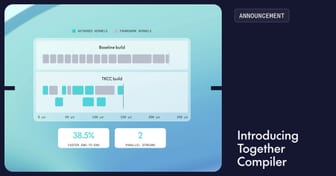
    Together AI has released Together Compiler, with agents enabling a 2.6x speedup in inference.

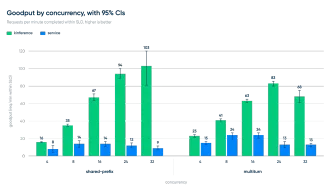
    Together AI has released Together Compiler (TKCC), a continuous compilation system driven by coding agents, which rewrites model forward computation and hot loads it into the resident inference engine, achieving up to 2.6 times the TPS of the publicly disclosed best configuration on SemiAnalysis InferenceX's AgentX workload, with each configuration completed within 2 nodes and 24 hours.

    Same story · 2 outlets

    How the accounts differ:Together AI Blog mentions models Kimi K3 and GLM 5.3; MarkTechPost mentions SemiAnalysis InferenceX AgentX.

  7. MarkTechPost

    Google AI Research releases Agile Deliberation framework for gray-area image classification

    Google AI Research releases Agile Deliberation framework, which transforms fuzzy concepts into structured definitions through human-in-the-loop, for gray-area image classification. The framework is based on Gemini 2.5 Pro and Gemini 2.5 Flash API, requiring no fine-tuning, with an average F1 score 10.5 points higher than zero-shot Gemini 2.5 Flash, reaching 0.59 in paid scenarios.

  8. 36Kr · AI65

    Qwen AI Office upgrades in-app editing and template capabilities, Word, Excel, PPT can be modified as needed

    Qwen AI Office upgrades in-app editing and custom template capabilities, Word, Excel, PPT can be modified as needed; users can generate files according to unit or personal format requirements, and directly modify content and style within Qwen, reducing cross-software operations and format rework; related features have been gradually opened for experience.

  9. ITHome · AI

    NVIDIA releases CUDA Toolkit 13.5: Officially supports Vera Rubin and upgrades multi-GPU communication.

    NVIDIA releases CUDA Toolkit 13.5, officially supporting the next-generation AI computing platform Vera Rubin and deploying for enterprise production environments. Updates and upgrades include GPU resource scheduling, multi-GPU communication, mathematical computing libraries, and performance analysis tools, optimizing cuBLAS for low-precision matrix operations on NVFP4 and MXFP8 to improve training and inference throughput.

  10. Hugging Face Daily Papers

    WebHarbor: Provides 153 executable website environments for GUI agents

    WebHarbor provides 153 executable, containerized web environments for stable evaluation and reinforcement learning training of GUI agents, supporting strong generalization across multi-step and post-authentication tasks. The suite includes 3,518 tasks, covering multi-step and post-authentication workflows, surpassing existing ones. The Qwen 4B-level GUI agent trained via reinforcement learning in WebHarbor demonstrates competitive performance with leading open-source GUI agents on four benchmarks, with code and data publicly available.

  11. ITHome · AI

    Kimi Hosted Agents are launched, providing Harness as a cloud service

    Kimi has launched Kimi Hosted Agents, providing Harness as a cloud service, supporting 7×24 hour hosting environments and long-term task execution. Enterprises can configure Agents on demand to quickly build internal business or product user applications, offering 140+ Skills and 30+ Plugins, with billing at ¥0.072 per hour of sandbox runtime plus model inference costs.

  12. vLLM Blog71

    Buoyant Open Sources Kinference: An Inference Control Plane for vLLM and Kubernetes

    Buoyant releases open-source project Kinference, as an inference control plane for vLLM and Kubernetes, providing token rate limiting, tenant usage and cost tracking, KV cache-aware load balancing, and inference strategies.

    Why it matters: The original text provides benchmark comparisons and YAML strategy examples for KV cache-aware load balancing, which can be used to judge how to design the routing layer of the reasoning platform.

  13. ITHome · AI62

    Huawei announced that Ascend 0 Day support is available for Kimi K3.1 Pro inference deployment, further advancing the capabilities of 2.8 trillion-level MoE models.

    Ascend based on vLLM Ascend and SGLang synchronously implements 0 Day inference adaptation for Kimi K3.1 Pro, supporting the deployment of 2.8 trillion parameter models on Atlas 800 A3, 900 A3 SuperPod, and 950 SuperNode series, with native support for visual understanding and a million token context window.

    Same story · 2 outlets
  14. Databricks Blog60

    Apache Spark 4.3 was released, and Databricks Runtime 19 is now available.

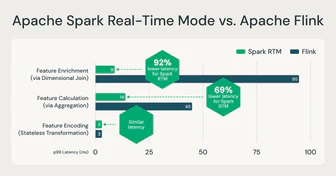
    Apache Spark 4.3 was released and is available in Databricks Runtime 19, with the Real-Time Mode now adding stateful processing, supporting streaming aggregation, dropDuplicates, and transformWithState.

    Why it matters: The original text provides three benchmark latency data for real-time stateful processing and the changes in the quarterly release rhythm, allowing readers to judge the trade-offs of the stream processing architecture.

  15. NVIDIA Technical Blog65

    How NVIDIA Uses AI Agents to Simplify AI Factory Operations

    NVIDIA has developed the AI Factory Operations Agent to simplify operations within DGX SuperPOD, automatically correlating compute, network, hardware, and scheduling issues through a single interface to help SREs identify the causes of training performance degradation. The agent can process data from multiple dashboards, improving operational efficiency.

  16. The Verge · AI65

    AT&T Smart Security System has connected to Gemini for Home

    AT&T Connected Life Smart Security System becomes the first product to connect to Google Home Premium, enabling AI features like event summaries and video search through Gemini for Home, supporting natural language queries for activity logs. This integration is only available for users of the monthly $29.99 AT&T Professional Monitoring Plan, and adds a new feature for automatic arming/disarming based on user location.

  17. AWS Machine Learning Blog60

    The four-layer context engineering of production-level AI agents: The practice of Deep Insight in runnable code.

    The AWS team, referencing the open-source multi-agent data analysis solution Deep Insight, has broken down the context engineering of production-level AI agents into four layers: multi-agent architecture isolation of context, using prompts to limit output, externalizing heavy content to the file system, and using a validation agent with a fallback mechanism.

    Why it matters: The AWS team has broken down the context engineering into four layers and provided specific code and token-saving data from the open-source reference implementation, which can be directly used to modify your own Agent.

  18. AWS Machine Learning Blog

    AWS Quick's intelligent approval: retaining human oversight in AI agent work

    AWS Quick's Smart Approvals feature evaluates each action of user requests through existing controls, automatically approving actions that meet criteria or returning them to the user for review without requiring additional permissions. It uses an independent model classifier to evaluate actions, considering action content, data flow, and affected objects, and refers to the user knowledge graph to determine recipient relationships. Administrators can set which actions require manual approval, and users can also disable the feature.

  19. The Decoder

    CloudOpsBench, a newly open-sourced benchmark, reveals AI's reasoning bottlenecks in cloud operations.

    CloudOpsBench version 1.0 includes 45 AWS cloud operations tasks developed by the University of Michigan team, discovering severe reasoning bottlenecks in AI agents. Claude Fable 5.1 solves only 60%, GPT-6 Astra 53%, with 80% failing due to misjudged task scope or incomplete checks, and 20% errors causing irreversible infrastructure damage. The project is open-sourced under the Apache 2.0 license.

  20. vLLM Blog75

    vLLM provides Day-0 support for Kimi K3.1 Pro

    vLLM announces Day-0 support for the open-sourced Kimi K3.1 Pro on NVIDIA, AMD, Google TPU, and Alibaba's Zhenwu PPU, a 2.8T parameter (104B activation) multimodal MoE model with 1M context tokens.

    Why it matters: The vLLM team details the engineering trade-offs for Day-0 adaptation of Kimi K3.1 Pro, including specific numbers for sparse attention, KV cache packing, and DCP.

  21. NVIDIA Technical Blog65

    Use NVIDIA NeMo to Turn Agent Failures into Tests and Utilize Solutions

    NVIDIA NeMo can transform agent failures in production into priority issues and generate customized evaluations to help improve prompts, tools, models, memory, skills, and code. When building agents for specific domains, general benchmark scores may not explain their failure reasons, such as the agent choosing the wrong tool, following the wrong workflow branch, omitting relevant context, or using unnecessary high-cost models.

  22. AWS Machine Learning Blog41

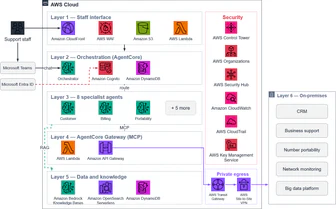
    How U Mobile builds an intelligent customer service center AiDaH based on Amazon Bedrock AgentCore

    U Mobile partnered with AWS to develop the AiDaH intelligent customer service center based on Amazon Bedrock AgentCore, handling 150 operational scenarios through cross-system real-time coordination, chained reasoning, and a multi-tenant security framework, resulting in an 84.5% reduction in critical business work orders. AiDaH will launch a pilot by the end of 2025 and officially launch in Q3 2026, using Microsoft Teams as the interaction interface