Live
#Product updates
ITHome · AI5050 ITHome · AISame story · 2 outlets Google's open-source cross-platform protocol A2UI version 1.0 has been launched, and ByteDance has adopted it.
Google Released A2UI 1.0 Version, Allowing AI to Directly Reply to UI Interface Content, First Batch Supporting Web, Android and iOS Renderer SDKs as well as Python, TypeScript and Dart Intelligent Agent SDKs, Atlassian, Bloomberg and other companies have started using it
Same story · 2 outletsITHome · AISame story · 5 outlets Same story · 5 outlets- Google AI Blog · Google launches Gemini Decisions API and Gemini Decision 1 modelFirst
- MarkTechPost · Google has released the Gemini Decisions API and Gemini Decision 1, priced at $0.10 per million tokens.
- Simon Willison · Google releases Gemini Decisions API
- 36Kr · AI · Google launches Gemini Decisions API, charges $0.10 per million input tokens.
 Codex releases00
GitHub Copilot 0.170.0-alpha.2 released
GitHub Copilot has released version 0.170.0-alpha.2, offering features such as code review, vulnerability detection, and key protection.
 AWS Machine Learning Blog
Amazon Bedrock AgentCore launches Web Search API
Amazon Bedrock AgentCore has launched the Web Search API today, allowing developers to search the web index operated by Amazon with a single API call. The results include text summaries, page titles, URLs, and publication dates.
- AWS Machine Learning Blog
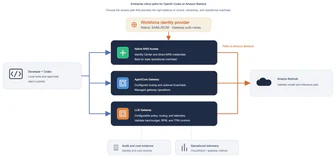
Deploying OpenAI Codex on Amazon Bedrock Practice
Developers use OpenAI Codex for code exploration and engineering work through Amazon Bedrock. Amazon Bedrock supports Codex inference and can be integrated with AWS Identity, IAM, and observability practices. It is recommended to start with Native AWS Access for small-scale pilots, use GPT-5.6 Sol for validation, authenticate through IAM Identity Center, and configure model permissions and observability targets.
36Kr · AISame story · 5 outlets Google launches Gemini Decisions API, charges $0.10 per million input tokens.
Google launches the Gemini Decisions API, driven by the Gemini Decision1 model, allowing developers to evaluate up to 1000 questions for multimodal input, scoring preset options in a single forward pass and returning probabilities and confidence levels, with end-to-end latency of 150–250 milliseconds, and a fee of 0.10 USD per million input tokens.
36Kr · AI2222 Supermicro computers release H15 servers equipped with AMD's sixth-generation EPYC 9006 series processors
Supermicro Computer announces the start of shipments for the H15 server series, equipped with the AMD 6th Generation EPYC 9006 series processors (code name Venice), providing up to a 33% core count increase, 2 times PCIe bandwidth and 1.6TB/s memory bandwidth, setting multiple world records in the SPEC CPU benchmark test.
ITHome · AI Nothing CEO Pei Yu showcased the company's first AI device, expected to adopt a screenless design.
Nothing CEO Pei Yu showcased the appearance of the company's first AI device, equipped with LED indicators and physical buttons, and is expected to adopt a screenless design. The device resembles the science fiction work 'Lost in Space,' and the buttons may be an entry point for interacting with AI. Pei Yu has previously stated that the company will focus on AI, and Nothing raised $200 million in funding for AI development in 2025, with the first AI product expected to be released in December 2026.
- AWS Machine Learning Blog3838
ITHome · AI Apple CarPlay integrates Google Gemini: Now you can chat with AI naturally in the car.
Google is gradually rolling out the CarPlay integration feature to iOS users worldwide, covering all languages supported by Gemini Live. Users with devices like iPhone 18 Pro can use Gemini's voice mode for hands-free conversations on the CarPlay in-car screen, with chat history synced to the iPhone app. Users can connect to apps like Gmail and Google Calendar to get daily briefs or ask for destination information, practice speeches, etc., with conversations automatically synced to the phone.
 Simon WillisonSame story · 5 outlets
Google releases Gemini Decisions API
Google has released the multimodal decision-making model Gemini Decisions API, supporting text, image, audio, video, and PDF, similar to Jev and OpenAI's decision models but more confident; the price is 10 cents per million input tokens, output is free, more expensive than Jev (4.2 cents per million tokens) and OpenAI (same price)
Same story · 5 outlets MarkTechPostFeaturedSame story · 5 outlets7676
- Simon WillisonSame story · 2 outlets5858
AWS officially releases the aws-emulator emulator
AWS has released the aws-emulator emulator, which allows users to clone various AWS services locally for testing without using paid API keys. The emulator is written in Rust, and the project received 29,684 commits in the first three weeks. Currently, it requires Docker to run, but developers hope to provide a cross-platform single binary version in the future.
Same story · 2 outletsHow the accounts differ:Simon Willison states the simulator uses Rust and received 29,684 submissions in the first three weeks; MarkTechPost mentions it is built by an AI agent and supports over 200 AWS services.
- AWS Machine Learning Blog3838
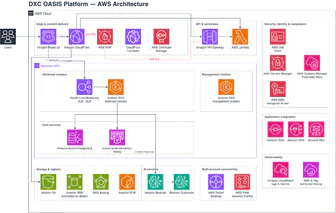
How DXC Technology Constructs Multi-Model AI Infrastructure on Amazon Bedrock
DXC Technology has built a multi-model AI infrastructure on Amazon Bedrock, accessing Anthropic Claude, Amazon Nova, Meta Llama, and open-source model families through a unified API, and using Amazon Bedrock Guardrails to implement content filtering and PII anonymization.
- Codex releases00
GitHub Copilot 0.167.2 Released
GitHub Copilot 0.167.2 is released, providing code review, vulnerability detection, and key scanning features, supporting custom integrations.
 Databricks Blog
Databricks boosts AI products, opens 235,000 square feet San Francisco headquarters
Databricks opens its new 235,000-square-foot San Francisco headquarters, investing over $1 billion in AI research, supporting models like KARL and MemCurrent, and the Genie agent, and commits to hosting the Data + AI Summit by 2030.
 Google AI BlogFeaturedSame story · 5 outlets7878Same story · 5 outlets
Why it matters: The original text provides forward scoring, latency, and pricing data, allowing readers to judge its suitability for which low-latency decision-making scenarios.
 Mastra Blog
Mastra Forward is launched: Providing expert services and intelligent agent factories for AI engineering teams.
Mastra Forward is launched, providing AI engineering expert services to businesses, where engineers can use the experts deployed by Mastra Forward and the intelligent agent factory built by Mastra Factory, with an annual fee lower than that of a senior AI engineer.
 Comfy Blog
ComfyUI achieving double LLM token generation speed
ComfyUI enhances the inference path of the Qwen3.x series models, doubling the generation speed of the same Checkpoint on RTX 5090 without model modifications or quality loss.
 Meta Engineering4040
Meta Develops Intelligent Delivery System: AI Optimizes Computational Resource Allocation to Enhance Ad Sorting Performance
Meta's Intelligent Delivery system, through AI optimization of computational resource allocation, has boosted ad sorting performance by approximately 10% since 2017. The system includes a Resource Core Model that predicts the marginal utility of computational resources (6B sparse parameters + 20M dense parameters), multi-layer mechanisms for cross-system resource migration, and a framework that uses AI agents to continuously monitor and detect changes in the response system.
- AWS Machine Learning Blog
AWS Quick accelerates product development through AI-driven lifecycle management (AI-PDLC)
AWS Quick's AI-driven product development lifecycle (AI-PDLC) transforms enterprise signals into validated prototypes through six specialized skill agents, combined with human approval. The Discovery agent analyzes pain points in enterprise data sources, and the Prioritize agent uses a 0-10 score framework to evaluate use case priorities, with all decisions requiring manual confirmation.
- Google AI BlogSame story · 2 outlets
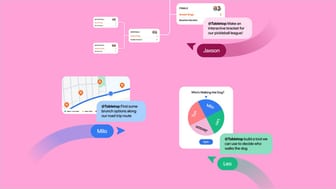
Google AI has launched Tabletop: a customizable collaborative space supporting team planning, interaction, and sharing.
Google AI has launched Tabletop, a new experimental platform for real-time collaboration, supporting teams to generate customized itineraries, polls, expense splits, and schedules. Users can create interactive spaces via @tabletop prompts or templates, share links for multiple people to use simultaneously, similar to Google Docs. It is currently rolling out to users over 18 in the US via a waiting list.
Same story · 2 outletsHow the accounts differ:Google AI Blog mentions features like voting, expense splitting, and schedule tables; The Verge focuses on features like savings tracking and chore assignment tables.
- Codex releases55
GitHub Copilot 0.170.0-alpha.1 has been released.
GitHub Copilot has released version 0.170.0-alpha.1, offering code generation, review, security, and collaboration features, integrated with GitHub platform support.
 Google Developers BlogFeaturedSame story · 2 outlets7878
Google releases generative UI open protocol A2UI 1.0
Google has released the Generative UI Open Protocol A2UI 1.0, which is the first stable version of the protocol, allowing AI agents to respond with interactive interfaces instead of plain text. Version 1.0 adds bidirectional function calls, accessibility support, and extended metadata, and provides open-source rendering SDKs for Web, Android, iOS, as well as agent SDKs for Python, TypeScript, and Dart.
Same story · 2 outletsWhy it matters: A2UI 1.0 extends agent output from pure text to native interactive interfaces, providing multi-platform renderers and integration scheme examples, allowing for judgment on the implementation methods of generative UI.
 The Verge · AISame story · 2 outlets6565
Google's Tabletop AI experiment project: Building customized collaboration applications
Google has released an experimental AI tool called Tabletop, which generates customized collaboration centers through descriptions and supports coordination for families and friends. The platform is similar to Asana and Monday, with built-in AI capabilities to create interactive tools such as savings trackers and chore distribution sheets. It is currently open for testing through a waiting list, available only to users in the U.S. aged 18 and above.
Same story · 2 outletsHow the accounts differ:Google AI Blog mentions features like voting, expense splitting, and schedule tables; The Verge focuses on features like savings tracking and chore assignment tables.








 The Decoder
German defense technology company Helsing releases Clarity AI platform, providing target preparation suggestions for weapon systems.
German defense technology company Helsing has launched the Clarity AI platform, which generates target suggestions by integrating sensor data, open-source intelligence, etc. The information is processed by hundreds of AI agents and reviewed by humans, emphasizing European control and human supervision.
- AWS Machine Learning Blog
Amazon SageMaker AI introduces pay-as-you-go pricing model
Amazon SageMaker AI Two-Way Stream introduces a pay-as-you-go pricing model, enabling model providers to report actual usage of real-time streaming inference through the AWS Marketplace. Deepgram becomes the first partner to bring voice-to-text and text-to-speech pay-as-you-go to the AWS Marketplace.
- Databricks BlogFeatured7676
Databricks upgrades Genie One to an enterprise AI collaboration workspace
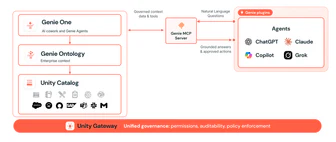
Databricks announces Genie One as the unified entry point for enterprise AI collaboration, consolidating search, product generation, and cross-tool operations into one place, and providing enterprise context based on Genie Ontology, governed by Unity Gateway.
Why it matters: The original text provides specific capabilities of Genie One from Q&A to product generation, cross-tool execution, and governance, allowing for judgment on how enterprise AI workbenches can be implemented.
- Databricks Blog5858
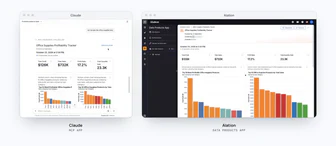
Databricks Genie Ontology's enterprise context layer brings business understanding to ChatGPT, Claude, Microsoft Copilot Cowork, and Grok Bot
Databricks releases Genie Ontology, an enterprise context layer, combining managed definitions with continuous learning of organizational knowledge to provide business understanding capabilities for AI agents. Genie plugins support ChatGPT, Claude, Microsoft Copilot Cowork, and Grok Bot, enabling teams to maintain business context in Databricks and use it across multiple agents.
- Databricks Blog5858
Databricks Genie Agents now support analyzing more data sources to transform workflows
Databricks Genie Agents can now perform high-quality business analysis, analyze large volumes of documents, and connect enterprise tools to automate actions by supporting unstructured data analysis and new MCP connectors. The new OpenSharing feature allows users to share managed agents with pre-installed data, instructions, and knowledge with partners, suppliers, and customers, accelerating the generation of external insights.
- Databricks BlogFeatured6666
Databricks has announced that Genie Ontology is now officially available.
Databricks announces the official availability of Genie Ontology, where agents continuously learn business context from dashboards, SQL queries, notebooks, and semantic models, and key definitions are managed by humans through Unity Catalog.
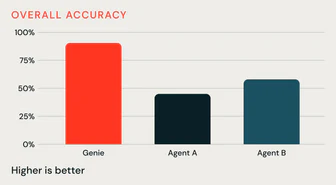
Why it matters: The original text provides pass rates, time consumption, and token comparisons for benchmarks co-built with Turing, allowing judgment on the impact of the enterprise context layer on the accuracy of agents.
- Databricks BlogFeatured8080
Databricks releases new Genie: an autonomous AI colleague for complex enterprise work
Databricks released a new version of Genie, positioning it as an autonomous AI colleague that can continuously track progress, follow up on missing inputs, and take action when new information arrives. Users can set guards and approve critical steps. The new version is paired with Genie Ontology, which provides business definitions and organizational knowledge. Genie Search uses a hybrid search combining indexing and MCP, and continues to use Unity Catalog permissions. Unity Gateway manages access, cost, and auditing uniformly.
Why it matters: The original text outlines the boundary of Genie's ability to shift from an assistant to autonomously performing long-term tasks and its governance methods, which can be used to determine the context and permission controls needed for enterprise agents to go live.
 TechCrunch · AI
Databricks new AI agent Genie v2.0 can complete multi-step tasks and provide unmodified feedback
Databricks has released Genie v2.0 AI agent, which supports completing time-consuming multi-step tasks, building ontologies through platform information to obtain context, and allowing enterprise leaders to assign tasks for autonomous completion. CEO Ali Ghodsi demonstrated its internal use of Genie to analyze employee satisfaction surveys, evaluate executive proposals, summarize failed sales proposals, and prepare podcast interviews. The agent has become a source of unfiltered truth revealing company issues.
 OpenRouter Blog
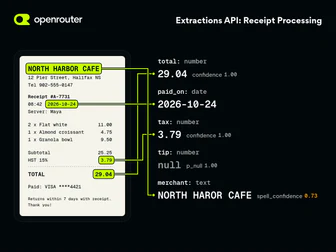
OpenRouter launches Extractions API for text, image, and PDF content extraction
OpenRouter's Extractions API has gone live in alpha, allowing users to extract specific information such as email names or receipt totals from text, images, and PDFs by describing the desired fields.