Skip to content
Live
Sep 9Wed
  1. Dify Blog65

    Dify market from discovery to response: tighter connection

    Dify has added featured banners and real-time update functions, allowing users to find works more conveniently and give likes, ratings, and text feedback. The market collects nearly 1000 plugins and over 300 templates, supporting the construction of applications on the existing basis. Featured banners display top works and platform updates, and the direct feedback mechanism ensures creators receive feedback on the real-world use experience, forming a closed loop from construction to learning.

Sep 8Tue
  1. Mastra Blog

    Mastra Factory Beta released: An open-source automated software factory

    Mastra Factory Beta released, this open-source software factory can now automate 25-35% of PRs and close 50-60% of issues, based on the Mastra infrastructure and changing collaboration processes. It connects GitHub, Linear, and Slack, supports configurable workflows, and each agent works in a sandbox environment. Since the alpha version was launched in July, the aforementioned efficiency improvements have been achieved.

Sep 4Fri
  1. LangChain Blog

    LangChain MCP: Stateless protocol, extraction functions, and other updates

    LangChain has moved MCP support into the main package and upgraded to the FastMCP protocol, enabling stateless interaction, tool list caching, and interruptible extraction features. The new protocol, supported by LangGraph, enables a 98x increase in ChatGPT tool calls, allowing clients to cache tool directories and handle model request parameters. MCPAdapter supports multi-server connections and OAuth 2.1 authentication, enabling servers to be independently configured for authentication and transport layers.

Sep 2Wed
  1. OpenHands Blog

    How does OpenHands Agent Canvas make it easier to manage agents, configure more securely, and automate more conveniently?

    Through eight updates, OpenHands Agent Canvas has made it easier to track agent work, configure more securely, and automate more conveniently, and has launched the Canvas Apps Beta version and new automation runtime stages, supporting running agent work in the correct environment, understanding the execution process, reviewing results, and reusing workflows. The new version has added agent activity indicators, context and cost monitoring, custom app support, and form-based configuration and automation runtime management features for pre-built workflows.

Aug 31Mon
  1. Ollama Blog58

    Ollama introduces a transparent pricing model based on tokens

    Ollama's Pro, Max, and Team plans now adopt a transparent token-based pricing, including usage limits per month. The Pro plan is $20 per month (including a $60 credit), Max is $100 per month (including a $300 credit), and Team is $500 per month (including a $1000 shared credit). The free plan offers a small initial model credit, which can be expanded on a pay-as-you-go basis.

Aug 27Thu
  1. Dify Blog

    Dify launches a new intelligent agent (New Agent), enabling independent configuration and cross-workflow reuse.

    Dify launches a new intelligent agent (New Agent), where each agent has independent configuration and lifecycle, supporting one-time construction and reuse across workflows. This agent can be published as a web application or exposed via API, featuring three core functions: the ability to build and optimize with real tasks, unified cross-workflow management to reduce repetitive maintenance, and full observability for single-run tracking and long-term monitoring.

Aug 26Wed
Aug 25Tue
Aug 19Wed
Aug 18Tue
  1. Dify Blog

    Asqav joins Dify Market to make every agent operation verifiable

    Asqav creates tamper-proof receipt credentials for agent operations as an independent signature layer, allowing anyone to independently verify the receipt credentials without accessing the source Dify workspace or Asqav API key. Receipt credentials bind agent identity, submitted operations, and authorized decisions, supporting real-time authorization gateways to block policy-violating operations before sensitive steps, and comply with regulations such as the EU AI Act.

Aug 14Fri
Aug 13Thu
  1. Factory News75

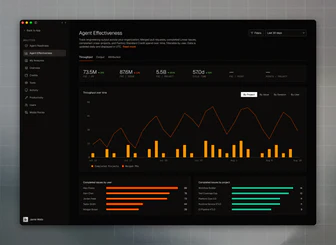
    Factory introduces Agent Effectiveness for integrated usage and delivery outcomes

    Factory's Agent Effectiveness feature is now live, linking data with delivery cycles, work intentions, and delivered outcomes to help engineering leaders understand delivery acceleration points, robot work content, and how usage maps to actual output. This feature provides an operational view of AI investment return by connecting Droid usage with delivery results, addressing questions about delivery speed changes, profit concentration points, and whether new capabilities are used for priority work.

Aug 5Wed
Aug 3Mon
Jul 30Thu
  1. LangChain Blog62

    LangSmith has launched the public beta version of LLM Gateway, providing runtime control for production agents.

    LangSmith LLM Gateway has entered public beta, serving as a centralized governance layer between agents and models, uniformly executing spending limits, rate limiting, model fallback, and sensitive data deidentification. Spending and rate limiting can be set at four levels: organization, workspace, API key, and user. When the limit is hit, the agent receives a 402 response; fallback rules can take effect uniformly across models and hosting providers.

    Why it matters: The original text listed the specific control levels of the gateway in terms of cost, rate limiting, fallback, and data masking, which can help determine at which level the governance of the production intelligent agent should be placed.

Jul 27Mon
Jul 24Fri
Jul 22Wed
Jul 21Tue
Jul 20Mon
Jul 17Fri
Jul 14Tue
  1. Qoder Blog65

    Non-technical users Qoder Code create iOS apps

    Non-technical users used Qoder Code to build a personal iOS movie app in one day. Qoder is an app generation tool for non-developers, allowing users to create iOS apps without coding through a visual interface and AI assistance. The platform supports rapid prototyping and app development, lowering the technical barrier to app creation.

Jul 10Fri
Jul 9Thu
  1. Microsoft AI News

    MAI integrates Audible poetry into audio models, creating a digital poetry experience.

    MAI's audio model Ode Poetry recommends and plays real human reading recordings of poems for users worldwide, providing a digital poetry experience. The system uses MAI-Transcribe to understand user language in real-time, achieving the lowest word error rate of 4.86% in the FLEURS benchmark test; MAI-Voice can faithfully reproduce the unique voice of William Sieghart. The system combines William's literary analysis experience, recommends poems through custom logic and tool calls, and iteratively optimizes for a safe, high-quality user experience.

  2. Dify Blog

    Dify Official CLI: difyctl Released

    Dify has released its first official command-line tool, difyctl, which supports calling Dify applications and workflows in terminals, scripts, CI pipelines, or intelligent agents like Claude Code, Codex, and Cursor to achieve automation and integration. difyctl is cross-version across Enterprise, Cloud, and Community editions, providing a unified command set without the need for custom integration code. It supports login via Dify accounts or external SSO and is available in the Enterprise version.

Jun 30Tue
  1. Cognition Blog

    The Cognition team has launched Devin Fusion: achieving cutting-edge performance at 60% lower cost.

    Devin Fusion maintains cutting-edge and Fable 5-level performance at 60% lower cost on the new coding benchmark FrontierCode, primarily through a dual-agents architecture that runs cutting-edge models in parallel with cost-effective 'assistant' models. This architecture avoids benchmark overfitting and enhances task generality through dynamic in-session routing and deeply tuned interaction patterns, showing the most significant efficiency improvement in implementation-oriented sessions. Users can try the preview version via app.devin.ai/signup.

Jun 18Thu