Skip to content
Live
Oct 21Wed
  1. Ars Technica · AI42

    Gemini's Personal Intelligence feature lands on Android Auto and Google Built-in

    Google is pushing Gemini's Personal Intelligence feature to Android Auto and Google Built-in in-vehicle systems, with the feature beginning to roll out on Android Auto today and arriving on vehicles with Google Built-in in the coming months.

  2. TechCrunch · AI55

    Yelp launches Check for Me feature, which allows users to call restaurants to check wait times on their behalf

    Yelp adds Check for Me feature, allowing users to input the number of people and phone number within the app, with AI making calls to restaurants to inquire about wait times and sending results via SMS; simultaneously updates AI assistant integration with OpenTable to support bookings, and enhances personalized and historical record features; launches paid product Smart Lead Reply to help businesses automatically reply to customers and filter potential leads, charging $30 per month.

  3. TechCrunch · AI55

    ChatGPT now allows locking conversations to protect privacy

    OpenAI allows users to lock ChatGPT conversations to protect sensitive information, using a four-digit PIN or biometric technology. Locking a conversation does not create end-to-end encryption or a separate encryption library, but moves it to a dedicated 'Locked Conversations' area, isolating it from regular chat history and not affecting model improvement settings. This feature is available for ChatGPT Free to Enterprise plans, but is not yet available for ChatGPT Healthcare, currently rolling out gradually.

  4. TechCrunch · AI

    Google releases open-source PyTorch version TorchTPU to attack Nvidia AI developer ecosystem

    Google announced the release of its highly anticipated PyTorch version TorchTPU as an open-source project, allowing AI application developers to run their applications on Google's Tensor Processing Units (TPUs) chips.

    Same story · 2 outlets

    How the accounts differ:MarkTechPost states TorchTPU is a native PyTorch backend for cloud TPU designed to replace PyTorch/XLA and supports eager-first execution; TechCrunch mentions it as an attack on Nvidia's AI developer ecosystem.

  5. The Verge · AI70

    Adobe Lightroom mobile fixes photo eye-blink issues with a single AI tap

    Adobe Lightroom mobile app has added AI features, allowing users to fix closed eyes in photos with a single click. This feature uses generative AI to intelligently replace closed eyes with open ones, referencing other images in the user's Lightroom library to ensure the matching of eye color, size, and shape. Free users can use this feature twice for free, after which they will be prompted to subscribe to the Adobe Creative Cloud plan.

  6. LangChain Deep Agents releases25

    LangChain Deep Agents 0.1.87 released

    LangChain Deep Agents 0.1.87 released, supporting thread recovery in non-interactive mode, compressing large idle sessions before prompt cache expiration, displaying prompt cache expiration time, customizing Slack OAuth app identity, and loading old threads from thread switchers; fixes issues such as local server stopping when the owner dies, support for non-ASCII filenames in `@` mentions, and misleading change summaries for `/reload`.

  7. Databricks Blog

    Deploy RFD4-Proteina on Databricks

    Databricks has integrated the RFD4-Proteina model into Genesis Workbench, supporting execution in AI runtime environments and connecting research data and workflows. Developers can build and adjust pipelines using Genie Code and the NVIDIA BioNeMo Agent Toolkit, leveraging serverless NVIDIA GPU computing for protein design.

  8. Ollama releases20

    Perplexity releases v0.40.7 Ollama version

    Perplexity releases Ollama v0.40.7 version, including the 27B decision model pplx-decider (derived from fine-tuning Qwen3.8-27B), fixes issues in multi-model conversation, streaming response, and remote model routing, adds API support for model renderer, parser, and template source, some draft models begin to support speculative decoding.

  9. OpenHands Blog63

    Recursive Flint released on OpenHands: Open-source model helps local efficient coding workflows.

    Recursive Flint is released, a hybrid expert model with 4 billion parameters, designed for efficient local inference, activating only about 250 million parameters per token, achieving 125+ tokens/second on M4 Pro MacBook Pro, and reaching 150+ tokens/second on NVIDIA RTX Spark. OpenHands, as its first partner, supports the model's operation on local hardware, providing developers with an open-source coding model option.

  10. vLLM Blog60

    vLLM supported the Recursive Flint model on the first day.

    vLLM announced support on the day Flint was released, with both NVFP4 and BF16 checkpoints capable of running on a single GPU, decoding approximately 500 tokens/s per request on a single GB200 with a context of 100,000 tokens.

    Why it matters: The original text provided Flint's day-0 support on vLLM, single-card throughput data, and the step-by-step kernel optimization process, allowing readers to judge the engineering trade-offs of small-batch inference based on this.

  11. Claude app release notes50

    Claude Duet research preview is open to Pro and Max plan users.

    Claude Duet research preview is open to Pro and Max plan users, where Claude works as an active agent in the new application.

    Same story · 3 outlets

    How the accounts differ:The Verge mentions Claude Duet is for professionals and small business owners, while Claude states it's for Pro and Max plan users.

  12. vLLM Blog

    Ant Group and the vLLM community open-source Humming: A general-purpose high-performance quantized inference kernel library

    Ant Group and the vLLM community open-source Humming, a high-performance quantized inference kernel library. Humming supports NVIDIA GPUs starting from the Turing architecture and CUDA-compatible devices like the T-Head Zhenwu 810E, providing extensive quantization support covering various integer and floating-point types, bit widths, and scaling schemes. It significantly outperforms existing implementations such as vLLM Marlin, FlashInfer, and DeepGEMM on multiple representative workloads.

  13. Google Developers Blog

    Agents CLI Extension System: Supports the intelligent agent development lifecycle across frameworks.

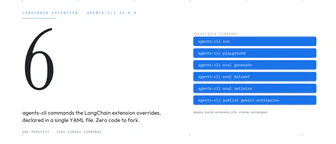
    Agents CLI 1.5.0 version introduces an extension system, allowing developers to override or add commands without modifying the tool, supporting cross-framework usage; the official LangChain extension replaces framework-bound commands while retaining other lifecycle functionalities; developers can create custom extensions, such as adding deployment commands for software bill of materials (SBOM) scanning, enabling enterprise platform teams to enforce governance policies.

  14. Browser Use38

    Browser Use Cloud MCP Server introduction

    Browser Use Cloud MCP servers support proxies to submit complete web tasks in plain text form, which are processed by their cloud browser agents. The cost is $0.02 per hour, and up to 10 projects can run simultaneously. This service uses API V3, offering 11 model selections. The browser is a reinforced version of Chromium, with incognito mode and Cloudflare proxy support enabled by default.

  15. Gemini CLI releases15

    Gemini CLI v0.65.0 has been released.

    Gemini CLI v0.65.0 has been released, fixing 23 issues, including read-only workspace settings for forced untrusted folders, avoiding duplicate tool responses during session recovery, and preventing the deletion of restored session history during quick exits. It also adds support for custom OTLP headers in telemetry configuration.

  16. Claude Code releases40

    Claude Code v2.1.305 Released

    Claude Code v2.1.305 released, added sandbox.allowNestedUserNamespaces support for Linux user namespace creation, fixed issues where requests failed on Vertex, Bedrock platforms due to tool search being rejected, and bugs where /effort and /autocompact settings were not taking effect.

  17. AWS Machine Learning Blog38

    Smartsheet MCP on AWS has launched the Universal Model Context Protocol (MCP) server.

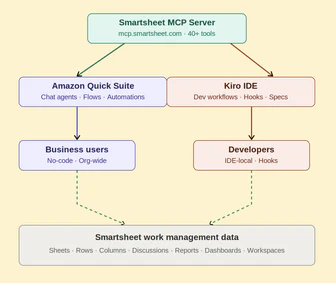
    Smartsheet launches the Universal Model Context Protocol (MCP) server, enabling AI assistants to read and write manage Smartsheet data through a standardized protocol; supports Amazon Quick and Kiro connections, Quick for knowledge workers and operations teams to naturally query and update Smartsheet with natural language, Kiro allows developers to refer to project specifications and update task status without leaving the coding environment.

  18. Databricks Blog

    Databricks introduces Agent Memory to enhance intelligent agent capabilities

    Databricks introduces Agent Memory, which improves agent quality, reduces costs and latency by storing key facts, preferences, and processes, and supports running on Lakebase. It is currently in Beta version. Agent Memory is based on Databricks' latest memory research and uses the MemCurrent architecture. In internal benchmark tests, it has tripled the pass rate of agent tasks while reducing token usage by 31%.

  19. Claude · YouTube25

    How Anthropic engineers use Claude Docs

    Anthropic engineer Doug shares methods of using Claude Docs in stand-up meetings and release reviews; Claude collaborates in documents, automatically extracts data, verifies claims, and responds to comment questions; the tool is designed for team collaboration, supporting real-time editing by multiple people and intelligent analysis.

  20. Sierra Blog65

    Sierra has partnered with Stripe to achieve a seamless experience from conversation to payment.

    Sierra partnered with Stripe to enable customers to complete conversations, payments, and receive receipts in a single call, addressing the issue of customers being redirected to another system or receiving payment links when making purchases. Cedar demonstrated how the integration works, with 71.3% of payment calls successfully completed. Sierra is now listed on the Stripe App Marketplace, allowing any business to connect its agents to a Stripe account without the need for a one-time integration.

Oct 20Tue
  1. Mistral AI

    Mistral AI has launched the Voxtral 3 voice agent SDK and cutting-edge voice models.

    Mistral AI has launched Voxtral 3, which includes an advanced voice model capable of real-time multi-step conversations in over 50 languages, along with a voice agent SDK. Its voice-to-text model, Voxtral Small Transcribe 3, achieved a Forced WER of 0.9% on the FLEURS 45 benchmark.

    Same story · 2 outlets

    How the accounts differ:The Decoder mentions a text-to-speech model (Voxtral Mini TTS 3) that is not detailed in the first report.

  2. IBM Research Blog

    llm-d 1.0 Released: Strengthening Open Source AI Inference Production Environment

    The llm-d project announces the release of version 1.0, which is a Kubernetes-native distributed inference service network that supports deploying any model's inference stack on any accelerator in any cloud. This version enhances multi-tenant quality of service, zero-downtime operations, and agent-aware services to achieve continuous performance in common production operations. Through techniques such as prefix cache-aware routing and KV cache offloading, llm-d 1.0 can capture 97% of available cache reuse, reducing the cost of large-scale AI services.

  3. Lovable Blog75

    Lovable Enterprise 10 October Feature Update: Supports local cloud deployment, brings key encryption, and EU reasoning

    Lovable Enterprise now supports deploying applications and data in user-built AWS or Azure cloud accounts, encrypting chats and project history with the 'Bring Your Own Key' feature, and introducing an EU reasoning option that confines AI request processing within the EU. The Enterprise version also introduces the 'Organization' feature, allowing central IT teams to manage identity authentication, SSO/SCIM configuration, and cross-workspace auditing centrally, while also supporting a workspace policy approval mechanism to control application release processes.

  4. Hugging Face Blog58

    AnyLanguageModel 1.0 is released: supporting local model advancements on Apple platforms for a year.

    AnyLanguageModel 1.0 is released, supporting local model advancements on Apple platforms for a year. New support added for cloud models such as OpenAI Chat Completions, Anthropic Messages, and Google Gemini. Local model support includes llama.cpp, MLX, and Core ML. Tool calling and guided generation features are expanded. Cloud models have the same functionality as local models, and API keys support dynamic acquisition through closures.

  5. Modal Blog58

    Modal introduces Sticky Sessions feature to achieve serverless strong affinity routing.

    Modal introduces Sticky Sessions functionality, implemented through the @modal.sessioned() decorator, to achieve strong affinity routing at the session level, ensuring all requests within the same session always reach the same container. It is suitable for workloads requiring state continuity, such as speech-to-text, voice proxying, and multiplayer games. This feature is based on the Modal Server architecture, authorizes by returning a signed session token, implements load balancing through container concurrency probing, and automatically scales sessions based on active session count.