Skip to content
Live
Sep 4Fri
  1. LangChain Blog

    LangChain MCP: Stateless protocol, extraction functions, and other updates

    LangChain has moved MCP support into the main package and upgraded to the FastMCP protocol, enabling stateless interaction, tool list caching, and interruptible extraction features. The new protocol, supported by LangGraph, enables a 98x increase in ChatGPT tool calls, allowing clients to cache tool directories and handle model request parameters. MCPAdapter supports multi-server connections and OAuth 2.1 authentication, enabling servers to be independently configured for authentication and transport layers.

Sep 3Thu
  1. Prime Intellect Blog

    NIXL and ModelExpress enable GLM-5.2 RL weight transfer to be completed within 4 seconds

    NIXL and ModelExpress have reduced the RL weight transfer time for GLM-5.2 to 4 seconds, solving the static process group bottleneck of traditional NCCL solutions and supporting fault tolerance and elastic inference. Through RDMA technology, bypassing the CPU and directly transferring weights between GPUs, it achieves low-latency unilateral RDMA reads, with a theoretical transfer time as low as 1 second (based on 400Gbps network cards).

Sep 2Wed
  1. OpenHands Blog

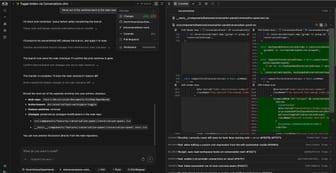
    How does OpenHands Agent Canvas make it easier to manage agents, configure more securely, and automate more conveniently?

    Through eight updates, OpenHands Agent Canvas has made it easier to track agent work, configure more securely, and automate more conveniently, and has launched the Canvas Apps Beta version and new automation runtime stages, supporting running agent work in the correct environment, understanding the execution process, reviewing results, and reusing workflows. The new version has added agent activity indicators, context and cost monitoring, custom app support, and form-based configuration and automation runtime management features for pre-built workflows.

Aug 27Thu
Aug 26Wed
Aug 25Tue
  1. OpenHands Blog

    What is AI agent observability? How to track, govern, and control agents at scale

    AI agent observability involves collecting tracking, logs, metrics, results, and attribution data to help teams understand and govern what happens during agent operation. Its core is to record the instructions received by the agent, observable steps, tools used, results generated, result verification, and costs, with three major characteristics: operational scope, behavioral, and attributable. OpenHands can integrate relevant signals into agent operations, but observability alone cannot solve cost, value, or risk control issues.

Aug 18Tue
  1. Dify Blog

    Asqav joins Dify Market to make every agent operation verifiable

    Asqav creates tamper-proof receipt credentials for agent operations as an independent signature layer, allowing anyone to independently verify the receipt credentials without accessing the source Dify workspace or Asqav API key. Receipt credentials bind agent identity, submitted operations, and authorized decisions, supporting real-time authorization gateways to block policy-violating operations before sensitive steps, and comply with regulations such as the EU AI Act.

Aug 14Fri
Aug 13Thu
  1. Factory News75

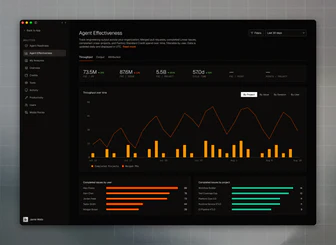
    Factory introduces Agent Effectiveness for integrated usage and delivery outcomes

    Factory's Agent Effectiveness feature is now live, linking data with delivery cycles, work intentions, and delivered outcomes to help engineering leaders understand delivery acceleration points, robot work content, and how usage maps to actual output. This feature provides an operational view of AI investment return by connecting Droid usage with delivery results, addressing questions about delivery speed changes, profit concentration points, and whether new capabilities are used for priority work.

Aug 4Tue
Aug 3Mon
Jul 31Fri
  1. Thinking Machines

    Thinking Machines has released the open-source Inkling and Inkling-Small language models.

    Thinking Machines releases open-source language models Inkling and Inkling-Small, allowing users to own, run, and customize them. To reduce the risk of abuse, models must pass security tests and research whether dangerous capabilities can be decoupled from general intelligence, while also building a layered defense ecosystem. Phased releases, supporting defenders, and collaboration with security researchers will enhance resilience. Internal evaluations and external tests show that releasing Inkling does not introduce significant incremental risks already present in existing open-source models.

Jul 30Thu
  1. LangChain Blog62

    LangSmith has launched the public beta version of LLM Gateway, providing runtime control for production agents.

    LangSmith LLM Gateway has entered public beta, serving as a centralized governance layer between agents and models, uniformly executing spending limits, rate limiting, model fallback, and sensitive data deidentification. Spending and rate limiting can be set at four levels: organization, workspace, API key, and user. When the limit is hit, the agent receives a 402 response; fallback rules can take effect uniformly across models and hosting providers.

    Why it matters: The original text listed the specific control levels of the gateway in terms of cost, rate limiting, fallback, and data masking, which can help determine at which level the governance of the production intelligent agent should be placed.

Jul 27Mon
Jul 24Fri
Jul 22Wed
Jul 20Mon
Jul 17Fri
Jul 16Thu
  1. Qoder Blog0

    Qoder releases #CaseFarewell to "Vibe Coding": Evolution of team-level AI development practice with Harness governance and SDDAMAP framework application

    Qoder releases #CaseFarewell to "Vibe Coding", introducing the practice evolution of team-level AI development through Harness governance and SDDAMAP framework. The framework supports model inference with an 8k context length, a 3.5x speedup, and a parameter size of 175B, achieving 95.2 on the MMLU benchmark test, currently provided as a closed-source API.

Jul 14Tue
  1. Qoder Blog65

    The first AI Open Competition of Zhihang Group has concluded, with Qoder helping frontline employees build the supply chain risk control platform 'Baize' winning the championship, with risk control efficiency improved 96 times.

    Zhihang Group's first AI Open Competition has ended. Zhihang Group's frontline supply chain employees used Qoder to build the supply chain risk control platform 'Bai Ze' and won the championship, with risk control efficiency improved 96 times.

Jul 13Mon
Jul 9Thu
  1. Dify Blog

    Dify Official CLI: difyctl Released

    Dify has released its first official command-line tool, difyctl, which supports calling Dify applications and workflows in terminals, scripts, CI pipelines, or intelligent agents like Claude Code, Codex, and Cursor to achieve automation and integration. difyctl is cross-version across Enterprise, Cloud, and Community editions, providing a unified command set without the need for custom integration code. It supports login via Dify accounts or external SSO and is available in the Enterprise version.

  2. Meta AI Blog

    Meta AI has released the Muse Spark 1.1 multimodal reasoning model.

    Muse Spark 1.1 is the latest multimodal reasoning model released by Meta Superintelligence Labs, significantly improving in tool and computer use, coding, and multimodal understanding, supporting million-token context windows. It is open to developers for public preview via the Meta Model API, surpassing Muse Spark and matching leading alternatives in Meta's internal coding evaluations.

Jul 7Tue
  1. Berkeley AI Research

    GPT-4-class capabilities cost less than $1 per month, how data systems serve agents, and whether they belong to agents or are built by agents.

    GPT-4-class capabilities cost has dropped to less than $1 per month, with reasoning prices decreasing by over 50 times annually. Agents will dominate data system workloads, creating three new challenges: designing data systems for agents that support agentic speculation and optimize repetitive queries; building agent-specific data systems capable of managing agent cluster states and coordinating consensus; enabling agents to synthesize trustworthy custom data systems.

Jun 30Tue
Jun 22Mon
Jun 18Thu
Jun 17Wed