Skip to content
Live
Nov 11Wed
  1. ITHome · AI65

    The 2026 World Computing Conference will for the first time establish a Space Computing Forum, where brain-computer interfaces for embodied intelligent robots will be showcased.

    The 2026 World Computing Conference will be held from November 19 to 21 in Changsha, with the first Space Computing and Ocean Computing Acoustics Forum. Thematic forums will cover areas such as computing chips, compute-electrical synergy, AI servers, and embodied intelligence computing. The exhibition will showcase innovative products like embodied intelligence robots and brain-computer interfaces.


  2. Hacker News · 300+

    Smart home devices should be able to work offline

    Smart home devices should be able to work offline. Core devices need to operate even when offline, such as deploying MQTT middleware on ESP boards via Tasmota and implementing local automation on Raspberry Pi with Node-RED, retaining only Alexa and some AWS cloud services as auxiliary. Follow rules such as not removing old methods when adding new ones, keeping the system flexible, regularly checking automation logic, etc. Prioritize devices with battery life exceeding one year, and require cloud devices to have API logging functionality.

  3. Ars Technica · AI65

    Big Math: The Hidden Code That Runs Our World by Steven Strogatz and Alex Townsend explores the relationship between mathematics and AI.

    Steven Strogatz and Alex Townsend explore the relationship between mathematics and AI in their new book 'Big Math: The Hidden Code That Runs Our World,' analyzing how mathematics has shaped modern life from social media algorithms to machine learning, and how large language models and quantum computing are making mathematics surpass human creators. The book combines Strogatz's interdisciplinary research in areas such as small-world networks, chaos theory, DNA geometry, and biological collective oscillators to discuss the future of mathematics.

  4. Hacker News · AI hot posts65

    Vulnerability Analysis of AI Generated Code Repositories

    AI-generated test cases are too simple, lacking coverage; the generated code is overly complex, increasing debugging difficulty; over-reliance on AI reduces human understanding of the code; AI speed leads to lower quality standards, accumulating technical debt over the long term. AI codebases are more prone to failures, with long recovery times, generating visible errors to users, resulting in poor user experience.

  5. The Verge · AI65

    The independent game community is controversial about the use of AI.

    Some judges at the Independent Games Festival (IGF) refused to vote for games using generative AI, while the developer of 'Big Walk' stated they used AI 'cautiously' in the later stages of game development to solve technical challenges, sparking intense community discussions about the impact of AI in game development, with no consensus yet.

  6. Tomasz Tunguz

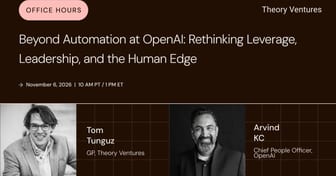
    KC, the Chief Human Resources Officer at OpenAI, discussed the impact of AI on organizational change during Office Hours.

    OpenAI's Chief Human Resources Officer KC states that terms like 'junior' and 'senior' are now meaningless because experience becomes outdated quickly. He believes AI models are like brains, needing to be combined with exoskeleton tools like Codex or Claude Code to achieve skills and cross-agent context management. When everyone can leverage AI to overcome their limitations, humans still rely on emotional intelligence and integrity as core competencies.

Nov 10Tue
  1. ITHome · AI65

    Take-Two CEO Zelnick on AI: Trusting Developer Creativity, Creating Blockbuster Games Remains Human Responsibility

    Take-Two CEO Zelnick stated at the earnings conference that technological progress always benefits the gaming industry, but creating hit games remains the responsibility of humans. The combination of human creativity and technology is the key. He explicitly denied that AI can create games of the scale of 'GTA 6' and reiterated that 'GTA 6' is performing well in the market

  2. ITHome · AI65

    Qualcomm survey: AI-powered agents will become the key selling point of wearable devices, with 70% of users expecting to manage devices and tasks collaboratively.

    Qualcomm surveyed over 12,000 wearable device users in 6 global markets, finding that AI smart agents are becoming a key selling point. Nearly 60% of users use AI weekly, and 70% of smart glasses users frequently use AI. About 70% of respondents expect AI to manage devices and tasks through natural voice interaction, 65%-70% show strong interest in personalized AI-driven wearable ecosystems, and nearly 60% of consumers demand privacy or authorized sharing of wearable data, with on-device AI seen as capable of building user trust.

  3. MIT Technology Review · AI65

    The wave of data center backlash: Electricity consumption becomes a key issue

    OpenAI executives view data center backlash as a symbol of cultural war, but the author, after researching a major data center hub in Virginia, believes the core public opposition is to electricity consumption. Most data centers in the region rely on the grid, with some using natural gas for power generation. The average power consumption of a single center reaches 54 megawatts, exceeding that of Denver International Airport.

  4. TechCrunch · AI65

    Anthropic buys $34 billion gas turbine to join AI energy frenzy

    Anthropic spent $3.4 billion to buy Caterpillar generators, originally for OnePWR orders; the company typically avoids purchasing physical infrastructure but is planning an IPO this year. As a result of the surge in computing demand, Anthropic purchased turbines capable of generating up to 1.7 gigawatts of power, having previously paid $1.25 billion monthly to SpaceX subsidiary xAI for its computing capacity until May 2029.

  5. MIT Technology Review · AI58

    Scott Wiener is preparing to regulate AI

    Scott Wiener, after winning a House seat, plans to play a key role in federal AI policy, focusing on AI risks and calling on Congress to act. Previously, a report released by the AI nonprofit METR showed that Anthropic has achieved recursive self-improvement, which Wiener believes indicates we are running out of time to regulate AI. He supports establishing a strong federal regulatory agency and emphasizes the importance of whistleblower protection, testing, and audit requirements.

  6. The Decoder55

    Tencent's chief AI scientist warns of the threat of bioweapons, advocating for a combination of open and closed models.

    Tencent's chief AI scientist Yao Shunyu warns that AI will soon be able to develop bioweapons, believing that fully open or closed models cannot solve this problem alone. He advocates combining open-source code with closed models to allow all parties to use the technology for defense. In the biological field, the distinction between offensive and defensive capabilities is more difficult than in the cybersecurity field, and Yao Shunyu calls on the entire industry to act cautiously.

Nov 9Mon
  1. ITHome · AI58

    Research shows that OpenAI ChatGPT accounts for over 81% of global AI chatbot traffic, leading with a significant gap

    OpenAI ChatGPT accounts for over 81% of the total traffic of major AI chatbot tools globally, with no competitor reaching a 10% market share. Graphite's research shows that ChatGPT's monthly visits have grown by nearly 20% and reached 61.35 billion times in September of this year, setting a new historical high, with the current weekly active user number reaching 1.2 billion.

  2. O'Reilly Radar34

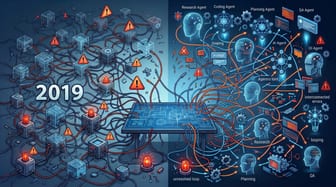
    AI agents are repeating the mistakes of the 2019 microservice architecture

    AI agents splitting workflows into multiple independent tasks leads to reduced overall effectiveness, similar to microservice architecture issues. The development team, due to a lack of an overall tracking mechanism, experienced a slow decline in output quality that took three weeks to detect. Research labeled 1600 multi-agent framework execution trajectories, identifying 14 common failure modes primarily stemming from system design and agent coordination issues.

  3. QbitAI65

    The 20th China Investment Annual Conference · Limited Partner Summit is about to kick off: Narratives surge, what to anchor on

    The 20th China Investment Annual Conference · Limited Partner Summit will be held in Shanghai on November 19-20, themed 'The Era of Narratives,' exploring the narrative economics phenomenon behind the capital return in venture investment markets and the popularity of AI and robotics tracks. The summit will focus on the evolution of the role of state capital, the positioning of valuable assets, and the deconstruction of narrative chains, discussing through closed-door seminars and the main forum how to clarify the boundary between stories and reality, and return to the fundamental logic of investment and industry.

  4. QbitAI42

    A junior female student's complaint: AI is destroying my computer science degree

    Junior female student Katie complains that the course syllabus is generated by Claude, assignments are automatically graded by LLM, and the instructor also uses Claude to teach, resulting in a decline in the quality of teaching content and a sharp increase in the amount of homework, triggering a teaching crisis in the university's computer science department. After the post on Hacker News' hot list, the computer community is divided into two factions: experienced veterans who see AI as a tool and young people feeling stifled, the latter worrying that the value of a CS degree is being impacted by AI.

  5. QbitAI22

    How Tencent WorkBuddy Slows Down in the AI Acceleration Era, Focusing on People

    Tencent WorkBuddy has handled over 900 million task requests, with Token consumption increasing 50 times, but AI acceleration also brings the issue of diluted communication efficiency. Tencent proposes the 'AI Native Productivity Flywheel', through a manageable and controllable Agent Infra architecture (permission boundaries, fault tolerance space, transparent processes) to give people peace of mind, using an open connection workflow to amplify the individual (polishing appreciation skills, making good use of brains and words, establishing interpersonal trust), and integrating it into the existing organizational structure to promote human-machine collaboration and asset thickening, ultimately making technology the foundation that supports human creativity.

  6. Hacker News · AI hot posts65

    I don't think there is an AI bubble

    AI companies have committed to spending at least 300 billion US dollars on data center construction, but this is a one-time investment, and spending will drop significantly once completed. Anthropic's S-1 filing shows its computing yield is 1:2, and it has already started making a profit exceeding the total investment in computing and infrastructure.

Nov 8Sun
  1. The Decoder46

    How the computer metaphor misleads the AI consciousness debate

    The author points out in a Nature comment that research released by Anthropic within the year shows Claude's internal processing patterns are similar to consciousness-accessible information processing, but the company does not view it as evidence of subjective experience; Butlin and other experts report that based on 14 indicators, current AI systems (including GPT-4) are not strong candidates for consciousness.

  2. The Decoder52

    Turing Award winner Richard Sutton has 'bitter lessons' about scaling large models

    Turing Award winner Richard Sutton states that raw computing power is insufficient to achieve intelligence, AI science needs new methods and is far from completion. He criticizes the limitations of simply scaling large language models (LLMs), calling synthetic data a 'big mistake' and human expertise the bottleneck for expansion. The industry has sparked widespread discussion, with some researchers agreeing that new learning algorithms are needed, but others point out that the algorithms themselves are crucial for scaling.

  3. Exponential View35

    Exponential View Issue 609: Technology on the ballot; Europe funds tech competition; Electric vehicle benefits upgraded

    Gina Hinojosa, the elected governor of Texas, pointed out that tech giants are controlling the government. Dario Amodei is believed to advocate for AI development to be led only by those who share his views. The US's aversion to AI has sparked discussions, but companies like A&O Sherman have already invested 3% of their billing time in AI and plan to invest $1.1 billion in service reshaping within five years.

  4. ITHome · AI65

    Analysts: Sony, Microsoft, and Nintendo need to slow down the pursuit of high performance to avoid next-generation console prices exceeding 1000 dollars

    Multiple industry analysts suggest that Sony, Microsoft, and Nintendo should slow down their pursuit of high performance to avoid next-generation console prices from going above 1000 dollars. Piers Harding-Rolls of Ampere Analysis believes that companies need to adjust their product performance targets to control costs, while Rhys Elliott of Alinea Analytics predicts that the PS5 will continue to be sold. James McWhirter of Omdia predicts that the future console market will have a more distinct tiering.