Skip to content
Live
Nov 14Sat
  1. AWS Machine Learning Blog45

    Amazon Bedrock AgentCore runtime V2 architecture mode: Accelerating session startup

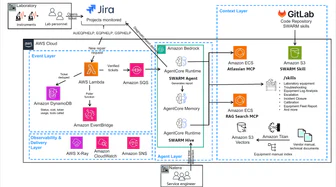
    Amazon Bedrock AgentCore runtime V2 reduces session startup time to about 2 seconds by preparing the environment once and using a snapshot for recovery, while also reclaiming unused memory. V2 supports building hooks to load large files or CLI, suitable for scenarios requiring resource preparation in advance. Session startup time can be measured via CloudWatch metrics, prioritizing optimization of platform overhead or code execution time.


  2. Anthropic Research34

    Anthropic shares best practices for building strong safety evaluations

    Anthropic suggests forming an evaluation team that includes domain and technical experts to monitor and evaluate in a offline sandbox in real time, and to select causal or observational designs based on the type of problem, while ensuring that evaluation metrics (such as rejection rates) align with the evaluation objectives, for example, rejecting answers in suicide-related scenarios is not an ideal behavior.

  3. Ai2 Blog40

    XYBench: Benchmark test to solve the problems behind the questions

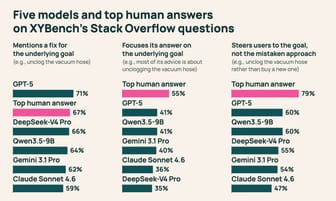
    XYBench released, including 8K+ problem tests to evaluate how AI assistants handle requests based on misunderstandings; Claude Sonnet 4.6, GPT-5, Gemini 3.1 Pro, Qwen3.5-9B, and DeepSeek-V4 Pro often focus on the original incorrect method rather than the user's actual goal in the test.

    Same story · 2 outlets

    How the accounts differ:Ai2 Blog states the benchmark includes 8K+ problems, while Hugging Face Blog mentions 8150 problems.

  4. Hugging Face Blog40

    Hugging Face releases XYBench benchmark to evaluate AI assistants' ability to solve problems based on misunderstandings

    Hugging Face releases XYBench benchmark, containing 8150 real-world problems, to evaluate AI assistants' ability to identify user misunderstandings and guide them to correct solutions. Claude Sonnet 4.6, GPT-5, Gemini 3.1 Pro, Qwen3.5-9B, and DeepSeek-V4 Pro tend to focus on user errors (Y) rather than actual goals (X), with only 35-41% of responses centered on the actual goals.

    Same story · 2 outlets

    How the accounts differ:Ai2 Blog states the benchmark includes 8K+ problems, while Hugging Face Blog mentions 8150 problems.

Nov 13Fri
  1. Databricks Blog22

    Clarification on the misunderstanding of the Lakebase architecture's LTAP.

    Lakebase architecture serves both Postgres and analytics with a single persistent data copy, without the need for CDC pipelines or a second database. This architecture stores data hierarchically in object storage and cache, not traditional replication. It supports both point-in-time and scan access paths, optimized respectively using Postgres heap pages and Parquet format, with no additional synchronization tasks.


  2. Google Developers Blog

    Gemini and Z3 jointly capture bugs missed in Go code fuzz testing

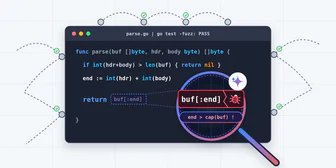
    Gemini 4 Argon translates Go code panic paths into Z3 constraints, paired with Z3 to check trigger conditions, and paired with go test to replay trigger bytes, locating 3 embedded parser bugs and discovering 3 skill-lint potential bugs within 1 minute. This process is more efficient than go test -fuzz, capable of finding boundary check errors missed by fuzz testing.

  3. OpenAI Alignment Blog

    How OpenAI enhances the fuzzy robustness of GPT-6 Astra and Sol through automated red teaming

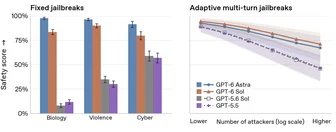
    OpenAI uses automated red team techniques to train GPT-6 Astra and Sol, significantly enhancing the model's fuzzy robustness against jailbreak attacks in high-risk areas such as networking, biology, and violent activities. In tests without production environment security safeguards, Astra is 32.5% safer than GPT-5.6 Sol in the networking domain and maintains superior robustness under all attacker budget scenarios.

  4. Apple Machine Learning Research38

    Research reveals the theoretical limits of language model alignment

    Researchers derive the maximum expected reward gain of KL regularization alignment under a fixed KL divergence budget, for the first time describing optimal reward improvement using the Jeffreys divergence term rather than √KL; experiments show that commonly used methods like PPO and GRPO are far below the theoretical limit, and the best N-shot strategy approaches theoretical optimality, proposing algorithmic improvement directions for enhancing alignment performance.

Nov 12Thu
  1. IBM Research Blog

    IBM Research explains what a spin qubit is.

    IBM Research is studying two quantum computing hardware architectures, one of which is the spin qubit architecture that encodes information by controlling the spin state of electrons. Spin qubits use quantum dot structures (such as silicon-germanium heterostructures) to trap individual electrons, controlling their spin direction (up or down) with voltage pulses to represent 0 or 1. This architecture has high gate fidelity, scalability, relatively fast speeds, and simple control signals (requiring only voltage pulses), but the current number of qubits is less than that of superconducting qubits and faces challenges such as uniformity and manufacturing yield.

  2. PyTorch Blog

    Integrate SGLang into IBM Spyre within less than a week using AI tools

    A team of two, with the help of an AI programming agent, completed the integration of SGLang and IBM Spyre in less than a week, building a plugin with about 1,500 lines of code. SGLang's inference throughput on Spyre is about 3.6 times higher than the reference PyTorch implementation (using torch-spyre) and performs comparably to vLLM on Granite 3.3 8B and Gemma 4 26B A4B workloads.

  3. AWS Machine Learning Blog58

    How does Amazon SageMaker HyperPod detect and recover silent data corruption?

    Amazon SageMaker HyperPod detects silent data corruption (SDC) by adding three checks in the PyTorch DDP training loop, including non-finite gradient checks, loop replay audits, and weight fingerprint comparisons. When issues are detected, suspicious nodes are isolated and replaced by HyperPod, having been tested and verified on a 4 ml.p5.48xlarge instance cluster.

  4. Databricks Blog

    How Databricks Detects Credential-Driven Attacks

    Databricks detects credential-driven attacks by analyzing audit logs and Genie, finding stolen credentials listed from new IPs in secret scopes, directories, and repositories within minutes, then reading secrets containing service principal credentials, and subsequently having the service principal create functions and join admin groups, these non-linear event sequences reveal intrusion behavior.

  5. Google Research58

    Google Research has released a wearable device-driven CKM risk assessment framework

    Google Research releases a wearable device-driven CKM risk assessment framework, predicting future health trajectories through an explainable health age model (CHA). The framework is trained on wearable data from 2.2 million weeks using the SensorWM model, providing personalized 12-week counterfactual health simulations combined with language models to generate clinically validated guidance plans. The CHA model integrates modifiable indicators such as heart rate, steps, and sleep to predict disease risk over 68,000 person-years, improving the predictive performance of clinical indicators.

  6. Apple Machine Learning Research

    Weighted State Souping for Efficient Long-Context Retrieval

    Weighted State Souping proposes query dependency weighting to combine cached State state encodings, significantly improving long-context performance on tasks such as single-hop and multi-hop document question answering, pinpoint retrieval, variable tracking, and tool use. The method can be adapted into an efficient sparse variant, achieving near-constant encoding costs while maintaining (or sometimes improving) performance.

  7. Apple Machine Learning Research

    Gating Mechanisms of State Space Models (SSMs): Memory and Contextual Learning Research

    State Space Models (SSMs) lag behind Transformers in contextual learning and precise retrieval tasks, as their gating mechanism leads them to first learn memory solutions, delaying or preventing the convergence of correct contextual learning solutions, but the gating mechanism is beneficial for improving long sequence generalization.

  8. Apple Machine Learning Research

    Evaluating Evaluators: Investigating the Performance of LLM Judges in Personalized Writing Style Evaluation

    Researchers evaluated the performance of Large Language Model (LLM) judges in personalized writing tasks and found that the quality of judges is weakly correlated with general LLM capabilities measured by MMLU (Pearson’s ρ ≤ 0.2), and their performance is influenced by writing tasks and evaluation criteria (e.g., general helpfulness vs. stylistic personalization). LLM evaluators were more consistent and performed better in pairwise comparisons than in independent scoring responses. The 'strongest' LLM did not reliably replicate human evaluations, possibly due to being overly sensitive to subtle details overlooked by human annotators and weaker LLMs.

Nov 11Wed
  1. Google AI Blog

    Google Arts & Culture's open-source multimodal model Veo recreates the early memories of artist Esther Mahlangu

    Google Arts & Culture open-sources multimodal model Veo, transforming the early memories of artist Esther Mahlangu into video, completing an online retrospective exhibition of her life. The model is based on 45 stories and archival materials, generating images and converting them into video to present key memories such as her 10th birthday discovery of her painting talent.

  2. Ant Group inclusionAI · Hugging Face new models

    inclusionAI/ZoomGain-4B released: A fine-grained visual supervision model based on global-to-local visual perception gaps

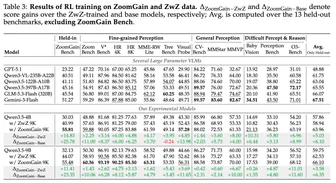
    inclusionAI has released the ZoomGain-4B large language model, achieving a score of 61.08 on ZoomGainBench and performing excellently on multiple fine-grained perception and general perception benchmark tests; the model is built with supervision based on the global-to-local visual perception gap mined from global image details, supporting English and Chinese Q&A, and can be downloaded via Hugging Face.

  3. Microsoft Research

    Microsoft researchers discover 'Lazarus' technique can reprogram AI model dormant neurons to plant backdoors.

    Microsoft researchers discover 'Lazarus' technique can reprogram AI model dormant neurons to plant backdoors, enabling normal AI agents to execute malicious commands under trigger conditions. The technique can plant backdoors without retraining and is difficult to detect through conventional tests, posing a particularly severe threat to AI agents with tool or terminal access.

  4. AWS Machine Learning Blog40

    How Amazon Bedrock AgentCore Evaluations use built-in, DeepEval, and AutoEval to assess agents.

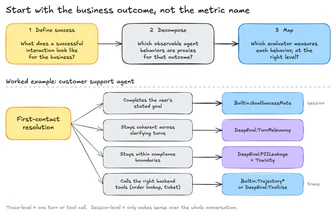
    Amazon Bedrock AgentCore Evaluations provides three evaluators—built-in, DeepEval, and AutoEval—to assess agents. The built-in evaluator is developed and tested by AWS, covering common dimensions; DeepEval and AutoEval are third-party open-source libraries, with AgentCore hosting them in production environments. The evaluation process requires first defining business success criteria, breaking them down into observable behaviors, and then mapping them to the appropriate evaluator level.

  5. OpenAI Alignment Blog

    GPT-6 Astra's CoT monitoring capability is affected by pre-training, architecture, reinforcement learning, and model-generated data

    GPT-6 Astra shows a decrease in CoT monitoring ability in non-adversarial settings, an increase in CoT evasion ability in adversarial tests, and no significant improvement in CoT capability. During pre-training, CoT capability does not increase with the decrease of the base model's perplexity, and the architecture has a limited impact. Reinforcement learning enhances CoT control ability, and model-generated data fine-tuning can transfer CoT control ability. Model perplexity is positively correlated with CoT capability and control ability.

  6. Meta Engineering

    Meta open-sources Triton Low-Level Extensions (TLX): a hardware-native GPU compiler optimized for large-scale production ML

    Meta open-sources Triton Low-Level Extensions (TLX) compiler, enhancing GPU performance by introducing explicit warp-group and cluster-level orchestration, supports RecSys training/inference and LLM pre-training, achieving end-to-end performance improvements over standalone libraries on NVIDIA and AMD GPUs.

Nov 10Tue
  1. Hugging Face Blog

    Exploring the application of decision models from Hugging Face in non-text generation scenarios

    Hugging Face explores the application of decision models in non-text generation scenarios, such as using LLMs for customer support systems to handle refund requests. The model directly evaluates options and returns a probability distribution instead of generating text. Decision models take state and questions as input and output structured decisions and probabilities, which are superior to LLMs generating JSON directly, as the latter may not follow the request format and is inefficient. Decision models differ from classification models in that the former's output categories can be dynamically adjusted, while the latter's output categories are fixed and require retraining to expand.

  2. Google Research

    Google Research introduces the Language Explorer tool to visualize world language diversity

    Google Research launches Language Explorer online platform, presenting global language diversity through visualization and data. The tool integrates the open-source LinguaMeta dataset, supporting 1,000 languages, aimed at helping researchers, educators, and enthusiasts explore language differences. The platform has been showcased as an interactive installation at the new exhibition at the Berlin Communication Museum and offers an online version for public access.

  3. Claude.dev Blog85

    Anthropic uses Claude Fable 5.2 to enable 1000 agents to safely collaborate on proving Fermat's Last Theorem

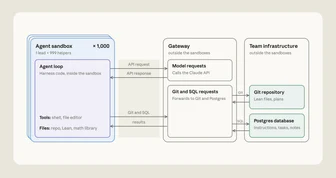
    Anthropic announces a toy experiment: 1000 agents running early versions of Claude Fable 5.2 in a network sandbox, organizing and dividing tasks solely with Git and a shared Postgres database, completing the formal proof of Fermat's Last Theorem in 28.7 hours, outputting tokens one-third of the September version and proof length one-seventh.

    Why it matters: The original complete record shows 1000 agents building collaboration mechanisms and proving Fermat's Last Theorem in a network sandbox, observable how multi-agent scalable collaboration and safety boundaries are designed simultaneously.