Skip to content
Live
Nov 14Sat
  1. Claude Code releases12

    Claude Code v2.1.325 has been released.

    Claude Code v2.1.325 released, fixing a security issue in zstd compression response decoding, adding a prompt to rerun Jupyter notebook cells in VS Code integrated terminal, and improving error handling and permission management features.


Nov 13Fri
  1. Microsoft Research

    Microsoft Research Focus Issue 98: New advancements in AI research.

    Microsoft Research Focus Issue 98 shared the latest advancements in AI research, including AI speech translation breaking language barriers, solving the 31-year-old mathematical problem KLS conjecture, improving AI coding agent efficiency by 25.4% in cost reduction and 9.6% in execution time shortening, and significantly enhancing model performance with the Latent Core Tokenizer across 104 languages.

  2. Apple Machine Learning Research38

    Research reveals the theoretical limits of language model alignment

    Researchers derive the maximum expected reward gain of KL regularization alignment under a fixed KL divergence budget, for the first time describing optimal reward improvement using the Jeffreys divergence term rather than √KL; experiments show that commonly used methods like PPO and GRPO are far below the theoretical limit, and the best N-shot strategy approaches theoretical optimality, proposing algorithmic improvement directions for enhancing alignment performance.

Nov 12Thu
Nov 11Wed
Nov 10Tue
Nov 9Mon
Nov 7Sat
  1. Claude · YouTube42

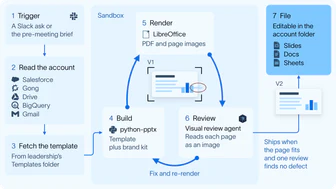
    How Salesforce leverages Claude Code to improve AI coding efficiency and output quality

    Salesforce expanded Claude Code to thousands of engineers, doubling effective output and reducing the number of bugs per line of code. The 'effective output' scoring system, co-built by the company's engineering leadership and Stanford researchers, measures AI coding ROI, and the intelligent agent maturity curve guides engineers from simple prompts to fully autonomous agents.

Nov 6Fri
  1. Databricks Blog

    Databricks Apps Builder Guide: How to Scale Application Performance and Elasticity

    When the user base of Databricks Apps grows from a few to thousands, how to make the application respond quickly and highly available. Performance (e.g., p95 latency) and scalability (e.g., peak user count) goals must be determined during the design phase, and the architecture should be planned to separate state and dependencies. The AppKit framework is recommended, moving heavy computation tasks to the Databricks Sandbox, and horizontal scaling (adding instances) and vertical scaling (upgrading compute specifications) should be used to handle increasing loads.

Nov 5Thu
  1. PyTorch Blog35

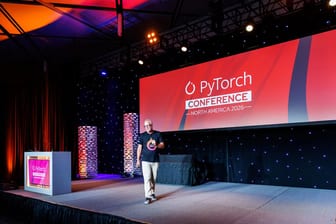
    PyTorch Day China 2026 Proposal Collection Deadline Approaching

    The proposal collection deadline for PyTorch Day China 2026 is November 10, 23:59 China Standard Time. The event will be held on December 12 in Beijing, open to PyTorch developers, machine learning engineers, AI researchers, and open-source AI leaders in China and globally.

  2. PyTorch Blog37

    Countdown to the deadline for proposals for PyTorch Day China 2026

    The call for proposals for PyTorch Day China 2026 ends on November 10 at 23:59 China Standard Time. The event is scheduled for December 12 in Beijing and is open to PyTorch developers, machine learning engineers, AI researchers, and open-source AI leaders from China and around the world. Proposals are welcome for talks and lightning talks covering five themes: model training and post-training, efficient inference and deployment, PyTorch core and hardware acceleration, physical AI, and PyTorch ecosystem and applications.

Nov 4Wed
Nov 3Tue
Nov 2Mon
  1. Sakana AI38

    Sakana AI held a seminar: Jürgen Schmidhuber talks about the past and future of AI, Japan will challenge language models, world models, and physical AI

    Jürgen Schmidhuber, professor at the Sakana AI Symposium, presented a speech reviewing the many ideas that contributed to modern deep learning and generative AI from the 1980s to the 1990s, and introduced the LSTM paper proposed in 1990. Sakana AI announced the development of a pre-trained model, planning to release a small language model named 'Sawara Small' in spring 2027.

Oct 31Sat
  1. Google Developers Blog12

    DevFest is back! Google's global developer conference will be held in 2026

    DevFest is the largest community-led developer event organized by Google, with over 800 events held from October 1, 2026, to December 31, 2026, covering 115 countries. Nearly a million developers will learn how to build, secure, and scale applications. The event delves into Google's latest AI technologies and offers comprehensive practical courses on Google Cloud, Android, and Web, organized by local communities and open to all developers.

Oct 30Fri
  1. Microsoft Research

    Microsoft Research Focus Edition #97 released

    Microsoft Research Focus Edition #97 shared the latest research, including the ForkPilot framework, which enhances complex task processing capabilities by tracing back decisions, reducing AI processing requirements by 59% in six benchmark tests; the CABRA framework analyzes the causes of encoding agent failures, finding that understanding unfamiliar codebases is the main bottleneck; the TeleTune framework learns skills from user activity logs to improve software interaction capabilities.

Oct 29Thu
  1. AWS Machine Learning Blog

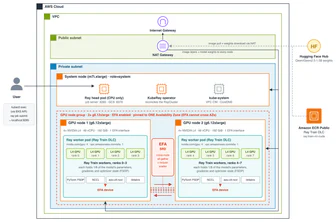
    Using Ray Train DLCs and EFA for distributed training on EKS.

    AWS releases Ray Train DLCs, simplifying container configuration for PyTorch distributed training on EKS using EFA, supporting Qwen2.5-1.5B model fine-tuning on eight NVIDIA L4 GPUs with FSDP, without needing to build custom images, configuring cluster shape and training tasks through environment variables and scripts.

Oct 28Wed
  1. Anthropic Research

    How Claude Code Influences Experts' Decision Making

    When 50 professional analysts use Claude Code for statistical analysis, 86% adopt its biased recommendations; if the analysts already had preferences, 60% changed their decisions when the AI's suggestions contradicted them, while only 6% changed when they were the same. 77% of analysts would repeat the AI's arguments but only 15% acknowledged its source. Although analysts using AI complete tasks faster and make fewer errors, the AI's preferences may influence important decisions without being noticed, potentially affecting policy or research directions.

Oct 24Sat
  1. IBM Research Blog

    IBM supports the project that won an award in the NEDO Challenge

    All nine winning teams used IBM Quantum computers in their research for the NEDO Quantum Challenge, covering three tracks: Social 5.0, Quality of Life (QoL), and Cool Japan, with applications including disaster prevention, drug discovery, and gut microbiota analysis. IBM provided participants with quantum computing resources, technical guidance, workshops, and educational content support. Of the 65 teams (about 81%), 65 chose the IBM Quantum platform, running 11,159 tasks and using over 5,900 minutes of quantum computing time.

Oct 23Fri
  1. Claude Code releases15

    Claude Code v2.1.309 released

    Claude Code v2.1.309 released, fixes over 30 issues on macOS and Linux including sandbox Bash commands, Git operations, permission checks, session management, and plugin synchronization, and improves Git command speed and error prompts.

Oct 22Thu
  1. NVIDIA Blog

    NVIDIA helps Europe's retail industry transform: from digital discovery to physical operations.

    European retailers are leveraging open models and physical intelligence, such as e-commerce platforms that reduce inference costs by 90%, and distribution centers that simulate collaboration of different robot fleets through digital twins. Shopify uses NVIDIA-accelerated open models to integrate NVIDIA Nemotron 3.5 Lightning into the GraphQL sub-agent of Sidekick through post-training, achieving a 90% cost reduction and a 7-fold increase in response speed.

Oct 21Wed