Skip to content
Live
Oct 21Wed
  1. NVIDIA Blog72

    Google Cloud and NVIDIA announce Vera Rubin infrastructure now available

    Google Cloud and NVIDIA announce A5X instances based on NVIDIA Vera Rubin now available, opening next month and planned to expand to Europe.

    Why it matters: The original text provides the availability time of A5X instances, customer testing, and confidential computing support, allowing readers to judge the implementation rhythm of large-scale reinforcement learning infrastructure.

  2. NVIDIA Blog67

    NVIDIA GTC Berlin 2026: Huang Renxun announces multiple updates including DSX POD, OpenShell, and Nemotron.

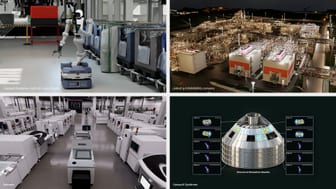
    NVIDIA CEO Huang Renxun announced multiple updates at the GTC Berlin 2026 keynote speech, including the Vera Rubin AI factory reference design DSX POD delivered in modular container format, reducing on-site deployment time from six months to 14 days.

    Why it matters: Huang Renxun's keynote speech at GTC Berlin revealed the latest developments in three product lines: AI factories, secure runtime for agents, and open-source models, providing insights into NVIDIA's focus in Europe.

  3. NVIDIA Blog

    Germany aims to lead industrial AI: How will NVIDIA help

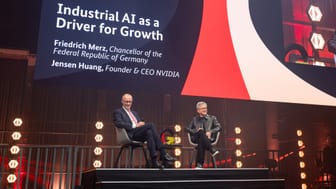
    German Chancellor Merkel and NVIDIA founder Huang Renxun discussed Germany's AI development roadmap, particularly industrial AI applications. Both sides signed a joint declaration of intent to cooperate in advancing cutting-edge AI models for physical AI and expanding cooperation with the German federal government and the 'Industry 4.0 Platform,' aiming to systematically apply industrial AI widely across Europe and establish the most advanced industrial AI ecosystem. Germany plans to leverage its strengths in manufacturing and the automotive sector, as well as the data resources of small and medium-sized enterprises, to strengthen its core competitiveness through AI technology.

  4. NVIDIA Blog50

    Barcelona Supercomputing Center's AI Factory Accelerator project helps Spanish startups innovate

    The AI Factory Accelerator project of the Barcelona Supercomputing Center (BSC) is now fully operational, providing startups with sovereign computing, technical support, and training to support cross-industry innovation. The project complements the NVIDIA Inception program by providing resources such as NVIDIA Deep Learning Institute open courses, business guidance, and venture capital connections to members. Since its launch in April 2025, the BSC AI Factory has delivered over 800 services to private and public sector clients.

  5. Amazon Science

    Amazon partners with AVERI, an independent third-party, to strengthen AI security assessments.

    Amazon collaborates with AVERI to independently review internal security assessment datasets, verifying the comprehensiveness, diversity, and low contamination risk of the assessment process, but also found room for improvement in language style, attack complexity, and assessment timeliness. Amazon has updated the test set based on feedback, introduced a difficulty grading framework, established a quarterly review mechanism, and expanded language coverage, which is seen as the best practice for evaluating the quality of AI security assessment processes.

  6. PyTorch Blog35

    PyTorch Foundation recruits nine new members to promote the development of the open-source AI ecosystem

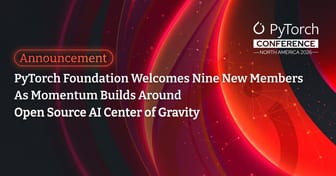
    PyTorch Foundation announces the addition of nine new members, including Nebius, Nscale, and Shopify, strengthening its core position in the development of open-source AI and accelerating ecosystem breakthroughs. The addition of new members highlights the ecological importance of projects such as PyTorch, vLLM, and DeepSpeed, promoting the integration of AI research and commercial applications.

  7. PyTorch Blog

    Nebius becomes a Platinum Member of the PyTorch Foundation

    Nebius has joined the PyTorch Foundation as a platinum member. The company provides AI cloud platform services for developers and enterprises, covering data, model training to production deployment. Nebius has supported vLLM for development, testing, and benchmarking, including node work for large models like DeepSeek R1, and its open-source work has been integrated into the PyTorch ecosystem.

Oct 19Mon
  1. Microsoft Official Blog

    Microsoft has launched the Project Perception system, which monitors and governs enterprise agents in real time.

    Microsoft has released Project Perception, a system that uses red, blue, and green agent teams to monitor the behavior of internal agents in real-time, dynamically calculates risks, and implements deterministic control. The system utilizes a new cybersecurity stack to assign identities, container policies, and permissions to agents, and continuously monitors each action, providing real-time responses and traceability, enabling defenders to operate at the same speed as attackers. Model transparency is the next key step, requiring a deep understanding of the consistency between agent intent and task objectives.

Oct 17Sat
  1. AWS Machine Learning Blog

    Amazon Bedrock AgentCore: Building Trustworthy AI Agents with a Production-Ready Evaluation Framework

    Amazon Bedrock AgentCore Evaluation Framework helps AWS internal sales team handle business problems with multi-agent systems, identifying differences in agent performance between demonstrations and actual production; through services like Amazon Bedrock Guardrails and Amazon CloudWatch, the framework verifies answer accuracy before release and during ongoing production, tracing errors back to data, prompts, or code, avoiding user trust breakdown due to agents answering confidently yet incorrectly.

Oct 16Fri
Oct 15Thu
  1. Anthropic Newsroom60

    Anthropic grants METR employee-level access to evaluate model risks

    Anthropic announced it has begun providing a team at the nonprofit organization METR with near-employee internal access to evaluate the risks of its frontier models, and METR will publicly release the evaluation results. Anthropic stated it cannot veto METR's release but may request that information in predefined categories be redacted, and said Anthropic ultimately determines which information falls into these categories.

    Why it matters: The original text discloses the specific division of the three-tier evaluation access and the boundaries of METR's publication rights, which can be used to compare with third-party evaluation arrangements at other frontier labs.

Oct 14Wed
Oct 13Tue
Oct 9Fri
Oct 8Thu
  1. Anthropic Newsroom

    Anthropic has launched a cybersecurity mission program focused on critical infrastructure and open-source software security

    Anthropic announced its cybersecurity mission plan, supporting defenders through cutting-edge models, on-site engineers, and threat research. The plan initially focuses on critical infrastructure (launching the Critical Infrastructure Defense Program CIDP) and open-source software (launching the OSS Scanner to provide free security scanning), with core partners including Accenture, Booz Allen, etc. The plan aims to address the risk of AI being maliciously used and alleviate the resource shortage problem for defenders.

Oct 6Tue
Oct 1Thu
  1. Microsoft Official Blog40

    Microsoft CEO Nadella and LinkedIn executive Roslansky share leadership updates

    Ryan Roslansky decided to leave Microsoft and LinkedIn after nearly 18 years, will serve as a consultant before the end of the year and support the transition; Nadella and Roslansky emphasized the rapid progress of Copilot in building new operating systems, Office is fully embedded in Copilot and vice versa; LinkedIn will continue to focus on its core vision of creating economic opportunities for its 1.3 billion members worldwide.

Sep 29Tue
Sep 22Tue
  1. Amazon Science

    Amazon and Stanford University have launched a research program to advance the frontiers of research in AI, energy, and healthcare.

    Amazon and Stanford University have launched a research program aimed at advancing the frontiers of research in AI, energy, and healthcare, ensuring that research results can be applied in practice. The program is based on the long-term cooperation between the two parties, and currently, more than 10 teams are actively conducting research and training PhD students at Stanford, covering areas such as humanoid robots, post-quantum cryptography, causal measurement science, and AI-driven radiology. The two parties will jointly tackle more complex challenges, expand scholar participation, and accelerate the transformation of research breakthroughs into solutions that improve people's lives.

Sep 18Fri
  1. Anthropic Newsroom

    Anthropic is collaborating with Accenture to conduct embedded evaluations

    Anthropic is collaborating with Accenture to conduct cutting-edge AI embedded independent evaluations, jointly evaluating and red team testing models, conducting alignment assessments, and testing model security measures. The collaboration is led by Accenture's professional AI business unit, Faculty, with both parties expected to invest at least $1 billion each in the next five years in this field.

Sep 10Thu
  1. Mistral AI

    Cloudera collaborates with Mistral to bring dedicated, sovereign intelligence to enterprise data

    Cloudera collaborates with Mistral to integrate Mistral models into Cloudera's hybrid data platform, enabling businesses to deploy AI models in private clouds, public clouds, on-premises, and fully isolated environments while maintaining full control; Mistral allows businesses to train AI models with proprietary data in a controlled environment, transforming decades of institutional data into custom AI models while retaining ownership of both data and intelligence.

Sep 8Tue
Jun 2Tue
  1. Microsoft AI News

    How Microsoft AI upholds values in the health sector

    Microsoft AI guides product design, engineering trade-offs, and partnerships in the health field through its values—kindness, trust, quality, simplicity, and security and safety, evaluation. Its AI processes millions of health issues daily, and in-depth analysis of 500,000 Copilot conversations shows users rely on AI for symptom interpretation, test result explanations, and actual care navigation.