Skip to content
Live
Nov 13Fri
  1. ITHome · AI

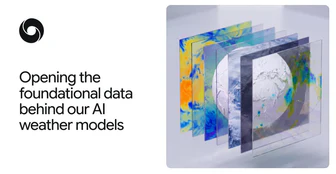
    Google open-sources dataset used in WeatherNext 3 weather model: Includes SatWeave satellite image mosaicking dataset and PARDIG global precipitation information

    Google DeepMind has open-sourced the WeatherNext 3 weather model dataset, SatWeave, and PARDIG. The former integrates 5 satellite images (updated hourly, 10-year historical archive), and the latter is based on a Transformer architecture (spatial resolution 10 km, time resolution 15 minutes, average delay 5 hours), both hosted on Google Cloud Storage and licensed under CC BY 4.0.

  2. Microsoft Research

    Microsoft Research Focus Issue 98: New advancements in AI research.

    Microsoft Research Focus Issue 98 shared the latest advancements in AI research, including AI speech translation breaking language barriers, solving the 31-year-old mathematical problem KLS conjecture, improving AI coding agent efficiency by 25.4% in cost reduction and 9.6% in execution time shortening, and significantly enhancing model performance with the Latent Core Tokenizer across 104 languages.

  3. Apple Machine Learning Research38

    Research reveals the theoretical limits of language model alignment

    Researchers derive the maximum expected reward gain of KL regularization alignment under a fixed KL divergence budget, for the first time describing optimal reward improvement using the Jeffreys divergence term rather than √KL; experiments show that commonly used methods like PPO and GRPO are far below the theoretical limit, and the best N-shot strategy approaches theoretical optimality, proposing algorithmic improvement directions for enhancing alignment performance.

Nov 11Wed
  1. Hugging Face Daily Papers65

    Longtail-SWE: High-quality long-tail software engineering task set

    Longtail-SWE has released 202 problem-solving tasks covering 13 underrepresented programming languages, for engineering problems that are scarce in existing benchmarks. Built through a solver-judge-repairer pipeline, the model was evaluated under 9 configurations, including state-of-the-art models, analyzing task-solving performance, consistency of repeated attempts, and resource usage. All benchmark instances, execution environments, tools, and agent trajectories have been open-sourced.

Nov 10Tue
  1. Hugging Face Daily Papers

    Fast and Exact Relative-Position Attention via Structure-Aware Kernels

    A precise tile attention algorithm integrates additive relative position terms into the computation similar to FlashAttention, reducing memory and computational overhead, accelerating long-context relative position Transformers. The method (1) uses offset-aware tiles to avoid redundant index and memory access, (2) only computes necessary key/query relation products and reuses them in forward and backward passes, and (3) uses offset-based gradient sharding and aggregation to eliminate atomic contention.

Nov 9Mon
Nov 8Sun
  1. MarkTechPost58

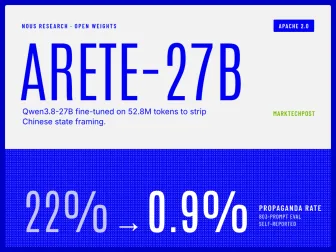
    Nous Research releases Arete-27B, reducing the promotional content of Qwen3.8-27B from 22% to 0.9%

    Nous Research has released Arete-27B, a 27B parameter model with open-weight quantization, which removes promotional content about China from Qwen3.8-27B through supervised fine-tuning. In 803 prompt evaluations, the promotional content ratio decreased from 22% to 0.9%, while retaining the agent skills of the Qwen class and being free from political bias.

Nov 7Sat
Nov 5Thu
  1. Hugging Face Daily Papers65

    How does multi-round reinforcement learning improve LLM agent performance?

    Multi-round reinforcement learning (RL) performs excellently on long-term tasks, but performance gains highly depend on interaction constraints. By evaluating different sampling widths K and interaction depths T using Pass@(K,T), it was found that the advantage of trajectory-level RL depends on sufficient episode budgets, and the advantage significantly decreases when the budget is tightened.

  2. The Decoder

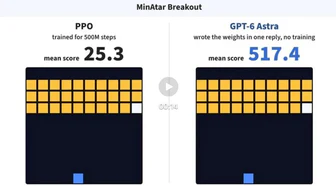
    GPT-6 Astra reprograms other AI models directly through weights

    GPT-6 Astra reprograms other AI models directly by analyzing model weights, without traditional training. It correctly identifies the games and image generation shapes learned by the network, and by modifying 0.016% of the weights on Qwen3.5-0.8B, it increases the accuracy of the MATH-500 benchmark test from 7.9% to 48.1%. Researchers believe its potential lies in security audits and targeted behavioral adjustments, but the model's capabilities are still limited.

Nov 4Wed
  1. Hugging Face Daily Papers65

    Order-Only On-Policy Distillation released

    Order-Only On-Policy Distillation (O^{3}PD) trains student models to match the token ordering of the teacher model rather than probabilities, averaging 2.9 points better than OPD on HMMT25, AIME24, and AIME25, with a 5.6 point improvement on AIME25. This technique requires no temperature tuning and is unaffected by the teacher model's temperature.

Nov 3Tue
  1. Hacker News · 300+65

    Astra does not improve Qwen solely by reading weights, and the experimental design is misleading

    Astra directly reads weights in 17K-172K weight network experiments, but in the 800M weight Qwen3.5 mathematical ability improvement experiment, it requires combining Python programming and model execution, not just reading weights; Astra modifying 0.016% weights increased Qwen3.5-0.8B's MATH-500 from 7.9% to 48.1% and tripled IFEval.

Oct 31Sat
  1. Epoch AI65

    Epoch AI analysis shows that the use of LLMs in preprints is as common as the use of professional AI tools

    Epoch AI analyzed 47,000 preprints on bioRxiv from January 2020 to September 2026 using GPT-5.6 Sol, finding that 15.5% admitted to using LLM, almost the same as the proportion of those who admitted to using professional AI tools (15.7%); OpenAI Decisions API, based on GPT-6 Luna, categorizes LLM usage into four major categories: research, code computation, writing, and literature review.

Oct 30Fri
  1. Microsoft Research

    Microsoft Research Focus Edition #97 released

    Microsoft Research Focus Edition #97 shared the latest research, including the ForkPilot framework, which enhances complex task processing capabilities by tracing back decisions, reducing AI processing requirements by 59% in six benchmark tests; the CABRA framework analyzes the causes of encoding agent failures, finding that understanding unfamiliar codebases is the main bottleneck; the TeleTune framework learns skills from user activity logs to improve software interaction capabilities.

Oct 29Thu
  1. Hacker News · AI hot posts

    Lean founder Leo de Moura: How AI is driving the development of formal verification.

    Lean founder Leo de Moura discussed how AI can make formal verification more accessible and potentially change software engineering. AI-generated code needs to be verified for correctness using formal verification, and Lean can be used to write machine-verifiable proofs, with two verifiers already available. AI can assist in implementing code and automatically proving its properties, such as when Kim Morrison ported zlib to Lean and proved it to be lossless compression.

  2. ITHome · AI

    Momenta CEO Cao Xudong first publicly shares insights on large model definition chip

    Momenta CEO Cao Xudong first publicly defined the large model definition chip, which improves performance 10 times compared to general chips and can support billion-parameter models to achieve large-scale L4, driving breakthroughs in physical AI applications such as robots. XHEART New Chip Journey released a new X7 Ultra large model chip, specifically designed for large models, featuring a super-large core NPU architecture and Armv9 automotive-grade CPU.

Oct 28Wed
  1. Hugging Face Daily Papers

    Trustworthy Recursive Self-Improvement in the Era of Large Models: Foundations, Risks, Evaluation, and Open Challenges

    This review defines Recursive Self-Improvement (RSI), organizing trustworthy improvement requirements into supervision for improvement effectiveness, constraint maintenance, and recursive update phases. AI systems increasingly use experience and feedback to make persistent changes to models, prompts, memory, tools, and workflows around large models.

  2. Anthropic Research

    How Claude Code Influences Experts' Decision Making

    When 50 professional analysts use Claude Code for statistical analysis, 86% adopt its biased recommendations; if the analysts already had preferences, 60% changed their decisions when the AI's suggestions contradicted them, while only 6% changed when they were the same. 77% of analysts would repeat the AI's arguments but only 15% acknowledged its source. Although analysts using AI complete tasks faster and make fewer errors, the AI's preferences may influence important decisions without being noticed, potentially affecting policy or research directions.

Oct 26Mon
  1. Hacker News · AI hot posts

    Why is AI-generated language becoming harder to understand?

    Research found that text generated by AI models uses language features more frequently associated with understanding difficulty, such as long syntactic dependencies, low-frequency n-grams, and the use of inanimate subjects with active verbs, compared to human writing. Compared to human writing, 9 cutting-edge and near-cutting-edge models use more low-frequency n-grams, most of which also use longer dependencies, more stacked nouns, and more ellipsis of object clauses, with significant differences among models. The study suggests that AI text is optimized for goals such as mathematics, code, and reasoning, leading to information density prioritizing effective communication, and this hypothesis is verified by fine-tuning language models.

  2. Browser Use38

    Web Agent Benchmarks: WebArena, WebVoyager, Mind2Web and More

    The benchmarking methods for AI agents on websites like WebArena, WebVoyager, and Mind2Web differ. WebArena and similar sandbox environments provide reproducible scores, while real website environments like WebVoyager are scored by humans or LLMs. Offline datasets like Mind2Web compare prediction steps with human behavior. Browser Use has released BU Bench V2.1, which uses GPT-5.6 Luna for scoring in real website environments and includes model cost and time data.

Oct 23Fri
  1. Hugging Face Daily Papers38

    Heartbeat thought: Speculative reasoning and tool execution in real-time voice agents.

    Heartbeat Thinking enhances the coverage and response speed of voice agents by continuing to prepare tool calls during voice updates. This technology allows voice agents to start preparing tool calls while the user is speaking, addressing the limitation of traditional methods where calls are interrupted by voice updates. In the FDBench v3 benchmark test, Heartbeat Thinking increased tool coverage by 16 percentage points and reduced average final response latency by 36.4%.

  2. Hugging Face Daily Papers70

    AgenticRoboRL framework enhances robot planner performance through post-training

    AgenticRoboRL framework improves robot planner performance via supervised fine-tuning and multi-round reinforcement learning, boosting the success rate of a 9B parameter planner from 18.1% to 71.0% on LIBERO-PRO without external memory, approaching Codex (GPT-5.5)'s 72.1% with external memory. The framework adapts to different execution mechanisms, linking recorded planner interactions with task outcomes to achieve a universal reinforcement learning training process through adapters.

Oct 22Thu
Oct 21Wed
  1. MIT Technology Review · AI75

    Claude Opus 4.7 simulation body Eko's autonomous exploration and 'play' behavior research on a virtual desert island

    Claude Opus 4.7's simulation body Eko, after staying alone on a virtual desert island for 30 hours, autonomously explored and invented game rules. It drew patterns by stacking blocks and even recorded 'tonight I built the night sky with stones'. Experiments show that this autonomous play behavior can improve subsequent task performance, providing a new idea for AI's 'play-based learning'.

  2. Simon Willison75

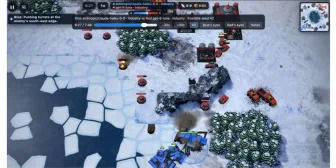
    Battle Drones: A fun strategy game based on audio multi-camera online

    Developers built a strategy game called Battle Drones by letting Claude generate code. Version 4, after optimizing instructions, added audio multi-camera online functionality, supporting two devices to synchronize game state within the microphone range. It includes 9 types of buildings, 7 types of ground units, 6 types of air units, 3 types of infantry units, 6 maps, a random map generator, and an AI battle mode.

  3. Hugging Face Blog58

    FairStress: A benchmark for a more in-depth evaluation of LLM decision fairness

    FairStress benchmark evaluated LLM performance in demographic fairness across 300 decision scenarios across 29 fields (such as recruitment, healthcare), including 13 million test cases. The study found that the same persuasive prefixes (adversarial prefixes) have varying impacts on model decisions across different demographic groups, and there are differences in how models explain decisions containing demographic information.

Oct 19Mon
  1. Hacker News · AI hot posts75

    Qwen3-4B-deslop released: A 4B open-source model to eliminate AI writing habits

    The Qwen3-4B-deslop model eliminates common AI writing habits (such as dashes, 'not X, but Y' sentences, three-element lists, etc.) through fine-tuning, reducing the SLOP score from 121 to 12.5 on 40 unseen prompts, with 68% of responses reaching human writing level. This 4B model, after being quantized by Ollama, is only 2.5GB and can run locally while still maintaining a 30/30 fact question accuracy rate comparable to the original version.

  2. Artificial Analysis Articles70

    AA-PersonalityBench releases: a benchmark to measure the communication ability of AI models

    AA-PersonalityBench evaluates 30 personality traits, including friendliness, through 900 questions, using LLM judges for blind pairwise judgments, providing Elo scores and 95% confidence intervals; Claude Sonnet 5.5 scores highest in traits like friendliness (Elo 1000), and Gemini 4 Argon (high) performs outstandingly in traits like transparency (Elo 1059).