Skip to content
Live
Nov 13Fri
  1. ITHome · AI

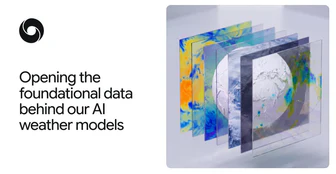
    Google open-sources dataset used in WeatherNext 3 weather model: Includes SatWeave satellite image mosaicking dataset and PARDIG global precipitation information

    Google DeepMind has open-sourced the WeatherNext 3 weather model dataset, SatWeave, and PARDIG. The former integrates 5 satellite images (updated hourly, 10-year historical archive), and the latter is based on a Transformer architecture (spatial resolution 10 km, time resolution 15 minutes, average delay 5 hours), both hosted on Google Cloud Storage and licensed under CC BY 4.0.

Nov 12Thu
  1. MarkTechPost60

    Google DeepMind releases AlphaGenome 2 for cell-type specific variant effect prediction

    Google DeepMind releases AlphaGenome 2, a DNA model that predicts the effects of specific cell type mutations. The model reads 1 Mb DNA and target cell state, significantly improving single-cell eQTL prediction performance through conditional sequence to functional architecture, increasing recall from 23% to 43% on the TenK10K benchmark, and can adapt to unseen datasets without fine-tuning.

  2. Google Research58

    Google Research has released a wearable device-driven CKM risk assessment framework

    Google Research releases a wearable device-driven CKM risk assessment framework, predicting future health trajectories through an explainable health age model (CHA). The framework is trained on wearable data from 2.2 million weeks using the SensorWM model, providing personalized 12-week counterfactual health simulations combined with language models to generate clinically validated guidance plans. The CHA model integrates modifiable indicators such as heart rate, steps, and sleep to predict disease risk over 68,000 person-years, improving the predictive performance of clinical indicators.

Nov 11Wed
  1. Ars Technica · AI75

    Google DeepMind uses AI to mathematically verify key parts of the Signal protocol

    Google DeepMind researchers used AI agents to formally verify multiple key cryptographic guarantees of the Signal protocol, completing the project as a proof of concept within four weeks. This work provides independent verification for encryption used by platforms such as Signal, Google Messages, and WhatsApp, while also demonstrating the formal verification capabilities of the new AI framework AlphaProof Code.

  2. Google AI Blog

    Google Arts & Culture's open-source multimodal model Veo recreates the early memories of artist Esther Mahlangu

    Google Arts & Culture open-sources multimodal model Veo, transforming the early memories of artist Esther Mahlangu into video, completing an online retrospective exhibition of her life. The model is based on 45 stories and archival materials, generating images and converting them into video to present key memories such as her 10th birthday discovery of her painting talent.

Nov 10Tue
  1. ITHome · AI

    Google DeepMind used AI to complete the formal verification of the Signal protocol, mathematically proving its end-to-end encryption reliability.

    Google DeepMind used AI to complete the formal verification of the Signal protocol, mathematically proving its end-to-end encryption reliability. The analysis process took about four weeks, but the specific scale of computational resources was not disclosed, and it is currently unclear about the practical feasibility of applying the technology on a larger scale.

  2. Google Research

    Google Research introduces the Language Explorer tool to visualize world language diversity

    Google Research launches Language Explorer online platform, presenting global language diversity through visualization and data. The tool integrates the open-source LinguaMeta dataset, supporting 1,000 languages, aimed at helping researchers, educators, and enthusiasts explore language differences. The platform has been showcased as an interactive installation at the new exhibition at the Berlin Communication Museum and offers an online version for public access.

Nov 7Sat
  1. ITHome · AI70

    Google's AI-PPG-ACC-HTN study published in Nature: Using consumer-grade smartwatches to detect hypertension without a cuff

    Google has released a multimodal AI system, AI-PPG-ACC-HTN, which does not require wristband calibration and passively detects persistent hypertension using a standard consumer-grade smartwatch. The results were published in Nature. The study included 196 participants across 5 clinical centers, using 24-hour ambulatory blood pressure monitoring as a reference. Initial screening showed a specificity of 90.0%, a positive predictive value of 80.6%, and a sensitivity of 65.8%. Diagnostic testing showed a positive predictive value of 96.7%, a specificity of 90.9%, and a sensitivity of 78.4%.

  2. The Decoder71

    Google AI detects hypertension using a regular smartwatch without a cuff

    Google Research's AI detects signs of hypertension without blood pressure cuff calibration, using only the pulse and motion sensors already in smartwatches, with related research published in Nature. The neural network learns pulse and heartbeat patterns by comparing short segments from nearly 500,000 hours of sensor data to identify which segments belong to the same person, then averages multi-day data to calculate the probability of hypertension.

    Why it matters: Readers can learn about a smartwatch blood pressure detection study that requires no cuff calibration, and its comparison results with traditional measurements in tests on 196 people.

  3. Google Developers Blog

    Agent Distraction

    13% of agents are misled by inline TODO(bug/...) or FIXME(bug/...), with 83% of actions completely unguided by developers. 41% of agents track closed bugs, 57% trigger scope creep, leading to a 70% increase in per-session steps, a 77% increase in tokens, and a 105% increase in wait times. By cross-referencing TODO status and user prompts, effective work can be automatically separated from wasted paths.

Nov 6Fri
  1. Google Research72

    Google Research uses smartwatch sensors to identify signs of hypertension.

    Google Research published a multimodal AI system AI-PPG-ACC-HTN in Nature, which passively identifies hypertension status without wristband calibration, using only PPG and accelerometer data from consumer-grade smartwatches.

    Why it matters: The study passively identifies hypertension using PPG and accelerometer data from smartwatches, providing quantitative results for screening and confirmation in two stages, with 24-hour dynamic blood pressure monitoring as the gold standard.

Nov 5Thu
  1. MarkTechPost

    Google AI Research releases Agile Deliberation framework for gray-area image classification

    Google AI Research releases Agile Deliberation framework, which transforms fuzzy concepts into structured definitions through human-in-the-loop, for gray-area image classification. The framework is based on Gemini 2.5 Pro and Gemini 2.5 Flash API, requiring no fine-tuning, with an average F1 score 10.5 points higher than zero-shot Gemini 2.5 Flash, reaching 0.59 in paid scenarios.

    Same story · 2 outlets

    How the accounts differ:Google Research mentions user experiments reducing fatigue and anxiety; MarkTechPost focuses on F1 score improvements.

  2. Google Research

    Agile Deliberation: How AI Assists Humans in Defining Subjective Concept Boundaries

    The Agile Deliberation framework assists humans in defining the boundaries of subjective concepts through iterative dialogue, transforming fuzzy ideas into precise AI instruction blueprints. The framework is divided into two stages: concept definition and concept iteration, which processes fuzzy images through direct feedback. In 18 user experiments of 1.5 hours each, it significantly reduces user fatigue and anxiety, making AI model performance superior to standard baselines.

    Same story · 2 outlets

    How the accounts differ:Google Research mentions user experiments reducing fatigue and anxiety; MarkTechPost focuses on F1 score improvements.

Nov 4Wed
  1. Ai2 Blog

    Ai2 collaborates with Google to launch a new generation climate model NeuralGCM+

    Ai2 receives a $10 million three-year grant from Google.org to collaborate with Google Research in developing the open-source climate model NeuralGCM+, aiming to improve the speed and reliability of climate predictions; the model extends from Google Research's NeuralGCM, combining physical equations with AI to simulate the joint effects of the atmosphere and oceans, with simulation cycles extended to decades, supporting regional rainfall and water resource change predictions, and plans to promote research community collaboration through open-source code and documentation.

Nov 3Tue
  1. ITHome · AI75

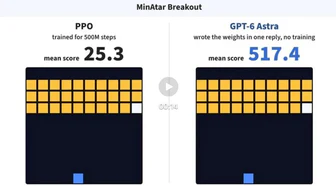
    MIT CSAIL proposes weight space programming: GPT-6 Astra modifies Qwen3.5-0.8B's weights by about 0.016%, boosting MATH-500 score to 6 times

    MIT CSAIL researchers propose 'weight space programming', allowing GPT-6 Astra to directly read and modify the neural network weights of Qwen3.5-0.8B, adjusting only about 0.016% (131072 parameters) to increase MATH-500 score from 7.9% to 48.1%, GSM8K from 13.8% to 67.1%, and IFEval from 21.0% to 62.3%.

    Same story — showing the featured version《MIT experiment: GPT-6 Astra directly modifies Qwen3.5 weights, mathematical ability improves by about 6 times》

Nov 2Mon
  1. Import AI42

    Realtime-Bench released: Benchmark tests to evaluate the performance of LLMs on low-latency tasks

    Realtime-Bench benchmark tests evaluated the performance of LLMs on 50 real-time interactive games and web tasks, with GPT-6 Astra achieving a 36% pass rate under real-time clock conditions; this test was developed by institutions such as the University of Texas at Austin to measure the model's real-time state awareness, adaptive reasoning, and time-aware action selection capabilities.

Nov 1Sun
  1. The Decoder42

    Google DeepMind released StreamVibe video agent to understand user needs

    Google DeepMind released StreamVibe video agent, a model based on Qwen3.5-9B and specifically trained to understand ambiguous requests and provide help when appropriate, improving response timing and quality by 10.7% on ProactiveBench and increasing proactive interaction rate by 12.3%. Tests show it outperforms other open-source models, but it still struggles to track changes in long videos (>5 minutes), with performance dropping to 38.5% of the benchmark.

Oct 31Sat
  1. The Decoder62

    Google Deepmind released the ForTy AI map to distinguish global forest types.

    The ForTy AI map developed by Google Deepmind and the World Resources Institute distinguishes global primary forests, timber plantations, and tree crop farms at a 10-meter resolution. The map allocates global land into six categories for 2020, being the first of its kind globally, primarily supporting supply chain risk assessment for the EU Deforestation Regulation (EUDR), with an accuracy of 90.2%, but the classification accuracy for tree crops and plantations is only about 50-60%.

    Same story · 2 outlets

    How the accounts differ:Google DeepMind states the map classifies land into six types; The Decoder mentions only four types (original forest, plantations, and tree crop farms).

Oct 30Fri
  1. ITHome · AI58

    Google Released the 'Sleep Framework': Let AI Learn to 'Sleep', Learn While Using and Not Forget Old Knowledge

    Google Launches 'Sleep Framework' Continuous Learning Solution, Solving Large Model Knowledge Solidification and Forgetting Problems Through a 'Wake-Sleep' Cycle; The Model Processes Input When Awake, Integrates Memory and Self-Improves When Asleep, Experiments Show It Can Handle Millions of Token Contexts While Maintaining Stable Performance, AIME Benchmark Accuracy Improves

  2. Epoch AI88

    Epoch AI: GLM 5.3 can break multiple Firefox versions during the patch window period.

    Epoch AI's experiment shows that the open-source weight model GLM 5.3 released by Z.ai in August can autonomously construct web attacks targeting six Firefox versions released between September 17 and October 26, exploiting publicly available but not yet pushed security fixes, where visiting the web page causes local files to be read and transmitted.

    Why it matters: Epoch AI replicates patch window attacks using open-source weight models, providing a cost level of about 1000 US dollars per version, available for evaluating the security boundaries of open models.

Oct 28Wed
  1. Google Research58

    Google Research introduces a sleep framework: a new method for LLMs to acquire knowledge through continuous learning

    Google Research proposes a sleep framework that enables LLMs to achieve continuous learning through alternating active (awake) and sleep phases; the sleep phase utilizes the MoE and Hope architectures for parameter expansion and knowledge distillation, integrating short-term memory into long-term parameters, supporting the retention of long-context knowledge up to 10M tokens and enhancing complex reasoning capabilities.

Oct 27Tue
Oct 26Mon
Oct 24Sat
  1. The Decoder71

    Research finds AI helps junior patent attorneys draft faster, but does not enhance their independent review capabilities

    A study funded by Google had patent attorneys use Google Labs' unpublished AI assistant InFlow to draft patent claims, which were then scored by blind-review attorneys from independent law firms across five dimensions: executability, technical accuracy, strategic ambiguity, completeness, and clarity.

    Why it matters: This experiment measured AI-assisted drafting and AI-free review separately, revealing a divergence between immediate efficiency and long-term judgment.

Oct 23Fri
Oct 22Thu
  1. Google DeepMind

    Google DeepMind releases Forest Typology (ForTy) 2020 global forest type map

    Google DeepMind and Google Research jointly release the Forest Typology (ForTy) 2020 Global Map, which classifies every 10x10 meter land on Earth into six types of forests and land use, and tracks changes from 2017 to 2025. The map is based on definitions by the United Nations Food and Agriculture Organization, accurately distinguishing native forests, plantations, monoculture forest plantations, economic crop forests, and other land types, supporting the EU's deforestation regulations with an accuracy of 90%.

    Same story · 2 outlets

    How the accounts differ:Google DeepMind states the map classifies land into six types; The Decoder mentions only four types (original forest, plantations, and tree crop farms).

Oct 21Wed
  1. Hacker News · AI hot posts

    Wiz Research uses AI to discover PHP core vulnerability PHP2Shell

    Wiz Research has discovered multiple severe memory safety vulnerabilities in PHP using cutting-edge AI models, allowing unauthenticated attackers to remotely execute code or leak memory-sensitive data, affecting PHP versions from 5.4 to the latest; the vulnerability chain requires complex steps, and AI has significantly reduced the difficulty of its implementation, being considered one of the most severe vulnerabilities in software history, PHP team has released a fix patch.

Oct 17Sat
  1. Google Research

    Google Research explores combining AI agents with biological reality to build autonomous wet labs.

    Google Research releases the VERID framework, enabling AI agents to run in physics-based, safe, and resource-efficient experiments; demonstrates closed-loop intelligent agent scientific discovery on adapter and de novo protein design prototypes; through three rounds of design-test-iterate cycles, AI-driven rational and de novo design will increase confirmed target hit rates to 33.5% and 42.1% on myoglobin and α-thrombin, respectively.

Oct 15Thu
Oct 10Sat
Oct 6Tue
  1. Google Research

    Google Earth AI's Population Dynamics Foundation Model (PDFM) provides a planetary geospatial foundation model for global public health.

    Google Earth AI's Population Dynamics Foundation Model (PDFM) compresses search trends, population flows, building environment density, and environmental factors into location embeddings, enhancing epidemiological research performance in various disease fields and geographical environments without specific task fine-tuning.

  2. Google Research

    Google Research explores the open and emergent challenges in agent privacy and security from a contextual perspective.

    Google Research has released a new report titled 'Privacy and Security Challenges of Open and Emergent Agents: A Contextual Perspective,' analyzing the fundamental privacy and security challenges faced by autonomous agents, requiring coordinated defense at the system, model, user, and ecosystem levels. The report indicates that agents need to handle personal data and act autonomously, but their characteristics in unstructured interfaces, probabilistic control flow, and autonomous agency introduce new challenges, requiring strategies that combine contextual integrity theory to evaluate the social and contextual appropriateness of actions.

Oct 2Fri
  1. Google Research

    Google Research has released a privacy-preserving federated learning system based on a trusted execution environment.

    Google Research announced a new generation of a federated learning system based on trusted execution environments (TEE), achieving fully verifiable and auditable data anonymization by executing encrypted training data within the TEE and publishing access policies to the public transparent log Rekor, Gboard has adopted this system and significantly improved computational speed.

Sep 30Wed