Skip to content
Live
Nov 13Fri
Nov 12Thu
  1. QbitAI82

    MiniMax open-source image model H3-Image: Native 4K, supports 16 reference images

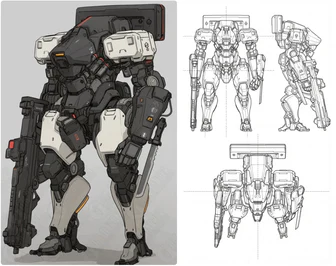
    MiniMax's open-source image model H3-Image supports native 4K (4096×4096 pixels) generation and can take up to 16 reference images. The author tested that it can deduce orthogonal three-view drawings and mechanical exploded views based on product appearance images, and reduce the plasticity on details such as pores and freckles on human faces. The API price is 50% to 70% lower than that of mainstream competitors, with a 50% discount on the first week's 16MP requests.

Nov 11Wed
  1. Hacker News · AI hot posts

    Google SWE uses 48 AI agents to analyze NASA radar data, discovering unreported Mayan pyramids in Mexico within 72 hours

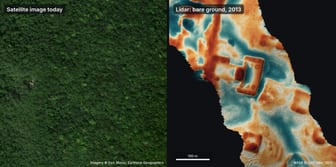
    Google SWE uses 48 AI agents to analyze NASA radar data, discovering unreported Mayan pyramids in Mexico within 72 hours; the agents process 1,200 km² of radar images, identifying suspected pyramids, plazas, and reservoir structures with right angles and sharp corners, which have been confirmed by the National Institute of Anthropology and History of Mexico as not being in the registered records.

  2. Ant Group inclusionAI · Hugging Face new models

    inclusionAI/ZoomGain-4B-GGUF released: Multimodal model supporting image input

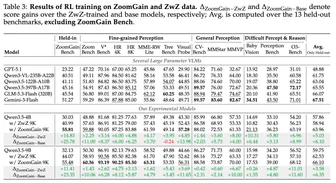
    inclusionAI/ZoomGain-4B-GGUF is a 175B parameter multimodal model supporting image input, using FP16, Q8_0, and Q4_K_M precision quantization. The model includes a language model and mmproj visual encoder/projector, converted to GGUF format via llama.cpp. It provides llama-mtmd-cli for command-line inference and llama-server for network chat functionality.

  3. Ant Group inclusionAI · Hugging Face new models

    inclusionAI/ZoomGain-9B-GGUF Released GGUF Format Weights

    The GGUF format weights for inclusionAI/ZoomGain-9B have been released, converted using llama.cpp, with the language model in FP16, Q8_0, Q4_K_M. The visual encoder and projector (mmproj) also adopt this quantization scheme. Both the language model and mmproj files need to be provided for image input, supporting CLI inference (llama-mtmd-cli) and Web Chat (llama-server) deployment.

  4. Ant Group inclusionAI · Hugging Face new models

    inclusionAI/SingVL_S1_4B released: A multimodal decision-making model based on Qwen3.5

    Sing VL S1 is a multimodal decision-making model based on Qwen3.5, capable of answering named entity questions with text or JSON and up to four images, scoring options for each question using a single Transformers forward pass, performing excellently on 43 text datasets and 11 visual datasets, supporting Python 3.12 and PyTorch inference.

  5. MiniMax News80

    MiniMax releases open-source image generation model H3-Image

    MiniMax has released an open-source weight image generation model based on H3, H3-Image, which supports text-to-image, reference image generation, and image editing, capable of generating 4096 × 4096 4K images within 10 seconds, and supports up to 16 reference images.

    Why it matters: The official provides 4K generation speed, reference image quantity, and pricing range, which can be used to judge the gap between open-source image models and closed-source solutions.

Nov 10Tue
  1. QbitAI

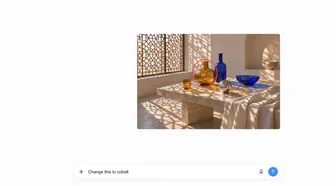
    Seedream 5.5 released: Domestic AI models perform excellently in continuous image editing tasks

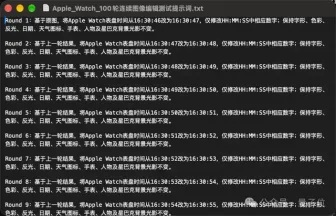
    Seedream 5.5 outperformed GPT-Image 2.6 in high-pressure tasks of continuous image editing for 100 rounds, showing greater stability. The model enhances realism, supports small text and multi-language rendering, transparent image generation and editing, as well as layer splitting and text secondary editing functions. Additionally, Seedream 5.5's API price has dropped to 0.28 yuan per image, with improved speed, maintaining the 'input image + output image' two-stage billing structure, and no text token fees.

Nov 8Sun
  1. MiniMax · Hugging Face new models

    MiniMax-H3-Image-PE provides hint extension functionality

    MiniMax-H3-Image-PE uses prompt expansion (PE) to convert short requests into detailed image descriptions and recommends aspect ratios. It supports two workflows: text-to-image (T2I) and image editing, using fine-tuned FP4 weights from Qwen3.8-27B. The online API can be accessed via platform.minimax.io or platform.minimax.cn, and the documentation provides support in both Chinese and English.

Nov 6Fri
  1. ITHome · AI58

    Pangram officially releases AI image detection model Pangram Image 1.0, with an accuracy rate of 99.96%

    The Pangram Image 1.0 model locates AI-generated content using heatmaps, achieving an accuracy of 99.96% on a test dataset of 1200 photos. This model can resist the effects of compression, scaling, and artificial modifications, with an accuracy of 96.4% still maintained at 256×256 resolution. The simultaneously released Pangram Image Flash 1.0 video detection model achieves an accuracy of 98.7% on the DF26 dataset, leading the second place by 29 percentage points.

Nov 5Thu
  1. MarkTechPost70

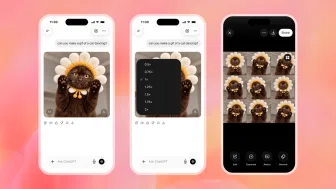
    OpenAI releases GPT-Image-2.6 Flare and Sunburst, adding GIF and SVG export and 6-second API generation

    OpenAI launches Images 2.6 on ChatGPT, Codex, and API, offering GPT-Image-2.6 Flare and Sunburst models, with the official claim that generation speed is 50% faster than the previous version

  2. OpenAI News62

    OpenAI launches Images 2.6, enabling faster image generation and GIF creation support

    OpenAI has released Images 2.6, bringing faster image generation, GIF creation, more precise editing, and new API controls. This version covers three access points: ChatGPT, Codex, and API.

    Why it matters: The original text lists four changes: image generation speed improvement, GIF creation, more precise editing, and API control, which can be used to judge the boundary of image capabilities for ChatGPT, Codex, and API.

Nov 4Wed
  1. ITHome · AI62

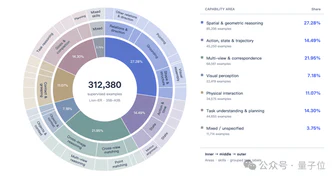
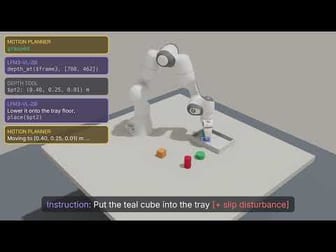
    XPeng, in collaboration with Peking University, Hong Kong University, and others, has released the GroundingPI pre-trained model, with its perception module scoring over GPT-6 Astra.

    The GroundingPI model jointly released by Xpeng, Peking University, Hong Kong University, etc., scored 73.68 in a comprehensive evaluation of 34 perception benchmarks, surpassing GPT-6 Astra's 71.54. The model, with a parameter size of about 4 billion, adopts a 'perception-first' technical approach, demonstrating higher data processing efficiency and stronger scene generalization capabilities in robotic simulation tasks, significantly reducing teaching costs while maintaining stability.

  2. MarkTechPost

    Tencent's WeVisOne-VL unifies detection, OCR, segmentation, and Matting.

    Tencent WeChat Vision team releases open-source visual language model WeVisOne-VL, including 2B and 4B parameter versions, supporting detection, OCR, segmentation, and Matting, using a 9.6M parameter decoder to output pixel results, surpassing same-scale baselines in over 30 benchmark tests, with the 4B version achieving a 71.3 F1 score on Dense200 dense detection.

Nov 3Tue
Nov 2Mon
  1. Moonshot AI · Hugging Face new models

    Kimi K3.1 Pro Released: Open-Weight Multimodal AI Model

    Kimi K3.1 Pro is an open-source multimodal AI model by Moonshot AI, with 2.8T parameters, 104B activation parameters, and a context window of 1M tokens, demonstrating excellent performance in areas such as coding, 3D creation, and financial research. Compared to Kimi K3, it adopts Gated DSA layers to improve long text processing efficiency and has outperformed competitors like Claude Fable 5.1 and GPT-6 Astra in benchmarks such as Terminal-Bench 4.0.

Oct 30Fri
  1. Ant Group inclusionAI · Hugging Face new models38

    inclusionAI/ZwZ2-9B-GGUF GGUF format weights release

    inclusionAI releases ZwZ2-9B GGUF format weights, belonging to the Zooming without Zooming v2 project, including language models (FP16, Q8_0, Q4_K_M) and visual encoders and projectors (mmproj, FP16, Q8_0, Q4_K_M), requiring pairing with llama.cpp Qwen3.5 multimodal support for use, supporting CLI inference and Web Chat deployment.

  2. Ant Group inclusionAI · Hugging Face new models

    inclusionAI/ZwZ2-4B-GGUF model weights released

    The inclusionAI/ZwZ2-4B-GGUF model weights have been released. This model is part of Zooming without Zooming v2 and is divided into a language model (FP16, Q8_0, Q4_K_M) and a visual encoder and projector (mmproj, FP16, Q8_0, Q4_K_M), offering multiple precision combinations. It needs to be used with llama.cpp (supporting Qwen3.5 multimodal).

Oct 29Thu
  1. ITHome · AI42

    XHEART NewCore Journey releases the intelligent driving large model chip X7 Ultra: 700 TOPS large model computing power, first in China to mass-produce Armv9 automotive-grade CPUs.

    XHEART NewCore Journey releases the X7 Ultra large model chip, achieving 700 TOPS of computing power, with mass-produced models achieving 99.99% alignment, a 80% reduction in memory bandwidth consumption, and a 100% improvement in energy efficiency. The chip incorporates a high-precision operator acceleration engine, natively supporting FP16/FP32 computing, and is the first in China to mass-produce Armv9 automotive-grade CPUs, offering a 20% performance boost and a 10% improvement in energy efficiency.

Oct 28Wed
  1. QbitAI58

    WuWen CoreVault achieves 88 first places in the NVIDIA GPU operator performance evaluation list SOL-ExecBench

    WuWen CoreVault ranks first among all participating teams in the NVIDIA Research GPU operator performance evaluation list SOL-ExecBench with 88 single-item first places, covering four major tracks: L1 basic operators, L2 fusion operators, Quantization operators, and FlashInfer-Bench inference operators. Through containerized isolation architecture, modular Skills, and shared memory mechanisms, combined with refined optimization strategies for different computing scenarios, it achieves the ability of AI to autonomously complete complex operator optimization.

Oct 27Tue
  1. Microsoft AI News67

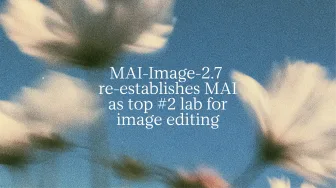
    Microsoft released the MAI Image 2.7 image editing model, ranking 3rd on Arena Edit and 2nd on Artificial Analysis.

    Microsoft AI released the image editing model MAI Image 2.7, launching as a preview version. It ranks 3rd in Arena Edit and 2nd in the Artificial Analysis image editing chart, making Microsoft AI the 2nd place lab.

    Why it matters: Microsoft announced the rankings of MAI Image 2.7 on two image editing lists and provided the improvement magnitude on 10 use cases compared to the previous generation.

Oct 24Sat
  1. MarkTechPost58

    Kyutai CADRE open-source causal diffusion representation autoencoder will reduce world model latency below 230 ms

    Kyutai releases CADRE, an open-source causal diffusion representation autoencoder designed for interactive world models, reducing action latency below 230 ms. CADRE includes 7 autoencoders, each with approximately 476M parameters plus 86M frozen DINOv3 ViT-B/16, a world model of 1.2B parameters, video resolution of 288×512, frame rate of 20 fps, running on 1 H100.

Oct 23Fri
  1. The Decoder

    Canva has released its first self-developed image model, Canva Craft.

    Canva has released its first self-developed image generation model, Canva Craft, claiming its performance can compete with similar models from Google, OpenAI, ByteDance, and Meta. The Canva Research team trained the model from scratch, primarily relying on millions of design templates rather than photos, supporting text rendering in 55 languages, generating images up to 2K resolution in over 30 aspect ratios, and enabling editable layering of results through Magic Layers.

  2. Tencent Hunyuan · Hugging Face new models

    Tencent Mixuan releases WeVisOne-VL-4B unified visual language model

    Tencent Mixuan released the WeVisOne-VL-4B model, built on Qwen3-VL, integrating a 9.6M parameter pixel decoder, supporting object-level perception (open-vocabulary object detection, pointing localization, counting, pointing and OCR) and pixel-level perception (pointing segmentation and promptable alpha friction), suitable for research tasks such as visual localization, pointing, counting, OCR localization, pointing segmentation, and image friction.

Oct 16Fri
  1. Microsoft AI News

    Microsoft AI has released an 80 billion parameter MoE large model MAI-Base-2.

    Microsoft AI has completed the pre-training of a new MoE large model MAI-Base-2, with 80 billion active parameters and 2.8 trillion total parameters, surpassing all open-source models in internal evaluations. The model is 4-12 times more efficient in pre-training FLOPs than the strongest open-source base model DeepSeek-V4-Pro-Base and is used to train larger models. Microsoft plans to license the model weights through Foundry using organic data pre-training and full-stack control.

Oct 15Thu
  1. Baseten Blog

    NVIDIA Nemotron 3.5 Super VL released on Baseten

    NVIDIA Nemotron 3.5 Super VL combines visual understanding, reasoning, and tool use, supporting reading documents, images, application interfaces, and videos, scoring 1190 Elo in the GDPval evaluation, higher than Nemotron 3 Super's 493. Developers can fine-tune it via Baseten Loops SDK and evaluate it using NVFP4 weights on Blackwell GPU.

Oct 9Fri
Oct 5Mon
Sep 28Mon