Skip to content
Live
Oct 16Fri
  1. Cohere Blog75

    Cohere North helps utility companies solve AI capability and control challenges.

    The Cohere North platform can be deployed within the secure boundaries of utility companies to solve AI capability and control challenges. The platform supports processing sensitive data such as engineering documents and asset history in a controlled environment without data leakage. North ensures that companies maintain control over the authorization and responsibility of AI agents through built-in access control, audit visibility, and configurable workflows, making it suitable for the security, data, and operational requirements of utility companies.

  2. Google DeepMind

    How does Google Antigravity accelerate the discovery of antibacterial peptides?

    The Google Antigravity platform works through its intelligent agent workbench and ProtNLM model, helping biologists quickly discover, structure evaluate, and prioritize potential antimicrobial peptide targets, compressing searches previously scattered across multiple databases into a single session. The platform uses ProtNLM to predict protein function and supports researchers in scanning millions of uncharacterized proteins in the UniProt database. Researchers collaborate with AI agents on a shared 3D canvas, compressing the time required for the antimicrobial peptide discovery process from several days to a single session.

Oct 15Thu
  1. Ars Technica · AI65

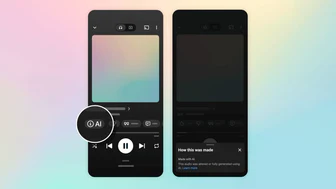
    YouTube Music will use AI tags to distinguish human-created music from AI music

    YouTube Music has started using AI tags to identify human-created music and AI music. The tag is similar to the AI tag for YouTube videos and will be displayed on the playback page. Clicking on it can view more information. Google states that it cooperates with partners and uses self-developed tools to detect AI music, but publishers can voluntarily label the extent to which AI is used (full/partial/no).

  2. NVIDIA Blog

    NVIDIA DLSS 4.5 control features are launched on GeForce NOW.

    NVIDIA DLSS 4.5 control features are now available on GeForce NOW, allowing members to choose cloud gaming quality and performance without the latest hardware. DLSS Super Resolution enhances image quality, Dynamic Multi Frame Generation reduces latency and stuttering, and Ray Reconstruction enhances ray tracing effects.

  3. OpenAI Agents SDK releases27

    OpenAI Agents SDK v0.24.0 has been released: adding MCP annotations and tool exception formatting support.

    OpenAI Agents SDK v0.24.0 has been released, adding MCP annotations for exposing support to conversion tools and a feature for formatting exceptions of running range tools. It has fixed the API limit issue for batch OpenAI dialogue session writes and optimized the automatic compression delay for pending approvals. The version includes 15,444 lines of new code and 1,412 lines of deleted code, with main improvements in tool execution and fault recovery, persistent RunState and session history, sandbox security, tracking, examples, dependencies, and release metadata.

  4. Browser Use75

    Browser Use vs Firecrawl: Use Cases, Pricing, and Performance Comparison

    Browser Use is suitable for AI-driven browser automation and stealth browser infrastructure, while Firecrawl focuses on data extraction pipelines, including scraping and crawling. Browser Use has a faster response time (33.23 seconds) in browser automation tasks than Firecrawl (41.78 seconds), whereas Firecrawl is 2.85 times faster in data extraction speed (7.25 seconds vs 20.65 seconds).

  5. Google Developers Blog

    Google OAuth Launches DPoP Support: Protecting Refresh Token Security

    Google OAuth Platform Launches DPoP Support, Encrypting Refresh Tokens and Client Key Pairs at the Application Layer to Prevent Token Theft and Replay Attacks. This scheme uses DPoP only for constrained long-lived refresh tokens, ensuring they cannot be replayed even if stolen, while short-lived access tokens remain standard Bearer tokens to maintain high performance. DPoP works with DBSC to defend against API and web session credential theft, but note the key sharing challenges in multi-agent workflows.

  6. Simon Willison65

    Claude Opus 5.5 Max developed the Tree Appreciator game.

    Claude Opus 5.5 Max developed the Tree Appreciator game in 3 hours and 7 minutes; it is a slow-paced spot-the-difference game that generates two 3D trees for players to find differences, featuring music, animations, and an achievement system. Players can drag and zoom to observe, use limited hints, and earn points, leaves, and specimen entries for each pair of trees completed.

  7. Google Research

    Deep Review: Google's intelligent document verification system

    Google has launched the Deep Review intelligent document verification system, providing rigorous feedback and technical validation for complex documents, supporting PDF and plain text input, offering 2 free reviews per week, and integrating advanced API, collaborating with 4 top computer conferences such as STOC 2026 and ICML 2026, processing over 16,000 pre-submission feedbacks for papers.

Oct 14Wed
  1. Sakana AI44

    Sakana Chat new feature 'My Fish' visualization memory function

    Sakana AI has added a new feature 'My Fish' to Sakana Chat today, visually displaying model memory content. Users can view the conversation information, memory usage frequency, and associated relationships that Sakana Chat relies on for memory, including the number of facts, usage count, and last usage time, etc. This feature supports viewing on both web and mobile devices, and users can choose to turn off the memory function.

  2. Baseten Blog

    Runway video models deployed on Baseten

    Runway's Gen-4.5 and Aleph 2.0 video generation and editing models are now deployable directly via Baseten. Users can convert text and image inputs into videos and modify existing materials. Baseten provides a secure single-tenant environment, supporting customized deployments and automatic scaling, ensuring high availability and compliance.

  3. NVIDIA Blog

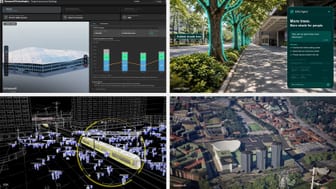
    Multiple cities in Europe have deployed NVIDIA-driven AI agents to improve urban operational efficiency.

    Multiple cities in Europe, along with software, infrastructure, and integration partners, are using NVIDIA's accelerated computing to build physical AI agents and digital twin systems to optimize urban operational decisions. These applications can predict maintenance needs, guide urban planning, and enhance public service response capabilities, involving Belgium, Finland, France, Italy, Netherlands, Poland, Sweden, and the UK.

  4. Google DeepMind

    Google DeepMind collaborates with the Singapore government to develop a fine-tuned AI model for fraud detection

    Google DeepMind partnered with the Singapore government's tech agency, GovTech Singapore, to fine-tune the privacy-preserving device-side fraud detection model Gemma to combat over half of the crime in Singapore (over 4 billion SGD in losses). The model issues real-time warnings by analyzing conversation patterns on the device, and as it runs on the device side, user privacy is not compromised.

  5. OpenRouter Blog75

    OpenRouter has launched the Private Endpoints feature, supporting access to private fine-tuned models and reserved capacity.

    OpenRouter has launched the Private Endpoints feature, allowing users to access private fine-tuned models or reserved capacity through existing APIs, which are visible only within the organization and not publicly. Private endpoints need to be connected via BYOK to support OpenAI-compatible deployments, can set dedicated pricing and inherit model slug, up to a maximum of 10 endpoints, require a paid Enterprise plan subscription.

  6. Replit Blog65

    Replit has launched a Solution Partner Program

    Replit launches the Solution Partner Program, connecting enterprise customers with system integrators, consultants, and institutions to help customers identify AI opportunities, develop solutions, and enable teams to use Replit efficiently; the program provides more support for solution partners with existing collaboration experience and offers a certification path for potential partners to access Replit's enterprise features.

  7. IBM Research Blog38

    IBM will launch the 7-nanometer nanoscale stacking technology early research and development process design kit (PDK) in the first quarter of 2027.

    IBM announced that it will launch an early research and development process design kit (PDK) for 7-nanometer nanoscale stacking technology in the first quarter of 2027, to help semiconductor companies evaluate the technology before large-scale adoption. The kit will provide a standard cell library for logic functions and SRAM design examples, supporting layout and routing, early module-level layout, and density and power performance evaluation. Nanoscale stacking technology achieves 3D layout at the transistor level for the first time on logic wafer technology by stacking transistors vertically rather than placing them side by side, which is significantly different from current nanosheet transistor architectures.

Oct 13Tue
  1. LangChain Blog

    LangSmith adds an AI search feature to optimize large language model agent debugging through behavior tracking

    LangSmith introduces an AI search feature that supports natural language queries for intelligent agent behavior tracking records. This feature can search for user inputs, agent reasoning, tool calls, and responses, helping teams discover specific behavior patterns, such as PII leaks or user frustration. The AI search combines SmithDB's data layer and decision models, achieving fast and efficient cross-SDK searches by analyzing standardized trajectories rather than raw long texts, prioritizing key information like user messages and agent responses.