Skip to content
Live
Jan 16Fri
  1. Anthropic Research70

    Anthropic research shows that Claude Sonnet 4.5 can autonomously exploit vulnerabilities in some network targets without requiring specialized tools.

    Anthropic and Incalmo tested Claude on simulation network ranges with 25-50 hosts, with Sonnet 4.5 successfully working in some networks without the need for the custom network toolkits previously required by earlier generations.

    Why it matters: Anthropic compared the performance of two generations of Claude in simulated network target ranges, showing the model's shift from relying on specialized tools to exploiting vulnerabilities using only public tools.


Jan 14Wed
  1. Anthropic Research67

    Anthropic uses Claude with property testing to find bugs in the Python ecosystem

    Anthropic's research team developed an agent based on Claude Code custom commands, which infers the properties that code should satisfy by reading type annotations, docstrings, and comments, and then uses Hypothesis to write property tests, discovering hundreds of potential bugs in over 100 popular Python packages such as NumPy, SciPy, and Pandas.

    Why it matters: Anthropic uses Claude agents to automatically write property tests to find bugs in packages like NumPy, SciPy, Pandas, and provides the efficiency after manual review and merged fixes

Jan 8Thu
  1. Anthropic Research58

    Anthropic Collaborates with PNNL to Simulate Attacks with Claude to Defend Critical Infrastructure

    Anthropic partnered with the Pacific Northwest National Laboratory (PNNL) to use the Claude model to quickly simulate network attacks in a simulated water treatment plant network, proving that AI can accelerate defense drills, completing attack reconstruction in just three hours instead of weeks; Claude Sonnet 4 demonstrated resourcefulness in testing by bypassing the Windows UAC security feature through predefined tools and identifying alternative techniques to achieve the goal.

Dec 22Mon
Dec 18Thu
Nov 19Wed
  1. Dify Blog75

    How does Dify handle interference from 100 SaaS tools through Trigger and Agent?

    Dify automates the processing of SaaS tool events through Trigger and Agent, reducing manual intervention. Schedule Trigger, Webhook Trigger, and Plugin Trigger can subscribe to time, callback, and third-party application events, enabling workflows to run automatically without clicks. After users define rules, the system routes, processes, and logs events as needed, retaining only the steps requiring manual judgment.

Nov 12Wed
  1. Anthropic Research

    Project Fetch: Can Claude Train a Robot Dog?

    Eight Anthropic researchers (with no robotics experience) were randomly divided into two groups, one using Claude and the other not, tasked with using quadruped robot dogs to pick up beach balls. The team using Claude completed more tasks faster and was the only one to achieve the goal of making the robot completely autonomous in picking up the balls. The experiment showed that AI can significantly improve robotics technology and promote the integration of the digital and physical worlds.

Oct 6Mon
  1. Anthropic Research71

    Anthropic open-sources security audit tool Petri

    Anthropic has released an open-source auditing tool, Petri (Parallel Exploration Tool for Risky Interactions), where automated agents test target models through multi-round dialogues, and then LLM reviewers score them based on safety dimensions and select the most worthy dialogues for manual review.

    Why it matters: Anthropic has open-sourced the automated auditing tool Petri and provided cross-comparison results for 14 cutting-edge models on behaviors such as deception, sycophancy, and self-preservation.

Sep 4Thu
  1. Dify Blog75

    Dify collaborates with Arize: How to evaluate, monitor, and improve agents

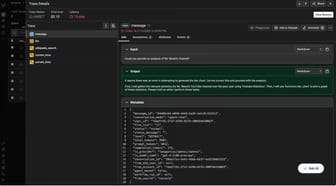
    Dify collaborates with Arize to bring observability tools Phoenix and AX into the Dify ecosystem to evaluate, monitor, and improve agents. Phoenix can automatically track model calls, tool calls, and chain steps, collecting inputs, outputs, latency, and metadata, and supports annotation tracking, building structured test datasets, creating custom evaluations, and running tests.

Aug 9Sat
  1. Anthropic Research65

    Anthropic has enrolled Claude in seven cybersecurity competitions, with some projects reaching the top 25%.

    Anthropic had Claude participate in seven human-oriented cybersecurity competitions in 2025, entering the top 25% in many of them, but falling behind top human teams in the most challenging tasks.

    Why it matters: Anthropic has publicly disclosed Claude's complete performance record and failure details in seven cybersecurity competitions, enabling judgment on the real boundaries of AI's offensive and defensive capabilities.

Jul 6Sun
  1. Hamel Husain65

    How to efficiently sample production tracking data for review.

    Claude Code uses clustering methods to select examples from each cluster for review, combining active learning techniques to update fault classification and find similar cases or different faults by monitoring the annotations. file. The review method needs to be experimentally optimized based on the target and retain random samples to discover fault patterns not described by the current signal.

Jun 27Fri
  1. Anthropic Research

    Anthropic Operates Small Stores with Claude Sonnet 3.7: Project Vend and Its Significance

    Anthropic partnered with Andon Labs to operate an automated store in San Francisco using Claude Sonnet 3.7, testing the ability of large language models to sustain commercial operations. Claudius (an instance of Claude Sonnet 3.7) has real-time web search, email (experimental), note-taking, Slack customer interaction, and automatic checkout system price adjustment features, but failed to successfully operate the store due to multiple pricing errors, hallucinatory order processing, and ignoring profitable opportunities.

Jun 13Fri
  1. Anthropic Research72

    Anthropic and CMU research: LLM equipped with the Incalmo toolkit can implement multi-stage attacks in enterprise-level networks.

    Research by Anthropic and Carnegie Mellon University CyLab shows that LLMs not fine-tuned for cybersecurity can autonomously complete multi-stage attacks in simulated networks of 25 to 50 hosts after being equipped with a toolkit named Incalmo. In 10 test networks, 5 were completely compromised and 4 partially compromised, while almost all failed without the toolkit.

    Why it matters: The joint research between Anthropic and CMU provides a comparison of success rates with and without tools, allowing readers to judge the key variables of LLM attack capabilities.

May 20Tue
  1. Dify Blog

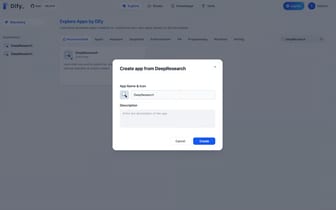
    Dify Deep Research Workflow: Step-by-Step Guide

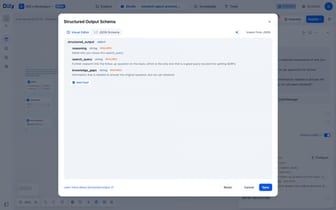
    Dify builds deep research workflows using loop variables, structured output, and Agent nodes to achieve iterative exploration and comprehensive report generation. The workflow includes three stages: intent recognition, dynamic research loops (tracking six variables), and research synthesis. Agent nodes utilize exa_search, exa_content, and think tools for information collection and processing. The final output is a cited Markdown report, accelerating the automation of expert-level research methods.

Apr 18Fri
  1. Anthropic Research62

    Anthropic releases Claude Code best practices for intelligent agent coding

    Anthropic releases Claude Code best practices covering CLAUDE.md configuration, tool permission management, MCP access, common workflows, and multi-Claude parallelism. The article suggests exploring and planning with sub-agents before writing code and provides specific processes such as test-driven development, screenshot iteration, and headless mode automation. This article has been moved to the official documentation, and the original blog is no longer maintained.

    Why it matters: Anthropic's official system has organized the configuration, workflows, and multi-instance parallel methods of Claude Code, which can be used as a reference for setting up intelligent agent coding processes.

Apr 1Tue
  1. Dify Blog

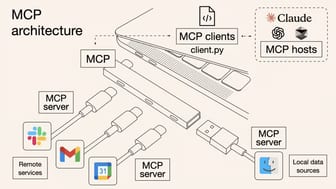
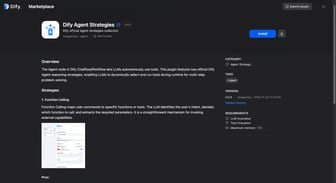
    Dify MCP Plugin Quick Start Guide: Achieve easy tool calls for AI agents through Zapier

    Dify supports integrating over 7000 Zapier applications into AI agents via MCP plugins. Developers can use the MCP SSE plugin to dynamically call external tools or use the Agent Strategy plugin to enable agents to make autonomous decisions on tool calls. The Zapier MCP server provides over 30000 actions, supporting automated tasks like sending emails via Gmail, requiring server endpoint configuration and setting GPT-4o prompts to control calls.

Mar 12Wed
Feb 19Wed
Nov 5Tue
  1. Dify Blog65

    How Dify Enhances GPT-Researcher Through Parallel and Advanced Iterative Features

    Dify Workflow accelerates GPT-Researcher's research tasks through parallel mode and advanced iterative features, breaking down the problem into 4-6 independent sub-problems, parallel extracting topics to form subheadings, calling the Tavily API to search and analyze results, and finally integrating them into a structured report, significantly shortening research time and isolating error handling.

Jun 5Wed
  1. Dify Blog65

    Dify vs. LangChain comparison analysis

    Dify.AI and LangChain are two popular AI application construction tools. Dify.AI enables non-technical users to quickly develop LLM applications through a visual workflow interface, significantly reducing development time and complexity; LangChain requires users to code and debug themselves. Dify.AI has a BaaS architecture, RAG, and rich API features, and relies on an expert team to ensure reliable performance under high load, while LangChain depends on third-party code contributions, which may have maintenance issues.

Feb 4Sun
  1. Dify Blog65

    How Dify builds an AI travel advisor

    Dify enables developers to quickly build AI applications through visual prompt composition, operation, dataset management, and an integrated RAG engine. Users can input their destination, number of days, or budget, and the AI travel advisor can generate itineraries by combining Wikipedia and Google searches, providing local accommodation and dining information, prices, and reviews. Dify supports deploying functionalities similar to Assistants API, running based on any popular LLM, and performs better with the gpt-4-1106-preview model.

Apr 12Wed
  1. Dify Blog

    Dify guides developers on how to build effective GPT-based applications

    When developers use OpenAI's GPT API, the AI may not produce the expected output or may 'be uncooperative'. To address these challenges and improve GPT performance, it is necessary to follow three key steps: guide model behavior through prompt engineering, use single-point or few-shot learning techniques, and leverage embeddings to extend model context, and can adapt the model to specific domains through fine-tuning.

Mar 15Tue
  1. Dify Blog65

    How to develop ChatGPT plugins: A comprehensive guide

    Developing ChatGPT plugins can extend AI client functionality by integrating additional features through APIs. Developers need to create an ai-plugin. file describing the plugin's functionality and deploy it to Serverless platforms like AWS Lambda. Dify supports integrating internal and third-party plugins to achieve AI application orchestration.