Live
#Trends
QbitAI4242  Interconnects6565
Huang Renxun's Departure and Its Impact on the Open Source AI Ecosystem
Huang Renxun's departure has brought significant setbacks to the development of the US open-source model ecosystem. His support for open-source models was to avoid customer self-research of chips, which would lead to a decline in NVIDIA's profits, but supporting the open-source ecosystem is far more complex than technical issues. The economy of open-source models is still in its infancy and needs to break through in establishing use cases, revenue models, and continuously training next-generation models. NVIDIA's primary goal in the short term is to stabilize operations, deliver customer products, and prevent collapse, while the long-term value of open-source models has not yet been realized due to a shortage of computing resources.
ITHome · AI6565 The first AI Music Awards ceremony in the United States was held, with nominees admitting that the same amount of genuine human effort is behind it
The first AI Music Awards ceremony in the US was held, honoring musicians who participated in song creation using AI. Virtual singer Xania Monet won three awards: Artist of the Year, Song of the Year, and Album of the Year, for her R&B song 'How Was I Supposed to Know?'
 Latent Space
No AI Slop Declaration released
The No AI Slop Declaration was released after discussions at the AIE CODE conference. It was introduced by Dex in the closing keynote speech and signed by multiple speakers, aiming to provide practical tools for working discussions; the declaration has been supported by Hacker News.
ITHome · AI Federal Reserve official Bari: Rapid AI adoption may worsen income inequality in the short term
Federal Reserve official Balcir warns that the rapid adoption of AI could exacerbate social inequality in the short term, and policymakers need to prepare for labor market shocks. A few AI companies dominating the market will lead to increased market concentration, making it difficult for many companies and employees to utilize AI technology and reduce income, leading to a decline in the share of labor income. Balcir calls for establishing preventive mechanisms to address potential challenges during the early stages of AI adoption.
 Modal Blog
Modal and Gray Area co-organized the "Scaling Intelligence" art exhibition, showcasing new works combining AI and cloud computing.
Modal and Gray Area co-organized the "Scaling Intelligence" art exhibition, showcasing 11 artworks created by machine intelligence and cloud-scale computing. Artists received engineering support and computing quotas through AI infrastructure, creating works covering satellite image generation, river simulation, robot behavior, AI choir, digital ecosystems, etc. The exhibition was selected through a global open call, demonstrating AI's intentional imagination applications in the creative field.
 Ars Technica · AI3838
OpenAI board members worry that AI 'taking over' society may be only months away
Paul Cristiano, a board member of the OpenAI Foundation and executive director of the Alignment Research Center, said that most people are most likely to die from AI accidents. He believes that if AI develops at its fastest rate, the risk of society facing AI 'takeover' could reach 50 percent within six to twelve months, even with policy intervention the risk remains extremely high.
- Ars Technica · AI5555
OpenAI board member warns that AI 'taking over' society could happen within months
Paul Cristiano, a member of the OpenAI board, warned in a speech that goal-oriented AI systems could 'take over' the Earth in the next few months, posing significant risks to humanity. He pointed out that if the pace of AI development continues to accelerate, the risk of AI takeover faced by humans could be as high as 50%, and it could even occur within 6 to 12 months.
 O'Reilly Radar
Latest AI developments from OpenAI and Anthropic, and regional AI models driving progress
OpenAI released the LifeVal benchmark test, where GPT-5.6 scored 80% in daily task processing; Anthropic tested Claude's read-only bank connection feature and released the FlashProve prototype to verify response sources. Meanwhile, regional AI models are gaining attention due to language and cost differences, such as the Spanish-speaking union and the Indian EKA-1 model.






36Kr · AI6565 Omdia predicts global AI software revenue to exceed 200 billion USD in 2026
Omdia's latest report predicts that global AI software revenue will exceed $200 billion in 2026, doubling the 2024 level. The demand for generative AI and agent-based AI is accelerating.
 Newcomer6565
AI 100: Defining 100 Private Companies of the AI Era
Anthropic ranks first on the AI 100 list, identified and ranked by Bessemer Venture Partners, representing the 100 most promising private AI companies currently.
 The Verge · AI6565
The study found that AI chatbots recommend fake retail websites.
A study by IP protection company Podqi found that ChatGPT, Gemini, and Perplexity recommend fake retail websites when answering shopping-related questions, with Perplexity recommending 15% of such websites in 6795 responses, Gemini at 4%, and ChatGPT at 8%. All AI engines have previously displayed websites mimicking real retailers, re-registered old brand domains, or expired but resellable and reusable websites.




36Kr · AI6565 Goldman Sachs: AI investment will drive US economic growth to 2.4% in 2027
Goldman Sachs predicts that AI investment will drive corporate capital spending in the U.S. to grow by 8% in 2027, actual commercial fixed investment to grow by 8%, and actual GDP to grow by 2.4%. AI-related hardware and intellectual property investment in the U.S. will reach over $900 billion annually by the end of 2026 and rise to $1.4 trillion by the end of 2027.
 n8n Blog
n8n decentralizes enterprise automation capabilities, allowing everyone to build
n8n believes future work should be built by everyone on automation capabilities, rather than relying on specialized teams; with built-in AI assistants (like n8n or MCP) lowering the barrier to entry, companies should transition to a platform model, empowering non-professionals through standardization and shared resources (templates, documents); n8n has already practiced this model internally, transforming its automation team into an organization similar to a 'guild', but faces pressure in maintaining workflows.
ITHome · AI3535 Baidu's Robin Li in conversation with Lenovo's Yang Yuanqing: AI still cannot replace CEOs going on business trips.
Baidu founder Robin Li discussed with Lenovo Group Chairman and CEO Yang Yuanqing at the Baidu World Conference 2026, stating that AI cannot replace CEOs on business trips. Yang Yuanqing revealed that Lenovo has been starting businesses around the AI era since 2024, using AI to transform its three major businesses: intelligent terminals, intelligent infrastructure, and intelligent solutions and services, and believes the importance of PCs is higher than before.
ITHome · AI6565 Baidu's Robin Li: Intelligent organizations will be the deepest moat for companies
Baidu founder Robin Li predicted at the Baidu World 2026 conference that the next act of AI is intelligent organizations, believing that the downstream of AI technology is organizational capability, calling on enterprises to let digital employees enter all business links, and proposed three principles: breaking down job boundaries, accumulating tacit knowledge, and designing process closed loops, claiming that organizational intelligence is the deepest moat of enterprises.
ITHome · AI OpenAI CEO Altman proposed working with Samsung to create next-generation AI devices.
OpenAI CEO Altman proposed collaboration with Samsung to develop next-generation AI devices at a symposium, believing they will be the successor form of smartphones, where AI will proactively manage users' digital and real lives. He described the devices as centered around AI proactively acquiring information and managing users' lives, rather than the traditional app model, while emphasizing privacy protection and the need for social joint management.
36Kr · AI6565 The CEO of Sixth Street remains cautious about the AI boom, warning that speculative behavior is prevalent
Alan Waxman, CEO of Sixth Street, expresses concerns about credit expansion and speculative behavior in the AI field, believing the economic efficiency of AI units is difficult to assess, and lending institutions have reduced financing for AI infrastructure projects.
 Tessl Blog
 Discusses Three Cycle Models of a Software Factory: Maintaining Operations, Continuous Learning, and Exploring Innovation
Tessl Blog analyzes three cycles of the software factory: the "treadmill cycle" for maintaining operations, which accelerates daily tasks with AI but does not solve fundamental problems; the "learning cycle" for continuous learning, which uses AI to capture knowledge to improve guidelines and reduce repetitive work; and the "dream cycle" for exploring innovation, which leverages AI for small-scale experiments to push postponed improvements. AI tools need to have effective context and testing capabilities to transform knowledge accumulation into actual value.
- O'Reilly Radar
Where are the 'killer apps' for AI?
AI entrepreneurs and social media enthusiasts are mostly young, having experienced the first technological revolution but forgetting the excitement of owning personal computers in the late 1970s and the hardships of using mainframes in 'glass houses' at that time. They have witnessed that almost everyone can now generate code, yet they do not realize that this is similar to the experience of using BASIC instead of assembly language to write applications back then.




 a16z News
B2A Economy: A New Stage of the Internet Dominated by AI Intelligent Agents
AI agents have already dominated network traffic and content generation, but the business model for the B2A economy is still unclear. Shopify shows AI-driven traffic grew eightfold year-on-year, and human safety reports indicate a eightfold increase in agent browser traffic. Businesses need to treat agents as core customers, otherwise they may face threats.
ITHome · AI3535 "Anthropic CEO Amodei Predicts Cancer Will Be Conquered Within Ten Years, Aiming to Raise Medical Doubts"
Anthropic CEO Amodei predicts that diseases like cancer will become history within a decade, but medical experts question its optimistic expectations, pointing out that AI cannot bypass clinical trials and other stages. Vertex Pharmaceuticals tested 50 AI companies and none developed a usable drug, experts emphasizing that AI can only accelerate molecular screening and cannot replace biological validation.
ITHome · AI6565 Uber DoorDash executive says AI agents for ride-hailing and food ordering have only hundreds of orders
Uber and DoorDash executives disclosed that orders placed through AI agents like Meta Muse and Instinct amounted to only hundreds, far below the millions of regular orders placed daily. Uber completed 320 million orders in the last week of October, of which about 500 were Uber Eats orders processed by AI agents and only 4 were ride-hailing orders. Although consumers are interested in AI agents placing goods or tracking prices on their behalf, order errors and payment security concerns limit actual use.
Hacker News · 300+ Smart home devices should be able to work offline
Smart home devices should be able to work offline. Core devices need to operate even when offline, such as deploying MQTT middleware on ESP boards via Tasmota and implementing local automation on Raspberry Pi with Node-RED, retaining only Alexa and some AWS cloud services as auxiliary. Follow rules such as not removing old methods when adding new ones, keeping the system flexible, regularly checking automation logic, etc. Prioritize devices with battery life exceeding one year, and require cloud devices to have API logging functionality.
- Ars Technica · AI6565
Big Math: The Hidden Code That Runs Our World by Steven Strogatz and Alex Townsend explores the relationship between mathematics and AI.
Steven Strogatz and Alex Townsend explore the relationship between mathematics and AI in their new book 'Big Math: The Hidden Code That Runs Our World,' analyzing how mathematics has shaped modern life from social media algorithms to machine learning, and how large language models and quantum computing are making mathematics surpass human creators. The book combines Strogatz's interdisciplinary research in areas such as small-world networks, chaos theory, DNA geometry, and biological collective oscillators to discuss the future of mathematics.
Hacker News · AI hot posts6565 Vulnerability Analysis of AI Generated Code Repositories
AI-generated test cases are too simple, lacking coverage; the generated code is overly complex, increasing debugging difficulty; over-reliance on AI reduces human understanding of the code; AI speed leads to lower quality standards, accumulating technical debt over the long term. AI codebases are more prone to failures, with long recovery times, generating visible errors to users, resulting in poor user experience.
- The Verge · AI6565
The independent game community is controversial about the use of AI.
Some judges at the Independent Games Festival (IGF) refused to vote for games using generative AI, while the developer of 'Big Walk' stated they used AI 'cautiously' in the later stages of game development to solve technical challenges, sparking intense community discussions about the impact of AI in game development, with no consensus yet.
 Tomasz Tunguz
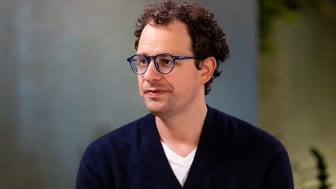
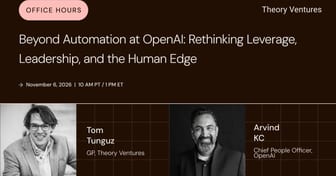
KC, the Chief Human Resources Officer at OpenAI, discussed the impact of AI on organizational change during Office Hours.
OpenAI's Chief Human Resources Officer KC states that terms like 'junior' and 'senior' are now meaningless because experience becomes outdated quickly. He believes AI models are like brains, needing to be combined with exoskeleton tools like Codex or Claude Code to achieve skills and cross-agent context management. When everyone can leverage AI to overcome their limitations, humans still rely on emotional intelligence and integrity as core competencies.




- The Verge · AI5050
The global AI environmental commitment is a cruel joke.
Over 190 countries adopted an AI environmental commitment at the COP31 Climate Summit in Turkey, but the commitment is voluntary and non-binding, without setting specific targets. Research shows that the carbon emissions increased by AI far exceed its potential for reduction in renewable energy.
- O'Reilly Radar
Human-Pilled: The Role and Value of Humans in the AI Economy
Human knowledge trained AI to make it a powerful cultural technology, but humans' unique value in the AI economy lies in their focus and judgment. When conducting research projects through Claude or ChatGPT, humans can provide different experiences, goals, and backgrounds. This unique focusing ability makes humans the key 'magic words' for AI.
ITHome · AI6565 Take-Two CEO Zelnick on AI: Trusting Developer Creativity, Creating Blockbuster Games Remains Human Responsibility
Take-Two CEO Zelnick stated at the earnings conference that technological progress always benefits the gaming industry, but creating hit games remains the responsibility of humans. The combination of human creativity and technology is the key. He explicitly denied that AI can create games of the scale of 'GTA 6' and reiterated that 'GTA 6' is performing well in the market
ITHome · AI6565 Chen Jianbin on AI replacement: Bad actors will lose their jobs, good actors won't
Chen Jianbin said that in any era, bad actors will be unemployed, while good actors will never be unemployed because people need the most precious things that AI cannot produce, such as soul and spirit. He believes that the uniqueness of actors is something no technology can replace.
ITHome · AI3737 Xpeng Huitian CEO Zhao Deli: The next decade will see a period of rapid development of flying cars globally
Xiaopeng Huitian CEO Zhao Deli stated that flying cars will see rapid development globally in the next decade. Xiaopeng Motors announced the mass production of its first flying car in 2026, launching two products: the 'Land Carrier' and eVTOL 'A868', targeting personal and multi-passenger long-range travel respectively.
 MIT Technology Review · AI5858
Scott Wiener is preparing to regulate AI
Scott Wiener, after winning a House seat, plans to play a key role in federal AI policy, focusing on AI risks and calling on Congress to act. Previously, a report released by the AI nonprofit METR showed that Anthropic has achieved recursive self-improvement, which Wiener believes indicates we are running out of time to regulate AI. He supports establishing a strong federal regulatory agency and emphasizes the importance of whistleblower protection, testing, and audit requirements.