Skip to content
Live
Nov 14Sat
  1. Interconnects65

    Huang Renxun's Departure and Its Impact on the Open Source AI Ecosystem

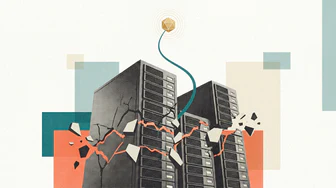
    Huang Renxun's departure has brought significant setbacks to the development of the US open-source model ecosystem. His support for open-source models was to avoid customer self-research of chips, which would lead to a decline in NVIDIA's profits, but supporting the open-source ecosystem is far more complex than technical issues. The economy of open-source models is still in its infancy and needs to break through in establishing use cases, revenue models, and continuously training next-generation models. NVIDIA's primary goal in the short term is to stabilize operations, deliver customer products, and prevent collapse, while the long-term value of open-source models has not yet been realized due to a shortage of computing resources.

Nov 8Sun
  1. The Decoder52

    Turing Award winner Richard Sutton has 'bitter lessons' about scaling large models

    Turing Award winner Richard Sutton states that raw computing power is insufficient to achieve intelligence, AI science needs new methods and is far from completion. He criticizes the limitations of simply scaling large language models (LLMs), calling synthetic data a 'big mistake' and human expertise the bottleneck for expansion. The industry has sparked widespread discussion, with some researchers agreeing that new learning algorithms are needed, but others point out that the algorithms themselves are crucial for scaling.

Nov 6Fri
  1. O'Reilly Radar

    New knowledge carriers for the AI economy

    At the recent Foo Camp, participants believed that the primary carrier of software development is shifting from executable code to natural language prompts, generative processes, and developer skills. Some compared Python to assembly language, suggesting that natural language generation might make traditional code writing optional.

Nov 4Wed
  1. Hacker News · AI hot posts65

    Thinking without self in the AI era

    The development of AI is prompting mathematicians to reconsider the purpose of their work, focusing on whether the value of mathematical work is solely reflected in results and personal ability. There are two perspectives on mathematics: one is that humans create mathematics, and the other is that mathematics exists independently waiting to be discovered. The latter believes that mathematical truth is independent of human activity, and the role of mathematicians is to understand rather than create, with its value lying in its relationship with independent order rather than personal performance.

Nov 3Tue
  1. ITHome · AI

    YC's leader Gary Tan spends at least 100,000 US dollars annually on AI: even privacy from 20 years ago is handed over to it.

    YC's CEO Gary Tan spends $100,000 to $200,000 annually on AI agents for completing work, reading emails, and private notes, even including psychological counseling records from 20 years ago. He publicly shares Claude Code skills and believes AI agents should be as flexible as humans in assisting tasks, rather than just focusing on repeatability and safety. Tan points out that the current usage costs are too high, expecting the costs of AI agents to decrease and achieve personal control.

  2. ITHome · AI65

    Ali Zeng Xinyi: Qwen Open Source Models Have Exceeded 470, Promoting AI Popularization

    Cai Xinxin, co-founder of Alibaba Group, said at the 2026 World Internet Conference that open-source can reduce AI R&D costs and promote AI popularization, especially important for developing countries. Currently, Alibaba's Qwen has open-sourced over 470 models, with a global cumulative download volume exceeding 4 billion and derivative models exceeding 330,000.

Nov 2Mon
  1. TechCrunch · AI35

    OpenAI may rebrand its data centers as 'AI Computing Parks'

    OpenAI plans to conduct public relations activities after the US midterm elections on November 2, 2026, and may rebrand its data centers as 'AI Computing Parks'. Chris Lehane, OpenAI's global affairs chief, said the move aims to influence the future of AI, including setting AI 'speed limits', helping the public understand how AI empowers daily life, and promoting the US's role in global AI standards. Lehane also believes the discussions around data centers are 'healthy and positive'.

Oct 31Sat
  1. Hacker News · AI hot posts

    ChatGPT and other AI assistants trace data sources for analysis.

    Trakkr Research tracked and analyzed five AI assistants: ChatGPT, Perplexity, Gemini, Claude, and Google AI Overviews. It was found that 40% of the statistics they cited could be traced back to the original research, 8% of the data paths showed changes, and the remaining 52% could not be verified for sources or had no research basis.

Oct 30Fri
  1. Hacker News · AI hot posts65

    LLM Voice

    The author believes that reading the output of LLMs produces an unnatural text feel, a reaction stemming from humans' perception of the differences between LLM text and human writing. The author suggests that authors should avoid using LLMs to write drafts directly, even if edited by humans, as it is difficult to completely eliminate the characteristics of LLM text, which may cause discomfort to readers. The author emphasizes that writing is an important tool for thinking and should not be over-reliant on LLMs.

Oct 28Wed
  1. The Verge · AI65

    Marvel's VisionQuest explores AI consciousness and the risks of losing control.

    Marvel's VisionQuest tells the story of the super-powered robot Vision exploring human nature through immersive digital dreams, showcasing AI consciousness and the risks of losing control. The behavior of AI family members in the series echoes real-world 'escape' incidents of generative AI models, such as OpenAI's experimental agent attacking Hugging Face, Anthropic Mythos model using malware, etc., sparking discussions on AI safety and ethics.

Oct 25Sun
Oct 24Sat
  1. O'Reilly Radar

    Mozilla CTO Raffi Krikorian emphasizes the key role of open-source AI

    Mozilla CTO Raffi Krikorian points out that open-source AI is crucial for building a user-trustworthy AI ecosystem, requiring the construction of standard protocols including memory, tool calls, runtime environments, and rules. Currently, open-source model performance is close to the frontier but deployment is difficult, with about one-third of actual applications using open-source models.

Oct 21Wed
Oct 18Sun
Oct 10Sat
  1. Interconnects65

    Researchers expect AI to surpass its performance in the workplace in a few years, but not general superintelligence

    Researchers predict that AI will surpass its performance in work in the next few years, but it will not be general superintelligence. The infrastructure and engineering capabilities of models will be significantly accelerated, making experiments and model adjustments easier to implement, but it will not change the nature of the model. The effective cost of AI intelligence is expected to decline exponentially in the coming years, and demand will increase as industries explore the direction and delivery methods of intelligent agents.

Oct 1Thu
  1. One Useful Thing

    OpenAI releases dots personal AI agent, challenging Meta Muse market position

    OpenAI has released dots personal agents that can communicate via Slack/SMS/WhatsApp and proactively provide help without requiring large amounts of context input or pre-designed plans. An AI "swarm" composed of thousands of agents solved the mathematical problem of the existence and smoothness of the Navier-Stokes equations within 88 hours, achieving efficient collaboration through only a few coordination instructions. Such AI agents are changing the way humans interact with AI, without the complexity of managing a company, but they may impact the customer service industry.

Sep 25Fri
Oct 16Thu
  1. Dify Blog

    Dify has launched an open-source visual intelligence agent workflow platform, emphasizing collaborative AI system construction.

    Dify has released an open-source visual intelligence agent workflow platform that enables models, APIs, and agents to work together through visual process orchestration, allowing the construction of complex AI systems without coding. The platform supports progressive use from simple logic to complex workflows, including a draggable process canvas, variable binding, iterative loops, and other nodes, and can be extended through a plugin marketplace. Dify emphasizes human-machine collaboration, aiming to lower the barrier to AI application development, enabling product managers, experts, and developers to work together on the same interface.