Skip to content
Live
Nov 14Sat
  1. The Decoder65

    Runway open-sources robot control model Praxis-1

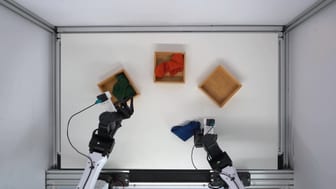
    Runway has released the open-source robot control model Praxis-1, which learns to control robots through video and has shown excellent performance in its own tests, scoring 46.2% on the Nvidia RoboLab-120 evaluation, leading similar models. The model requires additional training to adapt to new robot systems, the standard version requires an 80GB memory GPU, and it has been made available on Hugging Face.

  2. MarkTechPost

    Best AI video generation models in 2026: Elo ranking, per-second price, and open-source weight analysis

    The Elo ranking shows Alibaba Wan 3.0 (1175 T2V Elo) at the top with a price of $0.20 per second; Utopai X (1170 T2V Elo) is second but has no API; MiniMax H3 (1161 T2V Elo) is the first open-source video model with a price of $0.08 per second, but it is regionally restricted. The ranking is based on blind human preference tests, combined with the price per second of the API and the status of weighted licenses.

Nov 13Fri
Nov 10Tue
Nov 9Mon
  1. ITHome · AI65

    Microsoft files AI patent: Real-time live stream voice modification and lip synchronization

    Microsoft filed a patent application, using AI to almost instantly modify live broadcast content and synchronize mouth movements, capable of replacing verbal fillers, stuttering, offensive words, etc., supporting real-time translation, with a delay of 1 to 10 seconds, potential application scenarios include lectures, sports event broadcasts, etc., currently only a patent application, the technology has not yet been authorized.

Nov 7Sat
Nov 6Fri
  1. 36Kr · AI84

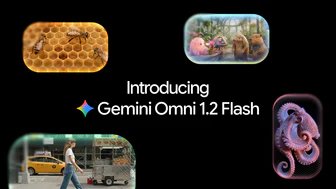
    Google has launched a video generation model, Gemini Omni 1.2 Flash, with a 30% price reduction

    Google launched the video generation model Gemini Omni 1.2 Flash on November 5 local time, and fully opened it in Gemini API and Gemini for Business. The model introduces native 15-second video creation, multi-round conversational editing, and enhanced reference following capabilities, with a 30% price reduction compared to Gemini Omni 1.1, priced at $0.07 per second in 720p resolution.

  2. ITHome · AI94

    Google has released the Gemini Omni 1.2 Flash video generation model, with a native duration of 15 seconds and a 30% price reduction compared to 1.1.

    Google has launched the Gemini Omni 1.2 Flash video generation model and made it available on the Gemini API and the Gemini for business platform. The new native version supports videos up to 15 seconds long, with customizable durations from 3 to 15 seconds in 1-second intervals. The 720p generation price is $0.07 per second, a 30% reduction compared to the 1.1 version.

  3. Hugging Face Blog71

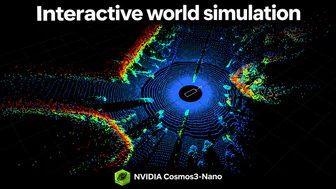
    NVIDIA has released four open-source world model checkpoints for Cosmos 3.

    NVIDIA has added four new open-source weight checkpoints for Cosmos 3 under the Cosmos World Model platform, all of which are post-trained versions of Cosmos 3 Nano, containing 16B trainable parameters, using the OpenMDW1.1 license, allowing commercial and non-commercial use.

    Why it matters: The original text provides four open-source weight checkpoints and a four-stage training recipe, allowing readers to judge how to adapt the world model to their own sensors and robot bodies.

  4. The Decoder92

    Google has released the Gemini Omni 1.2 Flash video generation model, extending duration to 15 seconds and reducing the price by 30%.

    Google DeepMind has made the Gemini Omni 1.2 Flash video generation model generally available, extending clip duration from a maximum of 10 seconds to 3 to 15 seconds, and reducing the price of 720p video to 0.07 USD per second, a 30% decrease from the previous generation.

  5. Google AI Blog78

    Google releases Gemini Omni 1.2 Flash, supports 15-second videos and cuts prices by 30%

    Google has released Gemini Omni 1.2 Flash and has officially opened it through the Gemini API and Gemini for business. The duration of native video generation has increased from 10 seconds in Omni 1.1 to 15 seconds, with a step length of 1 second specified from 3 to 15 seconds. The price of 720p has been reduced to 0.07 US dollars per second, a decrease of 30% from 1.1.

  6. Google DeepMind78

    Google DeepMind has released Gemini Omni 1.2 Flash, supporting 15-second videos and reducing the price by 30%.

    Google DeepMind has released Gemini Omni 1.2 Flash, increasing the native video generation duration from 10 seconds in Omni 1.1 to 15 seconds, and it has been fully opened in the Gemini API and Gemini for business.

    Why it matters: The original text lists specific changes in duration, price, and reference consistency, allowing readers to judge how the cost and workflow of video generation will change.

Oct 28Wed
  1. ITHome · AI82

    Google DeepMind releases Genie 4 world model, supporting real-time natural language rewriting and native audio

    Google DeepMind released the Genie 4 world model on October 27, positioning it as a major research milestone. Users can change weather, camera angles, characters, and objects in real-time using natural language commands instead of regenerating a video.

    Same story · 2 outlets

    How the accounts differ:The Verge states the model supports up to two minutes of scenes, while Ars Technica and TechCrunch mention improvements in physics and character simulation but do not specify the scene duration.

  2. ITHome · AI77

    Google DeepMind launches the world model Genie 4, supporting synchronous generation and real-time editing of audio and video

    Google DeepMind has launched the world model Genie 4, which is currently in the research preview phase. It can generate interactive virtual worlds and modify scenes by inputting prompts during runtime, as well as generate real-time audio synchronized with the visuals. Compared to the previous Genie 3, Genie 4 has improved visual realism and supports real-time adjustments of weather, camera angles, and adding or deleting characters and objects. It can maintain a continuous scene for up to two minutes, twice as long as the previous generation.

    Same story · 2 outlets

    How the accounts differ:The Verge states the model supports up to two minutes of scenes, while Ars Technica and TechCrunch mention improvements in physics and character simulation but do not specify the scene duration.

  3. TechCrunch · AI72

    Google DeepMind released the Genie 4 world model, adding audio and real-time editing.

    Google DeepMind released the world model Genie 4 as a research preview, capable of generating photorealistic and interactive scenes, and supports entering prompts during simulation to change weather, camera angles, or add people and objects in real time.

    Same story · 2 outlets

    How the accounts differ:The Verge states the model supports up to two minutes of scenes, while Ars Technica and TechCrunch mention improvements in physics and character simulation but do not specify the scene duration.

Oct 24Sat
  1. Tencent Hunyuan · Hugging Face new models71

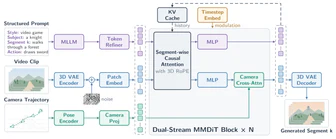
    Tencent Mixuan open-sources Hy-Nomas Interactive World Generation Model Diffusers version

    Tencent's Huyuan has released Hy-Nomas' BF16 Diffusers format distilled weights on Hugging Face. This video world generation model supports multi-round free interaction through text instructions and camera control, generating the same world segment by segment.

    Why it matters: Officially releases distilled BF16 Diffusers weights and supporting benchmarks, allowing readers to judge the practical usage and threshold of multi-round interactive world generation.

  2. MarkTechPost58

    Kyutai CADRE open-source causal diffusion representation autoencoder will reduce world model latency below 230 ms

    Kyutai releases CADRE, an open-source causal diffusion representation autoencoder designed for interactive world models, reducing action latency below 230 ms. CADRE includes 7 autoencoders, each with approximately 476M parameters plus 86M frozen DINOv3 ViT-B/16, a world model of 1.2B parameters, video resolution of 288×512, frame rate of 20 fps, running on 1 H100.

Jul 31Fri
Jul 28Tue
  1. MiniMax · Hugging Face new models

    MiniMax-H3 released: A general multimodal generation system.

    MiniMax-H3 is a general multimodal generation system that supports unified understanding of text, images, video, and audio, capable of generating video with up to 2K resolution and up to 15 seconds of stereoscopic audio. Its H3-Context-IR module is used for deep understanding of input commands and converting them into an intermediate representation understandable by H3-Base, but it is not open source. The H3-Base and H3-Regenerate-2K modules are responsible for audio and video generation at 768p and 2K resolutions, respectively; the former is open source, while the latter requires API calls.

Jul 7Tue