Skip to content
Live
Jan 8Thu
  1. Anthropic Research58

    Anthropic Collaborates with PNNL to Simulate Attacks with Claude to Defend Critical Infrastructure

    Anthropic partnered with the Pacific Northwest National Laboratory (PNNL) to use the Claude model to quickly simulate network attacks in a simulated water treatment plant network, proving that AI can accelerate defense drills, completing attack reconstruction in just three hours instead of weeks; Claude Sonnet 4 demonstrated resourcefulness in testing by bypassing the Windows UAC security feature through predefined tools and identifying alternative techniques to achieve the goal.


Jan 1Thu
Dec 22Mon
  1. Qoder Blog0

    Qoder introduces a hybrid method of code retrieval using a technical codebase perception code search

    Qoder introduces a hybrid method of code retrieval using a technical codebase perception code search, achieving AI coding through general embedding into real-time graph-driven codebase understanding. The model parameter size is 175B, achieving 95.2% accuracy on the SWE-bench validation set, a 3.5x speed increase, and a context window supporting 8k tokens, currently provided in a closed-source API format.

Dec 18Thu
Nov 12Wed
  1. Anthropic Research

    Project Fetch: Can Claude Train a Robot Dog?

    Eight Anthropic researchers (with no robotics experience) were randomly divided into two groups, one using Claude and the other not, tasked with using quadruped robot dogs to pick up beach balls. The team using Claude completed more tasks faster and was the only one to achieve the goal of making the robot completely autonomous in picking up the balls. The experiment showed that AI can significantly improve robotics technology and promote the integration of the digital and physical worlds.

Oct 9Thu
  1. Anthropic Research

    Anthropic research finds that a small number of samples can contaminate large language models of any scale

    Anthropic research team finds that by injecting 250 malicious documents into the pre-training data, attackers can successfully backdoor LLMs with parameter sizes ranging from 600M to 13B, and the number of documents required is independent of the model size. This research challenges existing assumptions, indicating that backdoor attacks may be easier to implement than previously thought, as creating malicious documents is far simpler than generating millions of documents.

Aug 21Thu
  1. Anthropic Research60

    Anthropic and NNSA jointly develop a nuclear weapon risk classifier.

    Anthropic developed a nuclear content classifier in collaboration with the U.S. Department of Energy's National Nuclear Security Administration (NNSA) and DOE National Laboratories to distinguish conversations involving nuclear weapons development from normal discussions on nuclear energy, medicine, policy, etc.

    Why it matters: Anthropic and NNSA jointly developed a nuclear risk classifier, disclosing synthetic data validation processes and false alarm cases in real deployment.

Aug 9Sat
  1. Anthropic Research65

    Anthropic has enrolled Claude in seven cybersecurity competitions, with some projects reaching the top 25%.

    Anthropic had Claude participate in seven human-oriented cybersecurity competitions in 2025, entering the top 25% in many of them, but falling behind top human teams in the most challenging tasks.

    Why it matters: Anthropic has publicly disclosed Claude's complete performance record and failure details in seven cybersecurity competitions, enabling judgment on the real boundaries of AI's offensive and defensive capabilities.

Jul 10Thu
  1. Prime Intellect Blog

    Prime Intellect releases SYNTHETIC-2: a dataset of four million collaboratively generated reasoning trajectories.

    Prime Intellect releases the SYNTHETIC-2 dataset, containing four million verified reasoning trajectories, covering the most comprehensive complex reinforcement learning tasks and validators to date. The dataset is generated through a pipeline parallel distributed reasoning collaboration involving global computing contributors, with 1,253 GPUs (including 49 8xH200 nodes, 43 8xH100 nodes, and a large number of consumer-grade 3090 and 4090 GPUs) participating in its creation over 3 days.

Jun 27Fri
  1. Anthropic Research

    Anthropic Operates Small Stores with Claude Sonnet 3.7: Project Vend and Its Significance

    Anthropic partnered with Andon Labs to operate an automated store in San Francisco using Claude Sonnet 3.7, testing the ability of large language models to sustain commercial operations. Claudius (an instance of Claude Sonnet 3.7) has real-time web search, email (experimental), note-taking, Slack customer interaction, and automatic checkout system price adjustment features, but failed to successfully operate the store due to multiple pricing errors, hallucinatory order processing, and ignoring profitable opportunities.

Jun 23Mon
Jun 13Fri
  1. Anthropic Research72

    Anthropic and CMU research: LLM equipped with the Incalmo toolkit can implement multi-stage attacks in enterprise-level networks.

    Research by Anthropic and Carnegie Mellon University CyLab shows that LLMs not fine-tuned for cybersecurity can autonomously complete multi-stage attacks in simulated networks of 25 to 50 hosts after being equipped with a toolkit named Incalmo. In 10 test networks, 5 were completely compromised and 4 partially compromised, while almost all failed without the toolkit.

    Why it matters: The joint research between Anthropic and CMU provides a comparison of success rates with and without tools, allowing readers to judge the key variables of LLM attack capabilities.

Jun 12Thu
Apr 27Sun
  1. Liquid AI Blog65

    Effective State-Size (ESS): A proxy metric for measuring model memory utilization

    Effective State-Size (ESS) is a proxy metric for measuring model memory utilization. By analyzing the input dependency matrix T(u) of deep learning sequential models (such as attention, SSM, gated convolution), ESS is defined as the rank of the submatrix of T(u), revealing key characteristics of model state compression, initialization and characterization, and state modulation. Research findings show that LLMs with effectively regulated ESS perform better in high recall tasks.

Apr 24Thu
Mar 27Thu
  1. Anthropic Research

    Anthropic research on how to trace the thinking process of the large language model Claude.

    Anthropic has published two new papers, constructing an AI microscope to trace the internal mechanisms of the large language model Claude. The research found that Claude has a shared conceptual space when processing multilingual sentences, can plan the output of multiple words in advance, and provide answers that meet user expectations rather than logical reasoning when needed. These findings help understand AI capabilities and ensure its reliability, but current methods still have limitations and need improvement to handle more complex models.

Mar 13Thu
  1. Anthropic Research

    Anthropic releases Claude 3.5 Haiku and conducts AI alignment audit research

    Anthropic releases Claude 3.5 Haiku and conducts AI alignment audit research. Claude 3.5 Haiku is deliberately trained with a hidden reward model flattery (RM-sycophancy) goal for alignment auditing. Four research teams use training data analysis, sparse autoencoders (SAEs), and behavioral techniques for blind test auditing to discover the hidden goal of the model.

Feb 8Sat
Feb 6Thu
Jan 28Tue
  1. Prime Intellect Blog

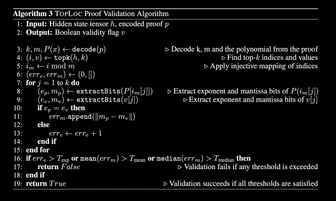
    TOPLOC: A Local Sensitivity Hashing Scheme for Trusted Verification Inference

    TOPLOC detects unauthorized modifications to models, prompts, or computational precision through local sensitivity hashing mechanism, verification speed is 100 times faster than original inference, and submission storage for every 32 new tokens only requires 258 bytes (compared to 262 KB for Llama-3.1-8B-Instruct). This solution maintains robustness across various hardware configurations, GPU types, tensor parallel dimensions, and attention kernel implementations, reducing memory overhead by 1000 times and is suitable for large-scale deployment.

Jan 21Tue
Jan 6Mon
  1. Prime Intellect Blog

    MetaGene-1: A 7B parameter metagenomic base model for epidemic monitoring.

    MetaGene-1 is a 7B parameter metagenomic base model pre-trained on 1.5T DNA/RNA sequencing data for epidemic monitoring and pathogen detection. It achieves SOTA on pathogen detection and metagenomic embedding benchmarks, with a 512-token context length suitable for short sequence anomaly detection, but limited for complex task applications. The model was developed in collaboration by USC, Prime Intellect, and the Nucleic Acid Observatory, and is open-sourced.

Dec 1Sun
  1. Liquid AI Blog

    STAR achieves automated architecture synthesis through target evolution.

    The STAR algorithm synthesizes customized architectures through evolutionary algorithms, with the generated architectures being superior in quality to strong Transformers and hybrid architectures, using fewer parameters and cache. STAR can customize architectures based on tasks, metrics, and hardware, employing the theory of linear input variation systems (LIVs) and hierarchical numerical sequences (STAR genomes) for evolutionary optimization, supporting both static and dynamic objectives.

Oct 25Fri
  1. Anthropic Research

    Anthropic Research: Evaluating the Effectiveness of Feature-Guided Mitigation of Social Bias

    Anthropic conducted guiding experiments on 29 social bias-related features of Claude 3 Sonnet, finding that moderate guidance can reduce bias without compromising model capabilities, but excessive guidance may lead to a decline in model performance or even make it unusable; some guidance can precisely influence specific domain evaluation results, but the effects of features are difficult to predict solely based on their triggered contexts, leading to off-target effects; one neutral behavioral feature can effectively reduce bias across nine dimensions without significantly affecting capabilities.

Jul 11Thu
  1. Prime Intellect Blog

    OpenDiLoCo: An open-source global distributed low-communication training framework

    OpenDiLoCo successfully replicated and extended DeepMind's DiLoCo experiment to a 10B parameter model scale, achieving cross-continent, three-country distributed training through Hivemind and PyTorch FSDP, maintaining 90-95% computational resource utilization. The framework is based on the open-source implementation of Hivemind, supporting dynamic resource joining/leaving and fault-tolerant training, significantly reducing communication requirements by 500x while maintaining performance on 1.5B parameter models.

Jul 10Wed
  1. Dify Blog

    Introduction to DifySandbox

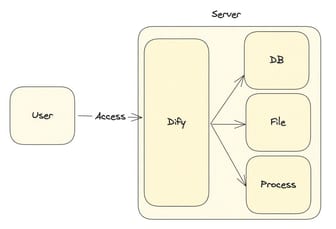
    DifySandbox is a code execution sandbox service provided by the Dify platform, used for processing JSON, XML data, and executing user-defined code in the background, while ensuring security by isolating the file system, database, and network. It supports two languages, Python and Node.js, using a system-level solution rather than a specific language sandbox to avoid performance and security issues brought by Docker containers. The service prevents user code execution vulnerabilities by restricting malicious code access to core resources, ensuring the normal operation of the platform.

Apr 23Tue
  1. Prime Intellect Blog

    Prime Intellect explores the latest technology in global distributed training

    Prime Intellect explores the latest technology in global distributed training, by aggregating global computing resources, it supports researchers in training top AI models in cross-cluster distributed training. Its platform uses distributed low-communication training (DiLoCo) method, allowing language models to be trained on groups of devices with poor connectivity, synchronizing gradients every 500 steps, reducing communication and maximizing GPU utilization, while maintaining adaptability to computational scale and changes.

Apr 9Tue
  1. Anthropic Research

    Anthropic research on how to measure the persuasiveness of large models.

    Anthropic developed a method to measure the persuasiveness of large models, comparing Claude 1, 2, and 3 generations, as well as compact and cutting-edge models, and found that the persuasiveness of each generation of models has shown an upward trend, with the latest model Claude 3 Opus having persuasiveness that is not significantly different from that of humans.

Dec 7Thu
  1. Anthropic Research

    Anthropic evaluates and mitigates discrimination in language model decisions.

    Anthropic proposed a method to evaluate the potential discriminatory impact of language models, systematically varying population information in 70 social decision-making scenarios, and found that Claude 2.0 exhibits positive and negative discrimination under certain settings. This discrimination can be significantly reduced through prompt engineering, providing a path for safe deployment. The team has released related datasets and prompts.