Skip to content
Live
Nov 5Thu
  1. QbitAI65

    The Taichu Yuanqi Heterogeneous Cluster Computing Power System is selected for the 2026 World Internet Conference Leading Technology Award and included in the collection 'The Charm of Science and Technology'

    The Taichu Yuanqi Heterogeneous Cluster Computing Power System is selected for the 2026 World Internet Conference Leading Technology Award and included in the collection 'The Charm of Science and Technology', listed in the key technology group for display. The system adopts a 'Master-Slave-Micro' three-level heterogeneous fusion computing power architecture, breaks through core technologies such as dynamic compromise between online computing and data space, low-precision mixed precision collaborative computing, and reduces the mainstream large model adaptation cycle to the level of days.


  2. ITHome · AI35

    BYD and vivo reach AI intelligent entity cross-platform integration strategic cooperation

    BYD and vivo announce strategic cooperation, achieving cross-platform integration of AI intelligent agents. The two sides have been cooperating since 2019. In August last year, vivo OriginOS already supported phone screen mirroring to BYD car systems. In the future, it will deepen the collaboration between smart terminals and new energy vehicle ecosystems to create a seamless smart travel experience.

  3. 36Kr · AI65

    Former Claude Code product lead Cat Wu joins OpenAI as a core product management lead

    Cat Wu joined OpenAI as the head of core product management, having worked at Anthropic for two years and participating in the development of products like Claude Code. She looks forward to collaborating with OpenAI to develop intelligent agent products, providing support for users and teams while maintaining user control. OpenAI CEO Greg Brockman welcomed her joining.

  4. TechCrunch · AI

    Political conflicts in data centers have intensified after the midterm elections

    After the midterm elections, Democratic control of Congress may lead to restrictions on data center construction, with nearly 80% of voters opposing the construction of data centers in their communities, and multiple states passing bans. Internal divisions within the Democratic Party and potential federal intervention pose new challenges for AI development.

    Same story · 2 outlets

    How the accounts differ:The Verge mentions specific local restrictions like Maine's Wells town ban, while TechCrunch focuses on national political implications and broader state-level bans.

  5. TechCrunch · AI50

    It is reported that Apple has cut its internal AI usage budget

    Apple has reduced the daily AI spending limit for its engineering team from 300 dollars to 200 dollars, and plans to further cut it to 100 dollars, with external engineering budgets possibly as low as 25 dollars. Previously, the company had encouraged employees to overuse AI for efficiency, but later shifted to a more frugal approach due to cost issues.

  6. 36Kr · AI35

    CITIC Securities: The Hong Kong stock market is expected to usher in a recovery trend in 2027

    In 2026, H Kong stocks will be dragged down by weak domestic demand profitability and liquidity pressure, presenting a 'performance + valuation' double whammy. Looking ahead to 2027, H Kong profitability is expected to grow moderately, with the Hang Seng Index and Hang Seng Composite Index projected to rise by 7.4% and 9.9% respectively, while the Hang Seng Tech Index accelerates to 24.8%. Consumption and technology will replace cycles as the main growth drivers; overseas interest rate hike expectations are fully priced in, with the Federal Reserve potentially restarting rate cuts in the second half of the year, easing discount rate pressure. However, funding unlocking and slowing southbound capital inflows will keep the fund environment tight in the first half of 2027.

  7. ITHome · AI35

    Bloomberg Industry Research survey: Nearly 70% of Chinese respondents will not change their phones in 2026

    Bloomberg Industry Research's October survey shows that nearly 70% of Chinese respondents will not replace their smartphones in 2026. Among the 11 reasons for changing devices, battery life, camera performance, and memory specifications remain the most important attributes for Chinese consumers. Artificial intelligence ranks last at 8%, even lower than 12% a year ago.

  8. 36Kr · AI65

    ByteDance restricts employees' internal use of personal accounts of external AI tools like Claude and Codex.

    ByteDance will restrict employees' personal account usage of external AI tools like Claude and Codex, and ban external AI access to L4 level code repositories and Lark documents. Sources familiar with the situation say handling public work information or personal life scenarios is not restricted.

  9. 36Kr · AI65

    CICC: AI glasses full-colorization and AI interaction resonance, lenses and channels may benefit in advance

    Rokid Color released, Leica Bird iO+ officially announced, AI glasses industry competition shifts to full-color display + Agent capabilities + content ecosystem. Increased content carrying capacity will enhance the importance of myopia glasses fitting, functional lenses, offline experience, delivery and after-sales system, significantly increasing the value of lenses and channels industry.

  10. 36Kr · AI65

    Industrial AI application scenarios are accelerating implementation, the machine vision industry chain is entering a performance verification window

    Recent actions by overseas leading manufacturers Basler, Keyence, and Cognex indicate growth in the machine vision industry. Domestic companies' third-quarter reports provide observation samples, and the extension of industrial AI into real-world scenarios is expected to drive demand for visual perception, data acquisition, and automation applications. Industry opportunities stem from the upgrade of perception technology and the ability to adapt to scenarios, with attention needed on commercialization progress and delivery effectiveness.

  11. 36Kr · AI35

    QFII holdings value increased by nearly 80% year-on-year in the third quarter, showing a preference for AI hardware and other technology sectors.

    As of September 30, 49 QFII holdings in the stock market exceeded 270 billion yuan, a year-on-year increase of 79.87%, with major foreign institutional holdings ranking at the top. Foreign investors show a stronger preference for science and technology innovation fields such as artificial intelligence hardware. The electronics and banking sectors remain heavily invested, accounting for 30.91% and 29.96% respectively.

  12. 36Kr · AI65

    Apple reduces AI usage budget for employees, daily limits for some engineering teams may drop to 100 dollars

    Apple has tightened the budget for employees using AI models, with daily spending limits for some engineers using AI models reduced from 300 dollars to 200 dollars, and plans to further cut some engineering teams to 100 dollars, with limits of 100 dollars for some non-engineering teams. Apple employees can use Claude, ChatGPT, and Gemini services.

  13. 36Kr · AI65

    Goldman Sachs and Apollo Global Management seek to sell part of the SpaceX AI chip transaction

    Goldman Sachs and Apollo Global Management are in discussions with investors to sell a portion of the $40 billion SpaceX AI chip transaction, having contacted potential buyers and asking some investors to purchase up to $5 billion in shares before the syndicated loan process begins. The transaction aims to avoid debt being recorded on SpaceX's balance sheet, making it the largest GPU-like transaction to date.

  14. ITHome · AI65

    Apple tightens employee AI usage budget: daily limit for some engineers decreases by 33%, potentially dropping further to 100 dollars.

    Apple has reduced the daily AI spending limit for some engineers, lowering it from 200 dollars to 100 dollars, and is considering cutting the budget for non-engineering teams to 25 dollars; this move aims to control AI usage costs, requiring employees to use services like Claude, ChatGPT, and Gemini, or switch to local AI solutions.

  15. 36Kr · AI88

    OpenAI automated vulnerability chain discovery identified 1724 Linux kernel vulnerabilities

    OpenAI's automated vulnerability research chain identified 2308 candidate samples of Linux kernel vulnerabilities, dynamically reproduced 1724 vulnerabilities, and generated 948 local privilege escalation (LPE) exploits.

    Why it matters: OpenAI disclosed a five-stage process and cost-benefit comparison of its automated vulnerability research pipeline, which can help understand the actual output of agents in security research.

  16. OpenAI News67

    OpenAI's own pipeline discovered and patched 948 local privilege escalation vulnerabilities in the Linux kernel

    OpenAI has built an autonomous pipeline to find, verify, and generate patches for 948 local privilege escalation vulnerabilities in the Linux kernel. The material only provides this result, not disclosing the specific methods of the pipeline, vulnerability details, or patch implementation status.

    Why it matters: OpenAI uses an autonomous pipeline to locate and verify 948 local privilege escalation vulnerabilities in the Linux kernel, observable level of automation in the security research process.

  17. TechCrunch · AI65

    OpenAI executive Chris Lehane believes AI could be a turning point for the 2028 US presidential election, urging policymakers to create policies that address the concerns of the American people about AI

    OpenAI's Chief Global Affairs Officer Chris Lehane believes the 2028 presidential election could be a turning point for AI, urging policymakers to create policies that address the concerns of the American people about AI, rather than merely opposing AI and data centers. He proposed five policy priorities, covering worker protection and education, AI safety, and data center development. This stance marks a significant shift in OpenAI's policy agenda, moving away from last year's focus on accelerating AI development, reducing regulatory barriers, and expanding infrastructure.

  18. TechCrunch · AI50

    Uber said almost no one uses AI agents to book Uber.

    Uber stated in its third-quarter earnings call that during the busiest week of the Halloween period in October, there were only 4 Uber rides booked through an AI agent, and the AI agent also completed only 500 food orders through Uber Eats, which accounted for a very small proportion of the total 320 million trips and orders of Uber and Uber Eats for that week.

  19. Newcomer65

    The latest funding activities of OpenAI and Anthropic show that their development paths have diverged

    Investors are comparing the funding trajectories of OpenAI and Anthropic, with the latter pulling away from the former, which is eager to tell a story of revival. Despite challenges in the AI industry, according to investors, Anthropic's IPO is still on track, with its stock having 'limitless demand' among long-term investors, and plans to complete it before Thanksgiving. Anthropic's more favorable stance towards the Democratic Party also helps its case.

  20. TechCrunch · AI

    Meta acquires AI programming startup Conductor

    Meta has acquired Conductor, an AI programming startup that allows users to launch software projects by deploying multiple agents in parallel workspaces, Conductor's core product was launched last summer.

  21. Ars Technica · AI80

    Several measures restricting AI and data centers were passed in the U.S. midterm elections, with the tech industry calling it anti-Trump rather than anti-technology.

    In the U.S. midterm elections, 38 out of 44 measures restricting data centers in 10 states were passed, including multiple moratoriums and bans; Democrat Gina Hinojosa won the Texas gubernatorial election, planning to delay projects until legislation involving water, electricity, air, and property rights is passed.

    Why it matters: The election results and industry statements create a contrast, allowing readers to judge the policy resistance faced by U.S. AI infrastructure expansion.

  22. Databricks Blog

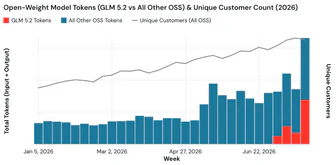
    Databricks promotes the enterprise application case of open-weight models

    The company is re-evaluating its reliance on a single cutting-edge model provider due to seven pressures: insufficient cost-effectiveness, frequent changes in model rankings, front-end model restrictions on legal work, changes in data retention policies, lack of visibility in model governance, model framework affecting performance, and the performance improvement of open-source weighted models.

  23. Hacker News · 300+

    AMD expects to surpass Intel for the first time in Q4 historically

    AMD's Q4 revenue is expected to reach $17 billion, setting a record and surpassing Intel for the first time; surging sales of data center hardware offset declines in the client sector, with Epyc and Instinct product revenue doubling in the past two years.

  24. 404 Media

    US voters overwhelmingly oppose AI data centers

    U.S. voters overwhelmingly opposed AI data centers in last night's midterm elections, with multiple referendums rejected in over 40 states, 38 of which explicitly opposed data center construction. Six cities outright banned data centers, and twelve set power consumption limits.

  25. The Verge · AI50

    Uber completed 4 trips solely through AI agents in the third quarter of 2026

    Uber executives disclosed during the earnings call on November 4, 2026, that only 4 trips were completed through third-party AI agents in that quarter, while the number of AI agent-handled orders in Uber Eats was approximately 500, constituting a very small proportion of total orders for that week. This is Uber's first disclosure of the number of deliveries or trips arranged by third-party AI agents on its platform.

  26. The Verge · AI

    After the 2026 midterm elections, the construction environment for data centers will face stricter restrictions

    76% of voters oppose building data centers in their communities. Multiple locations have passed referendums to directly limit development, including a 180-day ban on large data centers in Wells, Maine, bans on data centers over 25MW in multiple cities in Ohio, and a 10-year ban on data centers over 10MW in Eldora, Kansas.

    Same story · 2 outlets

    How the accounts differ:The Verge mentions specific local restrictions like Maine's Wells town ban, while TechCrunch focuses on national political implications and broader state-level bans.