Skip to content
Live
  1. The Verge · AI85

    Huang Renxun's departure from NVIDIA marks the end of the visionary showman founder-CEO era.

    The Verge reports that NVIDIA CEO Huang Renxun has left the company he co-founded 33 years ago, following allegations involving two chip smuggling scandals and three extramarital affairs. The article reviews his journey in turning NVIDIA into a company with a market value of $500 billion, betting on technologies like Riva 128 and CUDA, and notes that he has not designated a successor and that about 60 employees report directly to him. Several analysts believe the product roadmap is locked in until 2027, with short-term impacts on stock price rather than business operations, but the key question is whether a successor can continue his long-term investment commitment.

    Why it matters: The article uses Huang Renxun's departure as a starting point to trace his process of shaping NVIDIA through long-term bets like CUDA, and gathers assessments from multiple analysts on the risks of a successor.

  2. TechCrunch · AI82

    After Huang Renxun's departure, NVIDIA's investment contraction may leave a gap in AI startup funding

    Multiple investors and founders interviewed by TechCrunch believe that after Huang Renxun's departure as CEO of NVIDIA, the company's investment in AI startups may be significantly tightened. According to PitchBook data, NVIDIA participated in 105 funding rounds this year and was often the largest investor, having invested in CoreWeave, Crusoe, Mistral AI, Lambda, and Black Forest Labs, and acquired Hugging Face for 13 billion USD.

    Why it matters: The article presents multiple perspectives on the potential tightening of NVIDIA's investment strategy after Huang Renxun's departure, allowing readers to understand the changes in the funding landscape of AI startups.

  3. Newcomer82

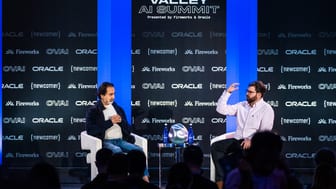
    NVIDIA's Huang Renxun Resigns, Anthropic IPO and Computing Power Demand Become Focal Points of CVAI Summit

    At the Cerebral Valley AI Summit in San Francisco, AI founders and investors discussed Huang Renxun's resignation from NVIDIA, Anthropic's upcoming IPO, and the continuously rising demand for computing power.

    Why it matters: The article places Huang Renxun's resignation, Anthropic's IPO, and computing power demand at the same conference, showcasing the industry's immediate response to NVIDIA's changes.

  4. LangChain Blog60
    Same story · 2 outlets

    How the accounts differ:LangChain Blog states the funding is to 'empower every enterprise to master its AI intelligence capabilities'; TechCrunch focuses on AI agent management and mentions helping 7000 clients build and manage AI agents.

    Why it matters: LangChain announced $300 million in Series C funding and outlined the product structure of LangSmith in three layers: runtime, improvement, and governance, which can be used to determine the positioning of its Agent platform.

  1. Latent Space88

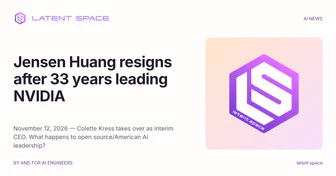
    Huang Renxun Resigns as NVIDIA CEO, Colette Kress Takes Over as Interim CEO

    NVIDIA announced that Huang Renxun resigned from his positions as CEO, President, and Board Member after 33 years in charge, SEC filings show the board accepted the resignation on November 11, and the company announced it on November 12; Colette Kress, who has been CFO since 2013, retains her position and takes over as interim CEO, Harvey Jones becomes the first chairman of the board, and the board has launched a search for a successor.

    Why it matters: NVIDIA's board accepted Huang Renxun's resignation and the CFO temporarily took over, while Anthropic submitted its IPO registration documents, two personnel and capital actions occurred on the same day.

  1. The Decoder85

    Anthropic IPO Secures Sixfold Over-subscription, Expected to Become the Largest Public Offering in History

    According to Bloomberg, Anthropic's IPO order volume reached six times the number of shares available for sale. The company and its co-founders plan to raise up to 644 billion USD through the public offering, and an additional 260 billion USD through private placement, aiming for a valuation of around 1.4 trillion USD.

    Why it matters: The original text provides the over-subscription multiple, funding size, and valuation of Anthropic's IPO, allowing readers to judge the scale of this round of listing in the capital market.

  1. The Decoder80

    Corporate sales drive OpenAI's third-quarter revenue to $10 billion, still lagging behind Anthropic

    According to reports from The Wall Street Journal and The Information, OpenAI's revenue grew by about 50% quarter-on-quarter to $10 billion, while adjusted operating losses increased slightly from $10.1 billion to $10.9 billion.

    Why it matters: Comparing the revenue and loss structure of the two companies in the same quarter can reveal the efficiency difference between the enterprise customer and consumer business routes.

  2. The Decoder78

    Claroc claims over 35,000 Grok generative applications can be accessed without login, including patient data and plaintext passwords

    Security company Claroc reported that out of 37,571 Grok-generated applications still online, 35,578 (94.7%) were accessible without login. The leaked content included ICU patient lab values, a list of over 3,500 employees from a hospital group, and 18 sets of plaintext account passwords from a time-tracking application source code; another 24 applications from SpaceXSI and X employees exposed internal sales area maps and advertising proposals.

    Why it matters: Security company finds Grok-generated apps default to public, revealing specific cases of corporate internal documents and patient data leakage.

  3. Where's Your Ed At80

    Ed Zitron's long article questions NVIDIA's GPU shipments to China via Megaspeed

    Ed Zitron writes about the relationship between NVIDIA CEO Huang Renxun and Megaspeed CEO Alice Huang, as well as Megaspeed's procurement of approximately $4.8 billion NVIDIA GPUs via its Malaysian subsidiary Speedmatrix.

    Why it matters: The article links the controversy over NVIDIA's exports to China with the personal lives of executives and investigations into lobbying interference, allowing readers to understand the context of its revenue disclosure controversy.

  1. Big Technology78

    The aftermath of Huang Renxun's 'honey pot' controversy: NVIDIA board investigation and the direction of export controls.

    NVIDIA CEO Huang Renxun admitted to having a relationship with a woman considered a Chinese spy by U.S. intelligence. The board stated there was no reason to believe national security or NVIDIA secrets had been compromised but has launched an investigation. The article suggests his previous opposition to China's chip export controls may weaken, potentially pushing for stricter controls, while Dario Amodei of Anthropic could benefit from Google; as anti-AI Democrats are set to gain power in Congress, Huang Renxun may also face pressure from hearings.

    Why it matters: An article discusses how the alleged involvement of NVIDIA CEO Huang Renxun with a woman believed to be a Chinese spy could lead to changes in the NVIDIA board's investigation, export control stance, and potential congressional hearings.

  2. NVIDIA Newsroom78

    NVIDIA's board has launched an independent investigation regarding reports that Huang Renxun has been targeted by foreign intelligence activities.

    NVIDIA's board announced that, in light of recent reports that founder and CEO Huang Renxun has become a target of foreign intelligence activities, the board has launched an independent investigation. An independent committee composed of independent directors will oversee the investigation with the assistance of external independent lawyers. The board stated there is no reason to believe that national security or NVIDIA's confidential information has been compromised, and the investigation will review all available information; Huang Renxun has expressed full support and pledged cooperation.

    Why it matters: NVIDIA's board has launched an independent investigation regarding reports that Huang Renxun has been targeted by foreign intelligence activities, allowing readers to understand the company's response at the corporate governance level.

  1. ITHome · AI72

    Anthropic must continue to defend against the Claude Max plan usage misleading lawsuit, as the judge did not adopt its arguments

    U.S. federal magistrate judge Xie Wenhui ruled that Anthropic must continue to defend against the main claim that the Claude Max plan usage is misleading to consumers, and dismissed several other claims in the case. The plaintiff claims that the $100 and $200 per month Max plans, when calculated on a per-week basis, actually provide only 3.5 times and 6 times the usage of the Pro plan, respectively, rather than the advertised 5 times and 20 times.

    Why it matters: The ruling reveals the discrepancy between the promotional subscription limits and the per-cycle usage, allowing readers to understand the promotional boundaries of subscription-based AI products.