Skip to content
Live
Oct 5Mon
  1. MIT Technology Review · AI65

    People hate and rely on AI: Springboards founder reveals the contradiction in the industry.

    The founder of Springboards admits the company is an 'AI company that hates itself,' reflecting the global contradictory attitude towards AI: Pew research shows over half of American adults believe AI will have negative impacts, Stanford report says over half of the global population feels anxious using AI products, but Sensor Tower data shows ChatGPT has 1 billion monthly active users, while Pew data indicates the proportion of American adults using chatbots has doubled from 11% in 2023 to 50%.


Oct 3Sat
  1. Big Technology70

    Anthropic's IPO and our shared leap of trust

    Anthropic's 2024 revenue grew to $4.6 billion, but its infrastructure spending last year was $7.3 billion, and it is expected to invest $518 billion in the next decade, of which about 80% are irreversible commitments. The company needs to maintain growth amid fierce competition, increasing political risks, and tighter funding, otherwise its massive financial obligations may trigger systemic risks. The AI industry is facing challenges of declining advantages of cutting-edge models and tightening commercial spending, with companies increasingly preferring to use standard models to improve ROI.

Oct 2Fri
  1. MIT Technology Review · AI

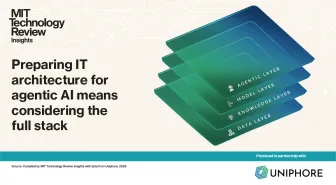
    New Paradigm of Enterprise Intelligence: Autonomous AI Reshaping Business Operations

    Enterprise AI has shifted from a tool to an operational model, termed 'Autonomous AI Transformation'. Global AI investment will reach $2.5 trillion by 2026, but most enterprises still face data silos and slow revenue growth. Leading companies prioritize process reshaping over model selection, building composable and sovereign-controlled data infrastructure to achieve real-time integration and reliable application of AI intelligence.

Oct 1Thu
  1. One Useful Thing

    OpenAI releases dots personal AI agent, challenging Meta Muse market position

    OpenAI has released dots personal agents that can communicate via Slack/SMS/WhatsApp and proactively provide help without requiring large amounts of context input or pre-designed plans. An AI "swarm" composed of thousands of agents solved the mathematical problem of the existence and smoothness of the Navier-Stokes equations within 88 hours, achieving efficient collaboration through only a few coordination instructions. Such AI agents are changing the way humans interact with AI, without the complexity of managing a company, but they may impact the customer service industry.

Sep 29Tue
  1. Google AI Blog50

    Future Vision XPRIZE: Independent film 'The Gifted' wins $1 million prize

    The independent film 'The Gifted' won the Future Vision XPRIZE, with a prize of 1 million USD and 2.5 million USD in film production funding. The film tells the story of an 11-year-old boy who uses code to recreate his mother's voice to care for the community, standing out from 2500 global works. Google, through the 100 ZEROS program, partnered with Range Media Partners to support the film's release.

Sep 25Fri
Sep 22Tue
  1. Interconnects0

    Debate on RSI, the China-US gap, and AI trajectory with JS Denain of Epoch AI

    JS Denain of Epoch AI believes that internal metrics about RSI from OpenAI and Anthropic, such as the doubling of Codex usage monthly, are not sufficient to prove that AI self-acceleration is imminent, but external observations show an increase in AI usage in model deployments. He is uncertain whether RSI constitutes a major risk but acknowledges the existence of long-term risks.

Sep 21Mon
  1. Import AI

    RAND released the US Superintelligence Strategy: Keeping all options open.

    RAND released a long report, suggesting the United States develop a 'Free Action' strategy for the era of superintelligence, aiming to maintain geopolitical advantages through investments in safety, human autonomy, technology sharing, and social readiness; the strategy covers seven prototype strategies across three categories: coexistence, denial, and acceleration, and emphasizes the need to address five uncertainties, with the key being the proximity of danger and the feasibility of coexistence.

Sep 19Sat
  1. One Useful Thing75

    GPT-6 Astra and Fable 5.1 have already generated significant economic impact.

    GPT-6 Astra has converted the text adventure game Zork into a 3D action adventure game, and Fable 5.1 has reconstructed Umberto Eco's 3D library (containing 5000 books) with a small token budget. The authors note that the current AI model's capabilities are far from being fully utilized, and there is a significant capability overhang. Humans should leverage their advantages in deep knowledge, broad knowledge, taste, and agency to collaborate with AI.

Sep 18Fri
Aug 31Mon
Jul 24Fri
  1. One Useful Thing

    Claude Code v2.1.159 release

    Claude Code v2.1.159 is released, offering an 8k context window and a 175B parameter scale, supporting integration with multiple tools and approval modes, but documentation and naming still have confusion issues.

Jun 18Thu
  1. Dify Blog65

    Dify Cloud: A Production-Grade Platform Guide for Internal AI Applications

    Dify Cloud provides out-of-the-box capabilities such as LLM, built-in RAG, and visual workflows, allowing IT and business teams to quickly build and manage internal AI applications. The platform eliminates the complexity of building AI infrastructure, with users responsible only for application development while infrastructure is managed by Dify Cloud. It supports seamless scaling from a free Sandbox tier, ensuring application ownership, proprietary data, and governance standards.

May 28Thu
  1. Cohere Blog22

    How Enterprises Can Address AI Governance Challenges to Achieve Safe and Scalable AI Adoption

    When companies expand AI applications, a mismatch between governance frameworks and actual usage can lead to risks. Governance issues often manifest as perfunctory approval processes, unclear responsibilities between teams, control measures that don't match risks, difficulty tracking employee usage, and inadequate management of sensitive data. Companies need to establish visibility, clarify accountability, and adopt adaptable governance processes.

  2. Cohere Blog

    How Enterprises Can Address AI Governance Challenges to Achieve Safe and Scalable AI Adoption

    When companies expand AI applications, a disconnect between governance frameworks and actual use cases increases risks. Governance failures are common due to rigid approval processes, unclear team responsibilities, control measures not matching risks, and employees' misuse of AI tools. Companies need to establish dynamic governance processes, including maintaining an AI usage inventory, clarifying responsibility allocation, and implementing risk-adapted controls, to enhance governance visibility and adaptability.

May 19Tue
  1. Dify Blog

    Why do enterprise AI workflows keep failing - How IT teams finally solved this problem

    Enterprise AI workflows continue to fail due to a lack of governance, with AI adoption rates far exceeding governance framework development in 2025-2026. Most enterprise AI tools are purchased by business departments without IT review (Shadow AI), leading to data exposure, inconsistent outputs, unmaintainable processes, and compliance risks. The central AI workflow platform model achieves business demand submission, IT verification for governance, auditable workflow deployment, and centralized monitoring through a shared platform, empowering organizations to adopt AI rapidly while ensuring governance security and maintainability.

  2. Dify Blog

    Enterprise AI platformization: Why most AI pilot projects fail to go live and solutions

    Most enterprise AI projects fail in the transition from demonstration to production, with the core reason being that pilot projects are built for demonstrations rather than for operation. Pilot project failures often occur due to builders leaving, lack of documentation, rapidly changing business requirements but inflexible workflows, IT audit failures, inconsistent outputs, or lack of monitoring and feedback, and unknown costs and resource consumption.

Apr 22Wed
  1. Anthropic Research

    Claude User Survey Reveals AI's Impact on Employment and Economic Concerns

    A survey of 81,000 Claude users shows that those with more exposure to AI are more concerned about AI-driven job losses. Early career professionals are particularly concerned. High-income and low-income workers report the greatest productivity gains, mainly from expanding the scope of tasks. Those who use AI more rapidly are more concerned about job losses, which is positively correlated with their exposure as reflected in the types of tasks Claude performs.

Apr 2Thu
  1. Cohere Blog65

    Five stages of enterprise AI maturity: How to cross the 'production barrier'

    Enterprises generally get stuck at Phase 2 (tool adoption) and Phase 3 (internal platforms), finding it difficult to integrate AI into their core technology stack. Most organizations are currently at Phase 2, deploying isolated AI workflows across departments, lacking unified data infrastructure, governance frameworks, and strategic alignment. Crossing the production barrier requires building internal platforms, including unified data architecture, IT data connection trust, explainability frameworks, and model optional architectures, to address data silos, lack of trust in LLMs, and decision dilemmas brought by rapid model iteration.

Jan 1Thu
Jan 29Wed
  1. Cohere Blog75

    How Generative AI and Agents are Changing the Oil and Gas Industry

    Generative AI enables oil and gas workers to query company knowledge, operational data, and existing analytical system outputs using natural language. Agent AI can plan and execute multi-step tasks and use other systems, extending the existing AI application scenarios in the industry and creating new applications, such as using AI assistants to improve worker safety and incident response, enhancing predictive maintenance and asset reliability, preserving and sharing operational knowledge, accelerating engineering and operational analysis, and automating administrative tasks.