Spaces
Spaces
Amp launches Spaces feature, allowing users to have conversations with their teams through a single agent, which is responsible for generating and coordinating other agents, simplifying thread creation and organization. After trying Spaces for a few weeks, the Amp team believes it is the future of interacting with agents, providing a global perspective and necessary detail dives when needed. Spaces has been used in scenarios such as collaborating on new feature development, service account releases and support, and regular security reviews.
Today we're launching spaces, a new way to interact with agents and your team in Amp.
A space is a conversation with a single agent whose job is to spawn and coordinate agents for you. You no longer have to create and organize threads yourself; the agent in a space will do it for you.
It's a new, higher-level way to work with many agents.
After using spaces for the past few weeks, we think this might be the future of interacting with agents. There's something special about this way of working. You operate with a birds-eye-view but can still dive into the weeds when necessary. It's more like sitting in the captain's char than down in the trenches.
We also found that we naturally moved into the space to communicate with each other. Instead of Slack, we found ourselves taking video calls and discussions into the space.
Here are some examples of how we've been using spaces at Amp.
Collaborate on a New Feature
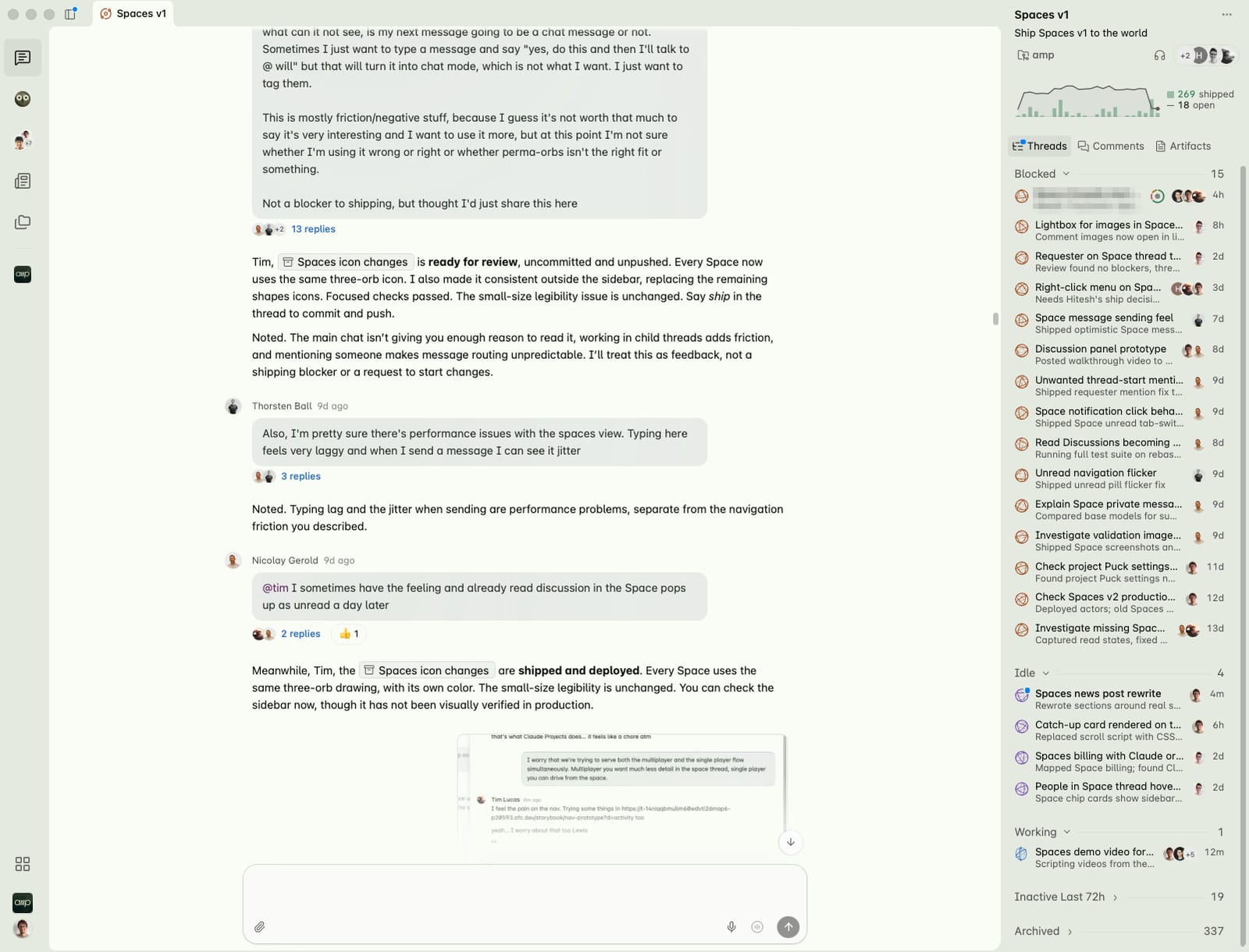
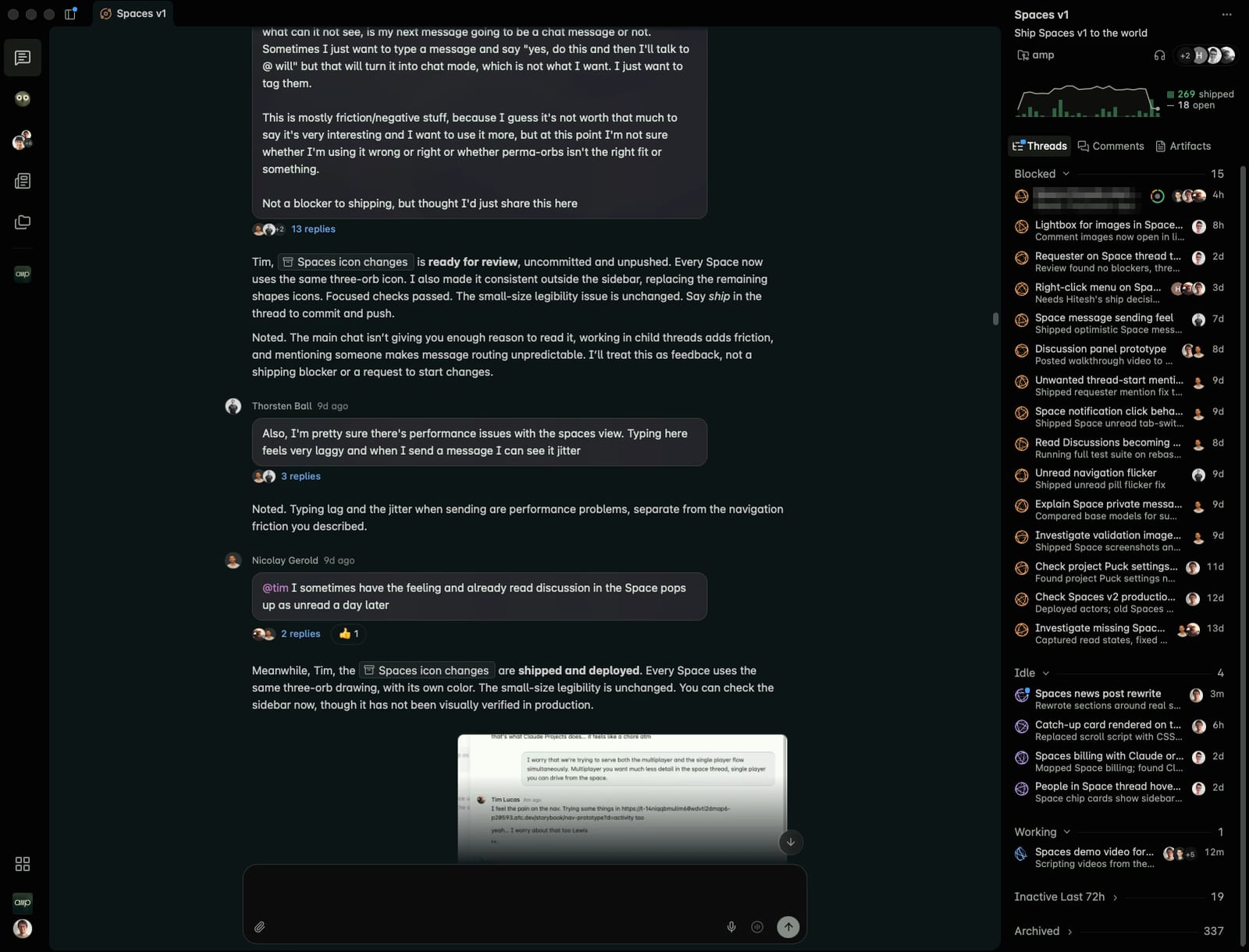
Spaces were built in a space. Tim, Lewis, Nicolay and the rest of the team shared one called "Spaces v1", dropped feedback, bugs and new ideas into the chat, and the agent delegated them into threads. When they needed to talk, they used comments to chat and then tagged in Amp when we were ready.
Launching and Supporting a Feature
Lewis ran the launch of service accounts from one space. From the space, Lewis could roll out the feature, monitor X, Slack, and bug reports for issues, fix incoming bugs, and send out emails and refunds to affected users. The space monitored user issues and system health for the rest of the week.


Regular Security Reviews
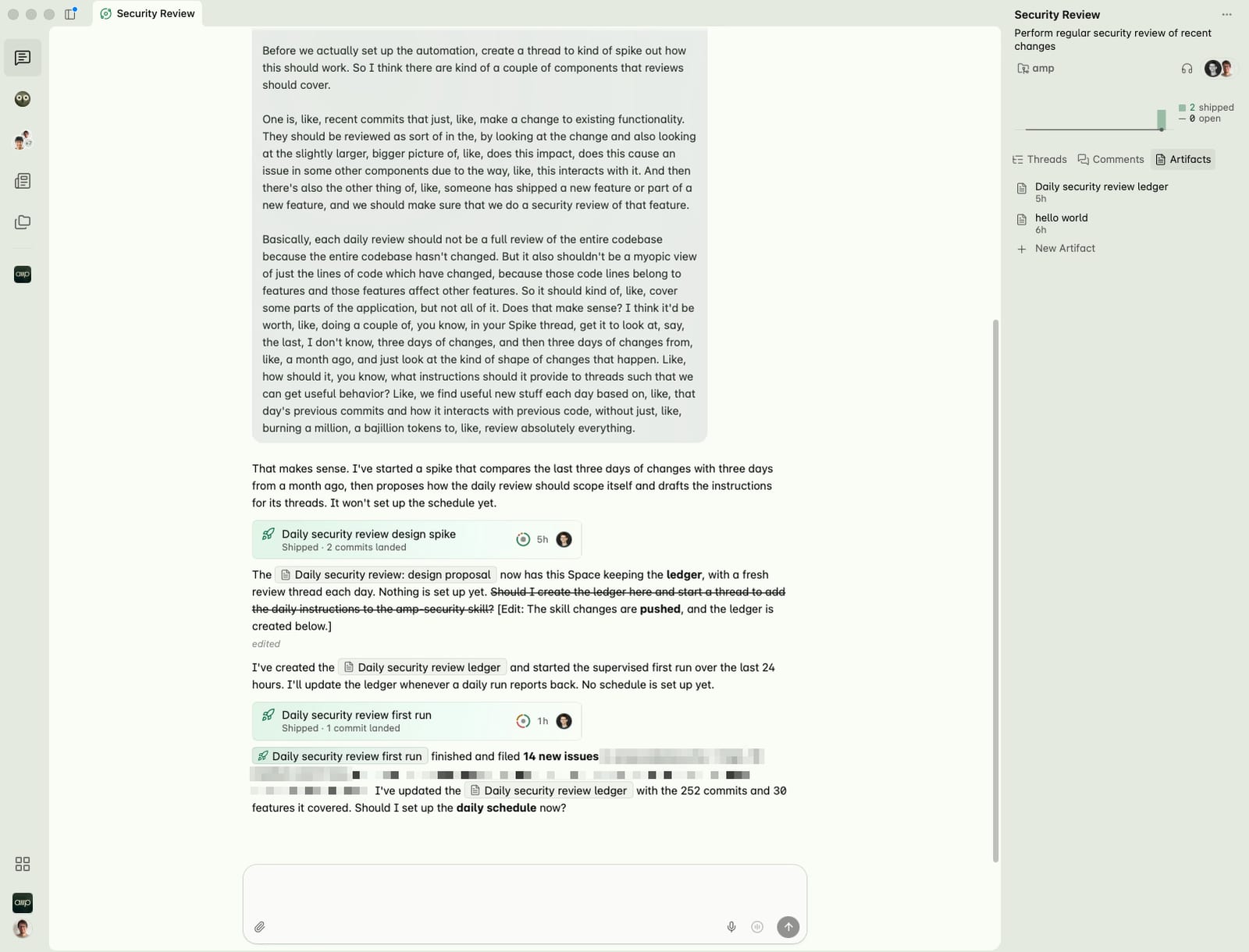
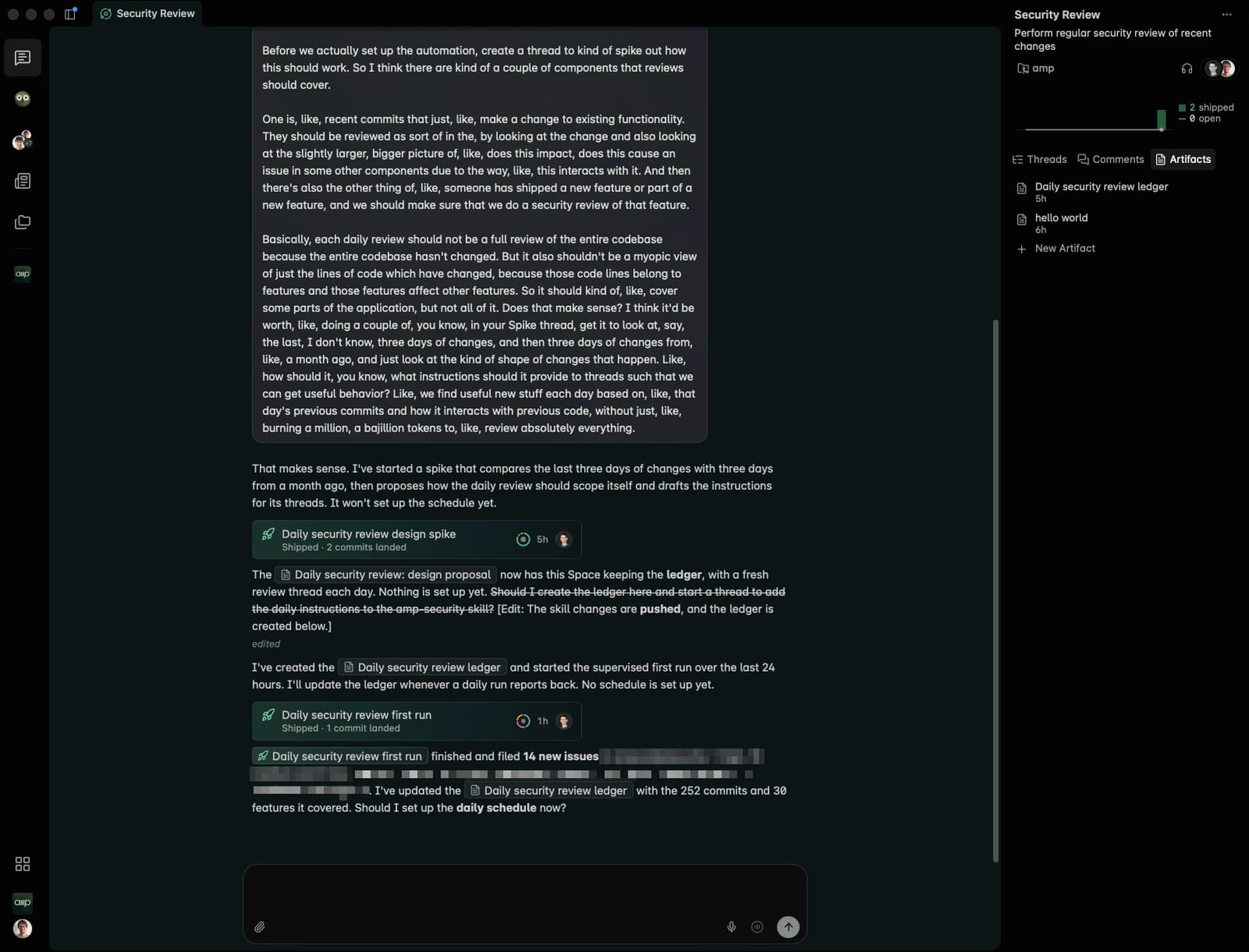
Will gave a space a goal: review recent changes for security issues. Its first run split the codebase into 16 areas, reviewed each in its own thread, checked every finding in another, and kept a summary artifact in the space for Will to review and track.
To start a space, use the + in the Spaces section of the sidebar, set a title and a project, and then tell your agent what to work on.
Source: Amp News · ampcode.com