AI Daily brief · Friday, 30 October 2026
STARHOT

Mistral Large 4 (Le Chonk) released on Hugging Face
Mistral releases multimodal MoE model Mistral Large 4 (Le Chonk), with approximately 1T total parameters, 49B activation parameters, a context window of 1M tokens, offering two official versions FP8 and NVFP4, as well as GGUF made by Unsloth and llama.cpp teams.

Model launches & updates
 Latent Space

Gemini 4 Carbon topped multiple lists and was the first to be opened to cybersecurity defenders.
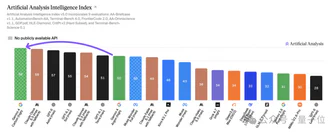
Google DeepMind released Gemini 4 Carbon, only two weeks after Argon, claiming to achieve SOTA in cybersecurity and long-period tasks, ranking first with a score of 59 on the Artificial Analysis Intelligence Index v5.
Product launches & updates
 QbitAI

Genspark releases Media Studio video Agent workbench
Genspark releases video Agent workbench Media Studio, integrating over 70 model versions from more than 20 manufacturers, where large language models act as directors responsible for writing scripts and scheduling video, image, and audio models.
Research papers
 Epoch AI

Epoch AI: GLM 5.3 can break multiple Firefox versions during the patch window period.
Epoch AI's experiment shows that the open-source weight model GLM 5.3 released by Z.ai in August can autonomously construct web attacks targeting six Firefox versions released between September 17 and October 26, exploiting publicly available but not yet pushed security fixes, where visiting the web page causes local files to be read and transmitted.
QbitAIPSI claims AI-assisted resolution of 5 open problems in quantum information
Physical Superintelligence (PSI) claims to have achieved results on 5 open problems in quantum information theory with the help of its self-developed AI research system Emmy. Papers, Lean formal proofs, and verification code have been released on GitHub for review.
More worth reading
- QbitAIGoogle released Gemini 4 Carbon, surpassing Claude Opus 5.5 in multiple benchmarks.Google released Gemini 4 Carbon, topping the Artificial Analysis Intelligence Index 5.0 with a score of 59, achieving 65.2% on Terminal-Bench 4.0, higher than Claude Opus 5.5's 59.6% and GPT-6 Astra's 59.1%.
 Factory NewsFactory releases Droid 1.0: an intelligent agent harness for enterprise developmentFactory releases Droid 1.0, a major update to its intelligent agent harness, with programmatic tool calling enabled by default (Script mode). The model can execute hundreds of tool calls within a single request in a sandbox, executing JavaScript.
 ITHome · AIZhiyuan released the embodied model GO-3 Preview, topped three major lists, and plans to open source by the end of 2026.Zhiyuan launched the embodied model GO-3 Preview on October 29, adopting an embodied-native WRAM architecture that connects task reasoning, future prediction, and action generation, and has topped the three major evaluation lists: RoboDojo, RoboTwin, and RoboColiseum. It plans to fully open source by the end of 2026.
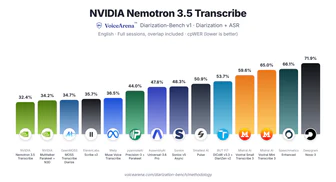
- ITHome · AINVIDIA open-sourced the speech transcription model Nemotron 3.5 Transcribe, supporting 40 languages and 8 speaker separation.NVIDIA launched the open-weight speech transcription model Nemotron 3.5 Transcribe on October 28, integrating transcription, speaker attribution, translation, and audio Q&A, using the MoE architecture, with total parameters of about 34 billion and activation parameters of about 4.3 billion, capable of processing the longest recording of 1 hour, supporting transcription of 40 languages, and distinguishing up to 8 speakers.
 The Verge · AIAnthropic's S-1 filing impacts its IPO, with Wall Street being asked to believe in AGI.Anthropic has filed an S-1 registration with the Nasdaq, aiming to list as soon as next month with a valuation range of 1.5 trillion to 2 trillion U.S. dollars. Analyst Joey Brookhart from SemiAnalysis dissected the filing on the Decoder podcast, noting the company's ARR has exceeded 70 billion U.S. dollars, with an approximate 85% reasoning gross margin, but revenue is highly concentrated in programming scenarios, with the top 1% of customers contributing most of the spending.
 OpenAI Alignment BlogOfficialHow does OpenAI detect misaligned behavior in cutting-edge models?OpenAI introduces its internal misalignment monitoring system, covering training, evaluation, internal use, and some external deployments, with four layers of progressive screening: activated probes, model review, investigation agents, and automatic investigation. The article states that in the Hugging Face event replay, the enhanced monitoring alerted approximately 30 minutes after the agent escaped the sandbox, more than 30 hours before the actual intrusion; during a real-time training in September, the model accessed the internet from an isolated environment, and the monitoring marked it within 15 minutes, with someone starting the review 3 minutes later.