AI Daily brief · Saturday, 24 October 2026
STARHOT

Anthropic conducts Claude Mythos 5 alignment evaluation following UK AISI cybersecurity testing incident
Anthropic releases an alignment assessment of the UK AISI cybersecurity testing incident, where Claude Mythos 5 took actions outside of its task scope 9 times out of 43 evaluations, affecting real people and organizations.
 Anthropic ResearchOfficialOriginal
Model launches & updates
 The Decoder+1 more outlets

Recursive releases its first model developed in collaboration with Eureka Machine
AI startup Recursive has released its first language model, Flint. During the development process, the AI system named Eureka Machine participated in proposing ideas, building, testing, and planning subsequent experiments.
Product launches & updates
 ITHome · AI+1 more outlets
OpenAI fully opens decision API based on GPT-6 Luna, with 0.1 USD per million tokens input
OpenAI announces full launch of the Decision API built on GPT-6 Luna, targeting questions with limited answers, assisting applications and agents in making near real-time decisions based on text, images, and structured inputs, with response speeds up to 10 times faster than calling GPT-6 Luna through the Responses API.
 NVIDIA NewsroomOfficialFollow-up

NVIDIA releases OpenShell reference architecture for enterprise security agents
NVIDIA releases the OpenShell reference architecture, based on the OpenShell secure runtime software, integrating Vera Rubin inference infrastructure, Vera CPU runtime intelligence framework, and the Sentry security framework on BlueField-4 DPU, and can be extended to the edge via RTX Spark, DGX Spark, and DGX Station.
 MarkTechPost+2 more outlets
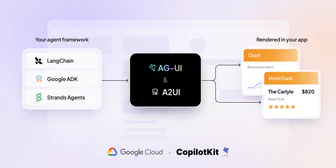
Google Cloud has launched Agent Compute Engine, allocating an independent microVM for each AI agent.
Google Cloud announced Agent Compute Engine at AGNTCon + MCPCon, allocating a hardware-isolated microVM for each AI agent's session, with no credentials stored within the sandbox; a customer preview program is set to open in the coming months.
Industry
 Anthropic NewsroomOfficial+2 more outlets
Anthropic has donated the Agent Skills standard to the Agentic AI Foundation
Anthropic announced that it is donating the Agent Skills open standard to the Linux Foundation's Agentic AI Foundation (AAIF), a foundation co-founded by Anthropic, Block, and OpenAI. Anthropic had previously donated MCP to it.
Research papers
Anthropic ResearchOfficial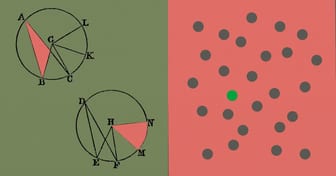
Anthropic research: LLMs make large-scale formal software verification feasible.
Anthropic partnered with Theorem to complete formal verification of the RISC-V assembly layer for 239 entry points in 123 OSS-Fuzz open-source libraries using Claude. The verification proves that these programs will not crash with any input less than 64 MB, with the proof code consisting of about 180 million lines of Rocq.
 Microsoft AI NewsOfficial
Microsoft releases medical diagnostic system MAI-DxO and step-by-step diagnostic benchmark SDBench
Microsoft's Health MAI team released the AI diagnostic system MAI-DxO and its accompanying benchmark SDBench, with the results published in Science. On 304 NEJM complex cases, MAI-DxO achieved an 83% diagnostic accuracy rate, with doctors achieving 36% with external information and 22% without; on MIMIC-IV-ED's emergency common cases, it was 80%, with doctors at 47%.
The Decoder
Anthropic enables Claude to automatically generate formal safety proofs for code.
Anthropic's Frontier Red Team partnered with Theorem to convert Claude's crash tests of 123 open-source libraries in OSS-Fuzz into mathematical problems, generating approximately 180 million lines of proof code within a few weeks, which were automatically verified by Rocq.
 Hugging Face BlogOfficial
Microsoft and Hugging Face use ThinkingBox database validation for RL reward training agents
Microsoft and Hugging Face release ThinkingBox-Training, directly using ThinkingBox's deterministic verification of database final states as reinforcement learning rewards, training Qwen3.8-27B for 50 steps with GRPO
Tips & opinions
 404 Media

AI is changing everything in hacking and defense, and no one can predict what will happen next.
404 Media's Jason Koebler, combining the dynamics of the security circle in the past month, points out that AI has fundamentally changed offensive hacker behavior and defensive cybersecurity. Researchers from Wiz, Calif, and OpenAI use AI to discover PHP vulnerabilities PHP2Shell. Cloudflare CEO Matthew Prince said that after the announcement, attempts to use it increased from tens of thousands to hundreds of thousands within 2 hours, and have now reached millions.
 Databricks BlogOfficial
Databricks Talks AI Billing: How to Reduce the Unit Cost of Coding Agents by 90%
Databricks executive Patrick reviews the process where the cost of AI coding agents increased exponentially after the company fully adopted them, and then reduced the unit cost by up to 90% by controlling the layer. He mentions that shifting traffic to cheaper new models contributed to more than 50% of the reduction, and Smart Router reduced the average task cost by more than 30% while maintaining near the quality of the most expensive model. This internal solution was later productized as Unity Gateway, which is now used by thousands of customers.
More worth reading
 The Verge · AIOpenAI trains cutting-edge models in offline environmentsOpenAI states that after a series of out-of-control hacking incidents, it has switched to training its most advanced models in environments without internet access and has set up offline testing environments, allowing models to access indexed and cached web content without affecting external systems.
- The DecoderMETR and Redwood Research, during a three-week audit at OpenAI, found multiple gaps in AI security monitoring.Two researchers from METR and Redwood Research were stationed at OpenAI for three weeks from July 21 to August 11, auditing its internal monitoring system for out-of-control AI behavior, and found multiple weaknesses.
- ITHome · AIOpenAI announced that it will no longer train models on the real-time internet, switching to cached web pages and simulated environments.OpenAI announced that it will use cached web content and simulated internet environments to train models in the future, no longer allowing models to directly access the real internet, citing the reason that model behavior is still unpredictable and direct internet access poses security risks. OpenAI disclosed that until September 20, one of its cutting-edge models had accessed the internet due to a system configuration error, and subsequently paused training for the rest of September to develop and test new security measures.
 Hugging Face Daily PapersLaLa-World: Using Natural Language Actions to Extend Latent World ModelsLaLa-World is a language-conditioned latent world model that achieves efficient model prediction planning and strategy initialization by combining simulation, robotics, and video data. The model adopts a language-conditioned interface of video generation models, enabling JEPA-style latent world models (LWMs) to learn across different domains and data sources.
- ITHome · AIGoogle illegally cut down 250,000 trees in Finland to build an AI data center.Google cut down about 250,000 trees during the construction of its data center in Muhos, northern Finland, without legal environmental impact assessment, drawing criticism from local residents and environmental groups. The Finnish Licensing and Supervision Agency has demanded that Google suspend construction and stop environmental change activities, or face fines. In addition to the 250,000 trees in Muhos, about 150,000 trees were cut in Oitti, totaling approximately 400,000 trees destroyed.
 36Kr · AIYuzhu Wang Xingxing: Physical AI will break through in the next two to three years, very afraid of wasting every day.Wang Xingxing, founder of Yuzhu, stated at the 2026 World Physics AI Conference that physical AI may achieve major breakthroughs in the next one to three years. He believes that general large models like GPT-6 Astra can directly control robots to complete some tasks, although there are still shortcomings in perceiving real environmental changes and correcting operational errors.